Specify tables for the actual study, laptop and materials tasks, then coordinate seating, circulation and noise with the room plan. No generic table specification guarantees twenty years without scratches.
Here is what to check before you order, by decision rather than by finish. For the full zone-by-zone furnishing picture beyond tables, see our library furniture hub.
Four-seat rectangles, six-seat rectangles, or long community tables?
Most library floors run a mix, and the mix matters more than any single table choice.
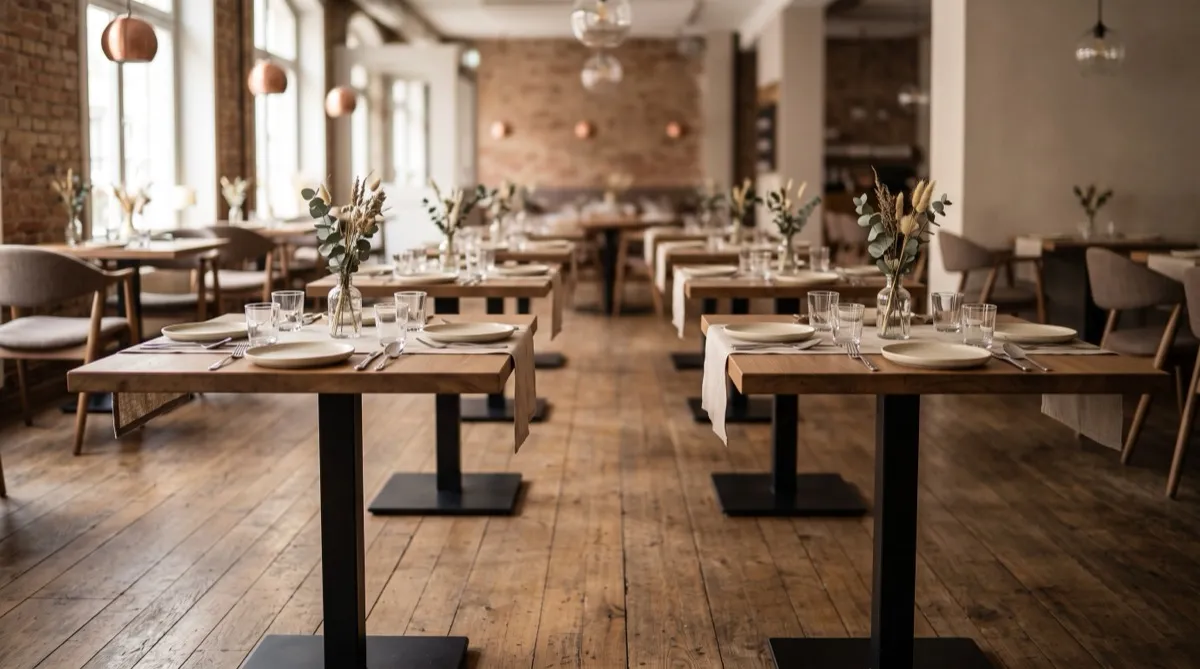
Four-seat rectangular tables are the workhorse of a general reading room. They divide easily into individual study spots when the room is half full and combine into small group spaces when it isn't, and they fit standard aisle and sightline spacing better than larger footprints.
Six-seat rectangular tables suit dedicated group study rooms and larger open floor areas where the library expects sustained group use rather than solo study. They need more floor clearance around them to avoid crowding neighboring furniture, so confirm your room plan supports the larger footprint before ordering in volume.
Long community tables, the eight to twelve foot farm-style or communal format, work well in a central reading room or a makerspace-adjacent zone where the library wants an open, shared-table feel rather than defined seating pods. They read as more casual and social than a grid of rectangular tables, which makes them a good fit for browsing zones but a poor fit for a quiet individual study room.
Whichever mix you land on, standardize the base height and top thickness across the floor so replacement units and spares are interchangeable rather than room-specific.
What top thickness and edge detail actually need to survive
Record expected contact, cleaning and equipment loads. Inspect the proposed top, substrate and edges rather than assuming thin tops inevitably delaminate within a few years.
Obtain the exact top thickness, substrate, support, edge treatment and care instructions. A one-inch minimum, bullnose edge or HPL label is not a universal qualification or guarantee of cleaner compatibility. Evaluate the complete assembly and its documented loads and exposure limits.
Leg bases versus pedestal bases: knee clearance and mobility
Base choice affects both how many people can actually use a table comfortably and how the table behaves acoustically.
Leg bases: Review their actual position, usable knee space, stability documentation and cost. Four legs do not automatically establish lower price or good fit at every seat.
Pedestal bases: Check the column and foot footprint at every seating position. They may free some space but can also obstruct feet or knees; confirm the actual configuration rather than assuming unobstructed space.
Check knee clearance height specifically, not just overall table height, on any table you're evaluating for laptop use. A table that measures right at the top can still crowd knees if the apron or a low stretcher sits too close to seat height.
How far apart should library tables be spaced?
Measure required clear routes with chairs occupied and pulled back, not merely between table edges. U.S. Section 403 distinguishes route width, turns and passing spaces; Chapter3 covers turning and clear floor space. 36 inches between edges or 42 to 44 inches at a turn is not a complete accessibility rule. Confirm the actual layout and applicable requirements with the project team.
Spacing also affects noise. Tables packed too tightly force chairs into each other's pull-back zone, which is exactly where the scrape and bump noise that undermines a quiet room comes from. Give every table enough pull-back room that a chair moving at one table doesn't nudge the table behind it.
Power access without cutting into the floor
Laptop-era library tables live or die on outlet access. Where the room's electrical plan allows it, specify tables with integrated power modules, either grommet-mounted outlets or edge-mounted power strips, so users aren't running cords across an aisle. Where integrated power isn't in the budget or the electrical plan, place tables against a wall or column line where floor power already exists rather than in the open floor, so the table's location follows available power instead of forcing a retrofit. This is planning guidance rather than an electrical scope; loop in your facilities electrician early, since running new floor cores after a table order is placed is far more disruptive than planning around existing circuits.
Controlling chair scrape in quiet zones
Trial manufacturer-approved chair and table glides on the actual flooring for sound, movement and floor protection. Felt, nylon and sled bases do not guarantee the quietest result. The space planning tool provides an early scenario, not an approved aisle or capacity plan.
Ordering at the right quantity
Inventory all study and reading zones and compare standardized formats where they meet the actual tasks. Confirm parts and finish availability rather than assuming a later reorder is automatic. Browse library tables and study tables as design concepts and request a quote for actual quantities, configurations and dates.