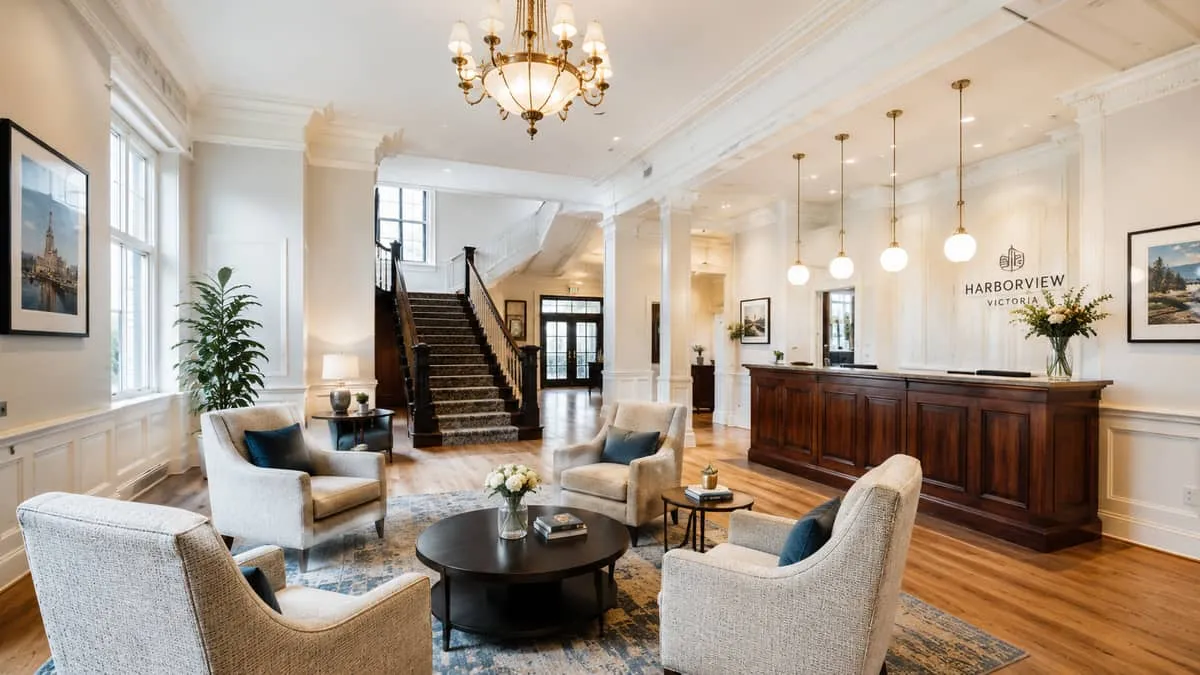
Victoria's hotel renovation market is unlike any other in Canada. The Fairmont Empress has stood on the Inner Harbour since 1908, and that single building has shaped guest expectations across the entire city for over a century. When travellers book a boutique property in James Bay or a heritage inn in Old Town, they are benchmarking their experience , consciously or not , against the Empress standard. That is the context in which every hotel renovation furniture decision in Victoria gets made.
The second complicating factor is the buildings themselves. A significant share of Victoria's hotel inventory is housed in structures built before 1940, many of them heritage-designated under provincial or municipal designation. That changes what renovation is legally permitted, what furniture can physically be installed, and how long the process takes. Any property owner who treats a Victoria hotel renovation like a straightforward FF&E refresh is going to run into problems that could have been anticipated with proper planning.
What Heritage Designation Actually Restricts
Heritage designation in Victoria runs on a spectrum. A municipally designated property under the City of Victoria's heritage register may have restrictions on exterior alterations but relatively few constraints on interior changes. A provincially designated building, or one with a heritage conservation covenant registered on title, can impose restrictions that reach into interior finishes, floor materials, and in some cases the character of furnishings installed in public-facing spaces.
Before you finalize any FF&E specification for a Victoria heritage property, you need a clear answer on what the designation actually covers. This is not hypothetical caution. Properties in the Old Town neighbourhood along Government Street and Bastion Square sit within a heritage area where alterations require heritage impact assessments. The Chinatown district carries similar constraints. Even if you are only replacing guest room furniture, structural changes that might accompany a renovation , removing a wall, cutting into a floor for new wiring, altering a stairwell , can trigger heritage review processes that extend your timeline substantially.
The practical furniture implication is this: rooms in pre-1940 construction are frequently non-standard in dimension. Door widths in Victorian and Edwardian buildings are often 28 to 30 inches, not the 32 to 36 inches that contract furniture catalogues assume. Hallway widths affect what can be moved without disassembly. Floor-to-ceiling heights can be unusually generous, which creates opportunity, but also means standard casegoods proportions can look undersized in the room.
A supplier selling hotel renovation furniture to Victoria heritage properties needs to take site measurements before you place an order, not after. The cost of shipping a bed frame or wardrobe that cannot pass through the door of a designated building is substantial. More importantly, in a market where your renovation window may be four or five months, a single return-and-reorder sequence can push the project into the following year.
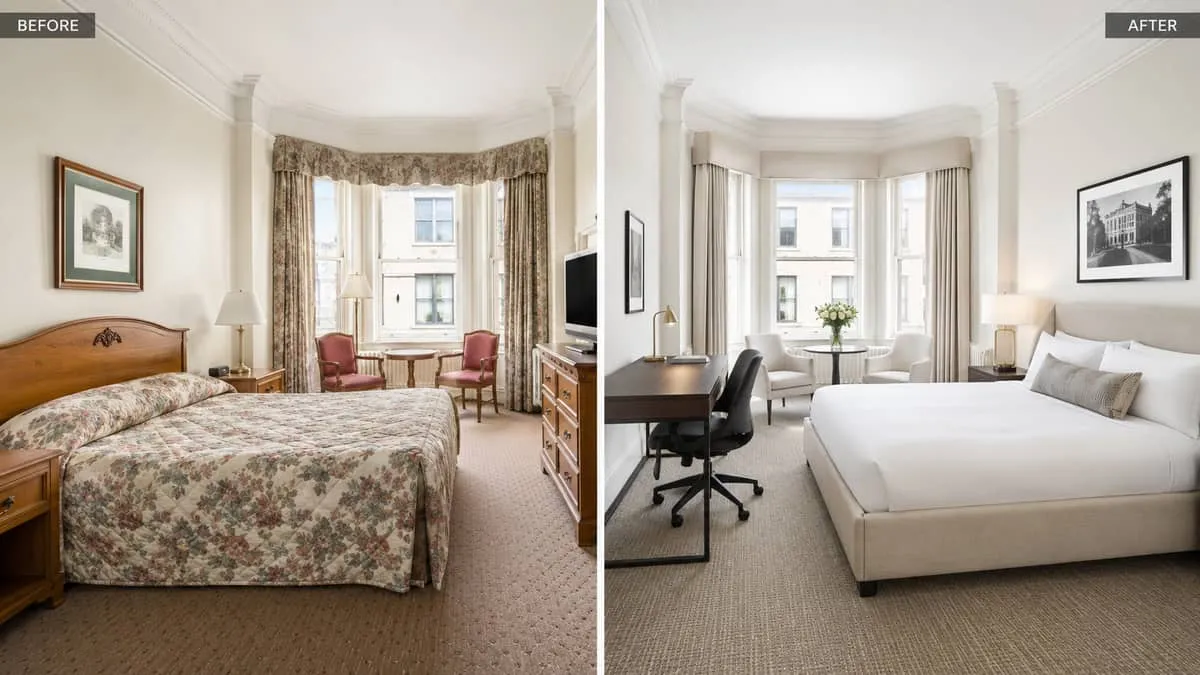
Renovating Around Victoria's Peak Season
The Inner Harbour drives Victoria's hospitality economy from late May through August. Whale watching departures from the wharf, afternoon tea service at the Empress, destination weddings at waterfront venues along the causeway, summer ferry traffic from Vancouver and Seattle , the city runs near full capacity during those months. Any hotel that takes significant inventory offline during peak season is surrendering revenue it cannot recover.
This creates a hard renovation calendar for most Victoria properties. The practical window is October through March. Some properties with strong government and legislative travel can hold occupancy through November and need to start earlier. Properties in the Fisherman's Wharf area that cater heavily to summer tourists may have a slightly longer window on the back end, but not by much.
What this means for furniture procurement is that your order dates are not flexible. Contract furniture from overseas manufacturers carries 12 to 16 week lead times under normal conditions. Add customs clearance, regional freight from a Vancouver distribution point, and final delivery coordination, and an order placed in July for October installation is already tight. An order placed in September is not going to make it.
The projects that run into trouble are almost always the ones where planning gets deferred until the busy season ends. Property owners who are running full occupancy in July and August tell themselves they will start planning in September. By the time they have specifications finalized and purchase orders issued, it is November or December, and the realistic delivery window is February at the earliest , which may still work, but leaves no margin for any supplier or customs delay.
If you are using a supplier who carries accessible warehouse inventory in BC or the Pacific Northwest, your timeline flexibility improves significantly. In-stock pieces can arrive in days rather than months. For properties that need to phase a renovation across multiple delivery windows, a supplier who can warehouse your complete order and release it by floor or room block as each phase completes is worth significantly more than a lower unit cost from a supplier who ships everything at once and cannot hold stock.
The Empress Standard and What Guests Expect
Victoria attracts a particular type of traveller. The afternoon tea tradition at the Empress draws guests who have planned their visit specifically around that experience. Destination wedding clients booking properties along the Inner Harbour are comparing venues with exacting attention to aesthetic detail. Couples arriving for the weekend from Vancouver who have been before have a clear mental picture of what a Victoria hotel experience should feel like.
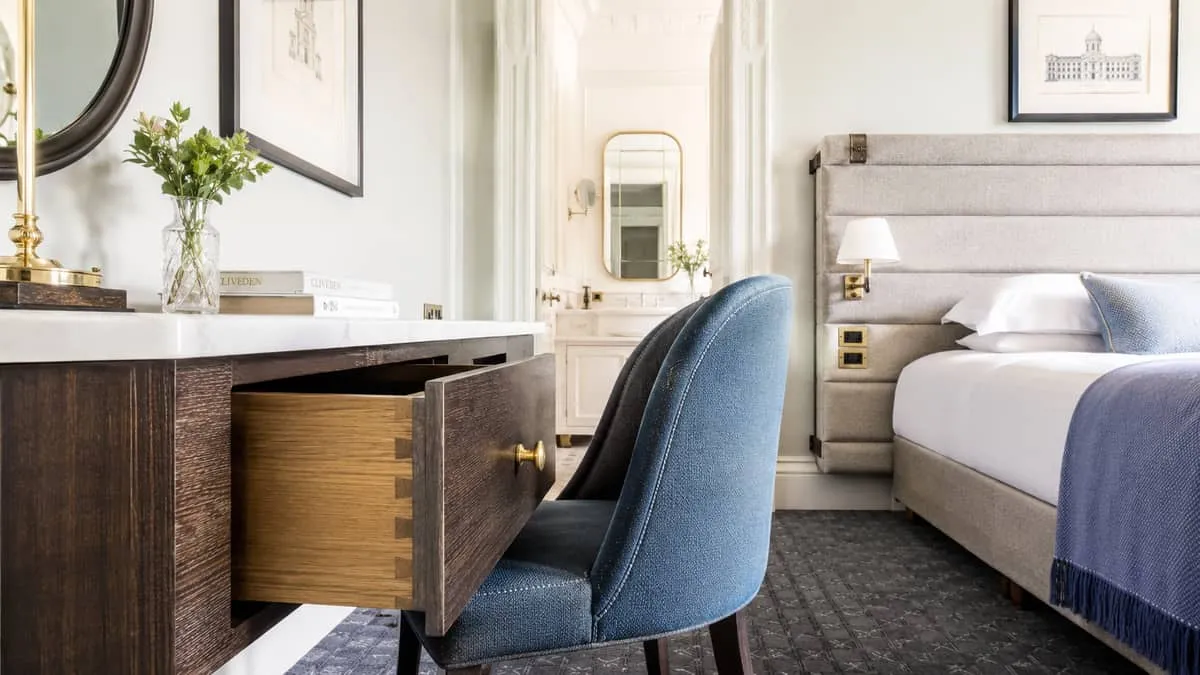
This calibrates guest expectations at the premium end, even for properties that are not operating at Empress price points. A mid-market heritage boutique in James Bay is being compared, in the guest's mind, to a reference point that has polished mahogany, antique reproductions, and white-glove service. That does not mean you need to match the Empress. It means your renovation needs to be coherent and intentional , guest rooms that communicate a clear aesthetic rather than an accumulation of unrelated furniture decisions made over different renovation cycles.
The practical implication for FF&E specification is that Victoria guests notice quality at a higher rate than in some other markets. A chair with a loose joint, upholstery that is pilling after eight months of use, or casegoods with visible laminate chipping is going to generate a negative review from a Victoria guest who might let it pass in a different context. Investing in commercial-grade construction upfront protects your review scores in a market where word-of-mouth and online reputation have direct effects on occupancy.
For seating, this means fabrics with a minimum 30,000 Martindale rub count, and 50,000 for lobby or lounge pieces that take concentrated traffic. Frame construction matters more in a heritage building than in new construction , pieces need to be dimensionally stable in older buildings that may have seasonal humidity variation and uneven floors. Mortise-and-tenon joinery in solid wood frames holds up to years of daily housekeeping movement in a way that staple-and-glue construction does not.
Phasing Renovations When Full Closure Is Not an Option
Most Victoria hotel properties cannot close completely even in the slow season. Government and legislative travel keeps the James Bay and downtown core occupied year-round. BC Legislative Assembly sessions, provincial government contract activity, and federal department offices all generate steady weeknight occupancy that does not follow a tourist calendar. A property that closes entirely for renovation forfeits that revenue stream and, more practically, loses its standing with corporate travel programs that require consistent availability.
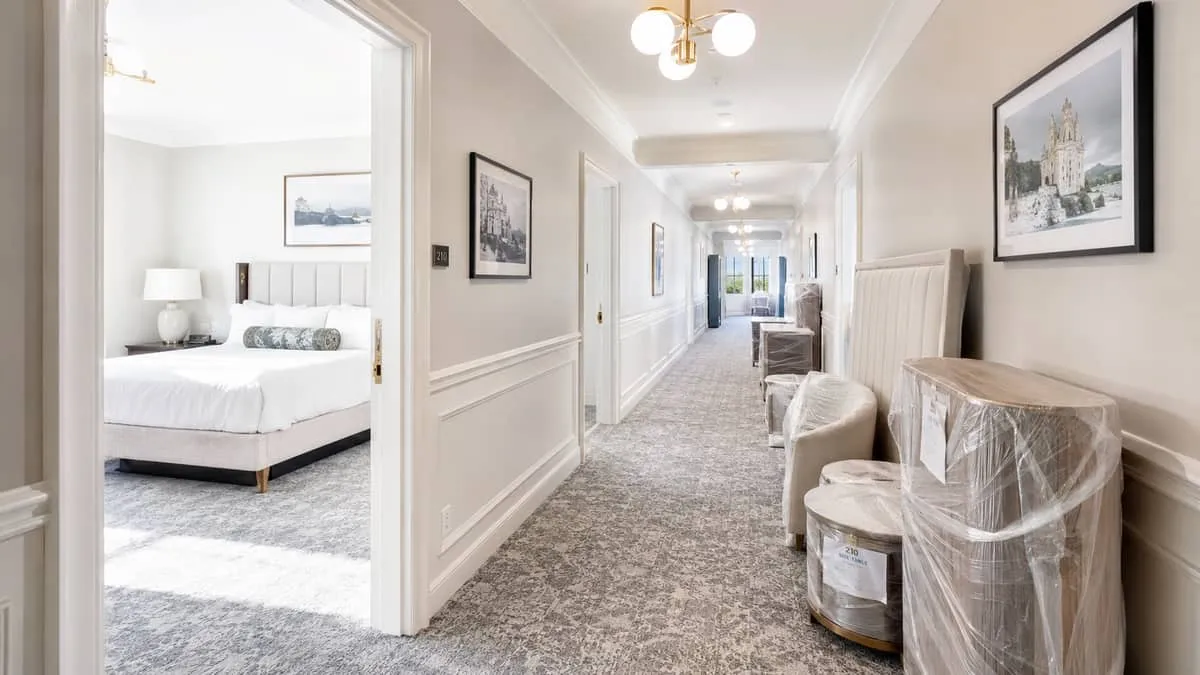
Phased renovation is therefore the standard operating model for most mid-sized Victoria hotels, not an edge case. Two floors come offline while the other three remain operational. Guest rooms rotate through a renovation schedule that holds revenue while work progresses. This approach works, but it requires a furniture supplier who can execute to it.
Phased delivery means precise, floor-by-floor delivery coordination , not a single shipment release with everything stacked in your loading bay. It means warehouse holding capacity at the supplier end, so your complete order can be received and staged, then released room by room as each phase completes. It means a supplier account manager who can track your phase schedule and coordinate outbound logistics accordingly.
When you are evaluating suppliers for hotel renovation furniture in Victoria, ask about warehousing capacity and phased release specifically. A supplier who cannot warehouse your order and execute phased delivery is going to create either storage problems at your property or logistical gaps in your renovation schedule. In a market where your next available renovation window is twelve months away, that is a costly problem to discover mid-project.
Sourcing Furniture That Fits Non-Standard Rooms
The dimension issue in Victoria's older hotel stock deserves its own attention, because it is consistently underestimated in the planning phase. Pre-1940 construction produced rooms with proportions that do not match contemporary furniture defaults.
Guest rooms in Edwardian-era buildings often have ceiling heights of 10 to 12 feet, which means standard-height headboards look squat in proportion. Armoires and wardrobes that work visually in a modern hotel room can disappear against the scale of the space. Furniture that suits the room in a Victorian building often needs to be specified with attention to vertical proportion, not just footprint.
Conversely, room widths in older buildings can be narrower than modern hotel standards. A floor plan that reads as a "double" room in an older building may have 12 feet of clear width rather than 14 or 15 feet. This affects bed placement, the viability of a desk and chair arrangement, and whether you can fit a meaningful seating area without the room feeling crowded.
The right supplier for a Victoria heritage property is one who brings measurements into the specification process early and flags proportion mismatches before you are committed to an order. That means someone with hospitality FF&E experience, not a retail or general commercial furniture vendor who is adapting a residential approach to a hotel context. The distinction matters in any market, but it matters more in Victoria where the buildings themselves create constraints that do not exist in newer construction.
What a Well-Planned Victoria Renovation Looks Like
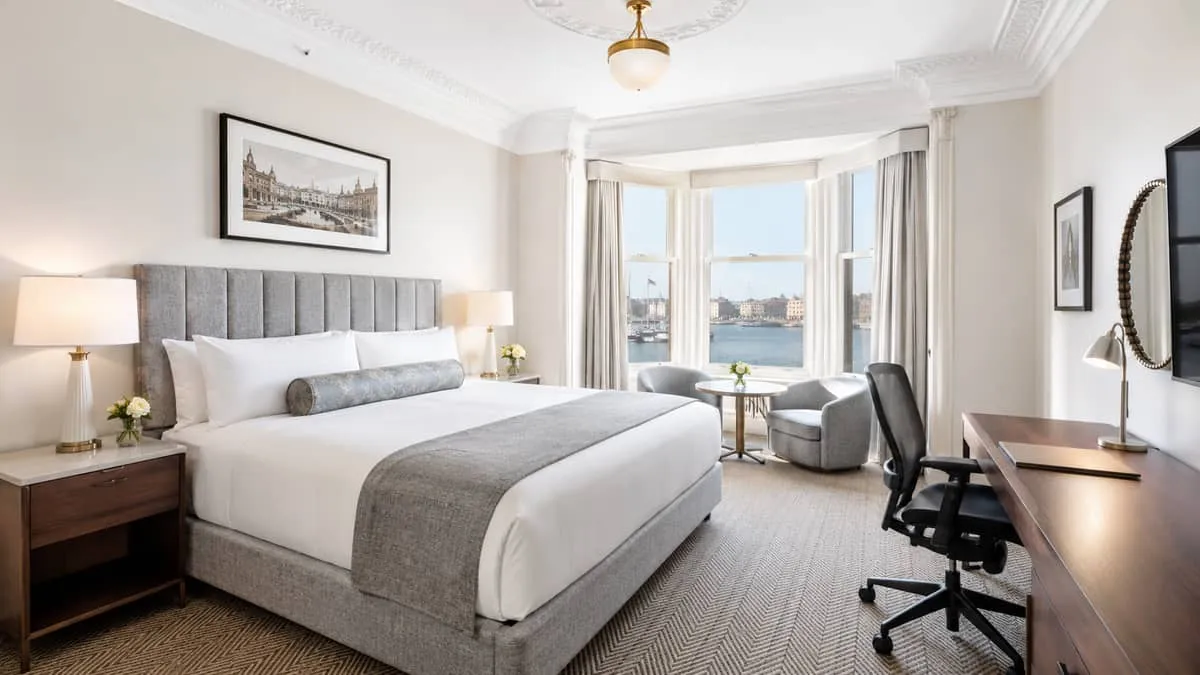
A hotel renovation in Victoria that comes together well shares a few consistent characteristics. Planning starts in February or March for an October installation , early enough to get custom pieces on order before peak season begins. Site measurements happen before specification is finalized, not after. The supplier is working with the property manager on phased delivery logistics from the first purchase order conversation.
The FF&E specification reflects the building, not just a brand standard template dropped into a heritage room. Pieces are scaled to actual room proportions. Upholstery and finish selections acknowledge that Victoria guests are making quality comparisons against a high reference point. The renovation is complete and fully staged before the first spring bookings arrive.
That is what it takes to compete effectively in the Inner Harbour market. The properties that execute it well come out with better review scores, stronger repeat bookings, and a renovation asset that earns its depreciation over the full intended cycle rather than needing supplemental investment two years in. Getting the furniture right, sourced from suppliers who understand this market and its constraints, is how that outcome happens.
Ready to plan your Victoria renovation? Connect with a hospitality furniture supplier who understands BC heritage building constraints, seasonal timing, and the phased delivery logistics your property needs.
Every Victoria venue has its own volume, layout, and turnaround demands, and hotel renovation furniture pricing follows from those specifics. Request a quote and we will scope it to your project.