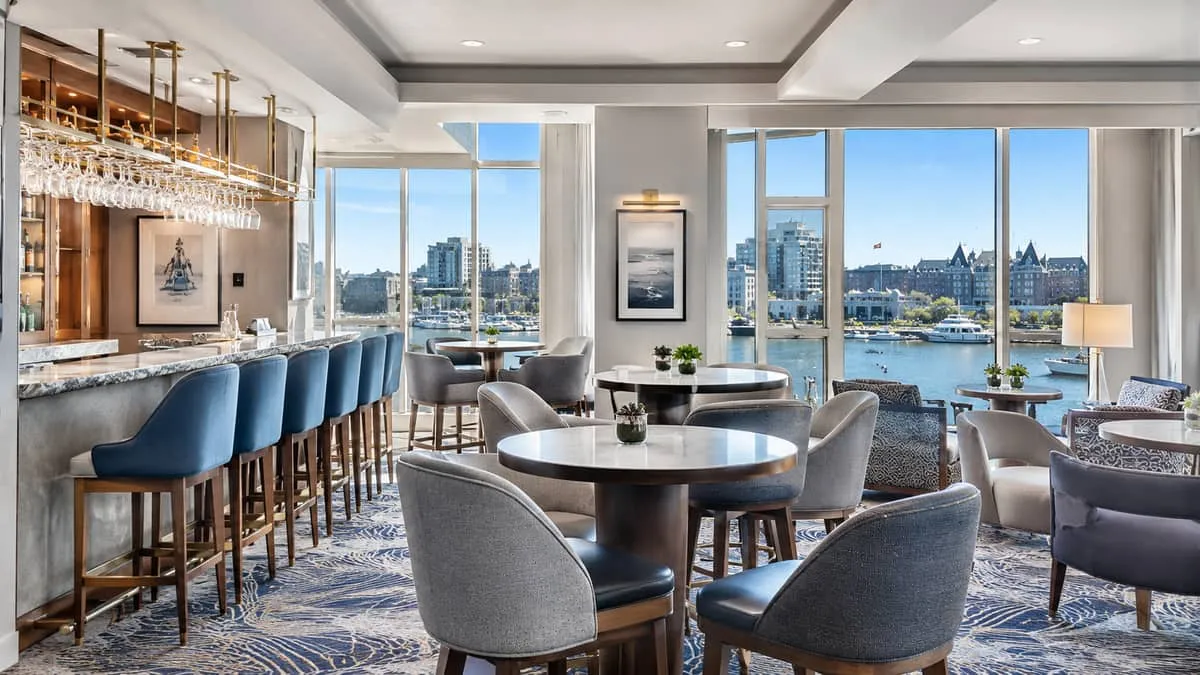
Victoria is the one Canadian city where a bar's furniture genuinely has to compete with the architecture. You are fitting out spaces inside Edwardian brick buildings along Government Street, tucking lounges into converted heritage storefronts in Old Town, or outfitting a hotel bar steps from the Fairmont Empress where guests arrive with very specific expectations. The Victorian aesthetic is not a stylistic choice here , it is baseline. And on top of that, you are running one of the densest tourist-season operations in British Columbia, with whale-watching groups and Inner Harbour day-trippers cycling through from May to October at a pace that would break residential furniture in a single season. The bar lounge furniture Victoria venues depend on has to carry all of that weight, literally and visually, without looking like it is trying.
Fitting Out Heritage Spaces: The Real Constraints
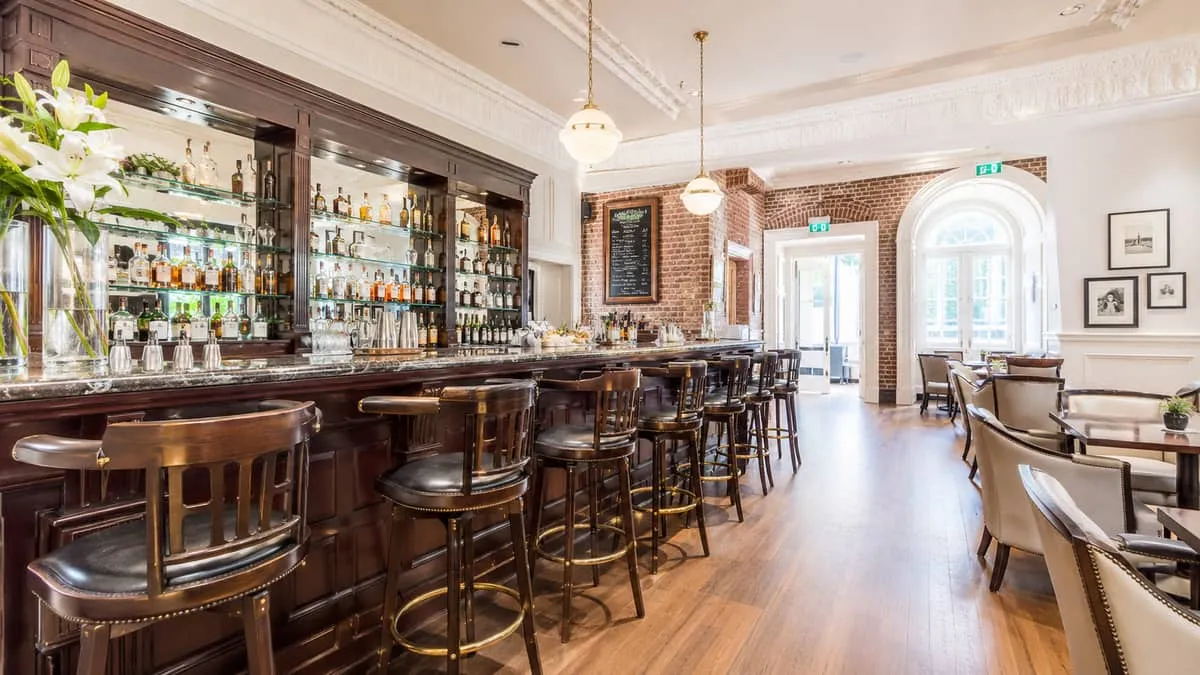
The single biggest differentiator in the Victoria market is the building stock. A lounge renovation in a heritage building on Fort Street or inside one of the Old Town boutique hotels near Bastion Square is not a standard commercial fit-out. You are dealing with uneven floors, low or unusually high ceilings, structural columns in awkward places, and in many cases, heritage designation requirements that limit what you can attach to walls or floors.
This changes the furniture specification conversation significantly. A four-legged table base is more forgiving on a floor that has shifted over a century than a central pedestal, which will rock on any surface that is not perfectly level. Freestanding furniture that does not require floor anchoring gives you flexibility that built-in millwork does not. And furniture that is scaled correctly for the room , not too low-slung for a high Victorian ceiling, not too visually heavy for a narrow heritage shopfront , matters more here than in a new-build hospitality project.
The practical advice for anyone fitting out a bar in a designated heritage building: take your ceiling height and your column positions into account before you pull a single piece off a catalog page. A supplier who has worked with BC's heritage hospitality market will ask you for those dimensions upfront. One who has not will send you renders that look wrong the moment they hit the floor.
Stain and finish choices are part of this too. Darker stains on solid wood frames , walnut, espresso, aged mahogany , read as period-correct in Victorian interiors without being costume-y. They also hide wear in a way that lighter Scandinavian finishes do not, which matters in a space that sees heavy use.
The Inner Harbour Tourist Equation: Volume Meets Expectation
The Inner Harbour corridor , the causeway restaurants, the hotel bars, the pub patios that catch the float plane traffic , is one of the highest-density hospitality zones in Western Canada during peak season. The challenge for operators in this zone is not purely aesthetic. It is durability under sustained commercial volume, combined with the expectation from a visitor audience that the space looks considered and deliberate.
Whale-watching tour guests do not arrive at the bar dry. Cyclists come in off the Galloping Goose. Wedding parties from the Empress overflow into adjacent venues. These are guests who are having experiences , they are not sitting down carefully. Bar stools on a waterfront patio take lateral stress, spills, and direct UV exposure simultaneously. High-tops on a causeway patio see condensation from glasses, salt air, and full sun across a long season.
For bar lounge furniture Victoria waterfront operators are specifying, this means the conversation around materials has to be direct. Powder-coated aluminum frames outperform steel in marine-adjacent environments because they do not rust. Solid surface or compact laminate table tops handle the combination of spills, cleaning, and UV better than wood veneer without requiring seasonal refinishing. Outdoor-rated fabrics on any exposed seating , if you are using upholstered seating on a patio , need UV ratings and drainage capabilities that standard contract fabrics do not carry.
The volume math matters too. A busy Inner Harbour bar in July is cycling through hundreds of covers a day. Barstools that require tightening every two weeks because they use bolt-together hardware are an operational liability. Welded steel or aluminum frames, with fully welded footrests, are the standard for this volume level , not an upgrade.
What the Fairmont Empress Market Actually Demands
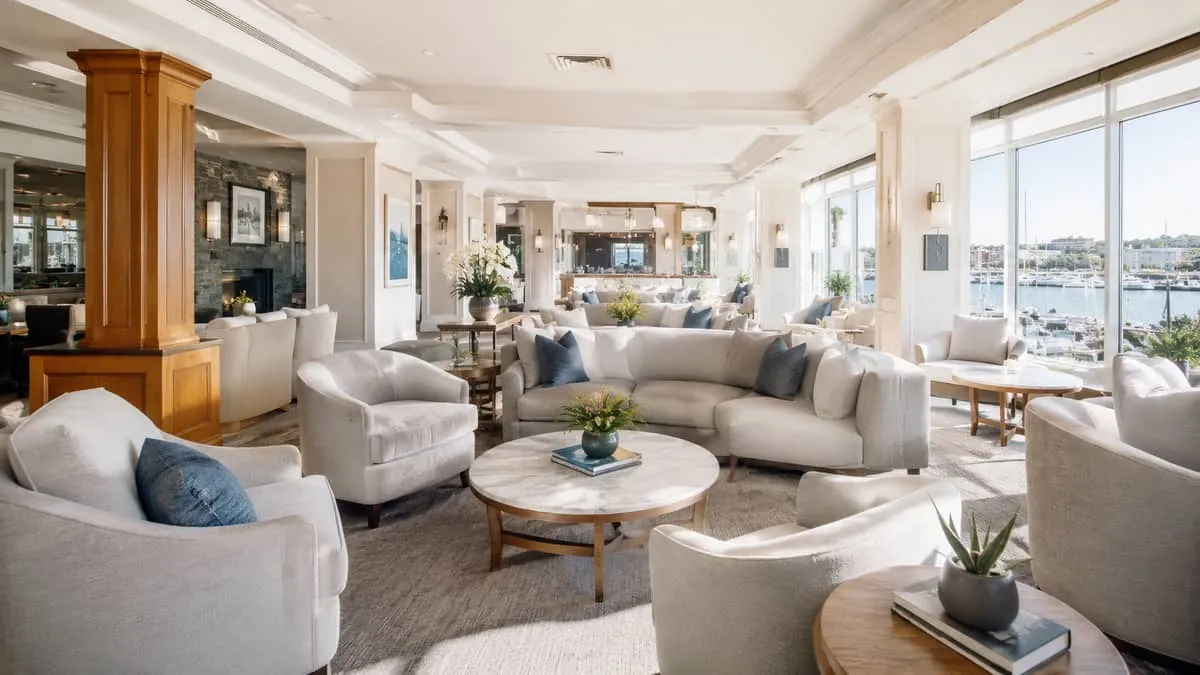
The Empress sets a gravitational pull on Victoria's hospitality market. Operators in surrounding blocks , the boutique hotels on Humboldt Street, the lounges along Wharf Street, the bars in Old Town that capture the Empress overflow , are implicitly competing with a property that has been defining Victoria's hospitality aesthetic since 1908. That is not a pressure to copy the Empress, but it does mean your lounge cannot look cheap relative to what guests just walked out of.
What the Empress-adjacent market actually demands from lounge furniture is a specific combination: visual weight without bulk, traditional silhouettes with modern durability specs underneath. A deep-buttoned Chesterfield-style club chair reads perfectly in this context. So does a tufted leather banquette with a solid wood cap rail. The problem is that many operators source furniture that looks right but is built to residential standards , and it fails quickly under commercial use.
The specification underneath the aesthetic matters just as much as the look. For upholstered lounge seating aimed at the Empress-adjacent market:
Foam density: Residential furniture uses 1.5 to 1.8 pound per cubic foot foam. Contract seating should sit at 1.8 pounds or higher for seats and 1.5 or higher for backs. In a busy hotel lounge or bar where guests are sitting for extended periods, under-density foam bottoms out within a year and the furniture looks shabby before its time.
Double-rub count: For fabric-upholstered pieces in a high-traffic lounge, specify above 100,000 double rubs. Genuine leather in this aesthetic context is also a valid option and handles cleaning protocols well , look for full-grain or corrected-grain hides rather than bonded leather, which delaminate under regular cleaning.
Frame joinery: Kiln-dried hardwood frames with corner blocking, glued and stapled joints, and screwed connections at stress points. The Chesterfield look requires a frame that can take the stress of guests dropping into deeply buttoned seats repeatedly without the structure racking.
The afternoon tea culture Victoria is known for extends into its lounge environments in a specific way: guests in this market sit longer than average. A table and two club chairs at a window seat in a Humboldt Street hotel bar might turn only twice in an afternoon while a comparable seat in a Vancouver sports bar turns six times. Furniture that holds its comfort and appearance across those longer dwell times is essential. That means density and construction specs matter more here than in high-churn bar environments.
Victoria's Pub Culture and the Victorian Aesthetic
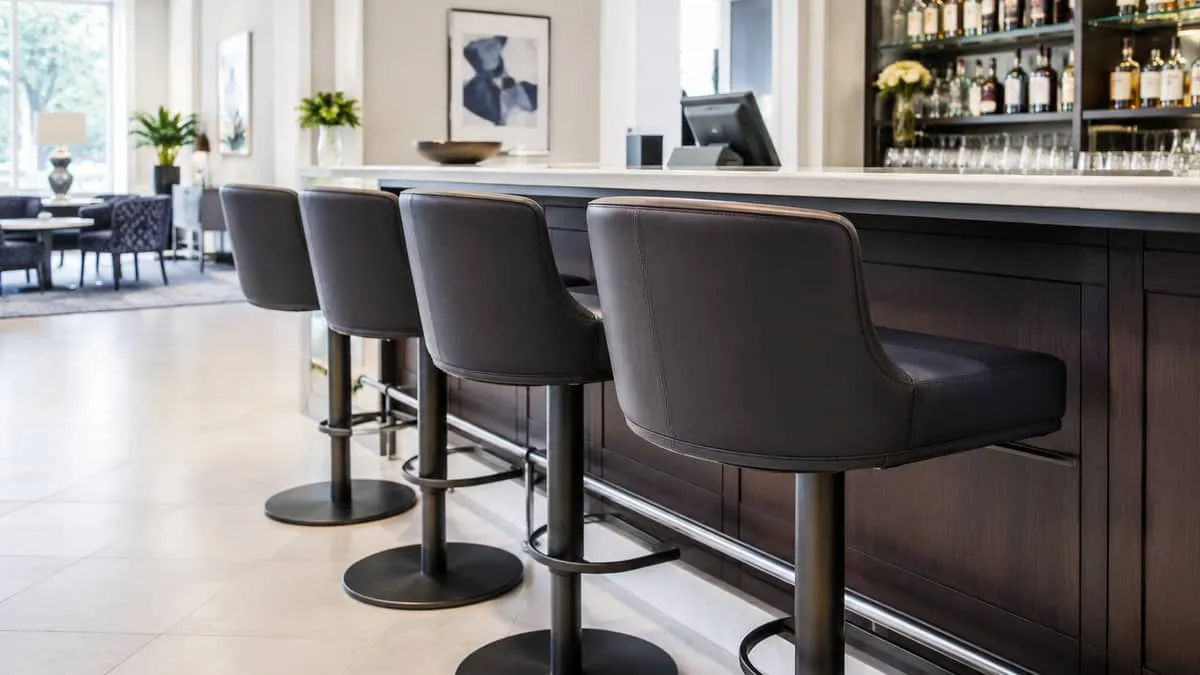
Victoria has more British-style pubs per capita than any other Canadian city, and the aesthetic expectations that come with that are real. Operators running traditional pubs , particularly along Douglas Street, in James Bay, or in the established pub corridors around Broad Street , are sourcing furniture that signals a specific character. The wrong barstool in a pub that has been operating since the 1970s is immediately visible to regulars.
The furniture elements that define the Victorian pub aesthetic in contract terms:
High-back settle seating: The fixed or semi-fixed bench seating with high backs that creates booth-like enclosures is a defining element of the British pub format. In commercial application, these are typically built to the wall with upholstered seats and backs on a structural timber frame. The upholstery needs to handle the same spill and cleaning demands as any bar seating, with the added challenge that settle seating often cannot be easily removed for deep cleaning.
Turned wood detail: Bar stools and side chairs in Victorian pub settings often feature turned spindle backs or legs. This detail signals authenticity but also creates cleaning complexity. Specify finishes that can be wiped without getting into grain, or design for easy removal of upholstered elements.
Brass and dark metal hardware: Bar rail hardware, footrest fittings, and table base details in brass or dark-finished steel are period-correct and commercially available. The brass-look option is often powder-coated steel in practice, which is more durable than real brass in a bar environment.
Solid wood table tops: Unlike waterfront patios, traditional pubs in covered, climate-controlled interiors can use solid wood table tops with more confidence. The key is a finish that handles glass rings and regular cleaning , a hardwax oil or catalyzed lacquer rather than a simple oil finish that requires constant maintenance.
Patio Season Is Long: Outdoor Furniture Specs for Victoria
Victoria's climate is the mildest in Canada, and that changes the outdoor furniture calculation significantly. Where a Vancouver or Calgary operator might get a four-month outdoor season, Victoria operators regularly run patios from March into November. A Government Street cafe patio or a causeway restaurant might see eight to nine months of meaningful outdoor use. The economics of outdoor furniture investment are completely different here.
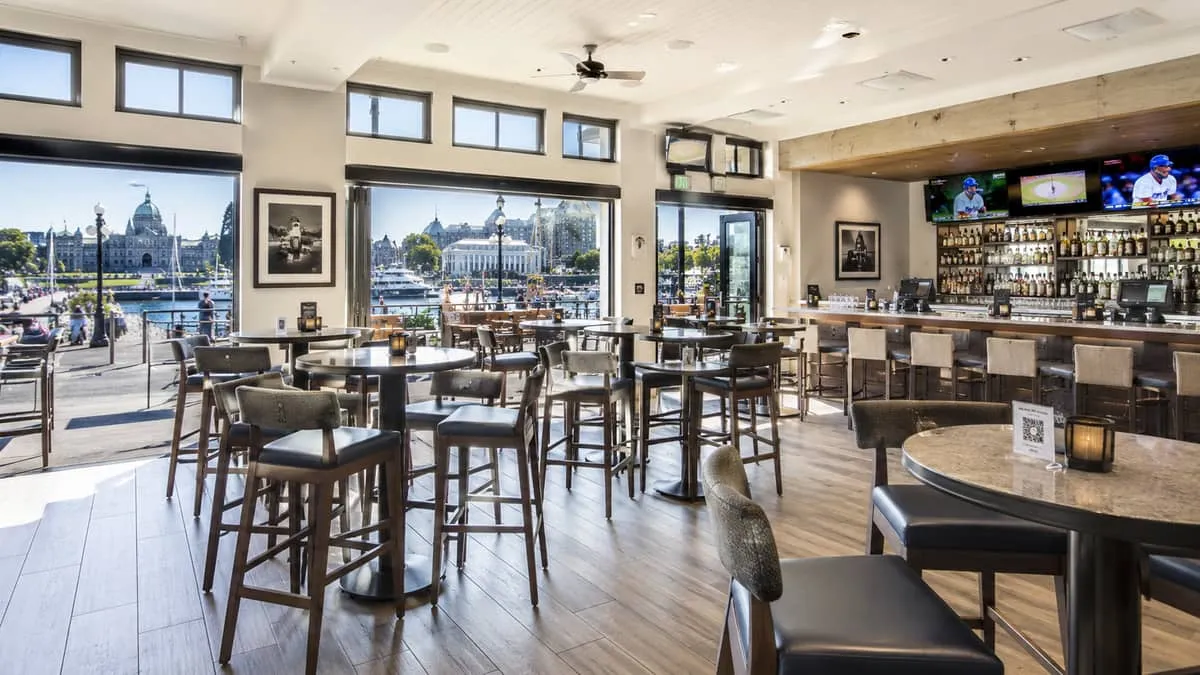
That long season means outdoor furniture needs to be specified for sustained commercial use, not seasonal deployment. The pieces that work:
Aluminum frames: Rust is eliminated, weight is manageable for staff rearranging for events, and powder-coat finishes hold colour across multiple seasons without the chipping and flaking issues that steel can develop.
Teak or eucalyptus solid wood: For operators who want a natural wood look on a patio, FSC-certified teak and eucalyptus are the commercial-grade choices. They weather to silver-grey without treatment or hold their colour with periodic oiling , and they resist the moisture cycling that Victoria's marine climate creates.
All-weather wicker over aluminum: The wicker-look outdoor seating that has become standard in hospitality patios is durable when it is built over a welded aluminum frame. The failure mode in cheap versions is the frame, not the wicker. Specify welded aluminum frames with UV-stabilized resin wicker.
Stack-ability: With eight to nine months of patio season, stack-ability matters less than in a shorter-season market. But for event-format venues on the causeway or at Fisherman's Wharf, the ability to reconfigure quickly still matters operationally.
Ordering for a Victoria Timeline
Victoria's geographic position creates real procurement considerations. Freight from the Lower Mainland adds time and cost, and the seasonal nature of the Victoria hospitality market creates hard deadlines. An operator who needs to be fully set up for the May long weekend does not have room for a six-week delay in a late March order.
Work with suppliers who understand BC hospitality timelines and can commit to delivery windows with specificity. The questions to ask before placing an order at volume:
What is the actual lead time from order to delivery to Victoria , not to the Lower Mainland? What is the freight arrangement, and who is responsible for damage in transit? Can replacement parts , seat cushions, footrest rings, base components , be sourced within two to three weeks if something fails mid-season? Is there a warranty that covers commercial use, not residential, and what is the claim process?
A supplier relationship that works for a Victoria hospitality operator means a supplier who can answer those questions clearly. Contract-grade furniture carries structural warranties of five years minimum as an industry standard. A supplier who hedges on warranty terms for commercial use is telling you something about the product's actual build quality.
Victoria's hospitality operators are running some of the most visible and aesthetically demanding venues in Western Canada. The furniture in those spaces is doing real work , carrying the look of a heritage building, surviving a compressed and brutal tourist season, and holding up to the expectations of guests who have come a long way and are paying accordingly. Getting the specification right from the start is significantly less expensive than replacing furniture that fails before its time.
Ready to spec bar and lounge furniture for your Victoria project? Send us the details and we will price it around your requirements. Request a quote to start.