
Read the actual property improvement plan with the current brand standards and the people responsible for the project. Identify named deficiencies, required outcomes, approvals and deadlines. Consequences and available options depend on the property's documents; do not infer them from a generic PIP description.
What furniture does a PIP actually require you to replace?
Separate furniture, construction, fixtures and soft-goods work, while identifying shared dependencies such as electrical work, mounting and accessibility. Assign responsibility for each line from the actual plan. The hotel furniture page can help organize categories for a brief; its concept imagery is not a documented inventory line.
The confusion happens most often around items that straddle categories. A vanity, for instance, might be listed once under a bathroom renovation line and again implicitly under furniture if it is freestanding rather than built in. Read every line item against your actual room inventory before you accept the brand's characterization of what is furniture versus construction, because the PIP letter is written from a standard template and does not always match your property's specific configuration.
Reading the letter line by line before you price anything
Before requesting a single quote, build a line by line translation of the letter into a room by room scope. List every furniture category named, the required completion standard cited (often a specific brand prototype or generation), and the deadline attached to each line. Some PIPs bundle everything under one deadline. Others stagger requirements, with furniture due on a different timeline than construction items. Missing a staggered deadline because you were tracking the letter as one undifferentiated document is a preventable and common mistake.
Negotiating scope and timeline with the brand
Ask the brand representative whether clarification, an alternative scope or revised timing is permitted. Support the request with current condition records, drawings and product documentation. A sound piece or maintenance history does not establish entitlement to deferral; retain the written decision.
Timeline negotiation works best when you come with a credible plan already in hand, not a request for more time with no plan behind it. A furniture supplier quote with a realistic production and freight timeline, even before you have finalized every detail, gives your brand rep something concrete to evaluate against the deadline they are enforcing.
Sequencing the buy so rooms come back online in blocks
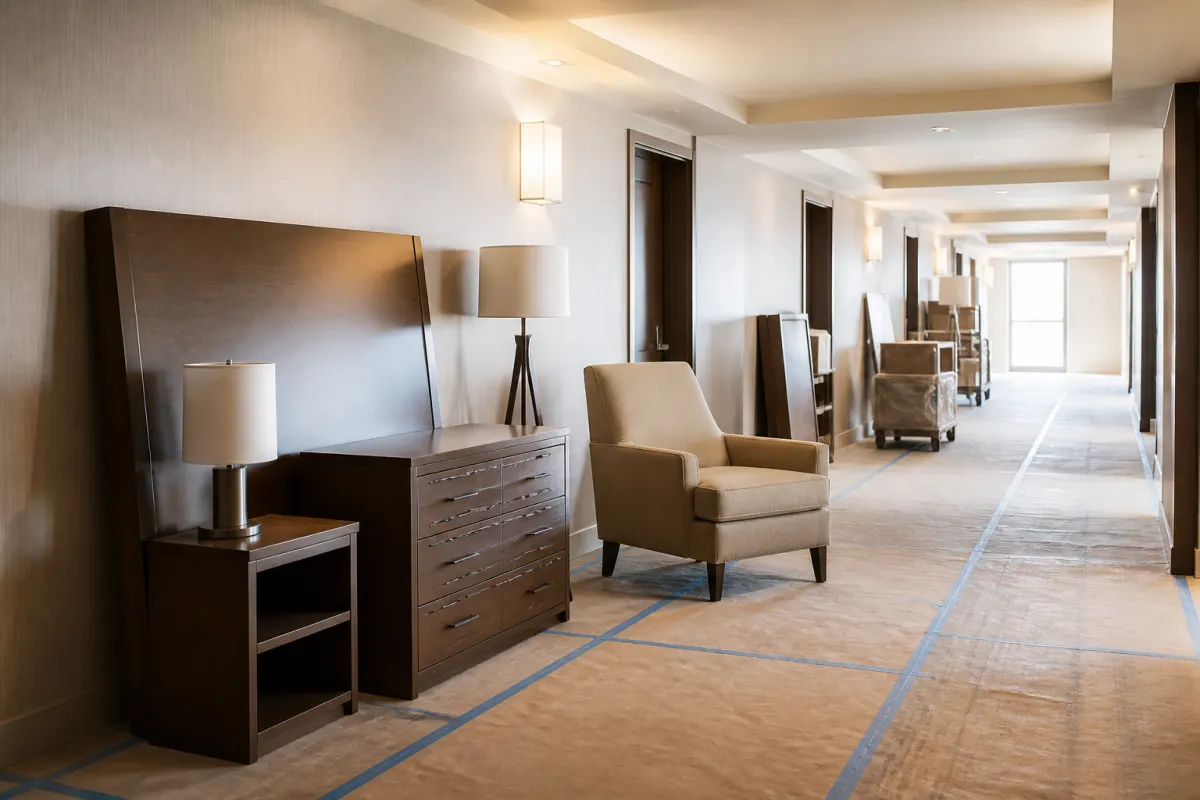
Evaluate a room-block sequence with the contractor and operating team. Confirm whether continued operation is possible and what access and storage it requires; a floor-by-floor program is a planning option, not a universal property requirement.
Coordinate delivery scheduling against your renovation contractor's block sequence before you place the order, not after. A supplier who can stage and release inventory in blocks that match your renovation schedule prevents the common failure where furniture sits in a warehouse accruing storage costs while only two floors are actually ready to receive it. Our FF&E replacement cycles guide covers how different areas of a property wear and why a PIP driven furniture swap should still respect area specific replacement logic where the brand gives you room to.
Budgeting the furniture line qualitatively
Build an itemized budget from quantities, specifications, approvals, freight, storage and installation quotes. Ask suppliers to price schedule alternatives explicitly. Use the FF&E budget calculator for an initial scenario, then confirm actual custom-finish and expedited costs in quotes.
Where the plan includes dressers, browse dressers for design concepts and obtain the actual proposed edge, finish and hardware specification.
Getting the scope and timeline locked before you buy
Confirm scope and approvals before committing to an order. Request a quote with the PIP requirements, room count and contractor's proposed sequence so independent suppliers can price and explain phased-delivery options.
For general renovation phasing beyond what the PIP itself dictates, our hotel renovation furniture guide covers the broader project management side, and how hotels source furniture walks through the procurement discipline that keeps a PIP driven order on schedule.