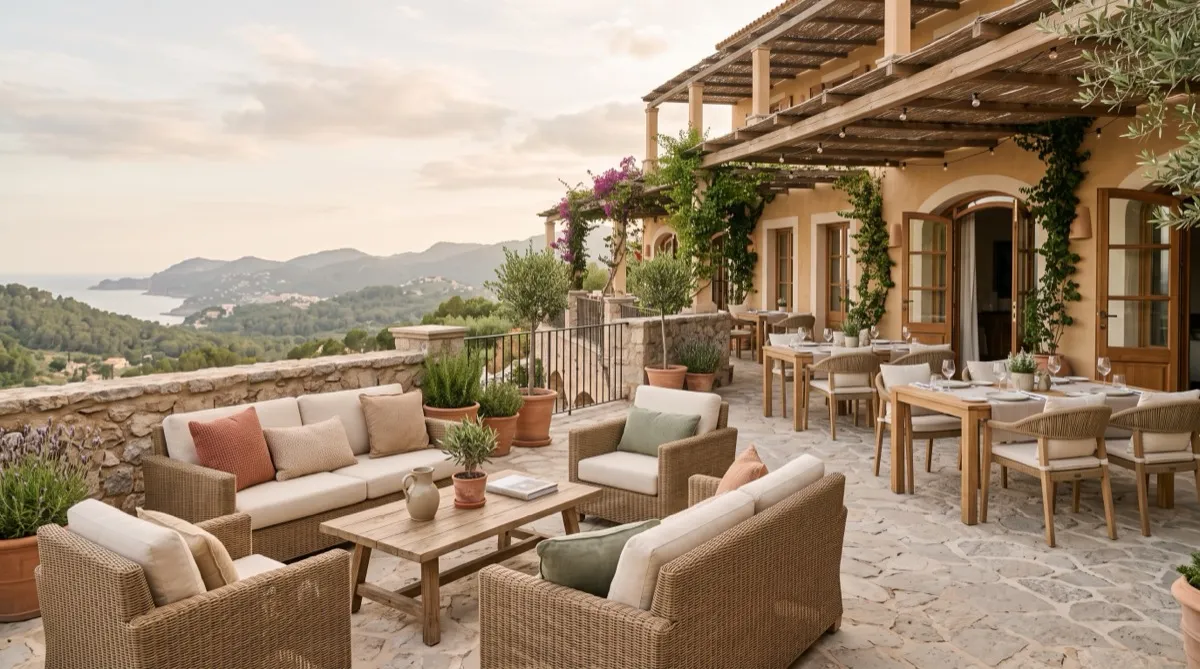
List the actual outdoor zones on your property: arrival seating, terraces, dining patios and any pool deck. Plan a coordinated appearance while documenting each zone's use, exposure and access requirements.
Arrival areas and entrance seating
Arrival furniture contributes to the first impression and may support waiting or other uses. Record its actual occupancy, cover and weather exposure rather than assuming this zone needs less durability.
Choose the arrangement and budget from the arrival area's footprint, circulation and intended use.
Terraces and courtyards
Terrace and courtyard seating serves a broader mix of uses than any other outdoor zone, casual guest seating, small meetings, a spot to work outside, overflow from the lobby bar. Because the use case is mixed, furniture here should skew toward flexibility: a combination of lounge seating and small tables that work for one person working alone or a small group meeting casually, rather than a single fixed configuration.
Specify the terrace's actual occupancy, cleaning, sun, rain and storage conditions. Aluminum, woven-look frames and performance cushions require product-specific outdoor-use and care documentation.
F&B patios
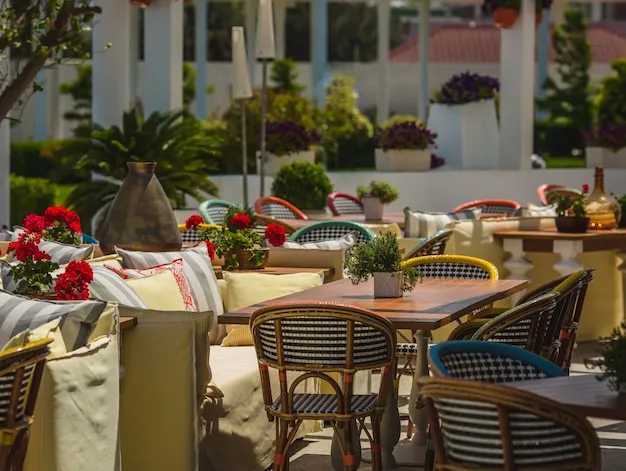
For dining patios, document covers, turnover, cleaning and weather exposure. Request actual frame, coating and upholstery specifications; commercial-grade and weather-rated labels alone do not establish performance.
This is also the zone where matched dining sets, ordered as a coordinated program rather than pieced together, make the most sense, since the F&B patio needs to look and function like a professional restaurant patio, not an extension of lobby lounge seating. Our commercial outdoor dining sets guide covers the decision between matched sets and mixed sourcing for this kind of high-use dining zone.
Pool decks
For pool decks, ask whether the actual frames, fasteners, slings and cushions permit the planned chlorine or saltwater, sunscreen and sun exposure. Aluminum does not form iron rust, but the complete assembly cannot be assumed corrosion-proof or suited to every pool environment.
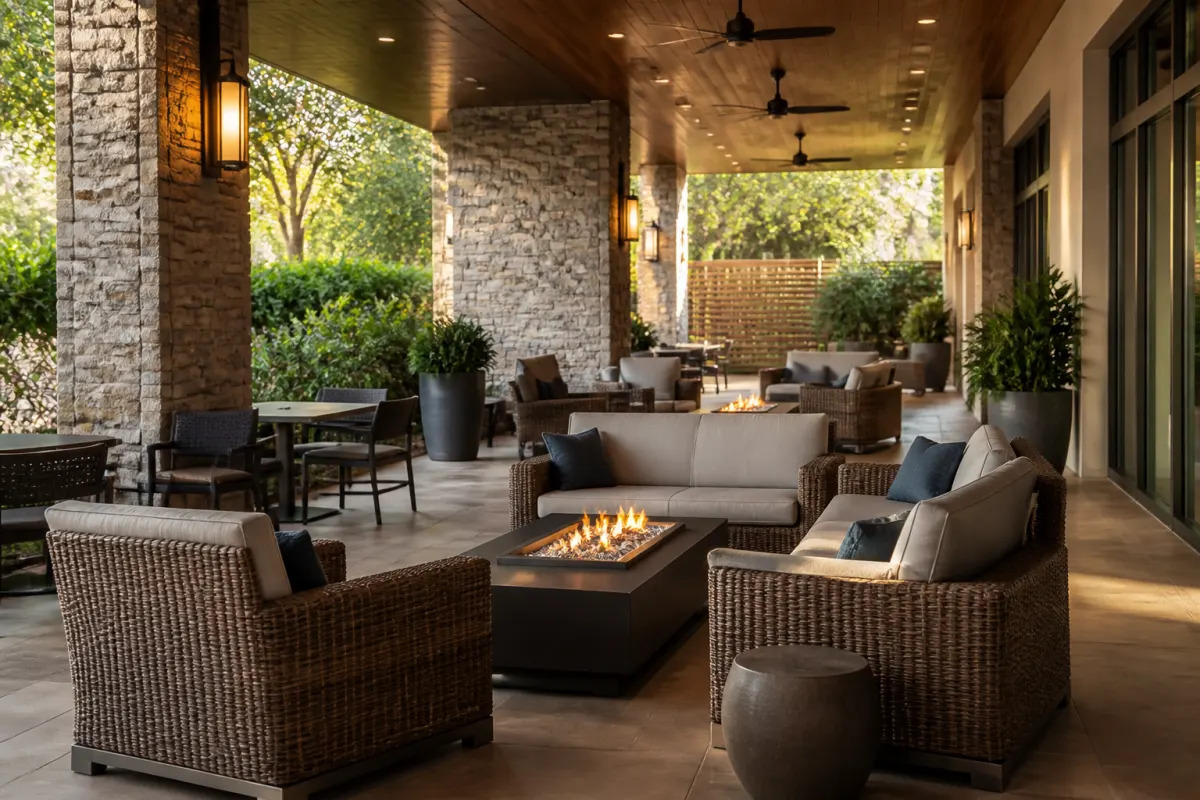
Use observed or forecast pool demand and the usable deck layout to compare peak and ordinary quantities. Check circulation, accessible use, shade and storage before adding pieces for peak weeks.
Coordinating one look across zones
The zones above have genuinely different durability and function requirements, but that does not mean they should look unrelated. The strongest hotel outdoor programs pick a consistent material language, a specific frame finish, a color palette, a design era, and apply it with appropriate variation across every zone. A guest moving from the arrival area to the terrace to the pool deck should experience one property, not four unrelated furniture decisions that happen to share a parking lot.
In practice this usually means choosing one or two frame finishes and a coordinated fabric or cushion palette that gets applied across all zones, with the specific piece selection (lounge chair versus dining chair versus chaise) varying by function while the material language stays constant.
Budgeting the full outdoor program
Price each zone from its documented quantities, exposure and handling requirements. Pool and dining areas may have different costs, but no fixed budget ranking or one-to-two-season failure prediction follows from their names.
Sourcing and timeline
List quantities, exposure, finish requirements and target dates by zone. Ask what is stocked or made to order and obtain separate approval, production, freight and installation dates; custom combinations have no universal ten to fourteen week window.
Related reading
Send us your property's zone breakdown and target seat counts and request a quote for a coordinated outdoor furniture program across every outdoor space.
Our take
If peak-demand quantities exceed off-peak use, confirm where surplus pieces can be stored and moved. Seasonal patterns vary by property, so check actual occupancy and the manufacturer's stacking and storage limits.
Storage check: Confirm seasonal quantities, storage footprint and handling requirements alongside the coordinated outdoor design.