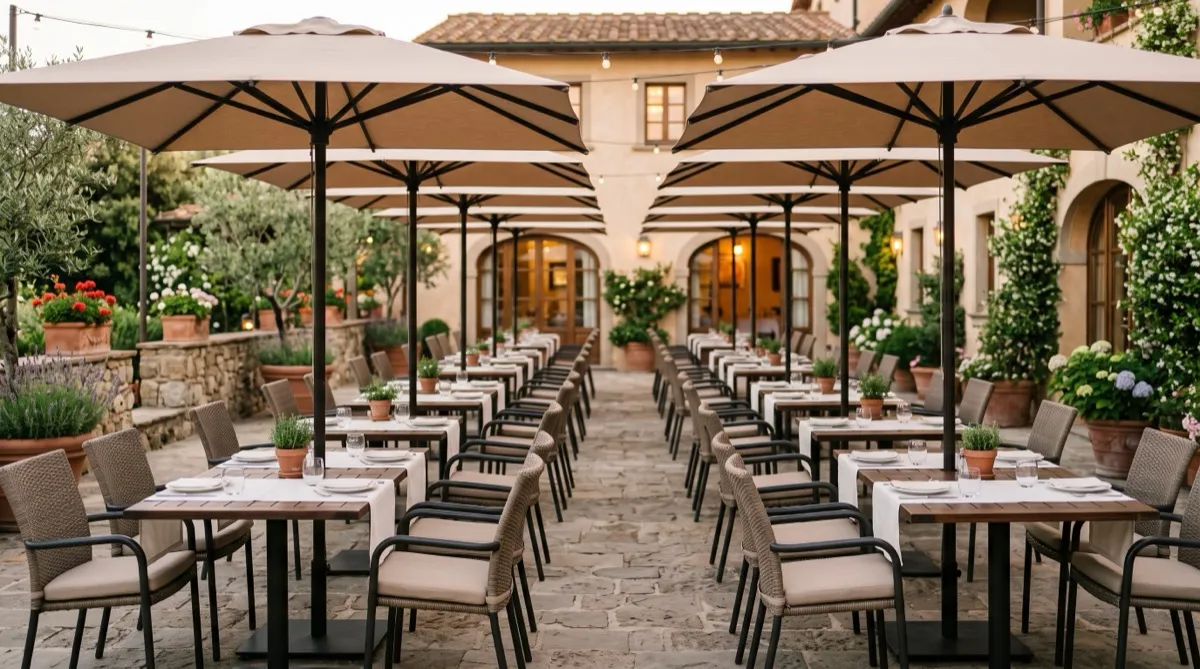
Outdoor dining programs get built one of two ways. Some operators buy a matched set, table and chairs specified together as one coordinated program, from a single line. Others build the patio piece by piece, sourcing tables from one place and chairs from another, mixing finishes and materials by zone. Both approaches work, but they solve different problems, and picking the wrong one for your situation creates either a mismatched patio or an unnecessary replacement bill down the road.
The case for matched sets
A matched dining set, ordered as a coordinated program from one supplier, gives you a common starting point for finishes and proportions. Confirm the table and seat heights, arm clearance, and chair spacing on the actual models before approving the combination. For a new patio build where the goal is a cohesive look with minimal design risk, ordering matched sets is the more predictable path.
Matched sets can simplify later ordering while the line and finish remain available. Record the model and finish codes, ask whether chairs can be purchased separately, and confirm the reorder terms. A coordinated program can still be discontinued, and new batches may differ from pieces that have weathered on the patio.
The tradeoff is flexibility. A matched set locks you into one look across the whole patio, and if the concept evolves or a zone needs a different function (a lounge corner versus a dining zone versus a bar-adjacent high-top area) a single matched set does not naturally accommodate that variation.
The case for mixing pieces
Mixing tables and chairs by source gives an operator control over each component independently. You can pair a more premium table top with a value-tier base, or select chairs optimized for stacking in one zone and lounge-style pieces in another, all without being locked into one supplier's full coordinated line. For patios with distinct zones (a main dining area, a bar-adjacent high-top zone, a lounge corner) mixing lets each zone get furniture actually suited to its function rather than compromising toward a single set design that has to work everywhere.
Mixing also gives more control over replacement timing. If chairs wear faster than tables (which is common, since chairs take more direct contact and movement) mixed sourcing lets you replace just the worn category without touching furniture that is still performing well.
The tradeoff is design risk. Mixing pieces from different sources means the buyer is responsible for making sure heights, proportions, and finishes actually work together, and a patio assembled from mismatched pieces looks unplanned even if each individual piece is good quality.
Replacement risk over the life of the program
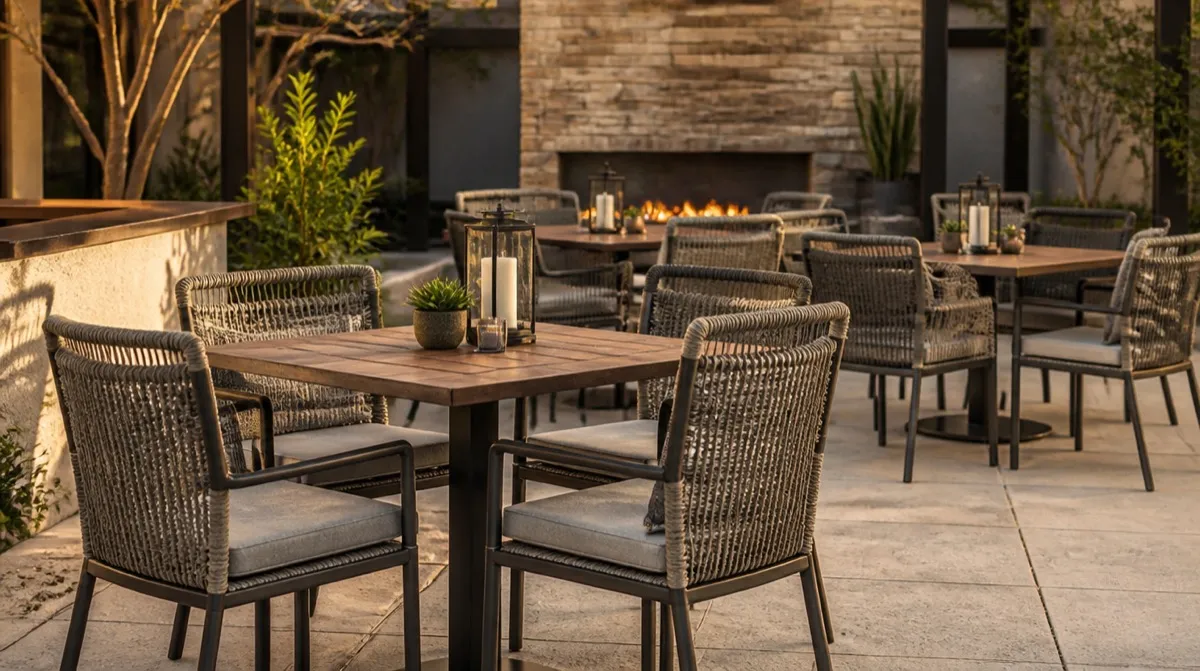
This is where the decision has real financial consequences beyond the initial order. Chairs, tables, and umbrellas do not wear at the same rate. Chairs see the most physical contact and typically need replacement or refresh before tables do. If your program is a fully matched set from one line, replacing worn chairs several years into the program means matching a finish that may have changed or been discontinued, which can force replacing the whole set rather than just the worn component.
Mixed sourcing can give more freedom to replace one category without an exact finish match. Define the amount of variation the design allows, then approve new samples against retained pieces. New dimensions, colors, and availability can still affect the replacement plan.
If you are ordering matched sets, plan for this ahead of time. Order a modest reserve of chairs beyond your immediate need specifically to cover attrition over the following few years, so you have original-batch pieces available. Compare reserve cost, storage, and expected losses; stored and weathered pieces may still look different.
Set math for actual cover counts

Whichever approach you take, size the order against real cover counts, not table counts. A four-top table needs four chairs, but patios rarely run at 100 percent of nominal capacity during every service, and a 5-to-10-percent reserve above the table-to-chair ratio is one illustrative inventory assumption for breakage, events, or repairs. Adjust it to loss history, storage capacity, and actual event needs. Running the set math against your actual peak cover count, rather than just the number of tables on the floor plan, avoids a mid-season scramble for a handful of extra chairs.
Which approach fits your patio
New builds with a single unified dining zone and a strong design point of view generally do better with matched sets, provided the actual models, clearances, and physical finish samples are approved together. Multi-zone patios, or programs where different areas serve genuinely different functions, generally do better mixing components by zone, since a single matched set rarely serves a bar-adjacent high-top and a quiet dining corner equally well. Our patio layout capacity guide walks through zoning a patio by function before you decide how to source each zone's furniture.
Related reading
- Restaurant patio tables guide
- Wicker vs metal commercial patio furniture
- Teak vs aluminum outdoor furniture
Send us your patio layout and zone breakdown and request a quote for a matched set proposal or a mixed component plan sized to your program.