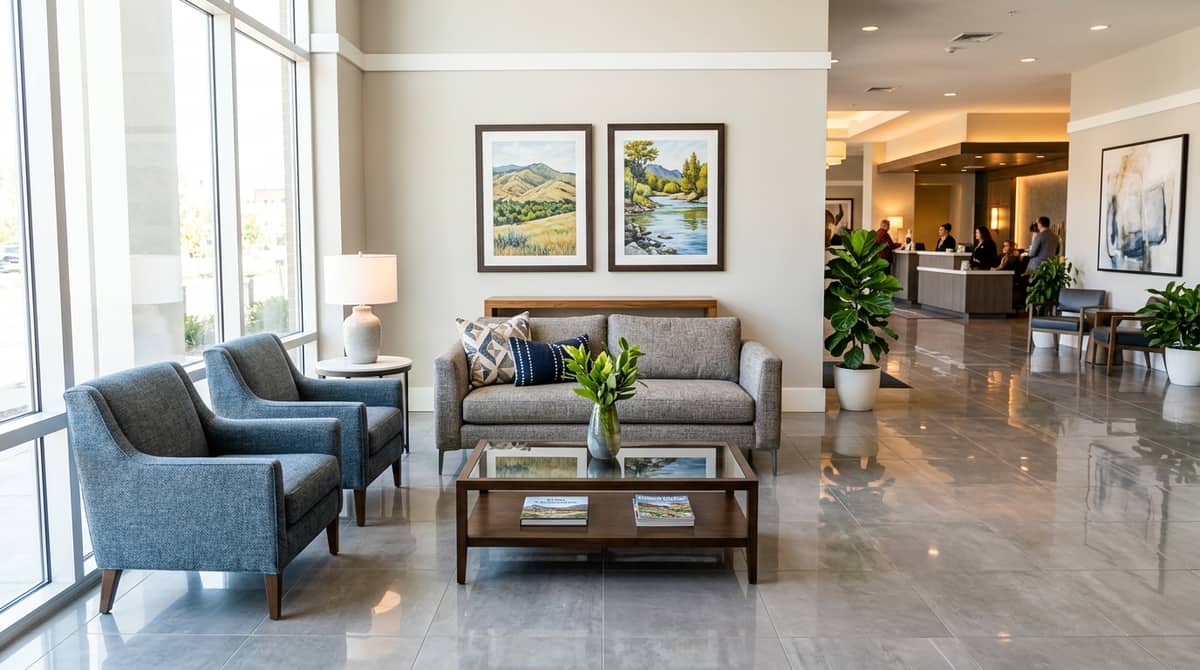
A delegate walks out of a general session at the OKC Convention Center, crosses Scissortail Park under the afternoon sun, and checks into a hotel a few blocks away in Bricktown. They have spent two days in a hall packed with booth traffic and folding tables of a different kind entirely, surrounded by convention carpet and recycled air. Now they want somewhere that feels like a room, not a hallway. In the first fifteen seconds in your lobby, before the front desk agent has said a word, your furniture answers the question of whether they made a good choice.
That moment carries real weight in Oklahoma City's hotel market. The city has built a downtown hospitality base around a genuinely diverse calendar, conventions and corporate meetings downtown, Thunder game nights that fill rooms across the metro, and the livestock and horse show circuit at State Fair Park that brings in a guest base unlike almost any other American city. Your lobby furniture is working across all of those segments at once, and how it holds up under that range of use is a business variable, not a decorating afterthought.
Oklahoma City's Market Segments Demand Different Things From the Same Room
Oklahoma City's hospitality market is genuinely split in ways that matter for furniture specification. The properties clustered around the OKC Convention Center, Paycom Center, and Bricktown face a different durability challenge than the boutique hotels taking shape in Automobile Alley and Midtown. Both need contract-grade construction, but the design brief underneath that requirement is different.
Downtown and Bricktown properties serving the convention center, Paycom Center event nights, and the ballpark district are managing lobby traffic at a volume that exposes weak specification fast. A large headquarters hotel can turn its entire guest count through the lobby twice during a single Thunder game-night check-out rush, and again during a stock show weekend when trucks and trailers fill the surrounding lots and guests move through in western wear and work boots. At that pace, upholstery fabric, frame joinery, and glide hardware are in a race against time. Furniture that looked sharp at opening will show pilling, seam separation, and loose frames within a year or two if it was not built for this level of use. Kiln-dried hardwood frames, high-resilience commercial foam, and performance textiles rated above 100,000 double rubs are the baseline here, not an upgrade.
Automobile Alley and the Midtown district are building a different kind of hotel experience. The boutique and lifestyle properties opening along the historic auto row corridor and near the Innovation District are competing on design credibility, drawing guests who have already looked at the photos and chosen the property for what it signals. Lobby furniture in that context is part of a curated story, and pieces that read as catalog-standard undercut the argument the property is making about itself. Durability is still non-negotiable, but the design judgment behind the specification matters just as much as the rub count.
What Oklahoma's Climate Actually Does to Lobby Furniture
Oklahoma's weather is a real durability variable that operators sometimes underweight. Summers regularly push past 95 degrees with high humidity, winters bring hard cold snaps and ice, and the state's notorious spring wind and severe weather season means guests are frequently walking in soaked, wind-battered, or tracking in dust from a dry spell. Lobbies here are absorbing a wider swing of moisture and grit than most Southern or coastal markets see in a full year.
Performance textile specification matters accordingly. Upholstery that is not rated for moisture and soil resistance shows degradation fastest in the seat cushion and on chair arms, exactly where hands, bags, and the occasional cowboy hat or wet coat make contact. Stain-resistant, cleanable upholstery is a baseline call for Oklahoma City hotel lobbies, not a premium add-on, particularly for properties near the fairgrounds where guests move through in outdoor work clothing during show season.
Frame construction matters just as much. Solid hardwood or steel frames with reinforced corner blocking and mechanical fasteners that can be re-tightened hold up against the expansion and contraction that Oklahoma's temperature and humidity swings put on wood joinery. Particleboard components absorb moisture and swell, loosening joints faster than operators expect. In a lobby where furniture gets pushed aside for a private meeting, cleared for a stock show reception, or rearranged for holiday programming, frame integrity under repeated movement is a practical requirement, not a nice-to-have.
Designing for the Arrival Experience in Oklahoma City's Signature Districts
The lobby arrival sequence is choreographed whether an operator plans it or not. Guests read the primary seating cluster first, then the front desk, then the path toward the elevators, and every piece in that sequence communicates something before staff ever say hello.
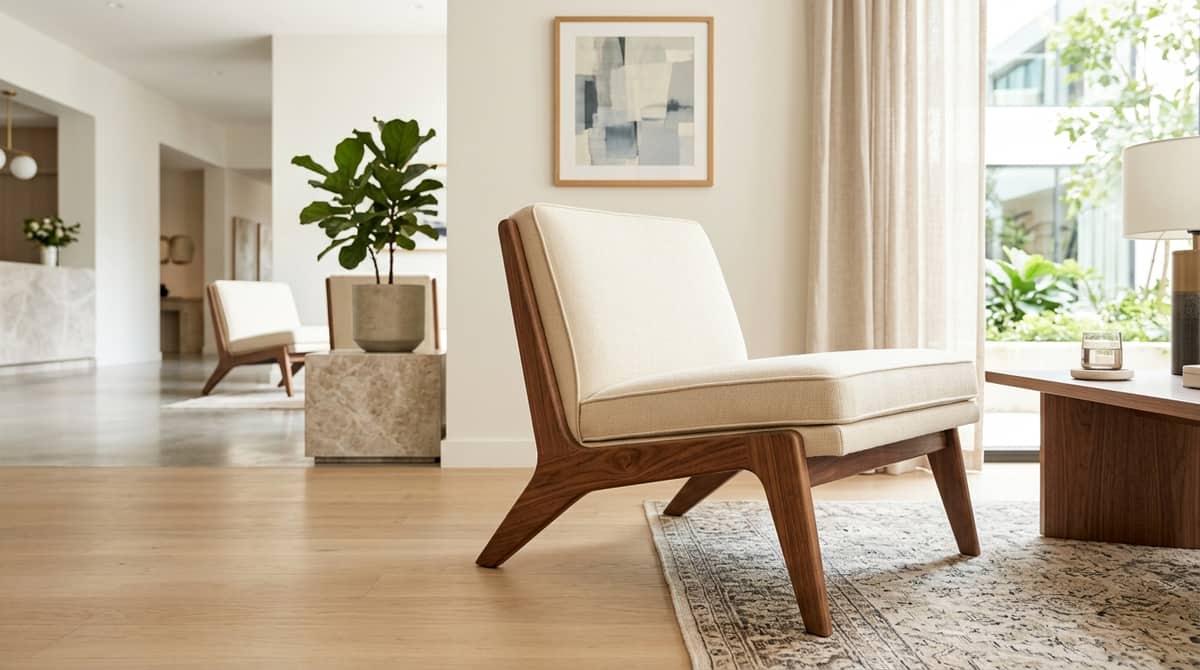
In Bricktown and the downtown convention core, guests are a mix of conventioneers, Thunder fans, and corporate travelers who have seen a lot of hotel lobbies elsewhere and notice when a property is trying too hard or not hard enough. Furniture that registers as right here has clean lines, upholstery that holds its shape after a full day of use, and a scale that fits the room without feeling like it was ordered to fill square footage. A well-scaled lounge chair in a durable neutral fabric, positioned to define a clear seating zone near the windows toward Scissortail Park, does the same quiet work as good lighting and an efficient check-in line.
Automobile Alley and Midtown properties are competing on a different register, closer to what guests expect from independent boutique hotels in larger design-forward markets. Low-profile lounge seating, tighter backs, wood or metal accents that reference the district's early-auto-row industrial character rather than a generic national-chain package, and side tables with real materiality all read as intentional. Furniture that looks like a standard commercial catalog pull reads as a mismatch against the rate and the neighborhood's design ambitions.
For properties near the fairgrounds and State Fair Park, the priority shifts again during major show weeks. Guests are arriving in groups, often with gear and equipment staging in tow, and the lobby needs seating clusters that support quick orientation and easy movement rather than a formal, static arrangement. Chairs that are simple to enter and exit, and configurations that can be reset quickly between a busy check-in wave and a quiet afternoon, matter more here than in a boutique property downtown.
Procurement Timing and the Oklahoma City Renovation Cycle
Oklahoma City's hotel development has kept a steady pace, with new builds and conversions concentrated downtown, along Automobile Alley, and near the airport hotel corridor, alongside a wave of renovation work at legacy properties updating common areas to compete with newer stock. That activity creates real scheduling pressure around furniture procurement.
Contract-grade furniture is built to order, and standard commercial pieces typically run eight to twelve weeks lead time from confirmed specification. Custom or semi-custom work, COM fabric programs, frame modifications, non-catalog finishes, adds coordination time on top of that. Projects that leave furniture decisions until late in a construction or renovation schedule tend to hit the same wall: the pieces that arrive on time are not the right pieces, and the right pieces do not arrive in time.
If a property has a hard opening tied to a major stock show, a State Fair booking wave, or a Thunder playoff run driving advance reservations, those lead times need to be built into the project timeline from day one. The cost of opening with placeholder furniture and replacing it within the first year, in guest review scores, in staff time managing complaints, and in a second capital outlay, is higher than the cost of getting the specification right the first time.
Working with a supplier who commits to clear lead times, has hospitality project experience at the right rate category and volume, and can support COM programs for properties with a specific material story in mind, is worth more than a marginally lower unit price from a vendor treating a hotel lobby order like a retail transaction. Oklahoma City's market is competitive enough that the gap between lobby furniture that confirms a guest's booking decision and furniture that introduces doubt is a revenue variable, not just an aesthetic one.