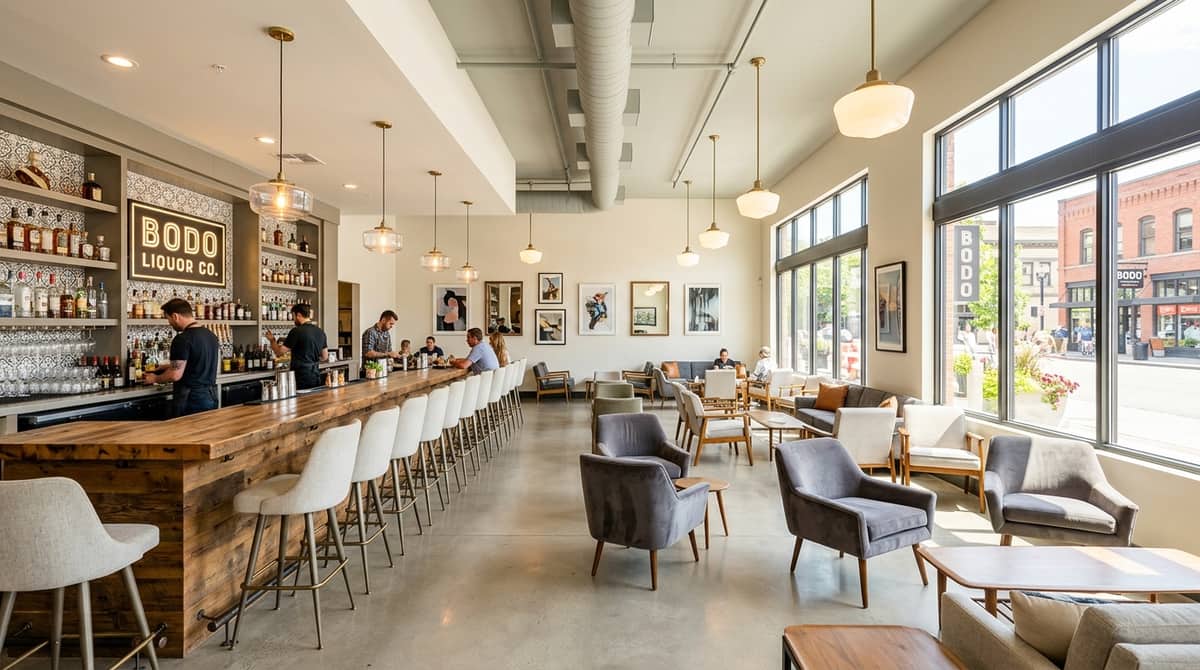
Oklahoma City's bar and lounge market has grown up fast. Bricktown's canal-front entertainment district pulls in Thunder game crowds, concertgoers heading to Paycom Center, and convention traffic from the Oklahoma City Convention Center, all converging on the same few blocks most nights of the week. A few miles north, Midtown, Automobile Alley, and the Uptown 23rd corridor have built a genuinely design-conscious cocktail scene that rivals anything in the region. Sourcing bar lounge furniture Oklahoma City operators can depend on means understanding both contexts, because a stool that survives a sold-out Thunder night in Bricktown is not the same stool that belongs in a curated Midtown wine bar.
Bricktown and the Convention Corridor: Built for Volume
Bricktown is the engine of Oklahoma City's nightlife economy. The canal, the ballpark, Paycom Center, and the Convention Center all sit within walking distance of each other, and on a night with a Thunder game or a major convention group in town, the bars along Lower Bricktown and Sheridan Avenue are running at a pace that most neighborhood venues never see. Furniture here needs to be treated as infrastructure first and design second.
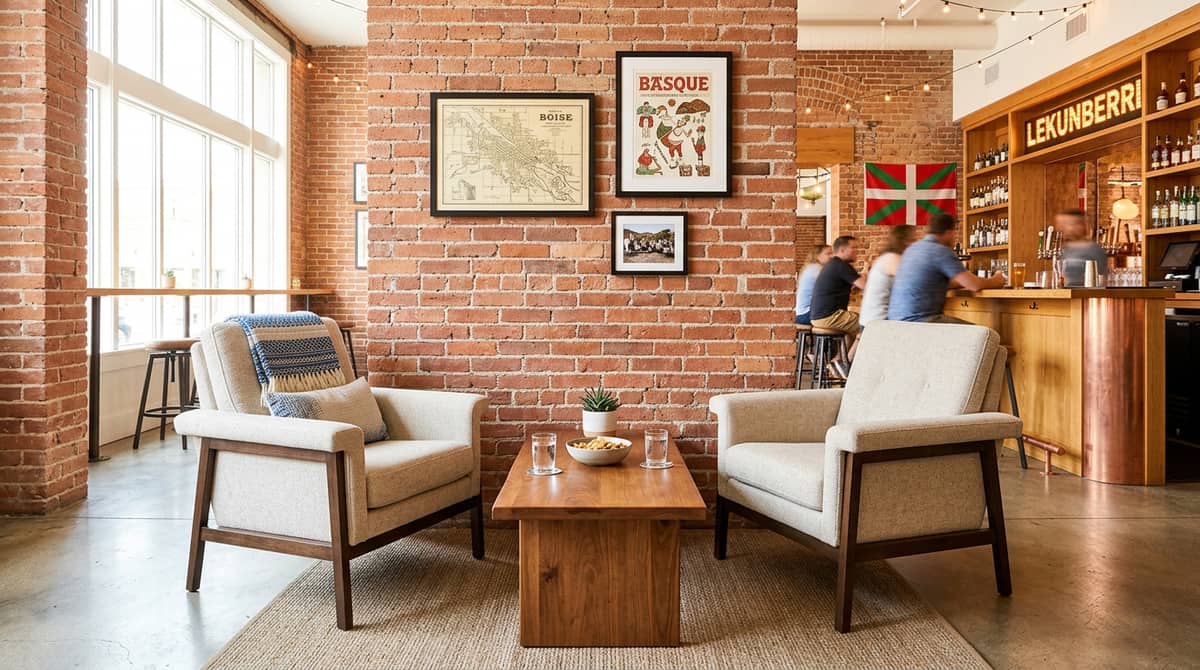
The specification priorities for this corridor are structural weight, weld quality, and fast replaceability. Barstool frames should be minimum 16-gauge steel on every structural member, with fully welded joints at the footrest and at each leg-to-seat connection. Bolted-frame stools loosen quickly under the stress of hundreds of guests sitting, shifting, and standing throughout a single event night, and a Thunder playoff run or a busy convention week will expose that weakness within a season. Ask your supplier for weld documentation before ordering in volume. Any established contract furniture supplier should be able to provide it without hesitation.
Solid bar stock footrests matter as much here as frame gauge does. Hollow tube footrests dent and work loose under sustained foot traffic, and a Bricktown venue running a full slate of Thunder home games plus concert nights at Paycom Center will put more cycles on a footrest in one season than a quiet suburban bar sees in three. Replaceability is the other piece operators underestimate. On a sold-out night with 400 to 500 covers, individual stools will fail and need to be swapped without disrupting service. Specify a primary collection your supplier keeps in stock rather than one that ships only made to order, so replacement barstools in a matching finish are a next-month order rather than an eight-week wait.
Table bases in this district should carry commercial-grade nylon or felt glides rather than plastic caps. Bricktown's mix of brick sidewalk patios, canal-side decks, and repurposed warehouse floors means tables get repositioned constantly, and plastic glide caps wear through fast enough to start scarring floors within a single busy season.
Midtown, Automobile Alley, and Uptown 23rd: Design Sets the Bar
North of downtown, the Midtown district and its Automobile Alley corridor, along with the Uptown 23rd strip running past the Plaza District, represent Oklahoma City's most design-literate hospitality market. These are the blocks where independent cocktail bars and wine bars are competing on atmosphere and identity, not just seating count. A new cocktail lounge opening on Automobile Alley in 2026 is thinking about how the room photographs and how it reads on a first visit, and the furniture carries a lot of that weight.
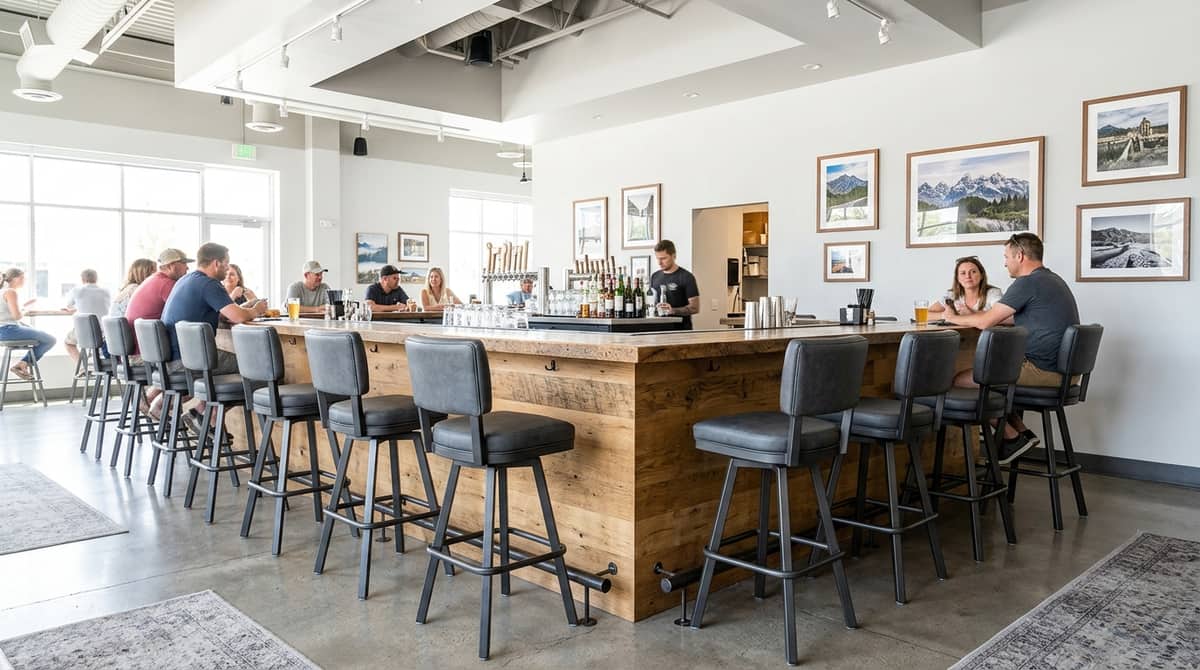
Current preferences in this corridor lean toward curved lounge silhouettes with generous cushioning, warm-toned upholstery in rust, olive, camel, or deep brown, and mixed-material tables that pair blackened steel or brass with reclaimed wood or stone. The all-black industrial look that carried Automobile Alley's early build-outs is fading as operators push toward something that feels more considered. A COM program (custom order material) through your contract furniture supplier is worth raising early in these projects. It lets a designer specify proprietary fabric on a commercially proven, contract-rated frame, which is how independent Midtown and Uptown 23rd venues get a bespoke look without giving up the structural rating a working bar requires. That conversation needs to happen before the design direction is locked, not after the frames are already ordered.
Seat height is a recurring problem on new Oklahoma City builds, particularly in adaptive-reuse spaces along Automobile Alley where a warehouse shell is being converted into a bar for the first time. Confirm your actual counter height before ordering. A standard bar-height counter runs 42 inches and pairs with a 28 to 30 inch seat height. A counter-height surface at 36 inches needs a stool in the 24 to 26 inch range. Getting this wrong by even two inches makes every seat at that counter uncomfortable, and it is not a fix you can make after the furniture has shipped.
For patio and rooftop seating, which is increasingly common along Uptown 23rd and in the Plaza District given Oklahoma's long outdoor season, specify powder-coated aluminum frames with solution-dyed acrylic or commercial-grade outdoor vinyl upholstery. Standard interior fabric fades visibly under an Oklahoma summer within a single season, and the wind load this region sees means lightweight or poorly anchored patio furniture is a real liability, not just a comfort issue.
Sourcing Bar Lounge Furniture for Oklahoma City Projects
Oklahoma City's hospitality construction market tends to move in bursts tied to specific catalysts: a new hotel opening downtown, a restaurant group committing to an Automobile Alley build-out, or a Bricktown venue racing to open before a busy convention season. The standard commercial furniture lead time of 8 to 12 weeks for custom orders rarely lines up cleanly with a construction schedule that has already absorbed delays elsewhere.
The practical approach for most Oklahoma City bar and lounge projects is a blend of in-stock contract inventory for the core seating program and custom or COM orders for the accent pieces where design specificity matters most. Build your supplier relationships ahead of an active project. Know which vendors keep in-stock barstools in the finishes you use most, which offer realistic COM turnaround, and which can fulfill a partial replacement order on short notice when a piece fails mid-season.
Lead time transparency is the variable that determines whether your project opens on schedule. Get confirmed availability and delivery windows in writing before finalizing a specification. A verbal estimate is not a commitment, and in a market like Oklahoma City where opening timelines are frequently tied to a specific event date, a Thunder season opener, a convention booking, a festival weekend, the gap between a confirmed delivery window and an estimated one can determine whether the venue opens on time.
If you are planning a bar or lounge build anywhere in Oklahoma City, Bricktown, the Convention Center corridor, Midtown and Automobile Alley, Uptown 23rd, or the Plaza District, request a specification consultation from your supplier before your layout is finalized. It surfaces seat height mismatches, material incompatibilities, and clearance issues while they are still cheap to fix on paper.