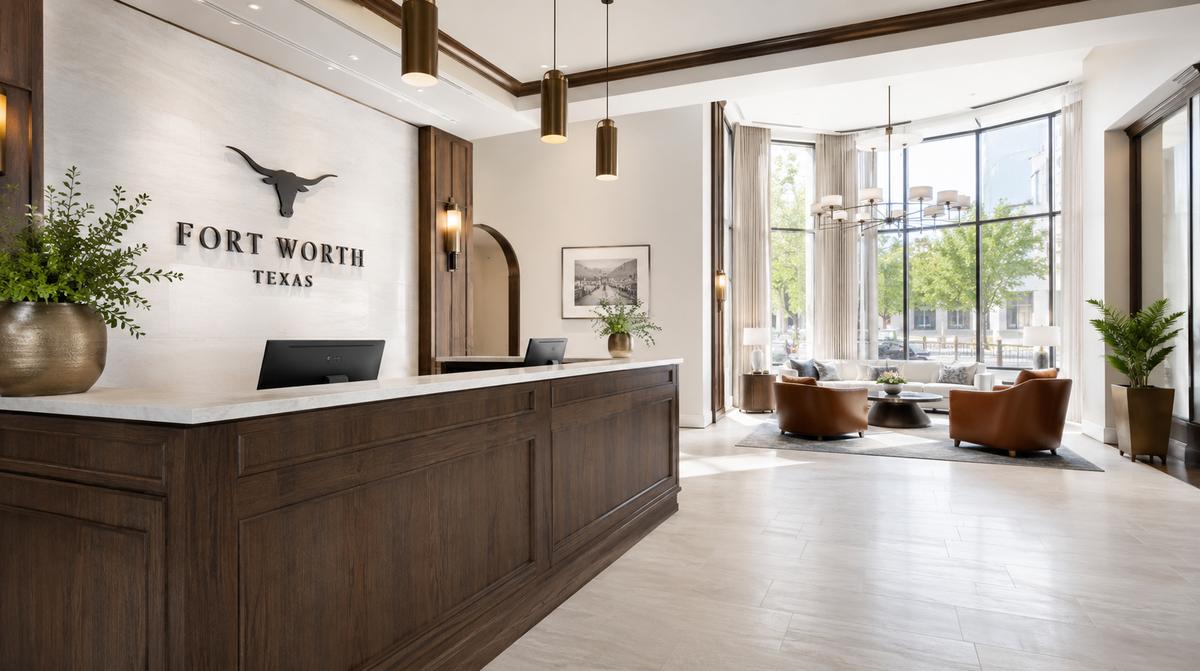
A traveling sales rep checks out of a Manchester hotel after a two-night stay tied to a trade show at the Expo Center, drops a bag at the front desk of a boutique property near the Millyard, and takes a call while waiting on the room. None of that happens at the front desk. It happens in the lobby, in a chair, at a side table, in the fifteen minutes before check-in even starts. Whatever that seating cluster communicates about the property, it communicates it before a single staff member says hello.
That moment carries real weight in Manchester's hotel market. The city anchors New Hampshire's largest metro area, runs a steady calendar of conventions and concerts through the SNHU Arena, and pulls a mix of business travelers tied to the Manchester-Boston Regional Airport corridor, university visitors connected to Southern New Hampshire University and UNH Manchester, and leisure guests heading north toward the White Mountains for foliage season or ski weekends. Your lobby furniture is doing real work across all of those guest types, and how it performs physically and visually is a business variable, not a decorating afterthought.
Manchester's Market Segments Demand Different Things From the Same Room
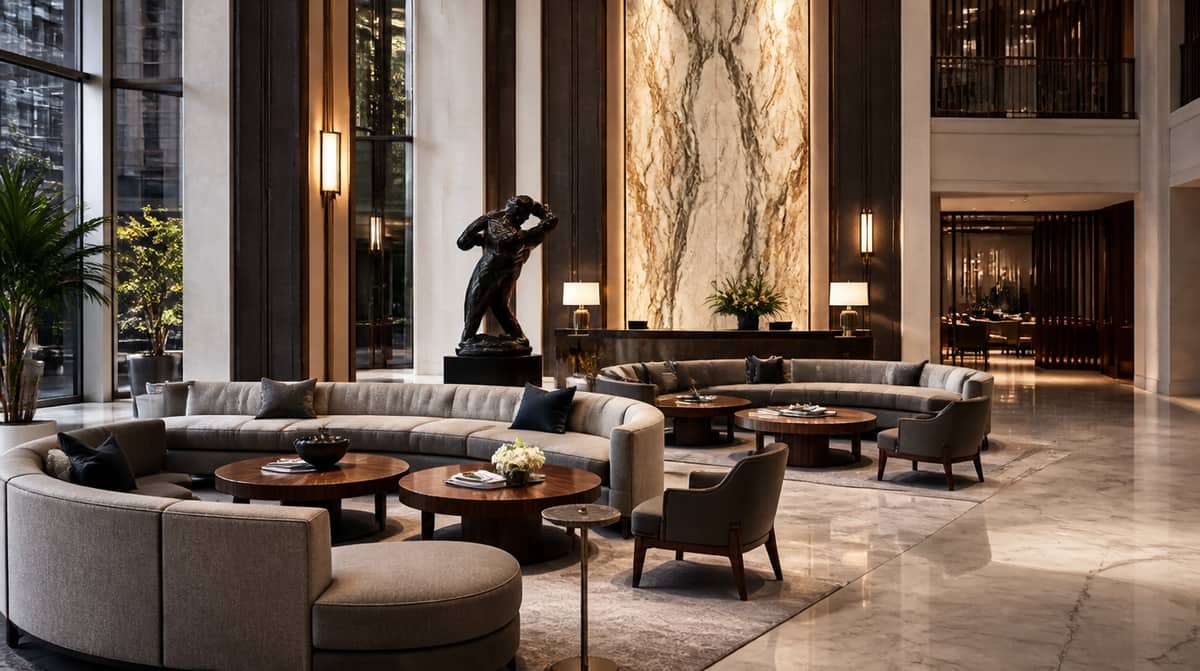
Manchester's hospitality market splits along lines that matter directly for furniture specification. Properties clustered around the SNHU Arena, the Radisson-anchored Expo Center, and the airport corridor along South Willow Street are managing a different kind of traffic than the boutique and historic-conversion hotels taking shape in the Millyard and along Elm Street downtown. Both segments need contract-grade construction under the surface, but the design brief on top of that is genuinely different.
Arena and expo-adjacent properties handle lobby traffic in bursts. A concert night at the SNHU Arena or a multi-day trade show at the Expo Center can move several hundred guests through a lobby in a compressed window, all arriving and departing close together rather than spread evenly across the day. That kind of concentrated load is hard on furniture in a way that steady, low-volume traffic is not. Upholstery, frame joinery, and glide hardware all take repeated stress in short bursts, and furniture that was not built for this category of use starts showing fabric wear, loosened joints, and finish damage well before a normal replacement cycle. Contract-grade kiln-dried hardwood or steel frames, high-resilience foam rated for commercial use, and performance textiles rated well above standard retail double-rub counts are the baseline here, not an upscale add-on.
The Millyard's converted mill buildings and the smaller boutique properties opening downtown are working a different angle. Guests booking those rooms have already looked at photos of exposed brick, timber beams, and industrial-era architecture, and they chose the property because of what that story tells them. Lobby furniture that reads as generic or catalog-standard undercuts that story fast. Here the durability requirement is identical, but the design judgment matters just as much: pieces need scale and material choices that feel intentional against exposed masonry and original mill windows rather than furniture that looks dropped in from a chain package.
What Manchester's Climate Actually Does to Lobby Furniture
New Hampshire's climate is a durability variable that's easy to underweight when specifying lobby furniture. Manchester runs genuinely cold winters, often five months or more of snow, ice, and road salt, and guests walk straight from a salted parking lot or a snow-covered sidewalk into the lobby carrying moisture, grit, and de-icing chemicals on boots and bags. That load hits the lobby floor first, but it reaches the furniture just as fast, on chair legs, ottoman bases, and any low-slung upholstery near the entry path.
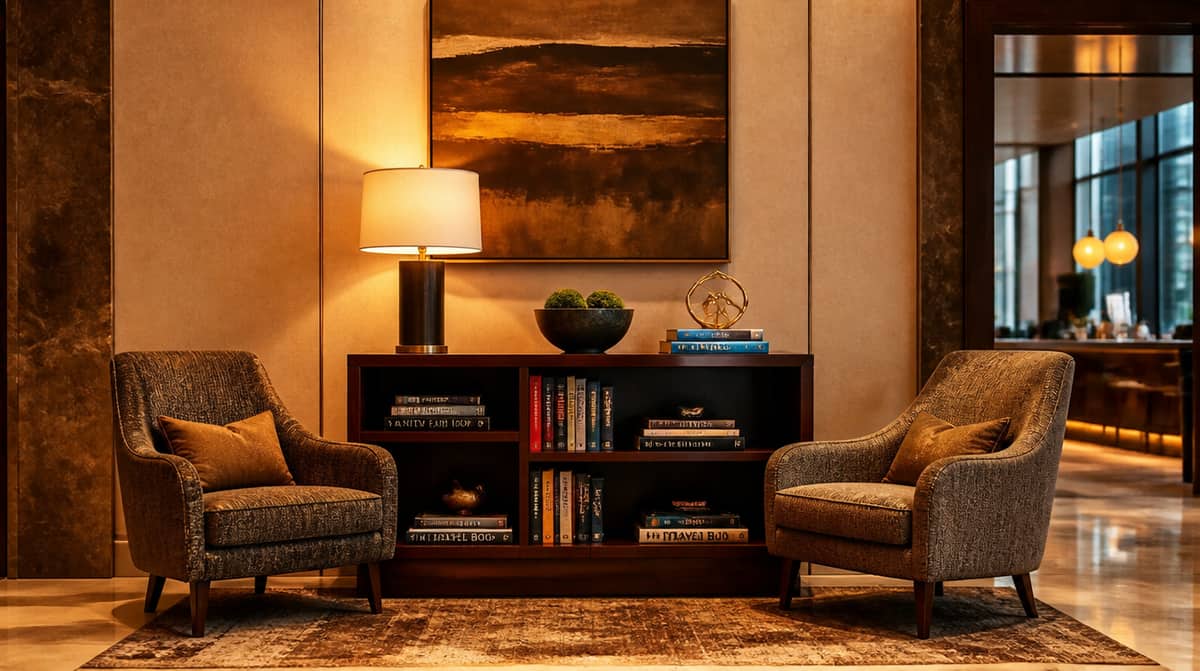
Performance textile specification is not optional in this context. Upholstery that isn't rated for moisture and soil resistance shows degradation quickly, both on the fabric surface and in the foam underneath it, particularly on seat cushions and arms where wet coats and bags make regular contact through a Manchester winter. Stain-resistant, moisture-resistant treatment on upholstery fabric is a baseline call for a New Hampshire property, not a premium option to skip until furniture is being replaced on an accelerated schedule.
Frame construction matters just as much. Solid hardwood or steel frames with reinforced corner blocking and mechanical fasteners that can be re-tightened hold up against the humidity swings between a dry heated lobby in January and the damp mud-season stretch in spring. Particleboard components absorb that moisture variation and swell, loosening joints over time. In a lobby that gets rearranged for conference check-in tables, holiday displays, or private event setups tied to arena nights, frame integrity under repeated movement is a practical requirement, not a nice-to-have.
Designing for the Arrival Experience in Manchester's Signature Spaces
The arrival sequence is choreographed whether a property plans it or not: primary seating cluster first, then the front desk, then the path to elevators. Every piece in that sequence signals something before staff interaction starts.
For downtown Elm Street properties and the Millyard conversions serving arts, university, and corporate travelers, the furniture that reads as right has clean lines, upholstery that holds its shape through repeated use, and a scale that suits ceiling heights that are often taller in converted mill spaces than in standard construction. A lounge chair with a solid silhouette in a durable, textured neutral fabric, sized correctly to the room, tells a guest the property is run with intention in the same way a clean check-in process does.
Airport-corridor and arena-adjacent properties are working a different priority. Guests arriving late after a flight into Manchester-Boston Regional, or badge-checking in after a long trade show day, want to orient fast and get to a room. Lobby furniture here needs to support efficient movement, seating clusters that don't create bottlenecks between the door, the desk, and the elevators, chairs that are easy to exit with carry-on luggage, and configurations that can be cleared quickly when the property hosts an event tied to a concert or convention weekend.
Procurement Timing and the Manchester Renovation Cycle
Manchester's hotel stock has been steadily updating, with legacy properties near the arena and airport refreshing common areas and older mill and commercial buildings downtown being converted into boutique hospitality. That pace puts real pressure on furniture procurement timelines.
Contract-grade furniture is built to order. Standard commercial pieces typically run eight to twelve weeks lead time from confirmed specification, and custom or semi-custom work (COM fabric, frame modifications, non-catalog finishes) adds coordination time on top of that. Projects that push furniture decisions to the back half of a renovation or opening schedule run into the same problem every time: the furniture that arrives on schedule isn't the right specification, and the right specification doesn't arrive on schedule.
If a property has an opening date tied to an arena event calendar, a trade show block at the Expo Center, or the fall foliage season that drives advance bookings across the region, those lead times need to be built into the project plan from day one. The cost of opening with placeholder furniture and replacing it within a year, in guest review scores, in staff time managing complaints, and in a second capital expense, is higher than the cost of specifying correctly the first time.
Working with a supplier who gives clear lead time commitments, who has handled hospitality projects at a comparable scale and rate category, and who offers COM programs for properties with a specific material story to tell, is worth more than chasing the lowest unit price from a vendor treating a hotel lobby order like a retail purchase. In a market where Manchester properties are competing for the same regional business, conference, and leisure travelers, the difference between lobby furniture that confirms a booking decision and furniture that introduces doubt is a revenue variable.