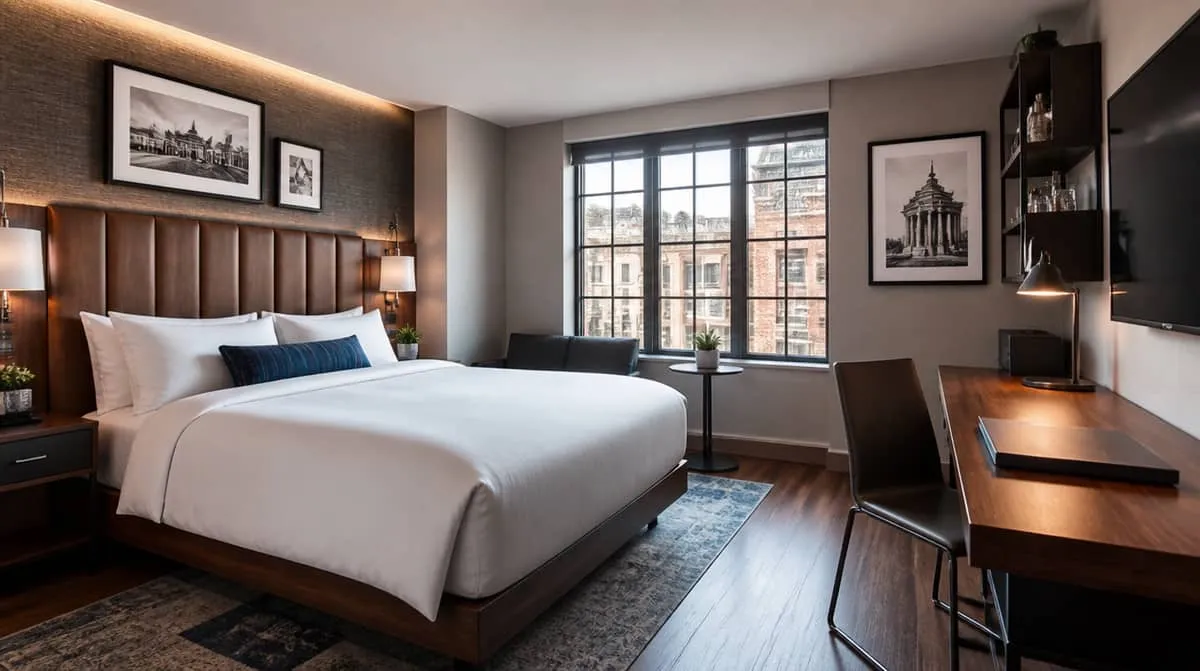
Manchester's boutique hotel market does not behave like a single city, even though the footprint is compact. You have Millyard properties built inside restored 19th century mill buildings, pitching an industrial-heritage identity to travelers who specifically want the exposed brick and timber over a standard chain box. You have downtown Elm Street boutiques competing for overflow from SNHU Arena and the Radisson conference floor, absorbing guests on concert nights and trade show weekends who did not necessarily choose the property for its design. And you have smaller independent inns along the edges of the city, closer to Manchester-Boston Regional Airport, whose entire pitch is a quieter, more residential feel than anything downtown offers. Each of those contexts demands a different furniture answer, and none of them can be served by a standard chain-hotel FF&E program. If you are sourcing boutique hotel furniture Manchester style, the core challenge is the same across all of them: contract-grade construction, smaller quantities, and an aesthetic that feels intentional rather than assembled from a catalog.
Why Manchester's Event Calendar Changes the Durability Math
SNHU Arena sits a few blocks from the Millyard and pulls concerts, minor league hockey, and regional conventions through downtown on a schedule dense enough that boutique properties feel the swings even without booking the events directly. A Thursday night with a sold-out show downtown behaves nothing like a quiet Tuesday in February, and the furniture in your lobby and lounge has to hold up to both without showing the difference.
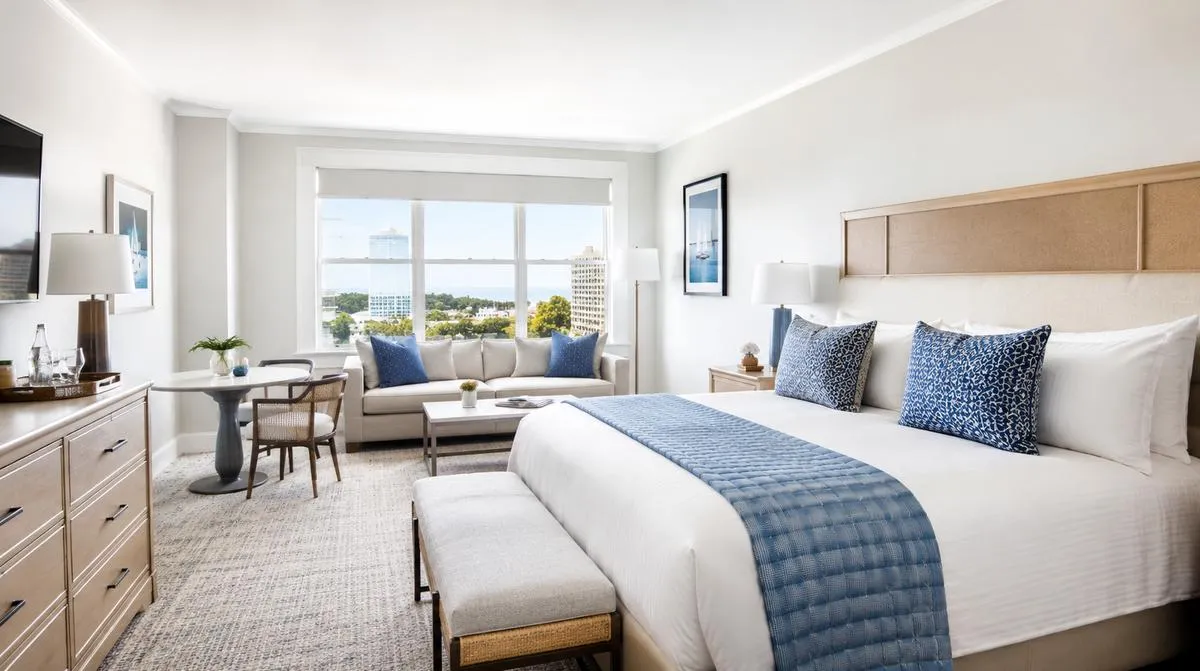
Furniture that performs fine during a slow boutique week faces a different stress level than furniture absorbing an arena-event weekend, when guests are moving through the lobby in waves before and after a show. The lounge chairs at check-in, the upholstered pieces in the bar area, the guestroom seating, all of it needs to be specified for heavy commercial use from the start. Residential-grade pieces dressed up with hospitality language fail fast under this kind of load. Frames crack, joints loosen, and fabric pulls at the seams on a timeline that turns what looked like savings into a capital expense problem within two seasons.
Contract-grade construction means hardwood or engineered hardwood frames, upholstery rated above 30,000 double rubs for seating in high-traffic areas, and joinery built for repeated use by people who are not being careful. For boutique properties absorbing Manchester's mix of arena traffic, corporate travel out of the airport corridor, and leaf-peeping season visitors passing through on their way north, that construction standard is not optional, it is the floor.
Design Cohesion in a City Built Around Its Mill Heritage
What separates a strong boutique property from an average one in Manchester is not the individual pieces, it is whether the room reads as designed. That distinction is entirely a function of how early you lock your material palette before sourcing begins.
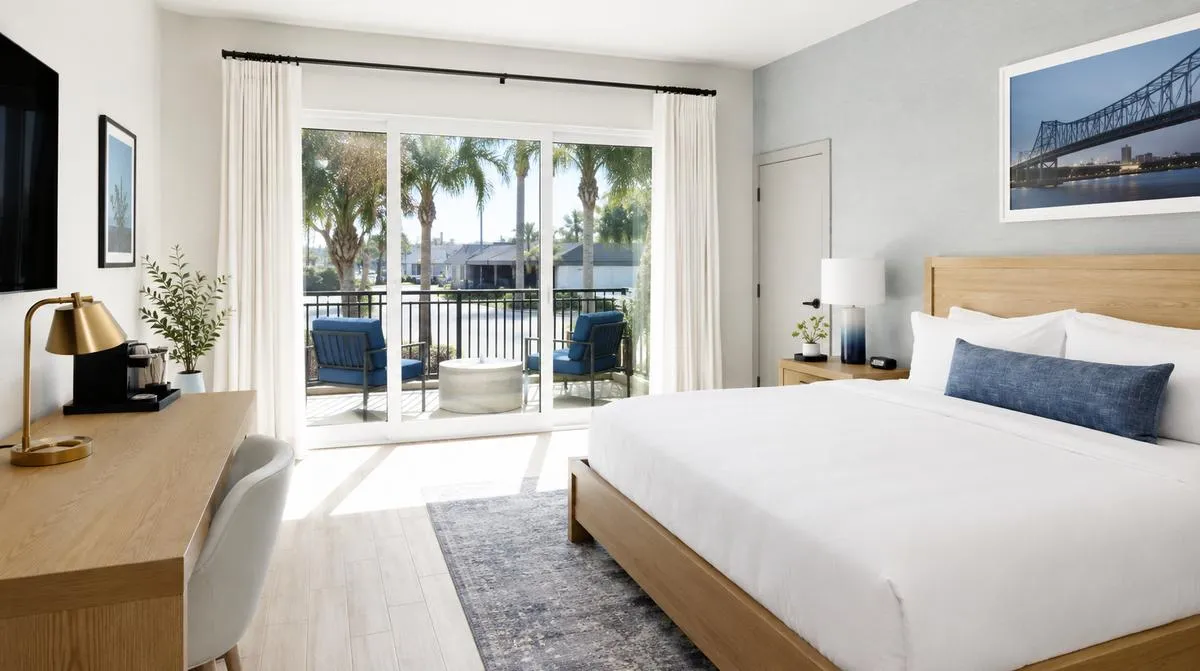
A Millyard property built inside a former textile mill can credibly pull from the industrial vocabulary the space already gives you: blackened steel frames, reclaimed wood surfaces, textile accents with a New England craft feel that ties back to the building's manufacturing history. A downtown Elm Street property positioned toward business travelers and conference attendees needs a tighter, more polished program, case goods with clean lines, upholstered seating in high-performance fabric that photographs well and holds its appearance through repeated use, metal accents in brushed brass or matte black rather than chrome. A property closer to the airport, serving a mix of corporate travel and families passing through toward the Lakes Region or the White Mountains, might lean into something warmer and more residential without sacrificing the commercial rating underneath it.
The mistake is sourcing individual pieces that each look compelling in isolation, then trying to make them cohere at install. You end up with rooms that guests read as assembled rather than designed, and design-literate guests, who represent the primary target for any boutique property worth operating, notice immediately when a room lacks visual logic. Palette first, sourcing second. Pick two or three anchor finishes, a consistent wood tone or metal family, a tightly defined fabric range, and hold every piece to those constraints before a single approval goes out.
Navigating Minimums and Finding the Right Suppliers
Most major contract furniture manufacturers are tooled for scale. They are comfortable with 300-room orders. A 40-room boutique in the Millyard ordering 35 units of a lounge chair and 20 guestroom desk chairs does not move the needle for most large manufacturers, and their minimum order requirements reflect that reality.
This is not an obstacle, it is a filter. The suppliers you want are the ones who have built their business around exactly this kind of account: independent hotels, boutique projects, restaurant groups, adaptive reuse developments in former industrial buildings. These manufacturers are accustomed to smaller quantities, mixed SKU orders, and the specification flexibility that boutique projects require. They will not push back when you need 15 units of one chair and 10 of another. Ask about minimums upfront, in writing, before you invest time building a specification around a supplier who cannot actually serve your project.
Manchester's furniture and design trade presence is smaller than a major metro, which means most boutique projects here source through suppliers based farther afield, in Boston, in New York, or through regional reps who cover northern New England. For hospitality-specific procurement, work through suppliers who can document their commercial ratings, provide FR compliance certifications where required, and have a track record delivering into properties with occupancy cycles similar to yours, especially the freight logistics of getting product into a converted mill building with narrower loading access than a purpose-built hotel.
If you are using an FF&E consultant or purchasing agent, one of their primary functions is exactly this: aggregating your order alongside other boutique hospitality projects to access manufacturer programs that your standalone order volume would not unlock. That margin layer frequently nets out once you account for the specification errors and reorder costs it prevents.
Planning for Manchester's Renovation Cycle
Boutique properties in Manchester's higher-demand corridors, the Millyard and downtown Elm Street especially, refresh their interiors on a faster cycle than you might expect going in. New independent openings and continued reinvestment in the Millyard's remaining mill buildings keep raising the design bar, and properties that looked current at opening can feel dated within four or five years as new inventory opens nearby.
The right time to plan for that refresh is during initial procurement, not when you are already behind schedule. Specify frames and case goods built to last the full cycle. Treat upholstery as the variable you will swap on a shorter rotation. Require COM-ready construction on all upholstered pieces from the start, no proprietary fabric tracks, no hidden frame systems, so reupholstery is straightforward when the time comes. Keep clean documentation of your original specifications: frame construction, foam densities, fabric weights, finish codes. Knowing exactly what you used the first time makes the next sourcing conversation significantly faster.
Lead times on custom upholstery programs typically run 10 to 16 weeks. If you are targeting a seasonal opening or working toward a specific event deadline, arena concert season and the fall foliage travel window both put real pressure on the calendar, furniture orders need to go out early enough to absorb that timeline without compressing your install window. First-time hotel owners consistently underestimate how little margin exists between order placement and opening day when custom work is involved.
Sourcing boutique hotel furniture in Manchester is a more specific problem than general commercial procurement. The city's event calendar, its mill-building design identity, and its position as a gateway between Boston and northern New England all shape what survives and what fails. Getting the spec right before the order ships is the most cost-effective decision you will make on the project.
Tell us about your Manchester boutique hotel furniture needs and we will turn your quantities, finishes, and timeline into a firm quote. Request a quote whenever you are ready to compare.