A family checks out of a Coeur d'Alene lakefront hotel at seven in the morning, boat gear stacked by the door, headed for a day on the water. By nine that same lobby is filling again, this time with a golf group arriving for a multi-day tournament. By evening, a wedding party is checking in for a lakefront reception the next day, garment bags and gift boxes in tow. Three completely different guests moving through the same room in a single day, and the furniture has to read as right for all three.
That range is the defining fact of Coeur d'Alene's hotel market. As a resort destination for the broader Inland Northwest, Coeur d'Alene hosts a hospitality mix that few markets its size have to serve: lake and boating tourism, golf tournament traffic tied to the region's course calendar, a wedding and event trade centered on the lake itself, and a smaller but real winter shoulder season pulling in some traffic from ski areas further south in the panhandle. Your lobby furniture is working across all of those audiences at once, and how it performs physically and visually is a direct business variable, not a decorating afterthought.
Coeur d'Alene's Market Segments Demand Different Things From the Same Room
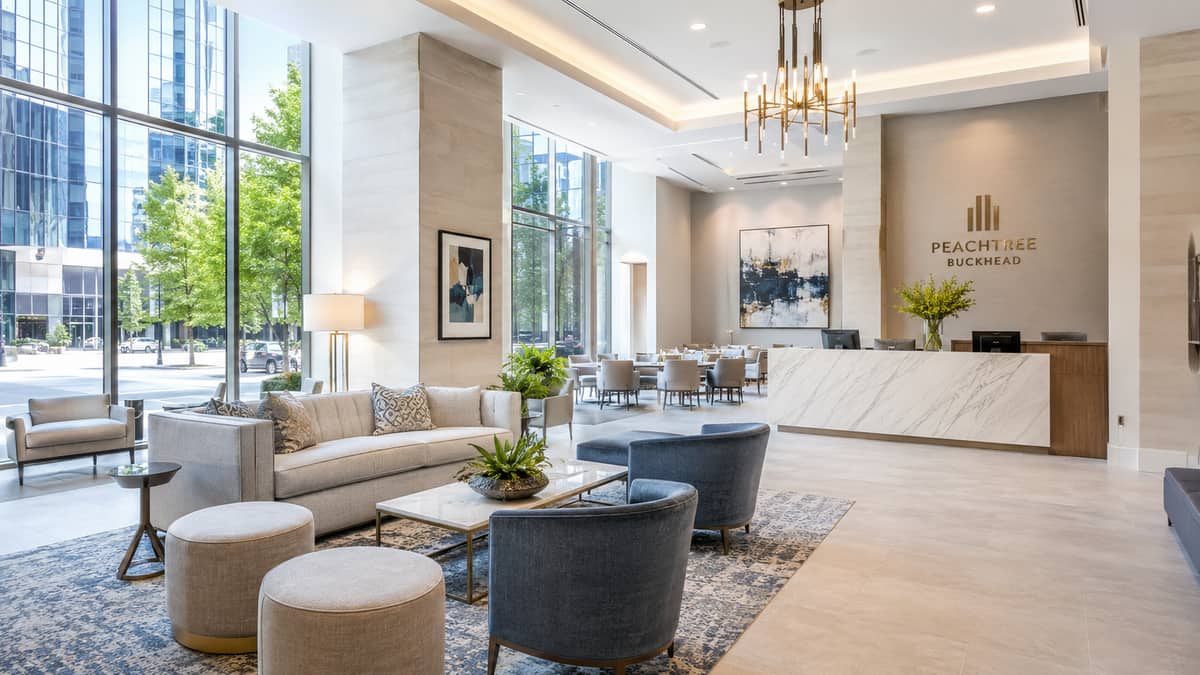
Coeur d'Alene's hospitality market splits into segments that matter for furniture specification in different ways. Lakefront and resort properties are managing a different kind of traffic than limited service hotels along the interstate corridor, and both differ from boutique properties downtown near Sherman Avenue.
Lakefront and resort properties are built for a leisure guest who is paying for the view and the amenity, and the furniture needs to hold up to boating gear, wet swimsuits, and heavy foot traffic during peak summer weekends. A property near the marina can turn its entire guest population through the lobby in a single morning during peak season, gear and coolers in tow. Furniture that was not built for that volume shows wear fast: loose frame joints, flattened cushions, and fabric that pills or tears within a couple of seasons. Contract-grade kiln-dried hardwood or steel frames, high-resilience foam rated for commercial use, and performance textiles rated well above 100,000 double rubs are the baseline here, not an upgrade.
Downtown Coeur d'Alene properties, including those near Sherman Avenue and McEuen Park, are competing on a different register. These hotels draw a mix of business travelers spilling over from Spokane, leisure guests who want a walkable downtown experience, and wedding parties staying near the venue rather than at a resort property. The furniture in these lobbies is part of the argument the property makes about itself. Durability still matters, but so does design judgment, pieces that read as intentional and current rather than generically commercial.
What Coeur d'Alene's Climate Actually Does to Lobby Furniture
The Idaho panhandle's four-season climate is a real durability factor that operators sometimes underweight. Coeur d'Alene sees a genuinely cold, snowy winter, a warm and dry summer, and a shoulder season that can swing sharply between the two. That combination is hard on furniture in ways that differ from what a coastal or Sun Belt market experiences, but it is no less demanding.
Winter means road sand, de-icing salt, snowmelt, and grit tracked in on boots and luggage wheels for months at a stretch, so upholstery and frame finishes need abrasion and moisture resistance built in, not applied as an afterthought. Performance fabrics with stain and soil resistance are a baseline call for Coeur d'Alene lobbies, not a premium add-on, given how much outdoor grit and moisture end up on seat cushions and chair arms during the long cold season. Summer brings its own wear pattern, sunscreen, lake water, and sand tracked in from a day on the water, all of which put real demands on fabric and frame finish near any lakefront or pool-adjacent seating cluster.
Designing for the Arrival Experience in Coeur d'Alene's Signature Spaces
The lobby arrival sequence is the same everywhere in its structure, primary seating cluster first, then the front desk, then the path to elevators, but what reads as right in that sequence depends on who is walking through the door.
Near the lakefront and resort district, guest volume spikes hard during peak summer weekends and golf tournament dates, and the furniture needs to support fast, orderly movement. Seating clusters that do not create bottlenecks between the entrance and the desk, chairs that are easy to exit with gear or luggage in hand, and configurations that can be reset quickly when a group event overwhelms the normal traffic pattern are the priority here over any single statement piece.
Downtown, near Sherman Avenue and McEuen Park, the guest mix leans toward business and leisure travelers who have seen a lot of hotel lobbies elsewhere. Furniture with clean lines, quality upholstery that holds its shape, and a scale that fits the room communicates the same intentionality that good lighting and an efficient check-in process do. A lounge chair with a solid silhouette in a durable, textured neutral fabric, scaled to the room's proportions, tells that guest the property is run with care.
Procurement Timing and the Coeur d'Alene Renovation Cycle
Coeur d'Alene's hotel stock has been steadily updating, with renovation activity concentrated near the lakefront and downtown as properties compete for the same leisure and event dollars. That pace creates real scheduling pressure around furniture procurement.
Contract-grade furniture is built to order, and lead times for standard commercial pieces typically run eight to twelve weeks from confirmed specification. Custom or semi-custom work, COM fabric programs, frame modifications, non-catalog finishes, adds coordination time on top of that. Properties timing a renovation or reopening around the summer lake and golf season need those lead times built into the project schedule from day one, not treated as a detail to sort out once construction is underway.
Working with a supplier who gives clear lead time commitments, understands hospitality projects at your property's scale, and can support a COM program when your design team has a specific material story in mind is worth more than chasing the lowest unit price from a vendor treating a hotel lobby order like a retail transaction.