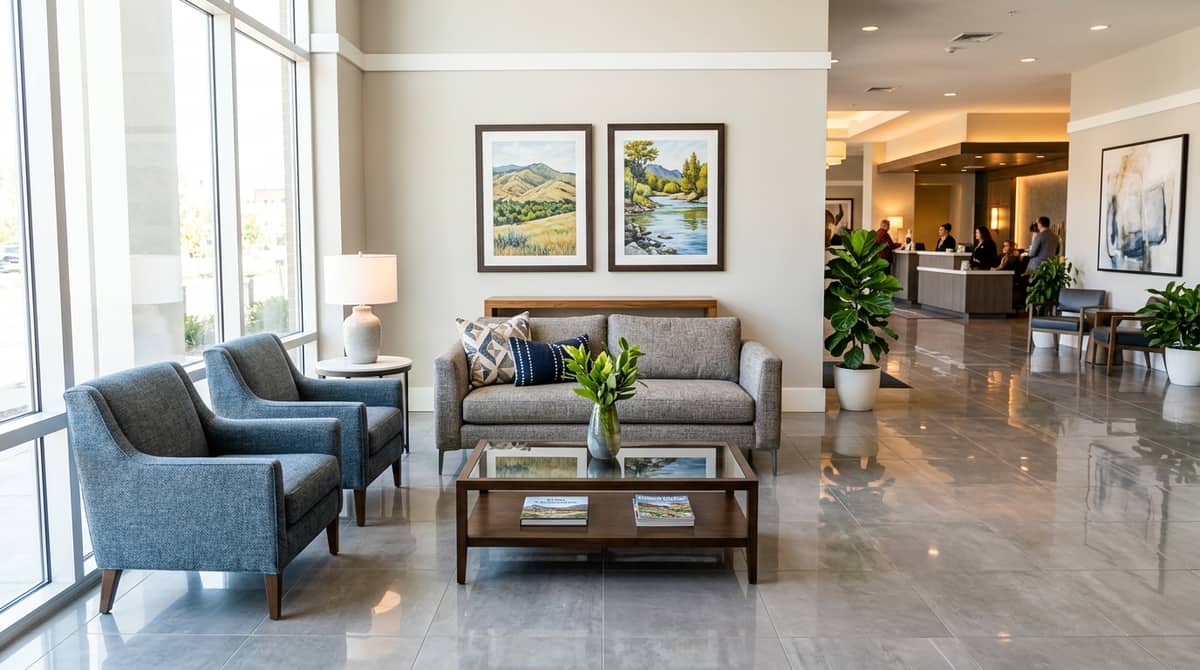
A family checks out of a lakefront hotel on a Sunday morning in early October, luggage stacked by the door, having spent three days walking the brick paths of Church Street Marketplace and driving the Lake Champlain shoreline for foliage. Three weeks later that same lobby is full of a different crowd entirely: parents moving their kids into UVM housing, business travelers in town for a conference at the Hilton Burlington Lake Champlain, and a smaller run of guests who came up from Boston or Montreal just for the weekend. The furniture in that lobby has to read as right for all of them, in the same room, without a renovation in between.
That is the specific challenge Burlington's hospitality market presents. It is a small city with an outsized visitor footprint, more than a million visitors a year moving through a compact downtown core, a waterfront, and a university calendar that drives occupancy in patterns most cities its size never see. Your lobby furniture is not a backdrop to that pattern. It is one of the few things that has to perform consistently through every version of who walks in the door.
Burlington's Market Segments Demand Different Things From the Same Room
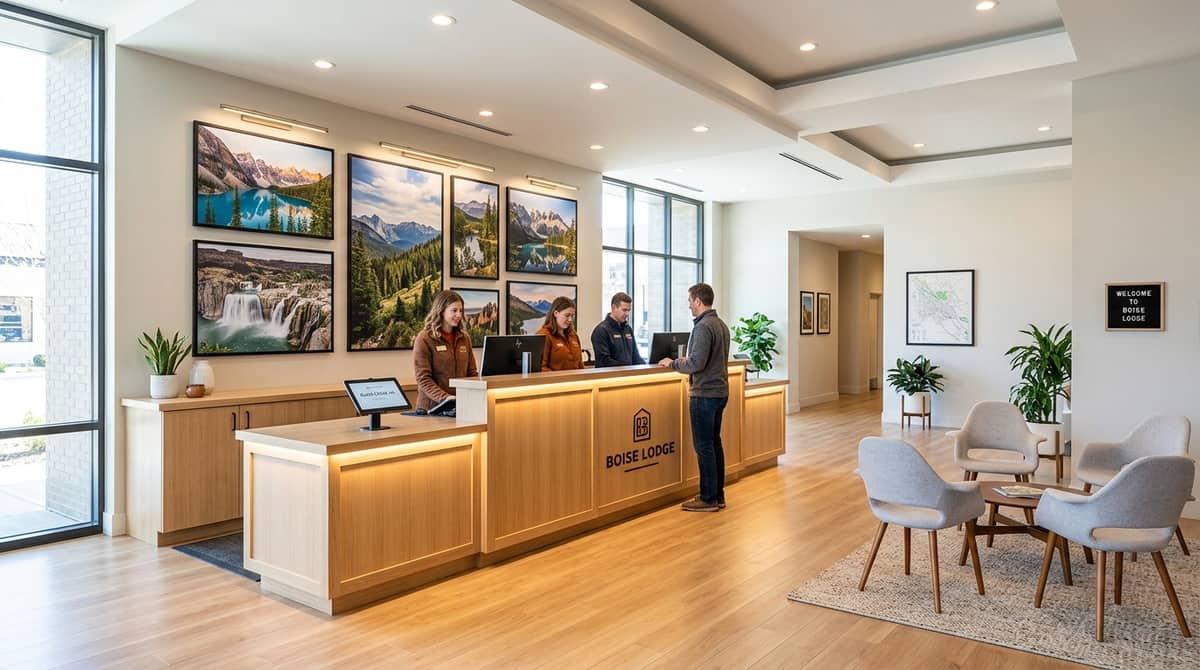
Burlington's hospitality footprint splits along a few clear lines, and each one puts different pressure on furniture specification. The larger conference-capable properties near the waterfront and downtown core, the boutique inns scattered through the Hill Section and along Battery Street, and the college-adjacent hotels serving UVM and Champlain College families are all working from a different brief, even when they are drawing from the same regional guest pool.
The conference and event hotels, led by the Hilton Burlington Lake Champlain and the properties clustered around the waterfront, handle lobby traffic in surges tied to specific dates rather than a steady year-round curve. A weekend conference, a graduation, or a ski-season group headed up to Stowe or Smuggler's Notch can push a lobby's seating capacity to its limit for 48 hours and then leave it half-empty the following week. Furniture built for that pattern needs contract-grade kiln-dried hardwood or steel frames, high-resilience foam rated for commercial use, and upholstery rated above 100,000 double rubs, because the wear does not arrive gradually. It arrives in concentrated bursts that punish anything under-specified far faster than steady daily use would.
Boutique properties in the Hill Section and the design-forward inns near the waterfront are managing a different expectation entirely. Guests booking these rooms have already seen the photos, and they chose Burlington in part because it reads as more considered than a standard interstate hotel stop. Lobby furniture here is part of the story the property is telling about itself, and pieces that look catalog-selected or generically commercial undermine that story even if the durability is fine. Design judgment matters as much as construction quality in this segment.
What Burlington's Climate Actually Does to Lobby Furniture
Vermont's climate is a genuine durability variable, and it works Burlington hotel furniture harder than warmer markets in ways operators sometimes underestimate. Winters bring snow, road salt, and sustained cold from November through March, and guests are walking directly from a salted sidewalk or a slush-covered parking area into the lobby. That means moisture, grit, and de-icing chemical residue making regular contact with flooring-adjacent furniture, chair legs, and the base of upholstered seating near entry doors.
Performance textile specification is not optional in this context. Upholstery that lacks moisture and stain resistance shows degradation fast when it is absorbing melted snow off wet coats and bags set down on cushions through five months of winter. Frame construction matters just as much. Solid hardwood and steel frames with reinforced joinery handle the humidity swings between a dry heated lobby interior and the damp cold coming through the doors far better than particleboard components, which absorb moisture and swell, loosening joints over a single season. In a market where furniture also gets rearranged for winter carnival events, holiday programming, and private functions tied to the university calendar, frame integrity under repeated movement is a practical requirement, not a nice-to-have.
Designing for the Arrival Experience in Burlington's Signature Spaces
The arrival sequence in a Burlington lobby follows the same logic it does anywhere: guests read the primary seating cluster first, then the front desk, then the path toward elevators or the waterfront-facing windows many properties are built around. Every piece in that sequence is communicating something before a staff member says a word.
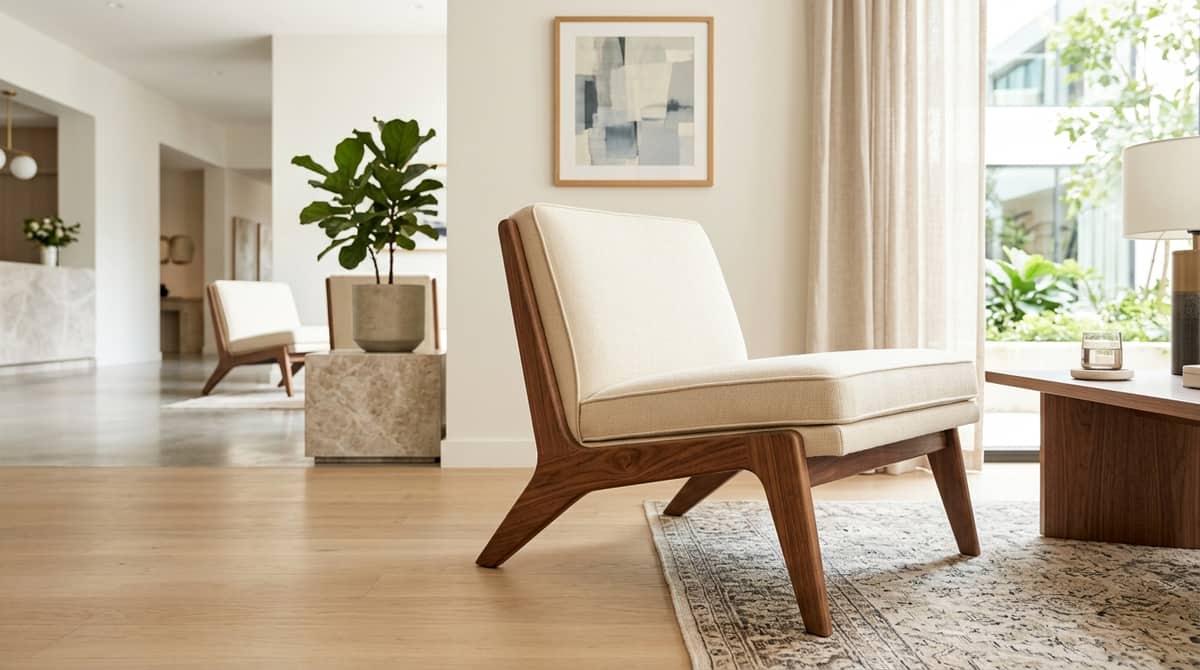
In properties near Church Street Marketplace and the downtown core, the guest mix runs toward leisure travelers who came for the walkable brick streets and the lake views, alongside business travelers who picked a downtown hotel for proximity to meetings. Furniture that works here has clean lines, upholstery that holds its shape through heavy seasonal traffic, and a scale that respects rooms that are frequently smaller and more intimate than the convention-hotel format found in larger cities. A well-scaled lounge chair in a durable neutral fabric, paired with a side table that reads as solid rather than disposable, signals the same intention that a well-run check-in desk does.
Waterfront and lakefront properties are competing on a different register, one built around the view itself. Lobby furniture here needs to frame Lake Champlain rather than compete with it, which usually means lower-profile seating, materials that read as natural (wood tones, woven textures, stone-referenced tabletops) rather than glossy or overtly corporate, and layouts that keep sightlines open toward the water. Furniture that looks like a standard national-chain package reads as a mismatch against a room built around that kind of view.
Conference-hotel lobbies near the Hilton and the downtown event cluster carry a different priority: guests arriving after a flight into Burlington International Airport or a long drive up from Boston or Montreal want to orient quickly and reach their room. Seating clusters that avoid bottlenecks between door, desk, and elevator, chairs that are easy to exit with carry-on luggage in hand, and modular configurations that can be cleared for a private event during a conference weekend all matter more here than they do in a leisure-driven boutique lobby.
Procurement Timing and the Burlington Renovation Cycle
Burlington's hotel development has been steady rather than explosive, but renovation activity on existing properties, particularly around the waterfront and downtown core, has picked up as owners work to keep pace with a visitor base that increasingly compares Burlington against larger regional markets. That creates real scheduling pressure around furniture procurement.
Contract-grade furniture is built to order, and standard commercial lead times run eight to twelve weeks from confirmed specification. Custom or semi-custom work, COM fabric programs, frame modifications, non-catalog finishes, adds coordination time on top of that baseline. Properties planning a renovation around a specific window, a graduation season, a foliage-season opening, or a ski-season rush headed toward Stowe, need that lead time built into the schedule from day one. The alternative, opening or reopening with placeholder furniture and replacing it within the first year, costs more in OTA review scores and staff time managing complaints than getting the specification right the first time would have.
Working with a supplier who commits to clear lead times, understands hospitality projects at Burlington's scale, and offers COM programs for properties with a specific material story to tell, is worth more than chasing a lower unit price from a vendor treating a hotel lobby order like a retail transaction. In a market this compact, where guests compare properties within walking distance of each other, the difference between furniture that confirms a booking decision and furniture that introduces doubt is a revenue variable.