A Baltimore hotel lobby is a working room. It serves convention delegates reviewing session materials between keynotes, families waiting for news from Johns Hopkins Medical Center across town, federal contractors conducting informal working meetings before heading to a D.C. agency, and leisure guests arriving for a weekend of Chesapeake Bay seafood and Inner Harbor waterfront. No single furniture specification serves all of those guests equally well but the right lobby furniture program can serve all of them adequately while telling a coherent story about the property and the city it occupies.
Baltimore's Hotel Lobby Market
Inner Harbor hotel lobbies are among the busiest in Maryland. Properties in the Convention Center corridor the Marriott, Hyatt, Hilton, and their peers run their lobbies as quasi-public spaces during major events: attendees use them as impromptu meeting rooms, overflow conference lounges, and informal networking space from early morning through late evening. The furniture in these lobbies isn't primarily serving arriving and departing guests; it's serving a continuous population of conference attendees who need a place to sit, charge, and work.
That use pattern demands specific furniture characteristics. Lounge chairs need to be proportioned for laptop use not too low, not too deep, with armrests at a height that doesn't create shoulder fatigue during extended seated work. Sofas in lobby groupings need to be firm enough for two-hour work sessions, not so deep that they're comfortable for sleeping. Power access USB-A, USB-C, and AC outlets should be integrated into end tables or available through power modules in the seating area. These are operational requirements, not amenity differentiators.
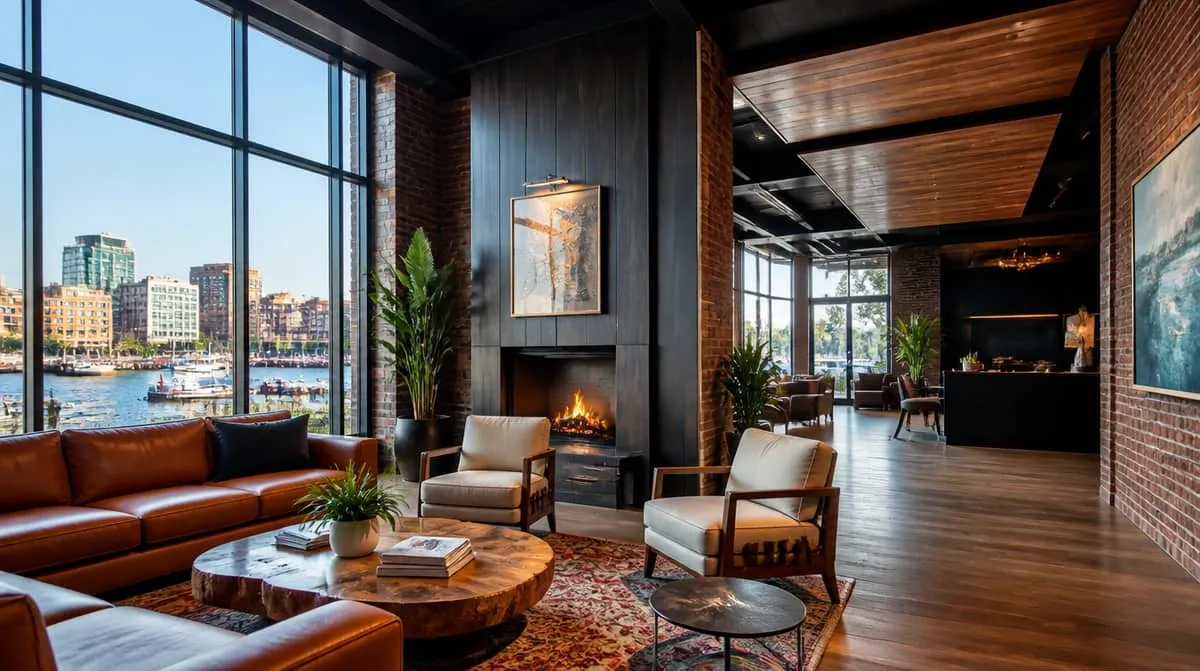
The healthcare visitor segment families and patients coming to or from Johns Hopkins Hospital, UMMS Medical Center, or one of Baltimore's numerous specialty medical facilities adds a human dimension that convention lobbies don't always account for. These guests may be anxious, exhausted, or arriving from emotionally difficult circumstances. Lobby furniture that communicates comfort and calm softer upholstery profiles, warmer palette, less corporate geometry performs better for this segment than the sleek minimalism that works for convention business. Some Baltimore properties near medical centers have begun differentiating their lobby furniture programs specifically to serve this guest profile, and the satisfaction data supports it.
Boutique hotel lobbies in Fells Point and Station North are working with dramatically smaller square footage. A Fells Point boutique might have a lobby that functions as check-in desk, lounge, bar, and coffee service simultaneously in under 1,000 square feet. Furniture in these environments needs to be scaled to the room not the oversized statement pieces that work in a 5,000-square-foot convention hotel atrium and configured to serve multiple functions at different times of day.
Baltimore Lobby Design and Specifications
Baltimore's lobby design aesthetic in its most successful iterations draws on the same material vocabulary as the city's broader hospitality character. Warm wood tones walnut, white oak, reclaimed-look species grounded against exposed brick or brick-pattern plaster, with accents in aged brass, flat black steel, or weathered copper. The Chesapeake Bay color palette runs through upholstery: deep navy, slate blue, oyster, warm sand, charcoal linen.
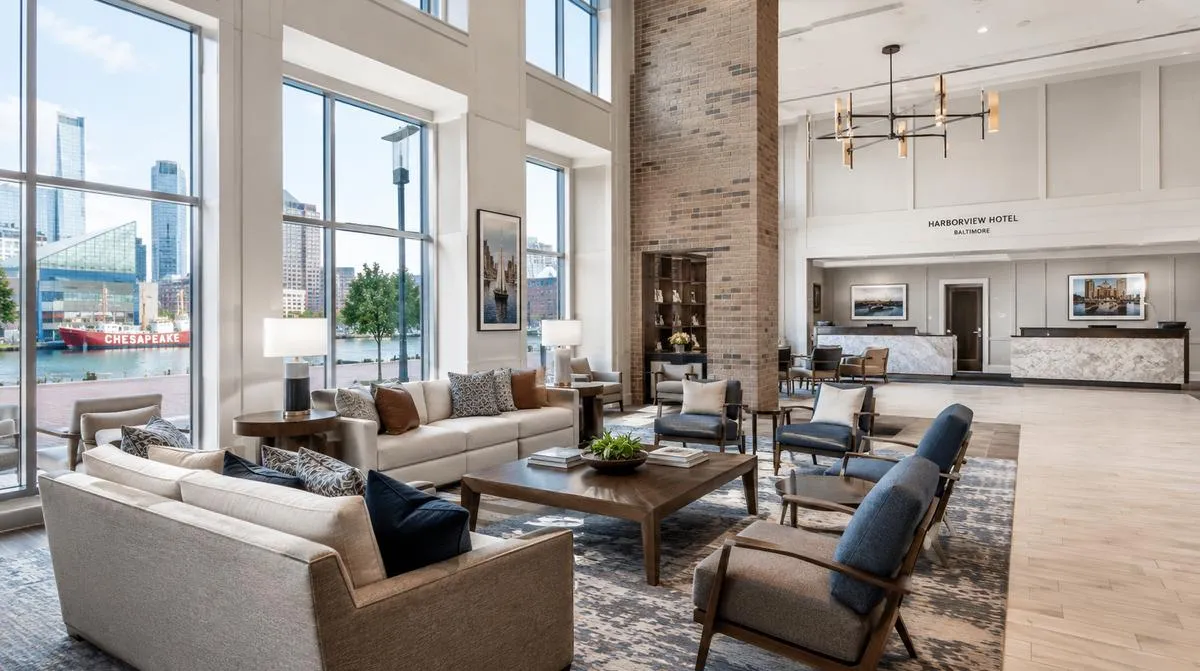
Sofas in Baltimore hotel lobbies should anchor the room visually and tonally. A large sofa in a mid-century silhouette clean lines, tapered legs in walnut or brass, tightly upholstered cushions in a slate grey or deep navy performance fabric establishes the room's design register immediately. It says quality and specificity without announcing itself as expensive. Pair it with lounge chairs in a complementary but distinct textile a warm cognac leather or an oyster-white textured linen and the grouping reads as curated rather than coordinated.
Ottomans serve double duty in Baltimore hotel lobbies: as footrests in lounge groupings and as informal extra seating during high-occupancy periods. Specify ottomans with a hardwood base and a fabric that wipes clean easily lobby ottomans receive direct contact from luggage, shoes, and spills. A tight-top upholstery in a commercial-grade performance fabric with no tufting channels where moisture can collect is the right specification for heavy-use lobby environments.
All upholstered lobby furniture should be specified with antimicrobial fabric treatment and commercial fire safety compliance documentation (NFPA 101 / TB 133). High-traffic lobby seating typically justifies a higher fabric specification than guestroom seating the usage cycle is continuous rather than intermittent.
Procurement for Baltimore Hotel Lobbies
Lobby furniture replacement typically occurs on a different cycle than guestroom FF&E public area seating wears faster from concentrated use, but the quantity of pieces is smaller. A Convention Center-adjacent property might refresh its lobby seating groupings every four to five years while running a seven-to-ten-year guestroom furniture cycle.
Plan procurement for lobby refreshes during low-occupancy periods typically January through February for Baltimore Inner Harbor properties. Lead times for custom upholstered lobby furniture run ten to fourteen weeks; plan procurement conversations six months in advance to allow for design review, material approval, and production scheduling without rushing any phase.
Every Baltimore venue has its own volume, layout, and turnaround demands, and hotel lobby furniture pricing follows from those specifics. Request a quote and we will scope it to your project.