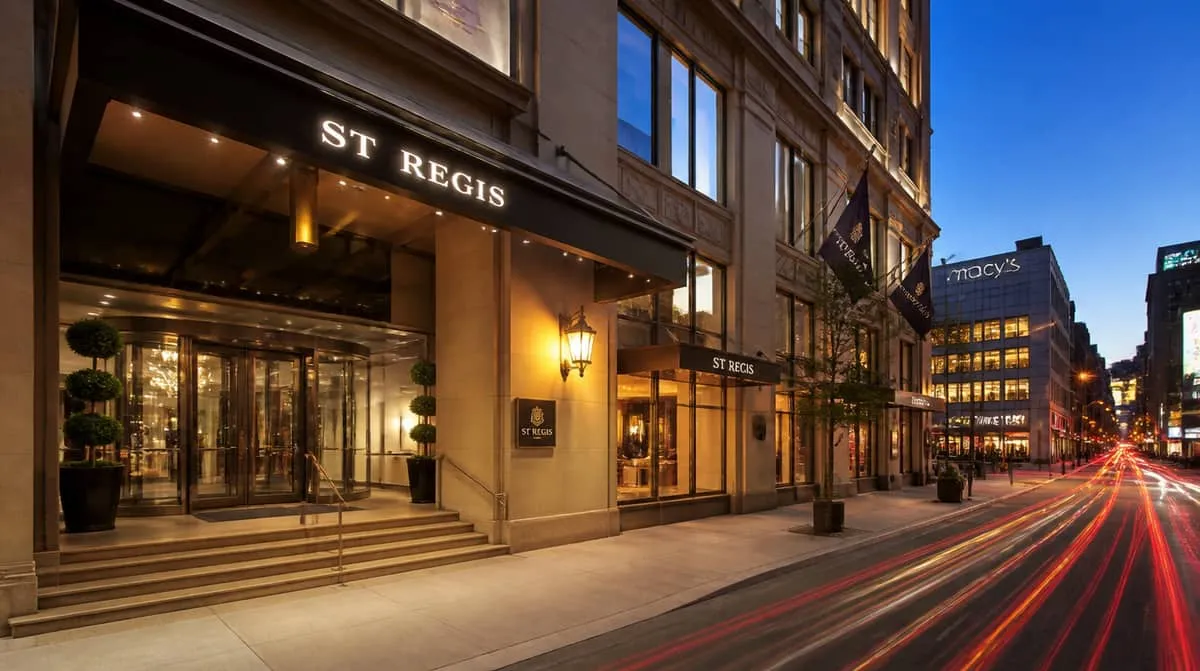
San Francisco hotels operate in one of the most unforgiving hospitality markets in North America. Real-estate costs are the highest in the country, which means every guestroom, lobby corner, and corridor alcove must generate revenue and the furniture filling those spaces must hold up under relentless demand. When Dreamforce descends on Moscone Center and brings more than 100,000 attendees into SoMa and Union Square hotels simultaneously, there is no grace period for worn seating or deferred replacements.
Why San Francisco Hotel Operators Source Differently
The city's hotel corridor runs from the grand Union Square properties the Westin St. Francis, Hilton Parc 55, and Marriott Marquis through the convention-adjacent hotels of SoMa, up to the legacy grande-dame properties on Nob Hill, and out to the tourist-heavy zones around Fisherman's Wharf and the Embarcadero waterfront. Each micro-market has its own guest profile and durability requirements, but all of them share the same fundamental pressure: the guest sitting in your lobby or dining chair tonight may be a Salesforce VP, a Tokyo-based Oracle partner, or a leisure traveler who has stayed at the Ace Hotel in New York and the Standard in Los Angeles and knows exactly what considered design looks like.
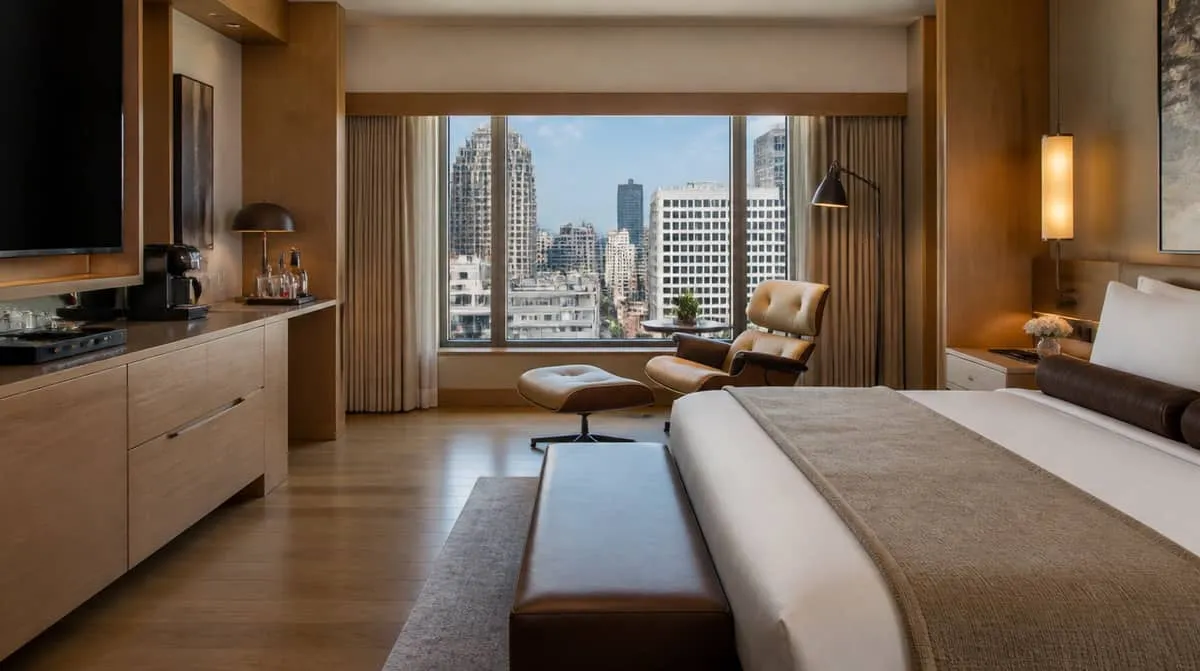
That expectation profile drives procurement decisions in ways that differ meaningfully from mid-market hotel markets. A property near Moscone Center budgets for lounge chairs that can absorb back-to-back conference crowds in September and October, then pivot to a quieter leisure mix in January without showing visible fatigue. SoMa boutique properties competing for tech-company buyouts need seating that photographs well for the Instagram stories their guests will post from the lobby. Nob Hill properties carry a legacy reputation to protect; their guestroom case goods and upholstered pieces need to signal permanence rather than refresh-cycle economics.
Union Square properties also manage some of the highest pedestrian throughput of any hotel in the western United States. The sheer volume of check-ins, tourist walk-ins to lobby bars, and group arrivals during convention season means that commercial-grade construction not hospitality-grade residential crossovers is the baseline, not a premium specification.
California Contemporary: The Dominant Aesthetic in SF Hotels
San Francisco has developed a regional hotel aesthetic that is distinct from Los Angeles glamour and distinct from Pacific Northwest minimalism. The shorthand is California contemporary: light oak case goods, warm white wall finishes, natural linen or performance-linen upholstery, concrete or plaster accent surfaces, and leather in warm neutral tones saddle, caramel, cognac rather than jet black. Lines are clean but not cold. The reference point is a well-edited residential interior, scaled and specced for commercial reality.
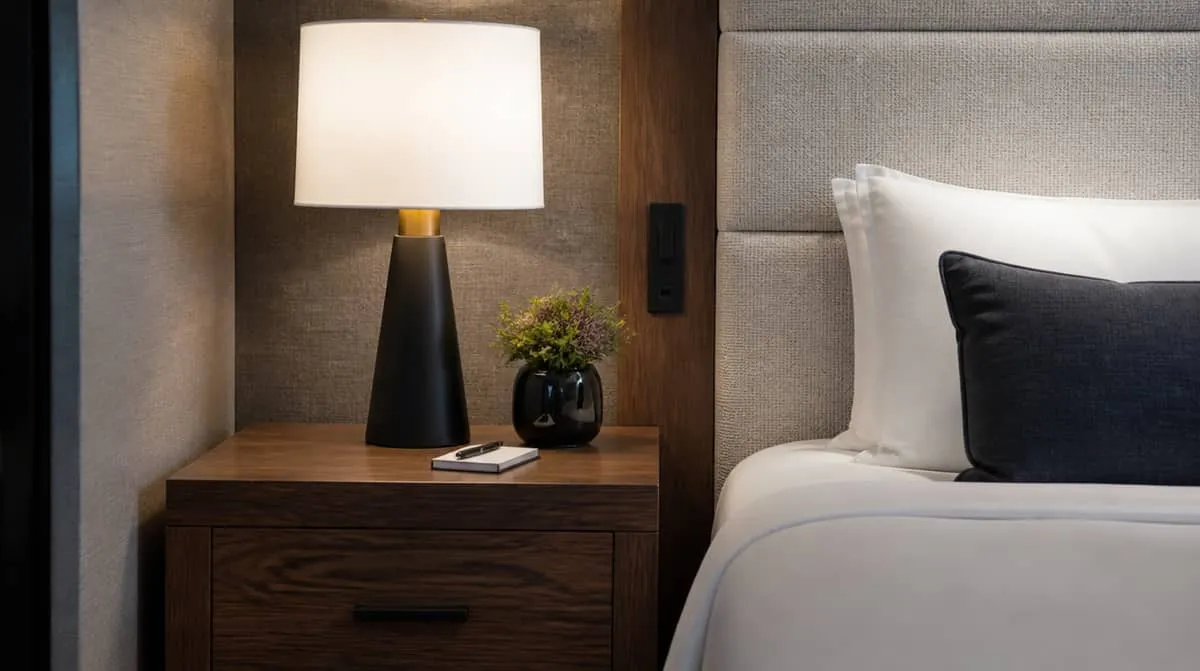
For guestrooms, this translates to platform beds with upholstered headboards in oatmeal, flax, or warm greige performance fabric inviting enough to signal comfort, durable enough to survive daily housekeeping contact. Case goods lean toward light oak or wire-brushed white oak rather than the dark walnut that dominated a previous cycle. Desk chairs and occasional seating follow the same principle: lounge chairs in warm neutral performance fabric with natural wood or brushed brass legs, keeping the palette warm even when the silhouette is architectural.
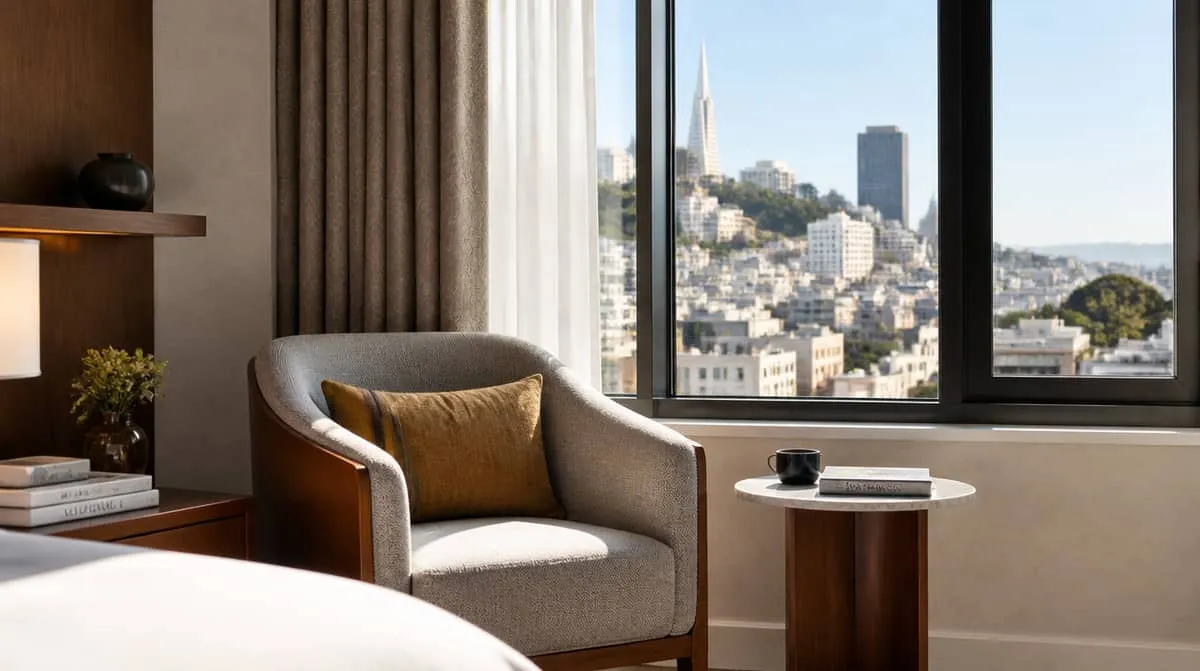
In public spaces, the California contemporary look extends to sofas with low, generous profiles sofas that read as residential comfort but are built to contract standards and ottomans that double as flexible seating during peak lobby periods. Tech guests in particular respond to furniture that feels designed rather than specified, and the California contemporary vocabulary is legible to that audience without feeling niche or regional.
Procurement Logistics for SF Properties
San Francisco's geography creates logistical considerations that affect every large furniture order. Most hotel properties in Union Square, SoMa, and Nob Hill are mid-rise or high-rise buildings with freight elevator constraints, narrow service corridors, and loading dock time windows coordinated around neighboring properties. A supplier that cannot manage phased, floor-by-floor delivery will create operational problems that cost more than any savings on unit pricing.
Lead times for FF&E orders in San Francisco typically run 10 to 16 weeks for upholstered pieces in specified COM or catalog fabrics, with case goods ranging from 8 to 14 weeks depending on origin. Properties renovating around convention blackout periods avoiding Dreamforce in September, Oracle OpenWorld in October, and the December holiday surge need to work backward from those constraints and build procurement timelines accordingly.
Commercial Furniture Depot works with San Francisco hotel operators on phased delivery schedules, ensuring installations proceed floor by floor or wing by wing to keep occupied rooms generating revenue throughout a renovation cycle. Volume pricing on full-property orders is available for properties sourcing 50 or more units of a single SKU.
Ready to spec hotel furniture for your San Francisco project? Send us the details and we will price it around your requirements. Request a quote to start.
Related reading
- Commercial hotel furniture: a sourcing guide for every space
- Boutique hotel furniture: specifying a distinctive, durable look
- What is contract furniture
- Hotel furniture supplier guide
- Hospitality furniture supplier guide
- Lounge chairs for hotel lobbies
- Hotel headboards
- Sofas for hospitality
- Commercial furniture in California