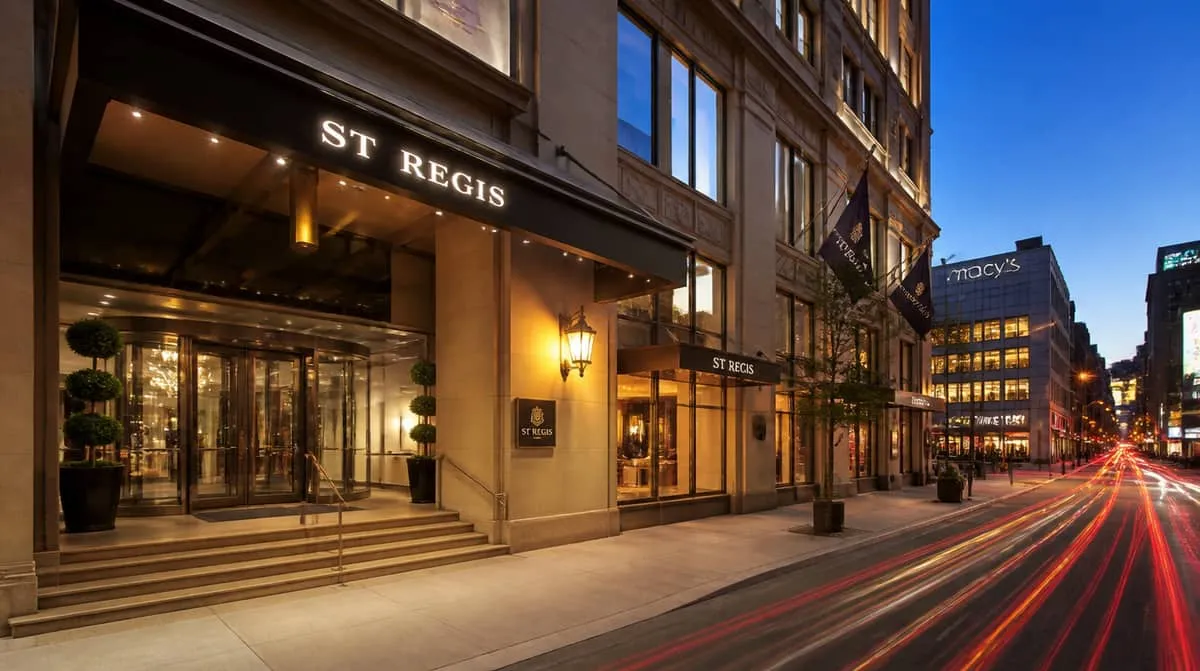
San Francisco's event and convention business is not a supplementary revenue stream it is a structural pillar of the city's hospitality economy. Moscone Center in SoMa is one of the busiest convention facilities in the western United States, and its event calendar creates demand ripples that extend to hotel ballrooms, rooftop event venues, and private dining rooms across Union Square, SoMa, and the Embarcadero waterfront. When Dreamforce runs for four days in September, every banquet chair in the corridor between Moscone and Union Square has been set up, broken down, and set up again more times than a hotel of the same size in a secondary market might see in a full quarter. Banquet furniture in San Francisco is a working asset, and it needs to be specified accordingly.
The San Francisco Event Venue Landscape
Moscone Center's events are the primary driver, but the hotel ballroom circuit is where most of the city's banquet furniture inventory actually lives. The Marriott Marquis on Mission Street directly adjacent to Moscone operates one of the largest hotel ballroom complexes in the city and runs continuous event configuration changes throughout the convention season. The Hilton Parc 55 and Westin St. Francis anchor the Union Square circuit for events that need to be within walking distance of the theater district and retail corridor. These properties maintain substantial in-house banquet furniture inventories and supplement with rental inventory during peak periods.
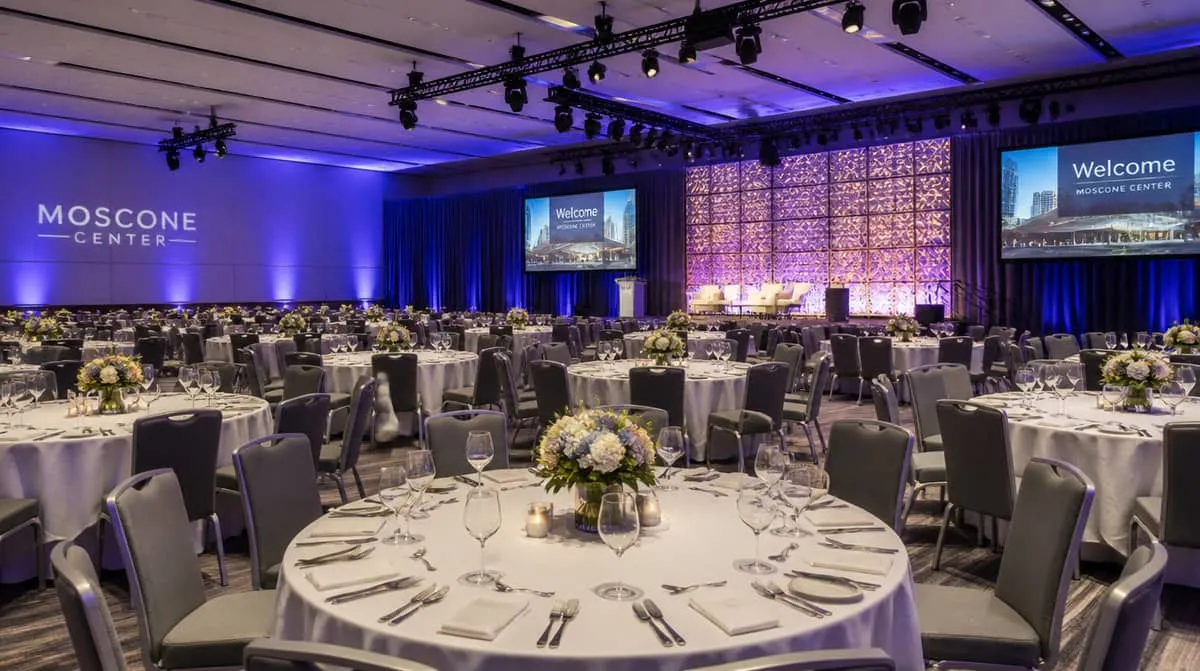
SoMa's event venue market has also developed an independent layer: private event spaces, corporate event venues, and restaurant private dining rooms that serve the tech-industry event circuit. Companies like Salesforce, Airbnb, and Google SF run internal offsites, product launch events, and client dinners in venues throughout SoMa and the Financial District. These events typically involve a different aesthetic than a traditional hotel ballroom more contemporary, more designed, less formal and operators catering to the tech-company event market are specifying banquet chairs that read as contemporary rather than traditional.
The Financial District's private dining rooms and event spaces, concentrated in the high-rise office towers and the hotels serving the banking and law firm corridor, handle smaller-scale corporate events: board dinners, deal-closing celebrations, client entertainment. These spaces justify a step up in furniture quality chairs with genuine upholstery rather than vinyl stack chairs, tables with quality linens that sit correctly on a level surface because the guest in that room is a managing director or a partner whose firm is paying a significant per-head event cost.
Fisherman's Wharf event venues manage the tourist and mid-range corporate event market, with ferry terminal event spaces and restaurant banquet rooms at the pier adding a waterfront premium to the location while operating at higher volumes with less design scrutiny. Durable stackable chairs in neutral finishes are the dominant specification for that sub-market.
Specifying Banquet Furniture for SF's Demands
Banquet chairs for San Francisco's convention market need to meet a specific set of performance criteria. Stackability to at least 8 to 10 chairs high is standard; the ability to roll stacked chairs on a dolly without chassis damage is critical for venues doing same-day conversions between configurations. Frame material should be steel with a powder-coat finish chrome-plated steel is a secondary option but shows wear faster under the kind of stacking frequency that a Moscone-adjacent hotel sees.
Seat and back upholstery for commercial banquet chairs in San Francisco's upper-tier venues is trending away from traditional commercial vinyl toward fabric-wrapped seats in performance textile typically a pattern-woven polyester or polyester-nylon blend rated at 100,000 double rubs, in neutral tones that work across table linen colors. This specification adds cost but substantially improves the guest experience for the tech-company and financial-sector events that are the highest-value clients in the San Francisco event market.
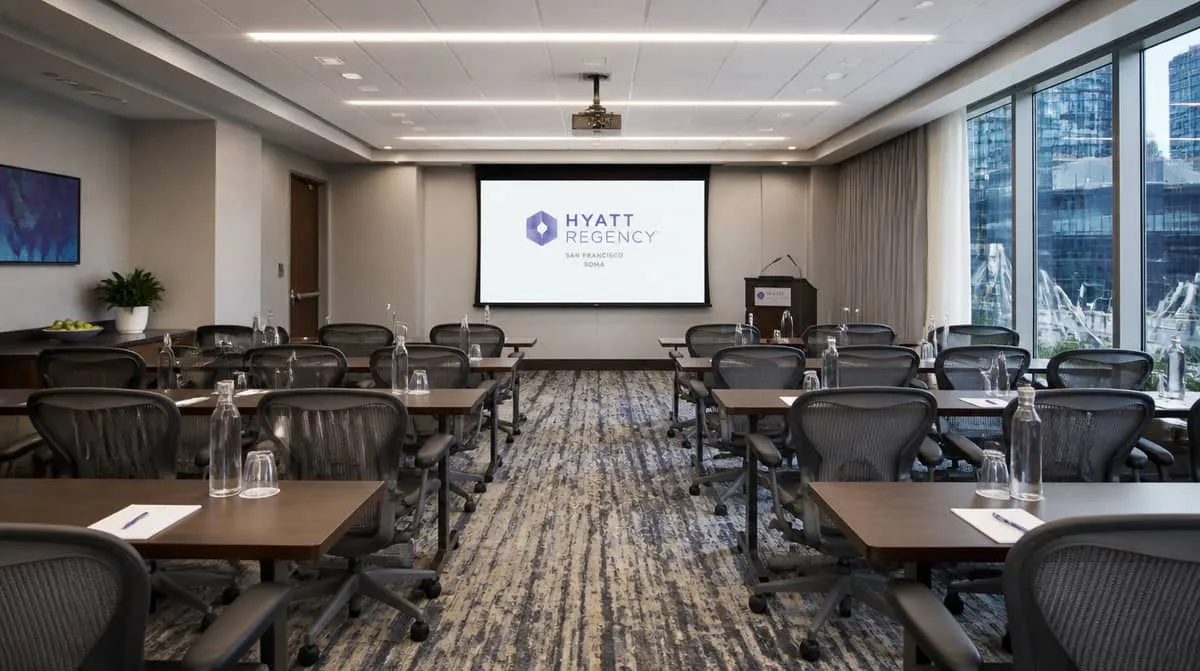
For venues that host both formal banquet dinners and conference breakout sessions, a chair with a clean profile that works in both configurations is more valuable than an optimized-for-one-function design. Banquet chairs with a low back and a modestly upholstered seat in a neutral tone can move from dinner service to classroom configuration without looking out of place in either.
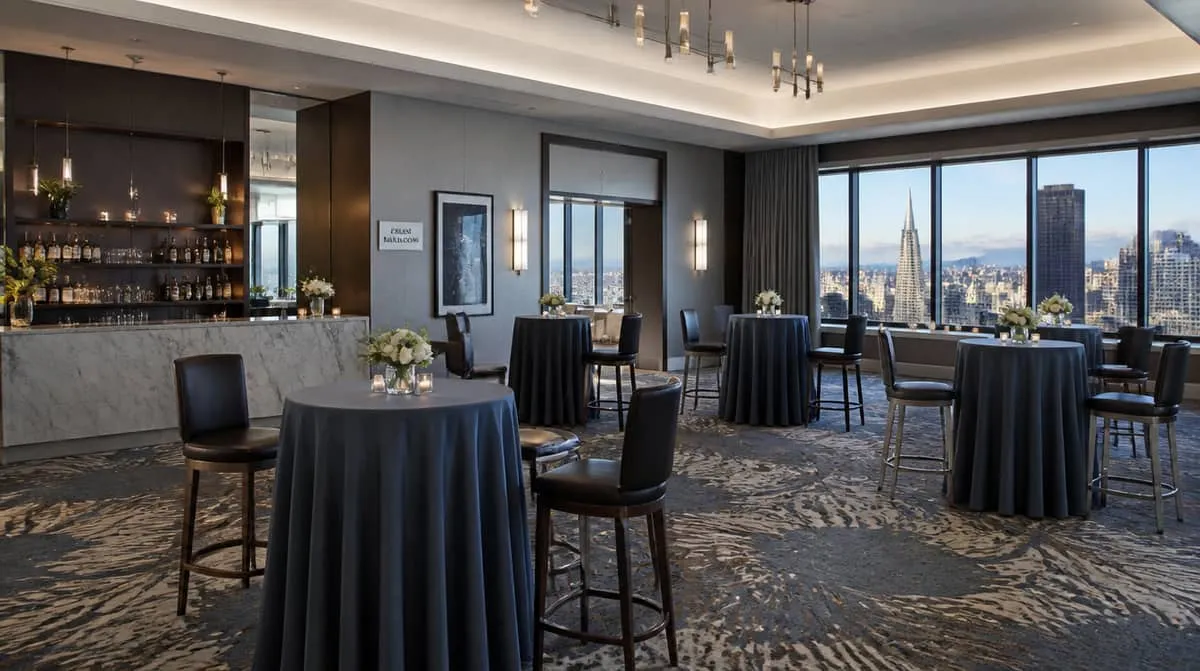
Beyond chairs, San Francisco's flexible event venues increasingly specify modular lounge furniture sofas and ottomans that can be configured for networking reception layouts that can be staged for pre-dinner cocktail hours and broken down before the formal program begins. This requires upholstered pieces that are visually polished, structurally sound without a rigid floor connection, and light enough for two-person repositioning.
Logistics and Lead Times for SF Event Venues
Banquet furniture replacement in San Francisco's major event venues is best planned around the convention calendar gaps. The window between the end of the December holiday corporate event cycle and the beginning of the spring conference season roughly January through March is the most practical renovation window for venues that cannot afford to take a ballroom offline during peak. An order placed in October for January delivery fits that window comfortably within standard 10 to 14 week lead times for upholstered banquet chairs.
Commercial Furniture Depot offers volume pricing on banquet chair orders of 50 or more units, which is the relevant threshold for most full-ballroom replacement programs. Lead times for catalog banquet chairs in standard finishes are typically 8 to 12 weeks; custom upholstery fabrics or custom frame finishes add 2 to 4 weeks.
For San Francisco properties comparing banquet and event furniture options, project-specific pricing tells you more than any published range. Request a quote and we will scope it to your space and volume.
Related reading
- Banquet furniture cost guide: what venues actually pay
- Banquet chairs: the complete commercial buying guide
- Ballroom furniture guide for event venues
- What is contract furniture
- Hotel furniture supplier guide
- Hospitality furniture supplier guide
- Banquet chairs for event venues
- Sofas for event and lounge spaces
- Ottomans for hospitality
- Commercial furniture in California