Raleigh has quietly become one of the most competitive hotel markets in the Southeast, and the pressure on property owners to deliver exceptional guest rooms has never been higher. With Research Triangle Park drawing a steady stream of IBM, Cisco, SAS, and Red Hat visitors alongside a booming pharmaceutical and biotech conference circuit, the average Raleigh hotel guest arrives with expectations shaped by the world's best corporate campuses. For operators sourcing hotel furniture, that means contract-grade product that communicates quality at first glance and survives the rigors of high occupancy.
Raleigh's Hotel Market and What It Demands From Furniture
The Research Triangle corridor stretching from RTP through downtown Raleigh to the Warehouse District represents one of the highest-value business travel concentrations in the American South. Properties near the Raleigh Convention Center which hosts pharmaceutical summits, biotech expos, and major technology conferences year-round routinely run at 85 to 90 percent occupancy during event windows. That utilization rate is a direct stress test for every piece of furniture in every guest room.
In Glenwood South, a neighborhood now packed with boutique hotels and lifestyle properties aimed at the tech-educated traveler, owners have invested heavily in furniture that signals the same design intelligence their guests encounter at Apple headquarters or Google campuses. Clean lines, honest materials, and functional precision are not optional in this demographic they are the baseline.
The NC State University market adds a distinct layer: family travel, academic recruitment weekends, and a rotating cast of visiting faculty and researchers who favor understated sophistication over flashy design. Properties serving the university corridor benefit from lounge chairs and sofas built around comfort and durability rather than trend-chasing aesthetics.
Meanwhile, the Warehouse District home to several of Raleigh's most-discussed boutique openings in recent years has created a demand for custom-adjacent furniture programs that can distinguish a 60-room independent from the branded flags nearby. Sourcing from a supplier with the range to serve both a full-service convention hotel and a 40-room design-forward independent is essential for procurement teams operating across multiple Raleigh assets.
Research Triangle Design Aesthetic and Furniture Specifications
The dominant design language that has emerged across Raleigh's hospitality sector reflects the city's identity as a technology-educated, research-driven community. Designers working on RTP-adjacent properties consistently reach for warm oak veneers, brushed matte metals, and textiles in earthy neutrals with occasional deep teal or forest green accents a palette that feels both intellectually grounded and genuinely comfortable.
This aesthetic has direct implications for furniture specifications. Guest room casegoods in warm oak or walnut-toned laminates with integrated USB and wireless charging perform strongly because they mirror the sophisticated home offices these guests maintain. Headboards with built-in reading light channels and upholstered panels in performance fabrics able to withstand both a business traveler's briefcase thrown against them and a housekeeper's weekly cleaning rotation are consistently specified by Raleigh designers.
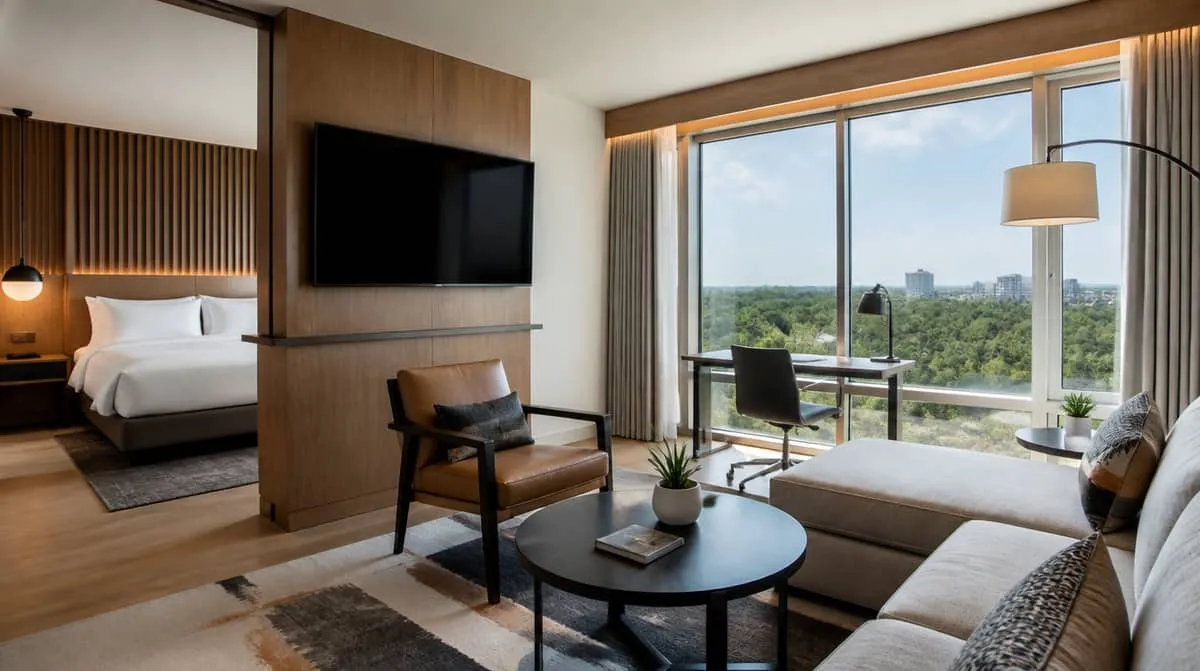
In common areas, the Research Triangle contemporary look calls for lounge chairs with solid wood legs and removable, cleanable seat cushions. Lobby seating arrangements that allow both focused individual work and small-group collaboration reflect the way RTP guests actually use hotel public space: landing spots between meetings, not purely social gathering areas.
Contract-grade COM (customer's own material) programs matter here. Raleigh designers frequently want to specify a furniture frame from a proven manufacturer and then apply a local textile or a fabric pulled from a broader interior scheme. Working with a supplier who supports COM programs without extended lead-time penalties is a genuine competitive advantage in this market.
Procurement and Delivery for Raleigh Hotel Projects
Raleigh's ongoing hotel development pipeline driven by convention center expansions, university proximity, and continued RTP growth means active FF&E procurement projects run simultaneously across the metro. Coordinating deliveries into downtown properties requires advance notice to building management, loading dock scheduling, and in many cases phased delivery to avoid disrupting occupied floors during renovation or soft-goods refresh programs.
For new construction projects near RTP or along the US-1 corridor, suppliers who can stage product at a regional distribution point and deliver in floor-by-floor sequences significantly reduce installation complexity. Lead times for custom upholstery and COM programs typically run 10 to 14 weeks from approved sample, so project managers building out Raleigh hotel schedules should lock furniture specifications early ideally at the same time as the FF&E budget is finalized rather than after.
Working with a national contract furniture supplier who maintains inventory programs for high-velocity SKUs means Raleigh operators can address urgent replacement needs a damaged chair, a broken headboard without waiting on full production lead times.
We quote hotel furniture for Raleigh operators against their own layouts and order sizes rather than a generic sheet. Request a quote and we will put together pricing for your property.
Related reading
- Commercial hotel furniture: a sourcing guide for every space
- Boutique hotel furniture: specifying a distinctive, durable look
- What is contract furniture
- Hotel furniture supplier guide
- Hospitality furniture supplier guide
- Lounge chairs for hotel lobbies
- Hotel headboards
- Hotel sofas and seating
- Commercial furniture in North Carolina