Bar and lounge operators in Raleigh are navigating one of the most interesting hospitality markets in the Southeast: a city with the nightlife energy of a major entertainment district grafted onto a professional base of research scientists, software engineers, and pharmaceutical executives. The result is a bar and lounge scene that needs to perform at a high commercial intensity while satisfying guests who will notice if your barstools are the same model they saw at a chain hotel in Phoenix. Commercial bar furniture in Raleigh is both a durability investment and a design statement.
Raleigh's Bar and Lounge Market: Glenwood South and Beyond
Glenwood South is the most concentrated bar and lounge district in the Triangle, a stretch of venues that ranges from rooftop bars with skyline views to intimate cocktail lounges occupying the ground floors of boutique hotel properties. The furniture in these spaces faces a specific operational reality: long service windows, high turnover at the bar, and guests who cycle between bar stools and lounge seating throughout an evening.
Barstools in Glenwood South venues need to handle both the physical demands of a busy Saturday night frequent mounting and dismounting, lateral stress on the base, spill exposure and the aesthetic demands of a clientele that photographs everything. Powder-coated steel frames with solid wood or upholstered seats in performance fabrics are the dominant specification here, and for good reason: they survive the operational abuse while maintaining the visual quality that drives Instagram traffic.
Hotel bars adjacent to the Raleigh Convention Center operate on a different rhythm. During major pharmaceutical summits or biotech conferences, these bars compress enormous volume into relatively short windows cocktail hours, networking receptions, post-session gatherings. The furniture needs to support flexible layout configurations: bar seating for individual guests, high-top clusters for standing-adjacent networking, and lower lounge chairs for seated conversations. Operators who can reconfigure their furniture layout between convention programming windows and regular bar service have a significant operational advantage.
The Warehouse District lounge scene leans into the industrial-chic aesthetic of the neighborhood. Exposed concrete, brick, and steel create a backdrop that calls for furniture with visual weight and honest materials. Sofas and lounge chairs with substantial frames visible welded steel or solid wood bases, thick cushion profiles read as intentional in these spaces rather than as afterthoughts.
The RTP-adjacent hotel lounge market the bars and lobbies of full-service hotels along the US-1 and I-40 corridors that serve the park's corporate campus visitors has its own distinct character: quieter, more work-oriented during the week, shifting to leisure travel patterns on weekends. Furniture in these spaces needs to span both modes.
Specifications for Commercial Bar and Lounge Seating
Bar furniture specifications in Raleigh's hospitality sector reflect the city's broader Research Triangle contemporary aesthetic: warm wood tones, matte metal accents, upholstery in performance textiles with enough visual sophistication to satisfy a design-aware clientele.
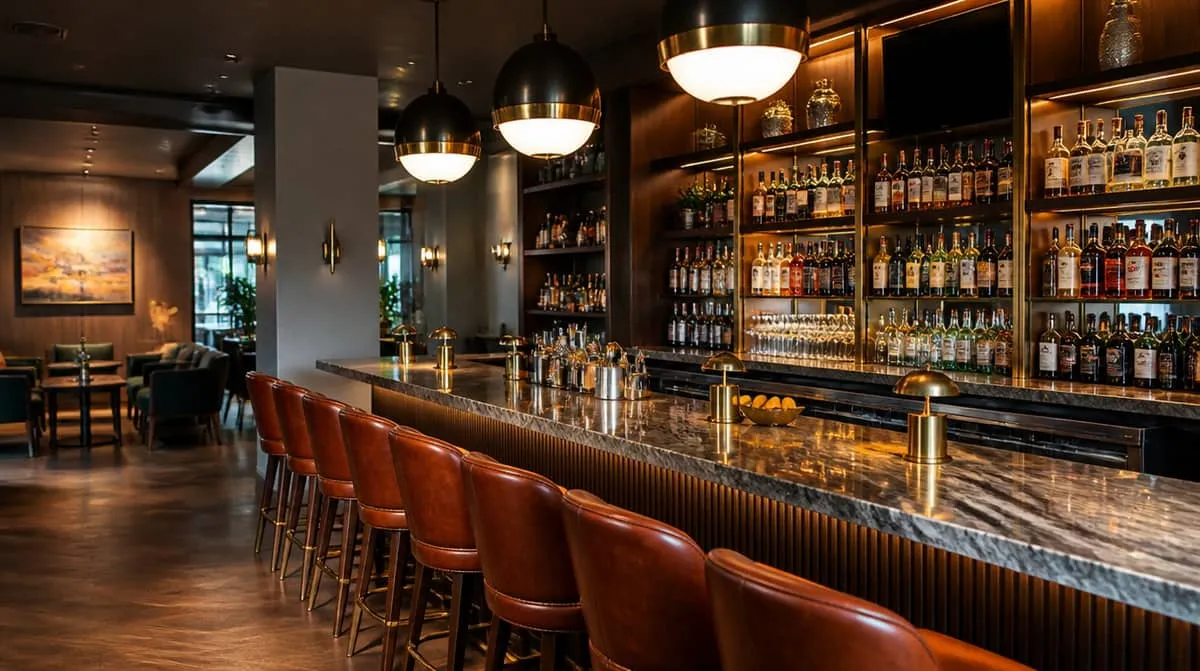
For barstools, the critical specification questions are seat height, base type, and swivel mechanism. Raleigh operators running both bar-height and counter-height seating in the same space a common layout in Glenwood South venues benefit from specifying adjustable-height or two-height barstool programs that present a visually consistent family while accommodating both counter configurations. Swivel mechanisms should be fully welded at the base plate and rated for commercial hospitality use the residential swivel mechanisms that appear in some lower-cost barstool programs fail quickly under commercial volume.
Lounge chairs for bar-adjacent seating need to balance visual comfort with commercial durability. Deep-seat configurations that feel luxurious but make it difficult for guests to stand without assistance are a poor choice for high-turnover lounge environments. A seat depth of 20 to 22 inches with a firmer cushion profile keeps the lounge feel without creating an extraction problem at the end of the night.
Ottomans serve as flexible seating supplements in lounge areas pulled forward as footrests, repositioned as additional seats during peak volume, used as low cocktail surfaces in between. Commercial ottomans for bar and lounge use should be fully upholstered in performance fabric, with no exposed wood edges or legs that create cleaning complications under spill conditions.
Ordering and Delivery for Bar and Lounge Projects
Bar and lounge renovations in Raleigh's active entertainment districts often happen on compressed timelines, particularly when operators are working around liquor license windows or planning to reopen before a major convention or festival. Suppliers with available inventory on core barstool and lounge chair SKUs can help operators meet those deadlines without sacrificing commercial-grade specifications.
Custom upholstery programs for bar and lounge projects COM fabrics, custom stain colors on wood frames add 8 to 12 weeks to lead times in most cases. Operators who identify their custom specifications at the concept design phase rather than after general contractor bids are locked in consistently avoid the value-engineering pressure that forces furniture downgrades at the end of a project.
Ready to spec bar and lounge furniture for your Raleigh project? Send us the details and we will price it around your requirements. Request a quote to start.