Pittsburgh's hospitality market has undergone a transformation as dramatic as the city itself from a post-industrial economy running on fumes to one of the most genuinely interesting urban destinations in the mid-Atlantic. The David L. Lawrence Convention Center pulls national conferences year-round, Carnegie Mellon and the broader tech corridor fills hotel blocks with extended-stay guests, and the Strip District and Lawrenceville neighborhoods have developed a dining and accommodation scene that draws leisure travelers who've stopped treating Pittsburgh as a flyover stop. For hotel operators in this market, furniture procurement isn't a commodity exercise the city's distinct aesthetic demands and unusually diverse guest profile require sourcing from a supplier who understands both contract-grade durability and design credibility.
Pittsburgh's Hotel Market: A Supplier's Perspective
The David L. Lawrence Convention Center LEED certified and one of the largest convention facilities in the mid-Atlantic anchors demand for full-service hotel rooms on the North Shore and downtown. Properties serving this market run high-volume event seasons that put guest room and public-space furniture through cycles most suburban hotels never see. Banquet-adjacent seating, lobby lounge chairs, and corridor seating need to hold up not just to normal occupancy but to the churn of back-to-back conferences with overlapping check-in and check-out windows.
On the opposite end of the spectrum, the boutique hotel boom in Lawrenceville and the Strip District is producing properties whose entire value proposition rests on distinctive interiors. These operators compete on design, not rate they cannot afford generic sourcing. They need sofas, headboards, and seating with enough character to photograph well and justify premium pricing to the tech workers and leisure travelers who research hotels the same way they research restaurants.
The healthcare corridor anchored by UPMC generates a reliable extended-stay segment medical staff, patients' families, and traveling researchers who prioritize durability and comfort over trend. And the sports calendar (Steelers at Acrisure Stadium, Pirates at PNC Park, Penguins at PPG Paints Arena) creates predictable surge seasons that stress-test furniture in ways operators need to plan for when specifying upholstery and frame construction.
Working with a supplier who can serve all four of these segments convention-adjacent full-service, design-forward boutique, extended-stay, and sports-surge from a single account relationship is a meaningful operational advantage for management companies running multiple Pittsburgh properties.
Design Standards That Fit Pittsburgh's Identity
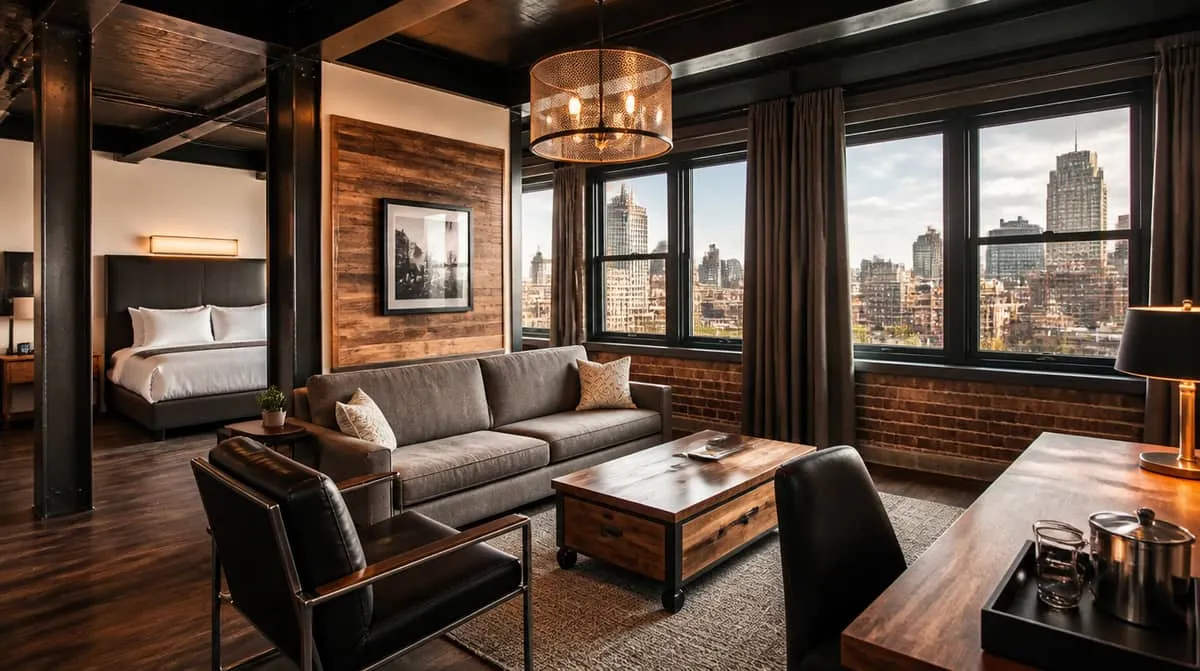
Pittsburgh has developed what designers increasingly call the "Pittsburgh aesthetic" a visual language rooted in the city's steel and industrial history that has become sophisticated enough to be referenced and imitated by other rust belt markets. It's not nostalgia. It's exposed structural steel treated with intention, reclaimed wood from demolished mill buildings given new life in tabletops and headboard panels, black metal accents that reference the bridges spanning the three rivers, and an overall commitment to honest materials and craft over veneer and artifice.
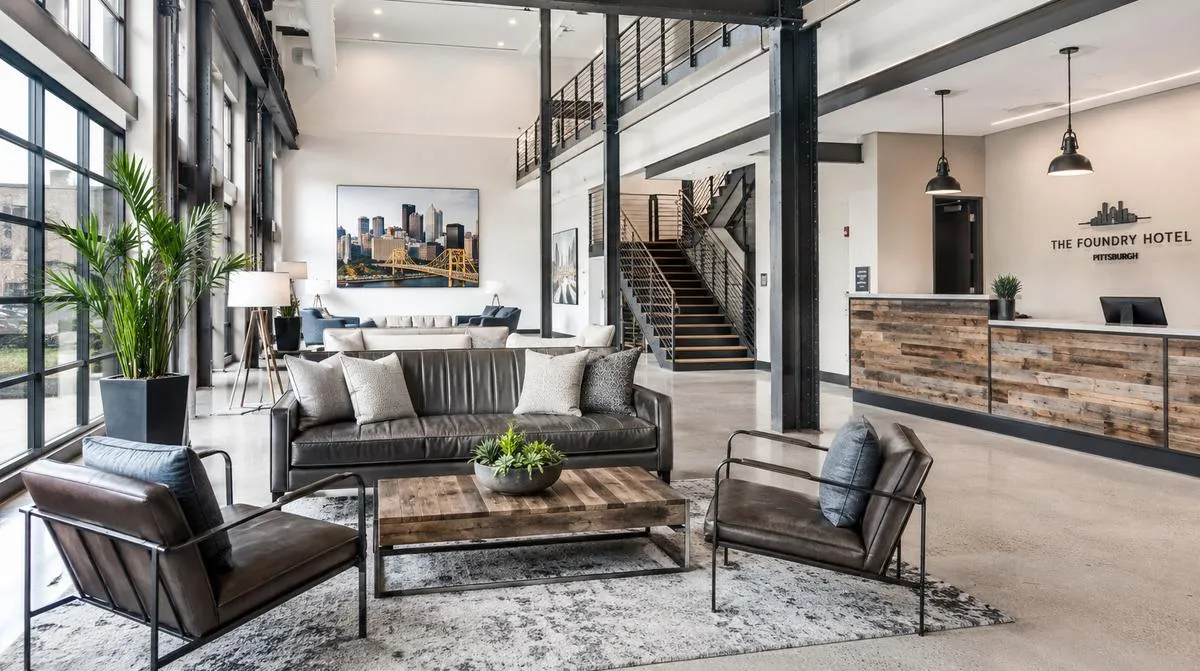
For hotel operators, this means furniture specs that would look out of place in, say, a Dallas suburban corridor feel entirely correct in Pittsburgh. Headboards with reclaimed wood panels or dark metal frames read as site-specific rather than themed. Lobby seating with visible welded joints and leather or performance fabric in charcoals and warm industrial tones connects to the streetscape outside rather than fighting it.
That said, Pittsburgh's tech economy means the guest base skews younger, more design-literate, and more likely to post interiors to social media than in legacy hospitality markets. The aesthetic has to be genuine a superficial application of industrial details on otherwise generic casegoods won't land. Contract furniture suppliers serving Pittsburgh need to offer pieces with structural honesty, not cosmetic industrial dressing.
Full-service properties near the convention center can lean slightly more traditional, but even these spaces benefit from acknowledging where they are rather than defaulting to mid-Atlantic generic.
Procurement Logistics for Pittsburgh Projects
Pittsburgh's market presents a specific logistical reality for large furniture orders: the city's geography bridged river valleys, steep grades into neighborhoods like Lawrenceville and Polish Hill means freight and installation coordination requires more planning than flat-grid cities. Suppliers who have not delivered to Pittsburgh before sometimes underestimate staging and elevator access constraints in older buildings undergoing adaptive reuse.
Lead times for contract-grade hotel furniture typically run 8 to 14 weeks depending on custom specifications. For Pittsburgh properties, coordinating delivery against construction phasing requires a supplier relationship, not a transactional vendor. Phased deliveries, warehouse-hold programs, and installation teams familiar with Pittsburgh's building stock are worth asking about before signing a purchase order.
Properties operating through soft-brand or independent flags should also account for the renovation cycles driven by Pittsburgh's older building stock historic conversions in the Strip District and Oakland require furniture that works within existing architectural constraints rather than demanding full gut renovations to accommodate.
Pricing for hotel furniture in Pittsburgh depends on quantities, finishes, and your delivery window, so a project-specific quote beats any list figure. Request a quote to get yours.
Related reading
- Commercial hotel furniture: a sourcing guide for every space
- Boutique hotel furniture: specifying a distinctive, durable look
- What is contract furniture
- Hotel furniture supplier guide
- Hospitality furniture supplier guide
- Lounge chairs for hotel lobbies
- Hotel headboards and bedroom furniture
- Commercial sofas for hospitality
- Commercial furniture in Pennsylvania