Louisville occupies a singular place in American hospitality: no other city concentrates this much high-stakes, high-visibility event demand into a single weekend while simultaneously sustaining year-round tourism from one of the country's fastest-growing travel categories. Hotels here must furnish for Churchill Downs grandeur and bourbon trail adventurers in equal measure, and the furniture they choose signals whether a property belongs in that conversation or not.
Louisville's Hotel Market: Churchill Downs to the Bourbon Trail
The first Saturday of May reshapes Louisville's entire hospitality economy. Churchill Downs draws over 150,000 attendees on Derby Day alone, and the week leading up to it Derby Week fills every hotel room from downtown to the airport corridor. Properties on West Main Street and in the Central Business District command rates that rival New York and Las Vegas for those seven days, which means room furnishings must photograph well, hold up under maximum occupancy, and still look fresh when inspectors walk through in June.
But the Derby is only the most visible pressure point. The Kentucky Bourbon Trail has evolved from a niche enthusiast experience into one of the Southeast's premier travel draws, bringing visitors who expect their hotel rooms to feel like an extension of the distillery experience warm wood tones, leather accents, materials that feel aged and considered rather than generic. Properties near Distillery Row on West Main Street, the 21c Museum Hotel, and the Omni Louisville have set a design standard that the broader market now chases.
The Louisville Convention Center anchors a separate demand category: corporate and association travel tied to healthcare conferences (Humana and Kindred Healthcare both headquarter here), logistics summits, and regional trade shows. Those guests arrive expecting clean, functional guest rooms with durable sofas and armchairs that survive multi-night corporate stays without showing premature wear.
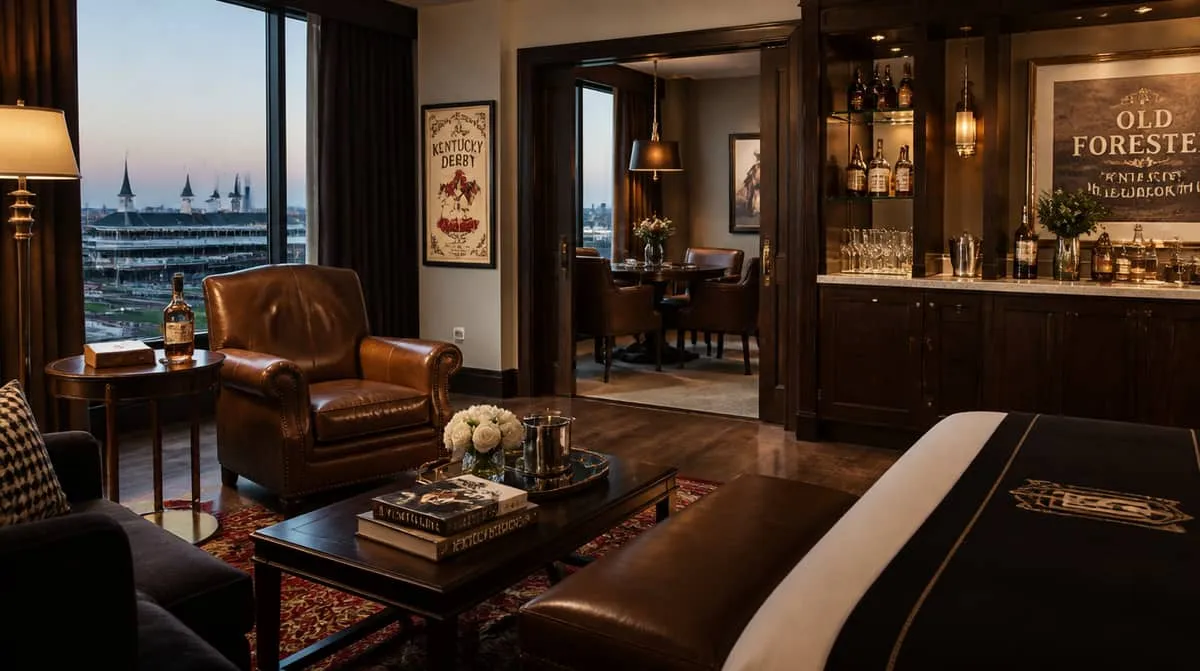
NuLu New Louisville on East Market Street is the city's emerging boutique hotel district, where independent operators are opening properties that compete on design and experience. These buyers shop differently from the branded hotels: they want distinctive pieces, are willing to mix materials, and have tighter budgets that require a supplier who can deliver contract-grade quality at boutique-appropriate price points.
The Louisville Aesthetic: Derby Heritage Meets Modern Warmth
Louisville's dominant hotel design language pulls from Kentucky's deep material traditions: dark walnut and mahogany millwork, cognac and bourbon-brown leather, jewel tones deep burgundy, hunter green, navy that evoke the Derby's pageantry without tipping into kitsch. The aesthetic is formal-yet-warm, grand but not cold.
For guest room furniture, this translates into solid wood casegoods with visible grain, upholstered headboards in jewel-tone velvets or textured wovens, and lounge chairs in leather or leather-adjacent materials that age gracefully. Cognac leather club chairs are almost a requirement in lobbies and suite sitting areas for properties competing in the premium tier.
NuLu boutique properties diverge from this template. They lean into a more contemporary interpretation lighter wood tones, mixed metals, abstract textiles that nods to Louisville's heritage without replicating it. A supplier who serves the full Louisville market needs range across both aesthetics.
Contract-grade durability specifications are non-negotiable regardless of design direction. Kentucky summers are humid, Derby Week compression is intense, and properties simply cannot afford the downtime and cost of replacing furniture every two or three years. Look for double-doweled and corner-blocked frames, rub-count ratings above 50,000 for upholstery, and moisture-resistant finishes on all wood pieces.
Procurement and Delivery Coordination in Louisville
Louisville sits at the intersection of I-64, I-65, and I-71, making it one of the most logistically accessible cities in the mid-South. Most suppliers serving this market can reach downtown Louisville from regional distribution hubs without the urban delivery complications that slow projects in coastal cities.
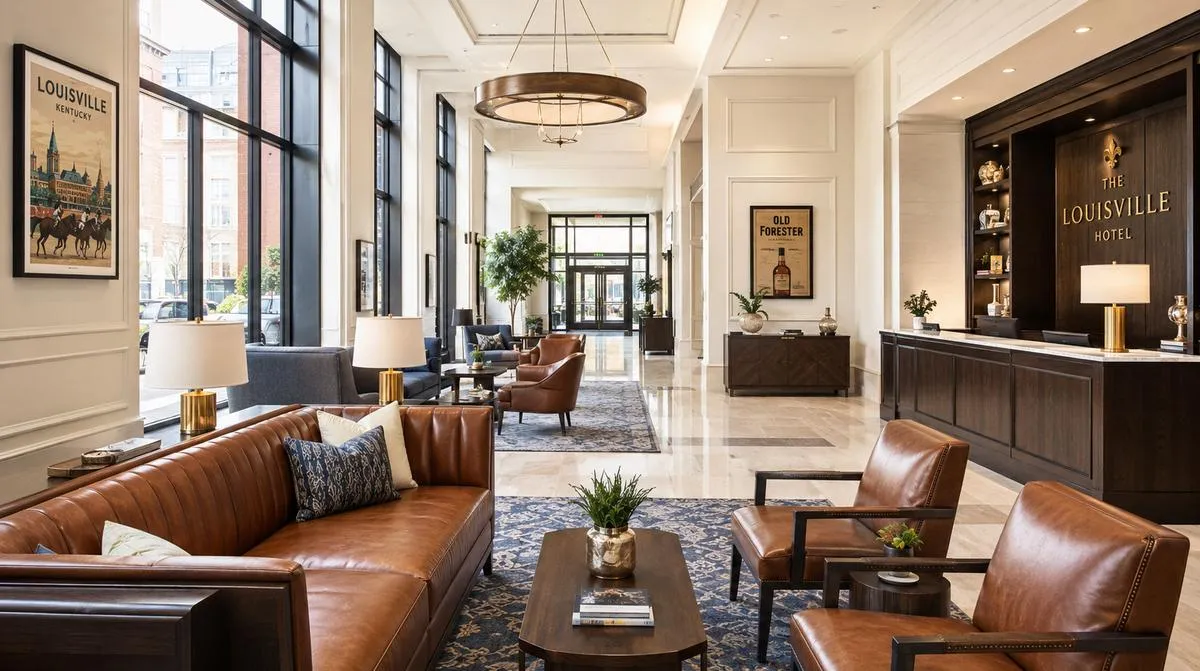
That said, timing is everything. Any hotel renovation or new opening that isn't fully furnished by mid-April risks getting caught in the Derby Week freight freeze carriers and installers in Louisville go fully committed weeks before the race, and trying to push a punch-list delivery through during Derby Week is expensive and unreliable. Experienced FF&E coordinators build their Louisville project schedules backward from the first Saturday of May with explicit buffers built in.
For phased renovations, floor-by-floor sequencing allows properties to maintain occupancy on unaffected floors while completing work in sections. Lead times on custom upholstered pieces typically run 10-14 weeks; casegoods from stock programs ship in 2-4 weeks. Plan accordingly and lock your vendor commitments early.
We quote hotel furniture for Louisville operators against their own layouts and order sizes rather than a generic sheet. Request a quote and we will put together pricing for your property.
Related reading
- Banquet tables in Louisville: sizing and specs
- Commercial hotel furniture: a sourcing guide for every space
- Boutique hotel furniture: specifying a distinctive, durable look
- What is contract furniture
- Hotel furniture supplier guide
- Hospitality furniture supplier guide
- Lounge chairs for hotel guest rooms
- Hotel headboards and bedroom furniture
- Commercial sofas for hotel common areas
- Commercial furniture in Kentucky
Our take
Derby Day, the first Saturday of May, is the anchor date this piece frames Louisville procurement timing around, but the actual scheduling constraint named is earlier: any furniture not fully installed by mid-April gets swept into the Derby Week freight freeze, since carriers and installers go fully committed weeks before the race. Working backward from mid-April rather than from Derby Day itself, and against the ten to fourteen week lead time the post cites for custom upholstered pieces, a custom order needs to be placed closer to early January than the general early May framing suggests, a difference of roughly three weeks that matters for anyone planning off the wrong anchor date.
The bottom line: Louisville operators should plan custom furniture orders against the mid-April freight freeze cutoff the post describes, not against Derby Day itself, since the freeze date is the actual binding constraint the stated lead time has to clear.