Louisville is not just a city with bars it's a city where bar culture is a primary tourism product. Whiskey Row on West Main Street, the distillery tasting rooms along the Urban Bourbon Trail, the rooftop bars of the CBD hotel towers, and the neighborhood bourbon bars of the Highlands and Germantown together form an ecosystem that sets a design standard few American cities can match. Furniture in these environments is doing strategic work: it tells arriving guests whether this is a place worth sitting down in.
Whiskey Row, Tasting Rooms, and the Urban Bourbon Trail
Louisville's bourbon bar category is unlike any other American bar market. The operators on Whiskey Row Old Forester's Peerless, Rabbit Hole, and the cluster of whiskey bars that have built around them serve guests who have arrived specifically for a curated bourbon experience. These guests are educated, they have expectations, and they are comparing your bar to the beautifully appointed tasting rooms at the major distilleries outside the city. Generic furniture fails immediately in this context.
The material language of the whiskey bar is dark: aged wood, burnished leather, brass hardware, exposed brick wherever the building allows it. Barstools in these environments should have solid wood or metal frames with leather or faux-leather upholstery in cognac, tobacco, or dark brown materials that read as aged without being literally worn out. Swivel mechanisms matter; stationary barstools work fine at low-volume neighborhood bars but become frustrating at high-throughput bourbon bars where guests are constantly rotating through flights. Footrest rails take enormous abuse in bar environments and should be specified at commercial grade welded steel rather than slip-fit connectors.
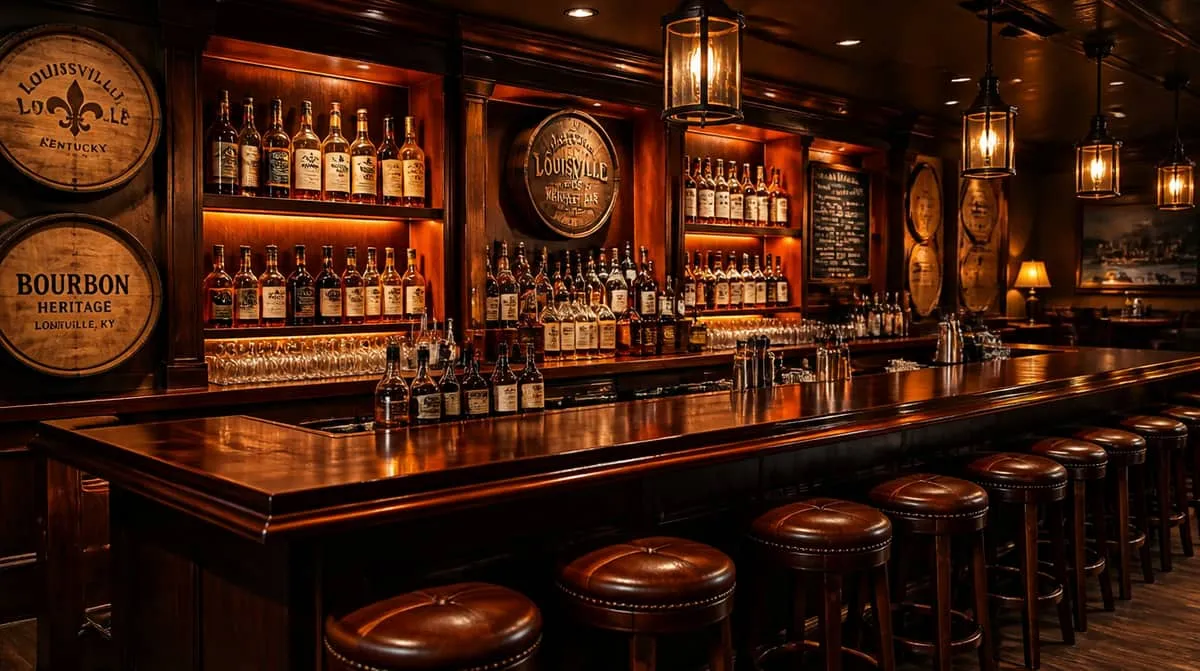
The hotel rooftop bar category is Louisville's other dominant format. Properties like the Omni, the Cambria, and the 21c all operate elevated bars that serve a mixed audience of hotel guests and Louisville residents. These spaces require lounge chairs and seating clusters that work for standing-height drinking as well as seated conversations, often in the same square footage. Modular configurations clusters of two or four seats around a low table give operators flexibility to reset for different crowd densities.
For tasting room operators at distilleries within driving distance of Louisville the Bernheim Forest area, the Bullitt County distilleries furniture choices anchor the brand experience just as much as the bourbon itself.
Designing Bar Seating for Louisville's Bourbon Aesthetic
The spec brief for a Louisville whiskey bar is more specific than most markets. The target is a look that feels permanent, materially serious, and rooted in Kentucky craft not trendy, not temporary, and definitely not generic hospitality-beige.
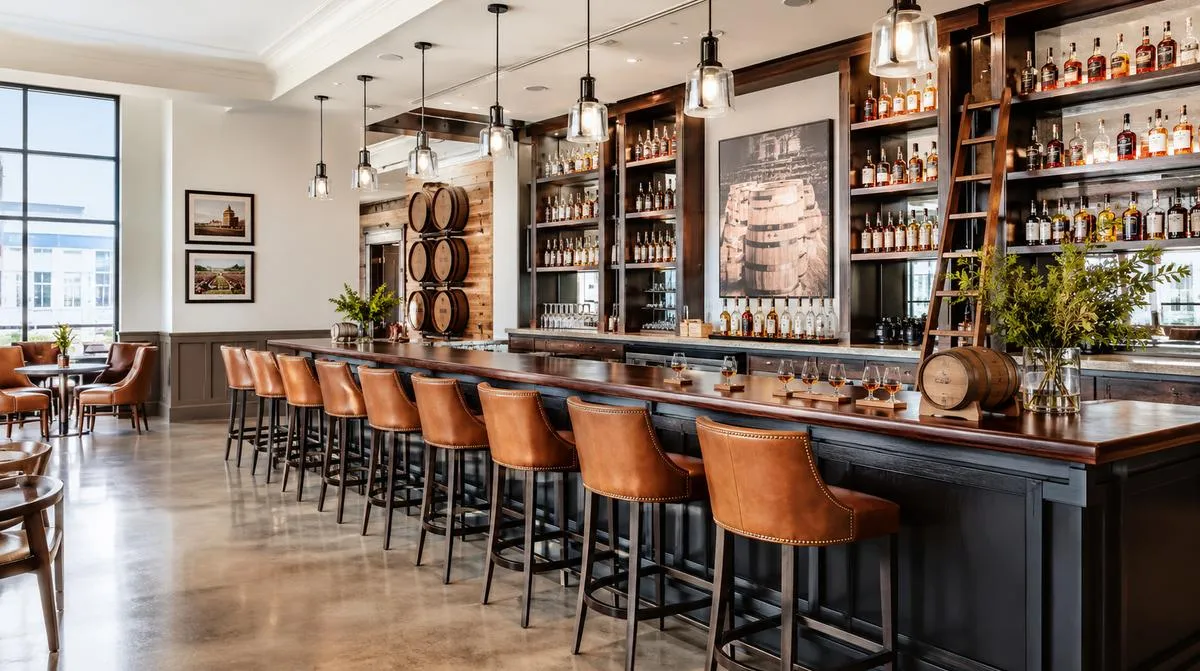
For bar counters, barstools with solid walnut or dark-stained oak backs and seats in cognac leather real or high-quality faux hit the target. The height range matters: most Kentucky whiskey bars use standard 42-inch bar heights, which calls for 30-inch-seat-height stools with footrests at 9-10 inches from the floor. Confirm your bar height before specifying.
Lounge seating in whiskey bars and bourbon lounges should feel weighty and generous. Deep-seated lounge chairs and sofas in dark leather or jewel-tone velvet (burgundy and hunter green remain the go-to choices in this market) invite guests to settle in for a longer tasting experience rather than cycle quickly through. That's usually exactly what the operator wants dwell time translates to additional pours.
NuLu bars operate in a slightly different register: more contemporary finishes, lighter wood tones, and more willingness to mix materials. An exposed-metal stool with a natural oak seat and leather pad reads right for the East Market Street crowd.
Procurement and Installation Considerations
Bar furniture takes the most sustained abuse of any hospitality category daily, all-day, often late into the night. Stool swivel mechanisms, upholstery seams, and footrest welds are the failure points to watch. Spec commercial-grade throughout, and confirm that the supplier offers replacement parts for proprietary components.
Derby Week applies maximum pressure to Louisville bar environments. Every whiskey bar on Whiskey Row, every rooftop hotel bar, and most NuLu bar concepts operate at capacity for the better part of two weeks. Furniture must arrive and be fully installed before mid-April not because of logistics preference but because the window to fix problems narrows to nothing as Derby Week approaches.
For Louisville properties comparing bar and lounge furniture options, project-specific pricing tells you more than any published range. Request a quote and we will scope it to your space and volume.
Related reading
- Banquet tables in Louisville: sizing and specs
- Commercial bar furniture buying guide
- What is contract furniture
- Hotel furniture supplier guide
- Hospitality furniture supplier guide
- Barstools for commercial bars
- Lounge chairs for bar and lounge environments
- Commercial sofas for bourbon lounge seating
- Commercial furniture in Kentucky