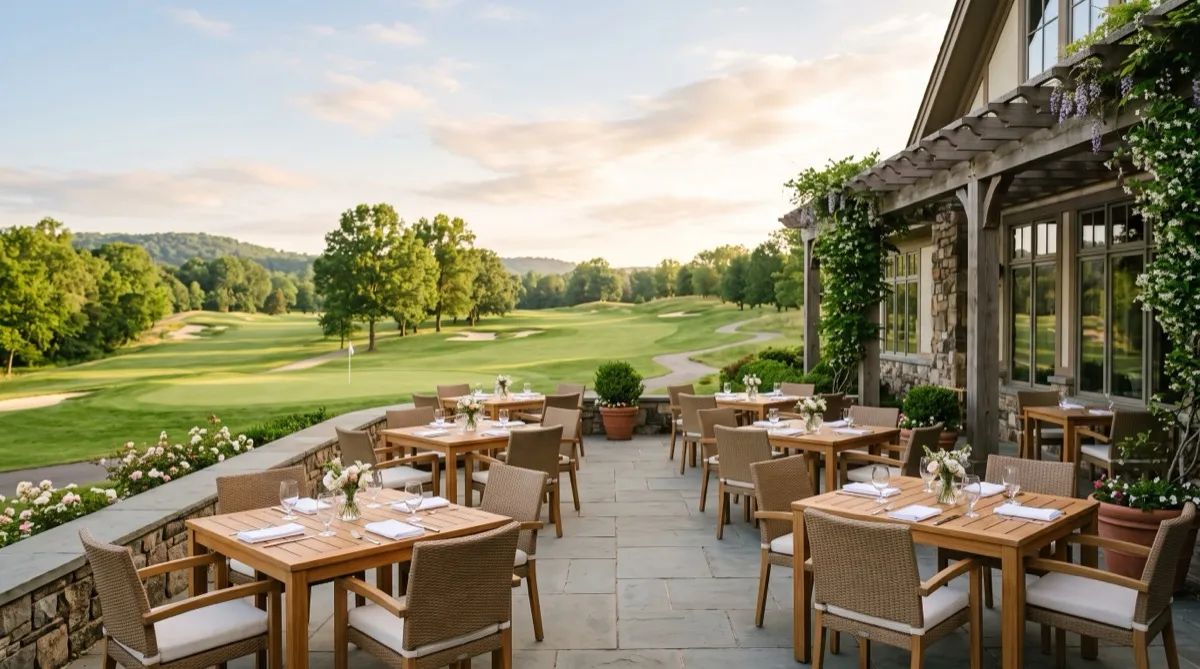
A golf course furniture plan can cover clubhouse dining, the 19th hole patio, and outing or banquet layouts. The guide’s 150-person awards lunch is an example event, not a confirmed room capacity. Record the actual uses, quantities, cleaning, exposure, movement, and delivery needs for each zone before combining the order.
Plan each zone against the course’s own operating and event calendar, then check which furniture or handling equipment can serve more than one approved layout. Here is how to organize the volume purchase.
Clubhouse dining: built for daily cover counts, not just looks
Size the clubhouse and grill-room furniture against actual service hours, cover counts, cleaning, and staff handling. Those inputs establish the proposed duty; this guide has no property data showing that dining is always the most-used zone or that every course operates seven days a week.
For dining chairs, request complete-frame use and test documentation, model load limits, and the exact upholstery’s cleaning and abrasion method. ACT’s guidance explains why a 50,000 double-rub figure alone cannot predict service life. Select table finishes against the approved cleaners and expected moisture; welded frames, wood-look metal, laminate, and sealed composite do not establish universal protection against water rings, humidity, or cleat scuffs.
The 19th hole patio: outdoor furniture that survives golf, not just weather
For the patio and outdoor bar, record sun, rain, moisture, cleaning, and contact with cleats or equipment at the actual site. A golf property may have different exposure from its dining room, but the course category alone does not establish more sun or harsher wear than every restaurant patio.
Request the proposed model’s approved outdoor use, finish and upholstery care, exposure limits, and any UV or drying documentation relevant to the site. Confirm glides against the actual patio surface. If the furniture also serves outings, verify stack limits, carts, and both layouts. Material or performance-fabric labels do not establish fading resistance, drying speed, or a season-long glide life.
Outing and banquet seating: the volume driver
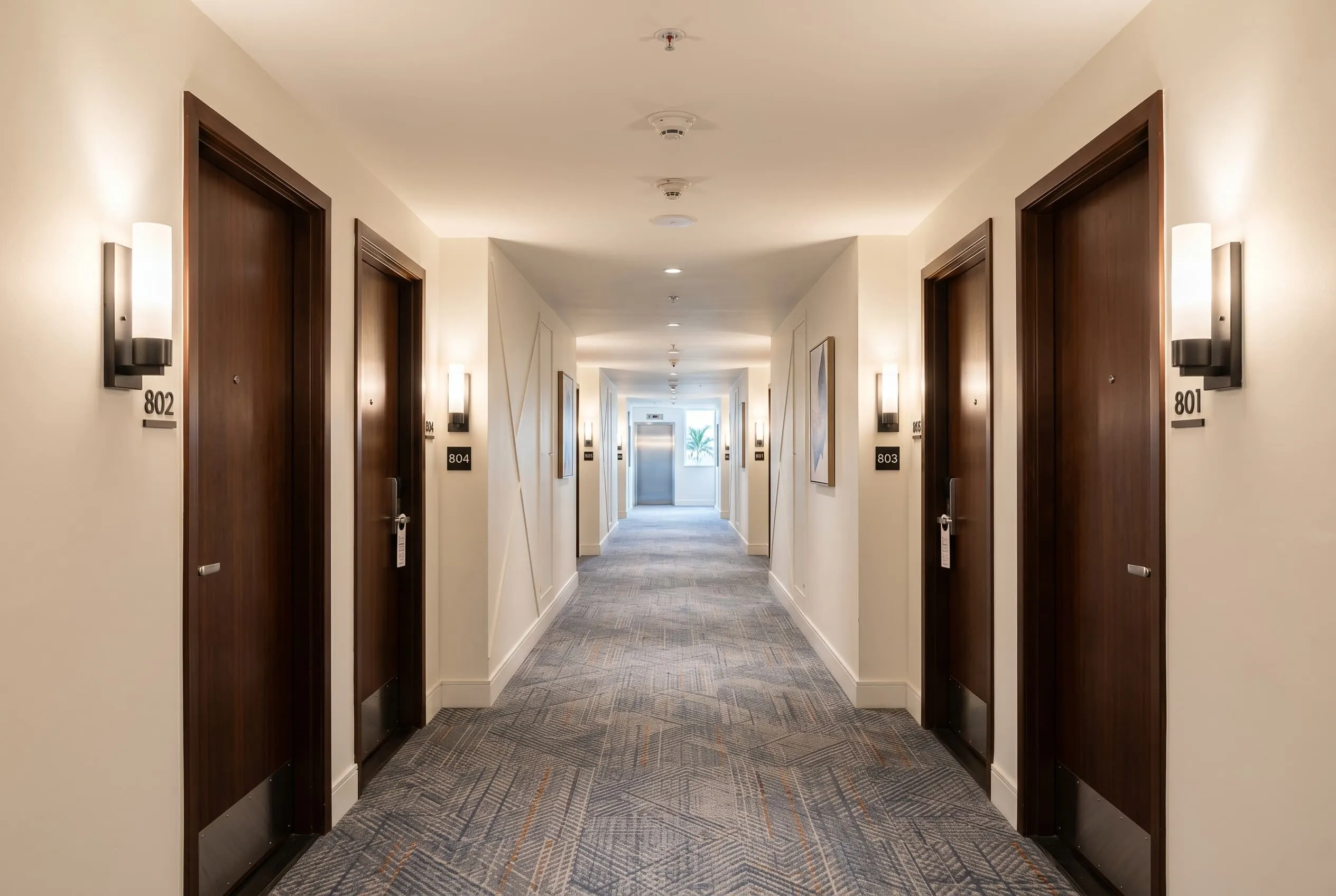
Use the largest approved outing or banquet layout, overlapping bookings, reserve needs, and reset schedule to size chairs and tables. Confirm the staff route and storage for that quantity rather than treating an event’s player count as the seating or cart requirement.
The May 30, 2026 guide’s published planning allowances were $45 to $90 for steel stacking chairs, $70 to $130 for aluminium stacking chairs, $60 to $130 for round 60 inch tables, $50 to $120 for rectangular 6 to 8 foot tables, and $70 to $150 for cocktail or highboy tables. These are historical illustrative inputs, not current supplier offers or documented weight comparisons. Check the actual formats and seats in the approved layout, then obtain model-specific prices including carts, finishes, freight, and services.
Buying direct at commercial spec versus retail
Compare proposals on the exact model’s intended use, tests, care, and support, regardless of sourcing channel. Buying direct or at volume does not guarantee a lower price. For a course-wide order, ask how freight is priced for the actual quantity, delivery address, dock or liftgate, truck access, and any limited-access conditions, so each proposal covers the same receiving scope.
Lead times and what to check before you order
The published 2 to 6 week stock and 8 to 14 week custom windows are planning examples, not current allocation or delivery commitments. Obtain approval, production or allocation, dispatch, and delivery milestones tied to the tournament calendar. Confirm model use, load and stack limits, compatible carts, upholstery care and test method, warranty scope, and glides for the actual surfaces. Ask about sample availability and timing rather than assuming a trial adds exactly one week.
Getting a quote
A combined order can include clubhouse seating, patio furniture, and banquet chairs and tables, each with its own approved use and dates. Request a quote for independent suppliers to review, with item, quantity, finish, delivery location, receiving conditions, and timeline by zone. Use the furniture cost calculator for initial budget scenarios and compare itemized supplier prices before committing.
Related reading
- Banquet Chairs: The Complete Commercial Buying Guide
- Buying Banquet Chairs in Bulk: Pricing, Freight, and What to Check Before You Order 100 or More
- Ballroom Furniture Guide
Our take
Check the actual transport route between storage and event spaces, including turf, gravel, cart paths, slopes, thresholds, and indoor floors. Request handling equipment approved for the furniture, load, and terrain, then trial it with staff under its instructions. Wheel diameter or pneumatic construction alone does not establish a correct cart for every course route or prevent damage.
The bottom line: Specify dining, patio, and banquet furniture against each zone’s actual use and approved layout. Confirm model-specific care, exposure, stacking, and transport documents, then compare the complete delivered proposals.