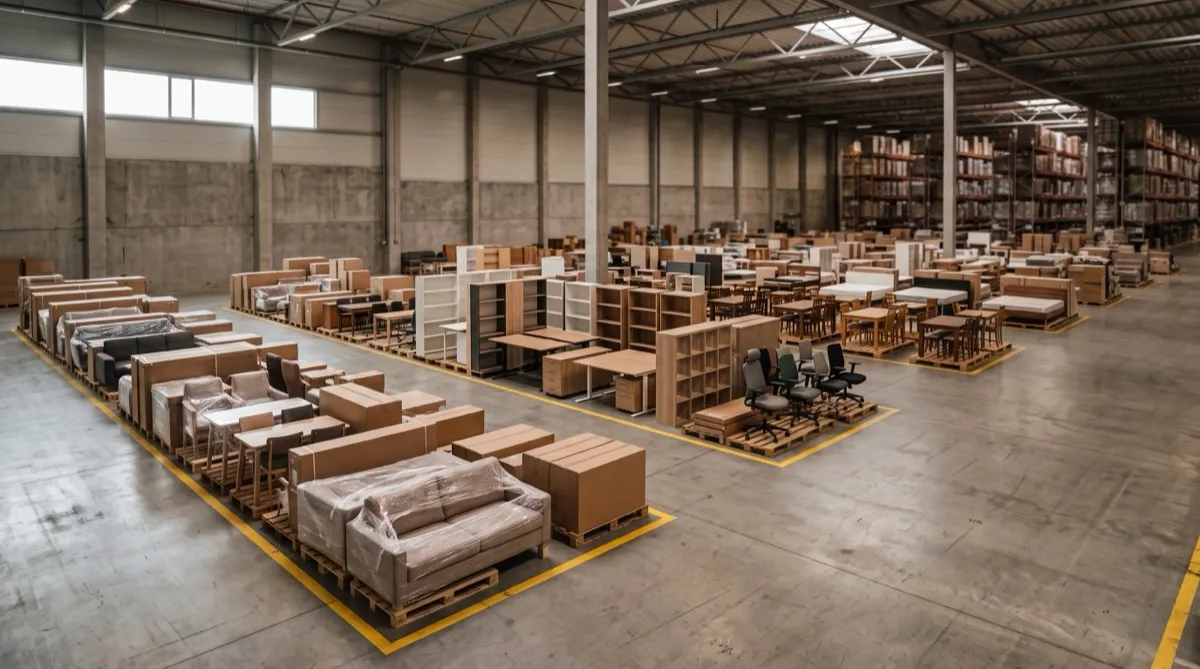
FF&E procurement gets planned around production and freight, and warehousing gets treated as an afterthought, the place furniture sits if something goes wrong. In practice, warehousing and staging are where a well-planned procurement schedule either holds together or falls apart, because construction sites are rarely ready exactly when furniture arrives.
Why staging exists at all
A hotel or restaurant build almost never finishes on the day the specification said it would. Punch lists run long, permits slip, and finish trades run behind schedule. Meanwhile, furniture that was ordered on a ten to fourteen week production clock keeps moving toward delivery on its own timeline, one that does not wait for construction to catch up. Staging and warehousing exist to absorb that gap, holding furniture in a controlled space until the site can actually receive and install it.
Without a staging plan, freight either sits on a truck at demurrage cost, gets refused at a site that cannot accept it, or gets crammed into a half-finished space where it risks damage from ongoing construction work. None of those outcomes are acceptable on a project with a fixed opening date.
Receiving and inspection at the dock
Every shipment needs inspection at the point of receiving, not after it has already moved into a room or been unpacked into storage. Count pieces against the packing list, check for visible transit damage on crates and packaging, and open a sample of cartons per shipment rather than assuming a full container arrived intact. Damage found at receiving is a freight claim. Damage discovered weeks later during installation is a much harder conversation, and coverage windows for freight claims are short, often measured in days, not weeks.
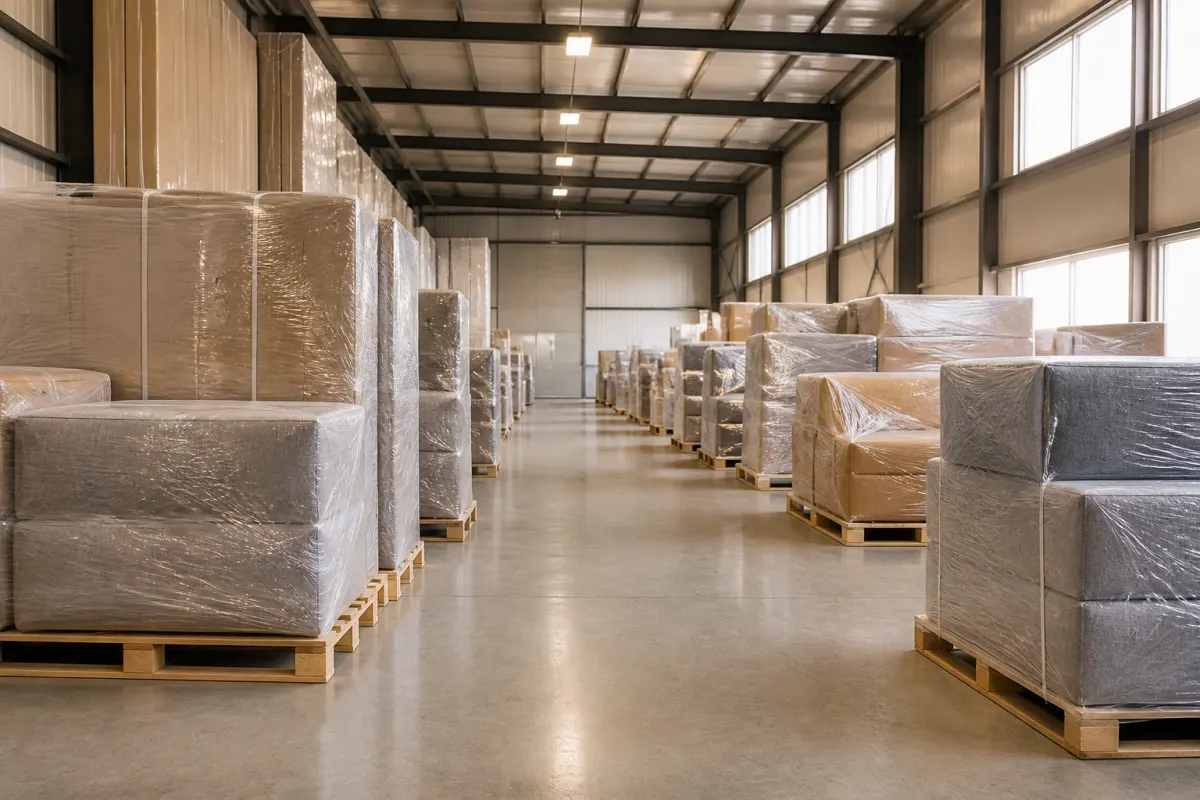
Photograph anything questionable before it moves off the dock. A clear photo record at the moment of receiving is the difference between a straightforward claim and a disputed one.
Damage claims windows
Freight carriers and manufacturers set specific windows for filing damage claims, and those windows start running the moment goods are signed for, not the moment someone gets around to inspecting them. Build inspection into the receiving process itself so nothing sits unopened past the claims deadline. A pallet that goes straight into storage without inspection and gets opened six weeks later, past the claims window, turns a covered damage issue into an uncovered loss.
Storage cost logic: just-in-time versus stockpile
There are two basic strategies for staging FF&E ahead of installation, and the right one depends on how confident the schedule is. Just-in-time staging times deliveries to arrive close to the actual installation date, minimizing storage cost and handling but carrying schedule risk if the site slips and cannot receive on time. Stockpile staging brings furniture in early and holds it in a warehouse for a longer window, which costs more in storage and handling fees but protects the project from a construction delay derailing the furniture schedule.
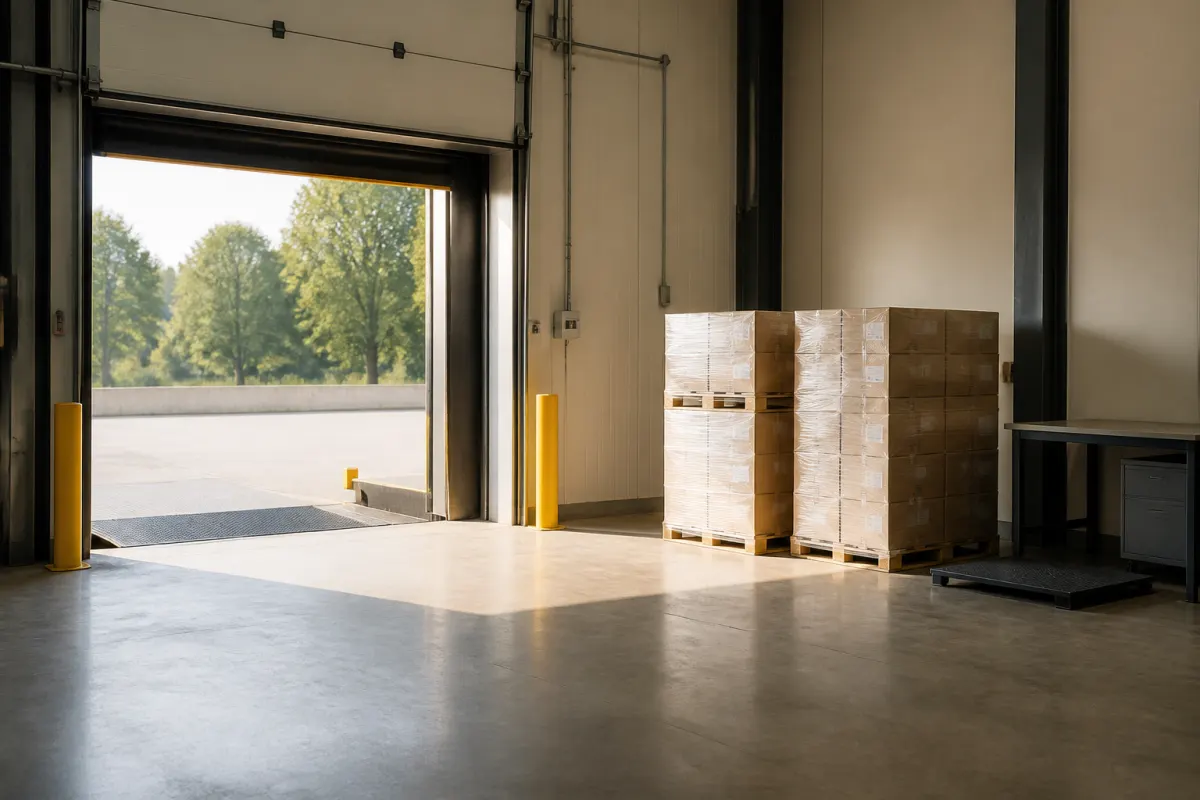
Most large projects use a blend. Long-lead custom items that are hardest to accelerate get ordered early and stockpiled, since replacing a delayed custom order is not a fast fix. Stocked or shorter-lead items get timed closer to just-in-time, since reordering them if a delay pushes the schedule is a much smaller problem.
Coordinating staging with construction
The warehouse or staging area needs a clear release trigger, a defined point in the construction schedule (drywall complete, flooring installed, a specific inspection passed) after which furniture is authorized to move from storage into the space. Moving furniture in before that trigger risks damage from ongoing trades, dust, and equipment traffic. Waiting too long past it wastes storage cost on furniture that could already be installed.
A staging plan that names the release trigger for each phase of the project, rather than a vague "when the site is ready," keeps the logistics team and the construction team working off the same signal instead of guessing at each other's schedule.
Insurance and liability while goods sit in storage
Furniture sitting in a warehouse for weeks or months between receiving and installation still needs coverage against fire, water damage, and theft, and the responsibility for that coverage should be spelled out explicitly rather than assumed. Some suppliers carry warehouse insurance on goods they are holding under a staging agreement; others expect the owner or general contractor to carry coverage from the moment of receiving. Get this in writing before goods start arriving, since a warehouse fire or a burst pipe with no clear insurance owner turns a logistics problem into a legal dispute on top of a schedule delay.
Tracking inventory across multiple shipments
Large FF&E orders rarely arrive in a single shipment. Casegoods, seating, and soft goods often ship separately, sometimes from different factories, on different schedules. A staging plan needs an inventory system that tracks what has arrived, what is inspected and cleared, and what is still in transit, tied to the room or unit it is destined for. Without that tracking, a warehouse full of partial shipments becomes difficult to audit against the installation schedule, and a missing carton is not discovered until an installation crew opens boxes expecting a complete set and finds a gap.
Building this into the procurement plan from the start
Warehousing and staging should get scoped and quoted as part of the procurement plan, not negotiated after freight is already moving. Ask your supplier how staging and short-term storage are handled before you sign a purchase order, not after a delay has already put furniture in transit with nowhere to land.
Our FF&E procurement guide covers the full workflow from specification through installation, including where staging fits into the sequence. For deeper detail on the freight side specifically, see our guide to FF&E logistics and installation.
Planning a project with a tight or uncertain construction schedule? Request a quote with your target dates and we will build a staging plan that protects the opening date.