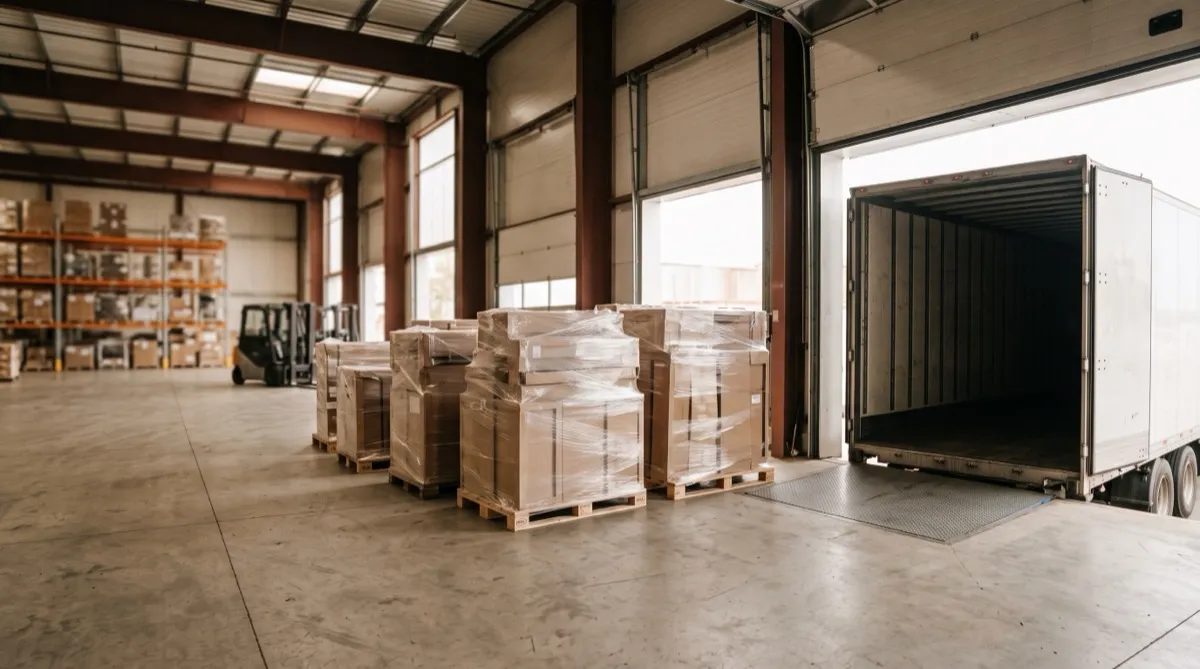
Freight is the part of FF&E procurement that gets the least attention during specification and causes the most problems during delivery. A well-specified furniture package can still show up damaged, incomplete, or on the wrong day if the freight plan wasn't built alongside the purchase order. Here's how the actual shipping methods work and how to plan around them.
LTL, FTL, and container: the three modes
Less than truckload (LTL) freight consolidates your shipment with other freight on a shared truck, priced by weight and space rather than a full trailer. It's the standard method for smaller orders and mid-size furniture packages, and it's typically the most economical option when you don't have enough volume to fill a trailer on your own.
Full truckload (FTL) dedicates an entire trailer to your shipment. It costs more per trailer but the freight moves without the multiple stops and transfers an LTL shipment goes through, which reduces handling damage and gets a large order to site faster and more predictably. FTL becomes the right call once an order's size approaches trailer capacity, since splitting it across multiple LTL shipments at that point rarely saves money and adds coordination complexity.
Container freight applies to imported furniture moving from the factory to a US port before the final domestic leg. This is the international portion of the supply chain for factory-direct commercial furniture, and it's where the bulk of your 10 to 14 week production and shipping timeline actually lives. Once product clears the port, it transfers to LTL or FTL for the final domestic delivery.
Curbside vs white glove delivery
This decision affects your labor cost and your receiving day logistics more than almost any other freight choice.
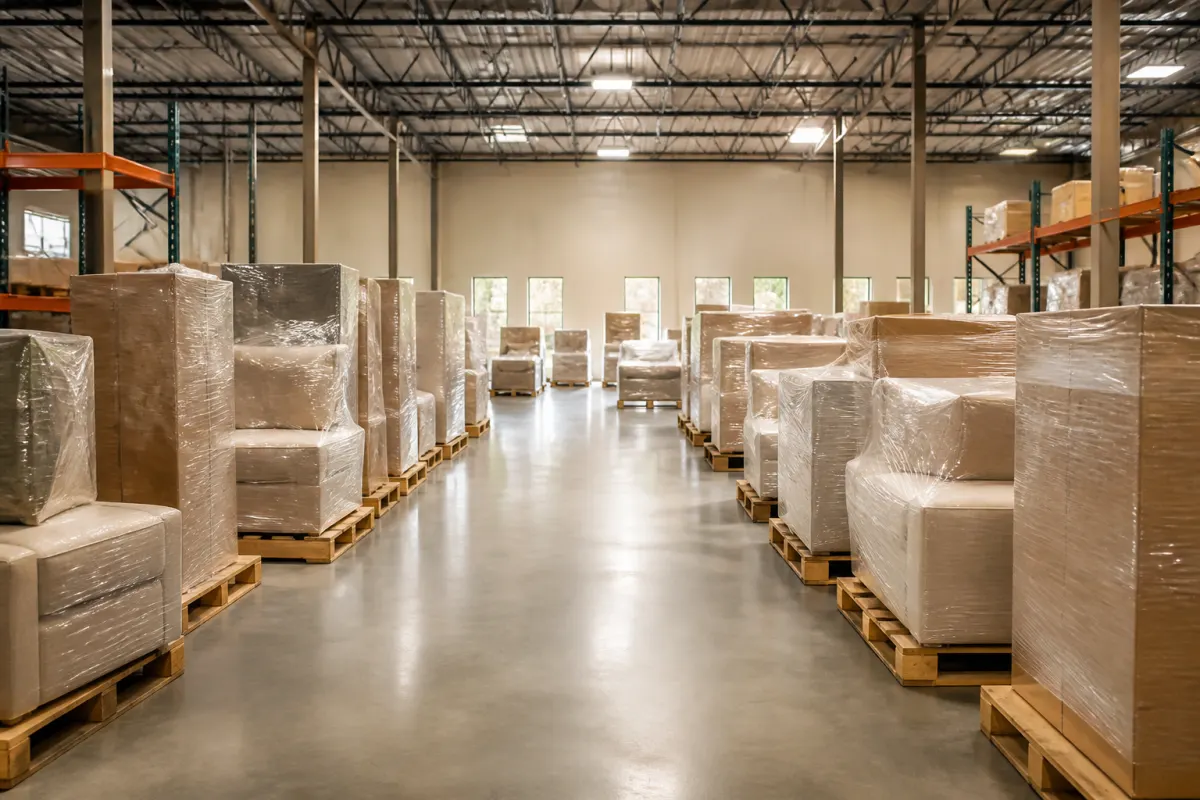
Curbside delivery gets the freight to your building's exterior, dock or ground level, and stops there. Someone on your side needs to unload, unpack, inspect, and move every piece into the building and to its final location. This is the lower-cost option, and it works when you have staff, a loading dock, and the labor bandwidth to handle a large delivery internally.
White glove delivery brings the freight inside, unpacks it, removes the packaging, and places each piece in its designated spot per a floor plan, sometimes including basic assembly. It costs more but removes the labor and damage risk of moving furniture through a building yourself, especially for upper floors, tight hallways, or elevator-dependent access. For hotel and large venue projects, white glove is usually worth the premium simply because internal moves of a large furniture order are disruptive and risky without a crew set up specifically for it.
Ask for delivery method priced as part of your quote rather than estimated separately after the furniture order is placed. The cost difference between curbside and white glove is significant enough that it should be a decision made during budgeting, not discovered on delivery day.
Damage claims and inspection
Freight damage happens, and how you handle inspection determines whether you can actually recover for it. The rule that matters most: inspect and note damage on the delivery receipt before the driver leaves, not after. A signed clean delivery receipt makes a damage claim difficult to pursue later, even if the damage is discovered minutes after the truck pulls away.
Open and inspect a sample of cartons at delivery whenever the shipment allows it, not just the exterior packaging. Concealed damage, damage inside a carton that looks fine from the outside, needs to be reported within a short window after delivery, so build time into your receiving day plan to open product rather than just stacking sealed cartons in a storage room to deal with later.
Photograph everything: the exterior of damaged cartons, the interior damage itself, and the shipping label showing the piece and order number. A documented claim with photos moves faster than a verbal report days after the fact.
Running an efficient receiving day
Confirm access details before the truck arrives: dock height, door and hallway clearances, elevator dimensions if the delivery is going above ground level, and whether the site can actually receive the volume showing up that day. A large FF&E order arriving at a site with no clear staging area turns into a hallway full of furniture and a logistics problem instead of a smooth install.
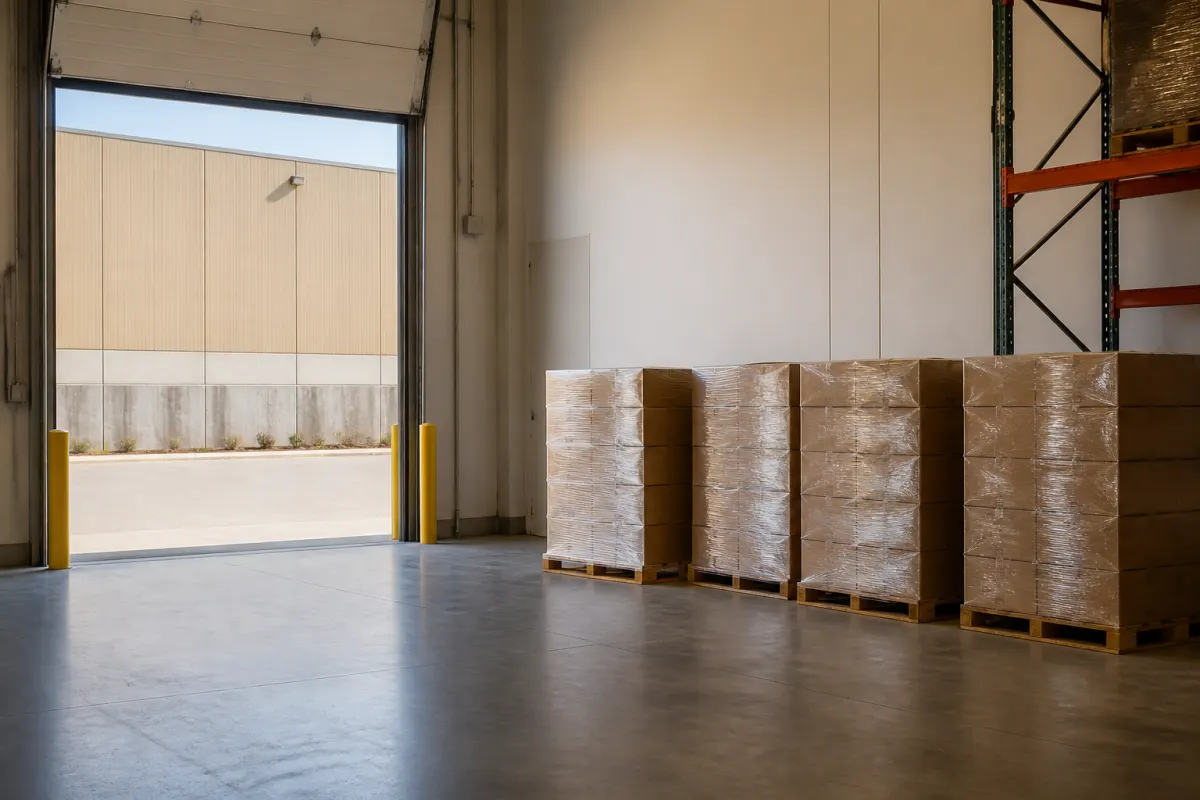
Assign a receiving lead who checks the delivery against the packing list, confirms piece counts by category, and flags shortages or damage in real time rather than discovering gaps after the crew has left. For phased deliveries across a multi-room or multi-floor project, track receiving by phase so a shortage in one delivery doesn't get lost by the time the next one arrives weeks later.
Warehousing when the site isn't ready
Construction schedules slip more often than furniture production schedules do, which means furniture frequently finishes production before a site is ready to receive it. Short-term warehousing bridges that gap, holding inventory in a controlled space until the site can actually accept delivery, rather than forcing an early delivery into an unfinished space where furniture risks damage from ongoing construction work.
Ask whether your supplier offers warehousing as part of the freight program before you need it, not after a schedule slip forces the question. It's a standard part of a well-run FF&E procurement relationship and protects both the furniture and your opening timeline.
Sourcing and lead times
Freight timing is tied directly to production. Container shipping from the factory adds real weeks to the timeline beyond production itself, which is why the full 10 to 14 week window for custom FF&E orders needs to be planned from the purchase order date, not the target delivery date. Lock delivery windows with your supplier as soon as the construction schedule firms up, and revisit them if either side shifts.
Request a quote with your project's item list, target dates, and site access details (dock, elevator, floor count) so the freight plan reflects the real delivery conditions rather than a generic estimate.