FF&E Procurement for Seattle Hospitality Projects: From Spec to Final Delivery
Seattle's hospitality market moves fast. A boutique hotel opening in Capitol Hill or a new food-and-beverage concept near Pike Place Market faces the same pressure: your FF&E needs to arrive on time, on spec, and ready for a hard opening date that has already been locked into your marketing calendar. Procurement mistakes a delayed container, a discontinued finish, a vendor who can't meet contract-grade durability requirements cascade quickly in a city where construction timelines are compressed and labor costs leave no room for rework. Understanding how the full procurement process works, from initial specification through final delivery, gives your project team a real advantage.
Building the Specification: What You Need Before You Order
The specification phase is where projects succeed or fail. Before a single purchase order goes out, your design team and purchasing agent need to agree on a complete FF&E schedule: every item listed by category, quantity, finish, fabric, and lead time. For a hotel in South Lake Union or a conference property near the Washington State Convention Center, that schedule might run to several hundred line items across guestrooms, lobby, restaurant, and pre-function spaces.
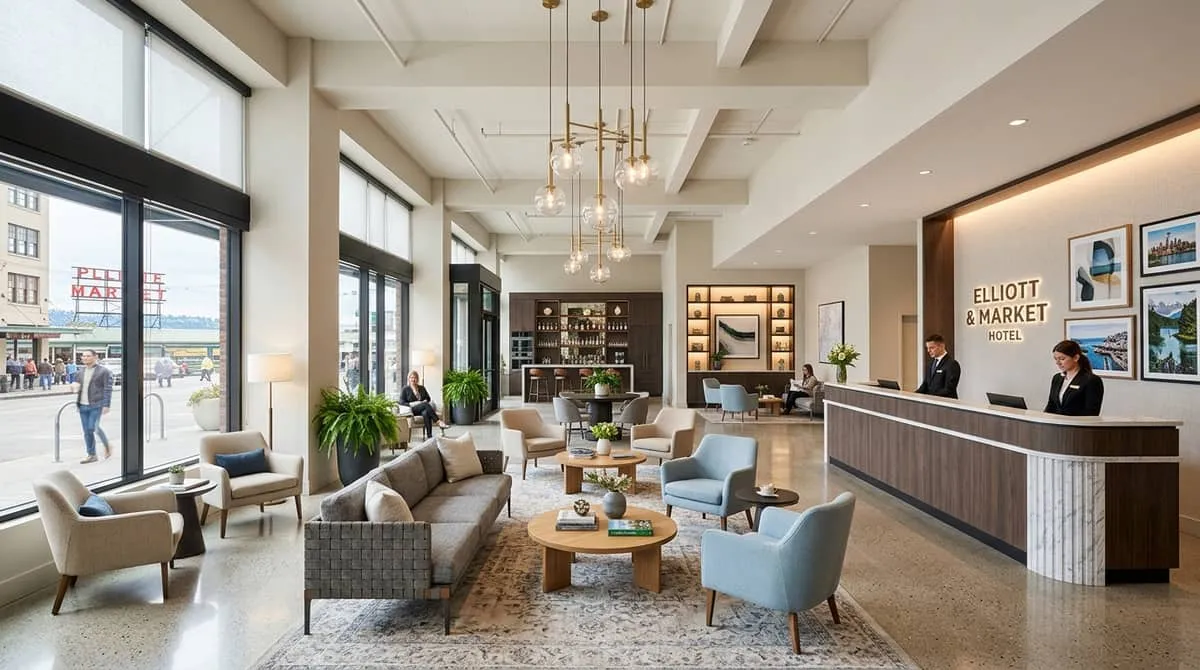
At this stage, clarify your durability requirements in writing. Seattle's hospitality market draws a mixed guest base tech workers from the Amazon and Microsoft corridor, convention delegates, Pacific Northwest leisure travelers. Seating in your lobby bar or restaurant needs to perform under daily commercial use, not just look good in a rendering. Specify double-rub counts for upholstered pieces, frame construction (eight-way hand-tied or sinuous spring for sofas and lounge seating), and finish grades appropriate for hospitality environments. If your designer has specified a fabric that ships from overseas, flag the lead time early. Standard lead times for contract-grade upholstered goods run 8–14 weeks from order confirmation; custom finishes or COM (customer's own material) can push that to 16–20 weeks.
Get your finish samples and fabric memos confirmed and signed off before orders are placed. Changes after production begins are expensive, and some vendors will not accommodate them at all. Your purchasing agent should track every approval in a centralized log so there is no ambiguity about what was specified and when it was approved.
Working with a Purchasing Agent in a Competitive Market
A qualified purchasing agent does more than place orders. On a Seattle hospitality project, they manage vendor relationships, negotiate pricing against published list, handle purchase order issuance and acknowledgment tracking, coordinate freight logistics, and serve as the single point of accountability between your design team and your suppliers.
Seattle's construction market is active. Developments in Ballard, the Central District, and along the Puget Sound waterfront are competing for the same freight windows, the same installation crews, and in some cases the same inventory allocations from major contract furniture manufacturers. A purchasing agent with established vendor relationships can hold inventory, negotiate staged delivery schedules, and escalate production issues before they become project delays.
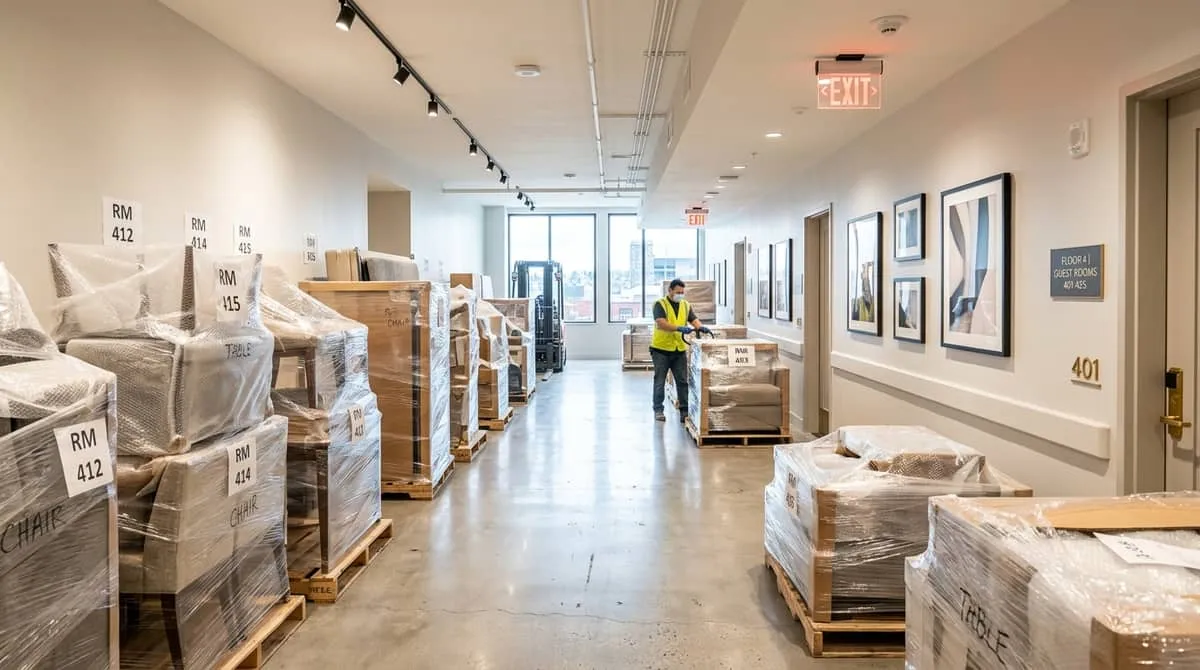
When evaluating a purchasing agent for your project, ask specifically about their experience with hospitality-scale procurement in the Pacific Northwest. Do they have existing accounts with contract furniture manufacturers who serve the region? Can they manage consolidated freight from multiple vendors into a single receiving warehouse near your property? Do they have a process for punch-list resolution tracking damaged or incorrect items and managing replacement orders without disrupting your installation schedule?
For properties with a design-forward program, purchasing agents also serve as a translation layer between the designer's vision and what is actually manufacturable within your budget and timeline. That negotiation preserving the design intent while making practical substitutions where necessary requires experience and judgment. Budget for a capable purchasing agent as a line item, not an afterthought.
Managing Timelines When Seattle Construction Doesn't Wait
Hard opening dates in Seattle are real deadlines. Hotel operators have group bookings, opening events, and revenue projections tied to specific dates. A hospitality project near the Washington State Convention Center may be timed to a major conference. A restaurant opening in Capitol Hill has a PR campaign already in motion. Your FF&E delivery and installation schedule has to support that date with margin to spare.
Work backward from your opening date to set your procurement calendar. If installation requires two weeks and you need a one-week buffer for punch-list and replacement items, your final delivery needs to arrive at least three weeks before opening. Add lead time for the longest-lead items custom upholstered seating, case goods with specialty finishes, imported lighting and you will often find that orders need to go out six to nine months before opening for complex projects.
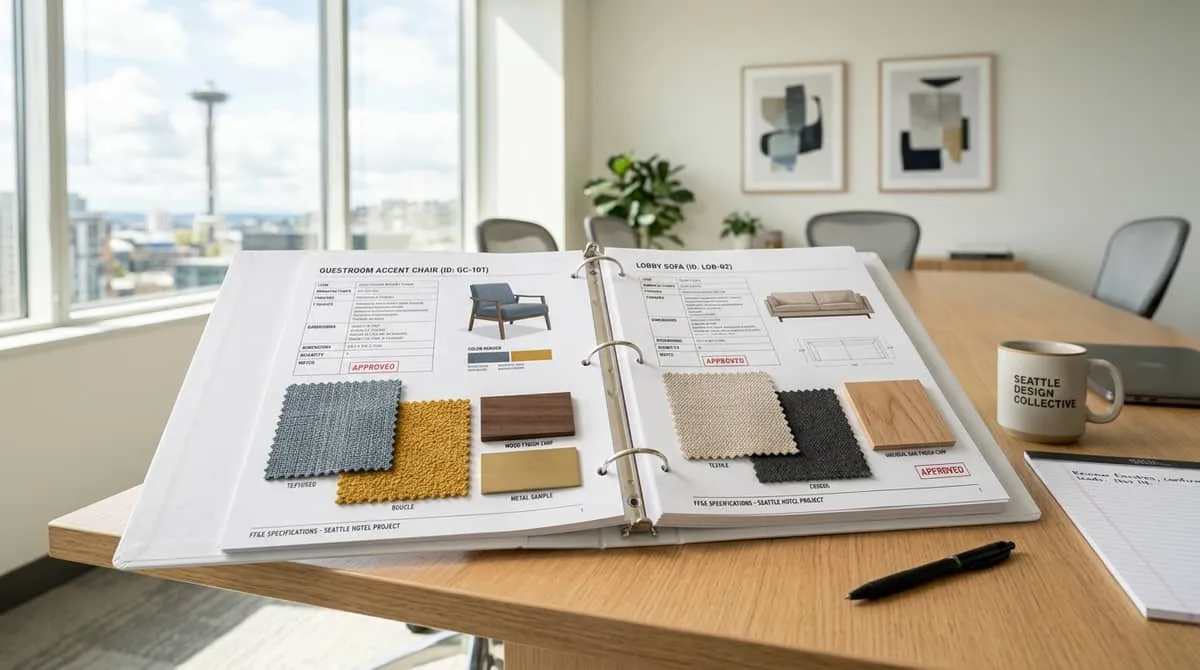
Build a critical path for procurement that mirrors your construction schedule. Your purchasing agent should be tracking production status on all open orders weekly, not monthly. When a vendor flags a delay a raw material shortage, a production backlog, a port disruption you need to know immediately so you can evaluate alternatives. Substitution decisions made with four weeks of runway are manageable. The same decision made with four days is a crisis.
Warehousing and receiving logistics matter in Seattle's dense urban environment. Many properties in Capitol Hill, South Lake Union, or near Pike Place Market have limited loading dock access or restricted delivery windows. Coordinate with your general contractor early to understand delivery constraints and build those constraints into your freight scheduling. A consolidated receiving warehouse outside the immediate construction zone, with white-glove delivery and installation crews staged for your installation window, is often worth the added cost.
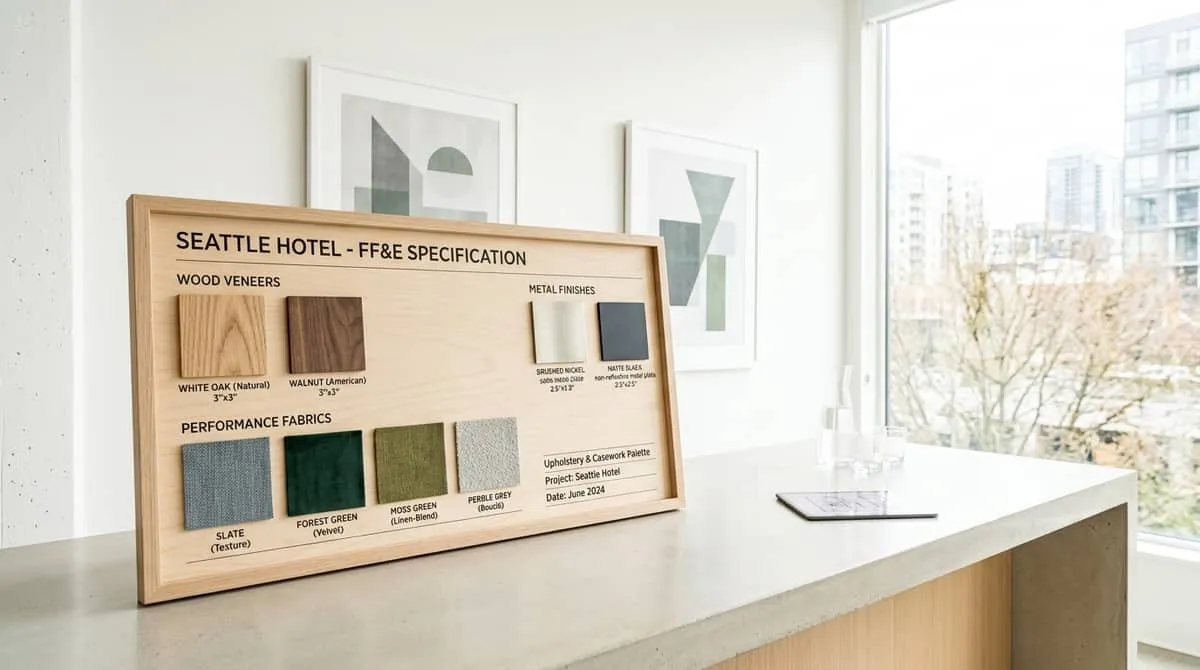
Communicate proactively with your design team and ownership group throughout the procurement cycle. Monthly procurement status reports showing what has been ordered, what is in production, what has shipped, and what is pending keep stakeholders informed and reduce the last-minute scrambles that drive costs up and compress timelines.
For Seattle properties comparing FF&E options, project-specific pricing tells you more than any published range. Request a quote and we will scope it to your space and volume.