FF&E procurement in Louisville is one of the more disciplined disciplines in American hospitality project management, and the reason is simple: the city has a hard deadline that cannot move. The Kentucky Derby runs the first Saturday of May, and every hotel project in Greater Louisville new construction, renovation, phased refresh is ultimately planned around it. Miss that window and your property sits incomplete during the highest-revenue week of its year.
Understanding Louisville's FF&E Demand Drivers
Louisville's hospitality market segments differently than most comparable mid-South cities, and each segment creates distinct FF&E procurement patterns.
The Derby corridor downtown Louisville, the Highlands, properties within ten miles of Churchill Downs generates the highest room rates and the most intense occupancy compression. Hotels in this zone treat their FF&E programs as revenue infrastructure: the right furniture supports premium pricing, holds up through maximum-occupancy weeks, and photographs well enough to sustain the rate strategy online. These buyers are willing to invest in quality but need a procurement partner who can execute on time without exception.
The bourbon tourism corridor along West Main Street and near the Louisville Mega Cavern brings a second buyer profile: properties and tasting room operators who are building for a growing, repeat-visitor audience. Bourbon trail guests return multiple times, notice quality, and share their experiences. FF&E decisions in this segment carry brand implications that outlast the individual purchase.
The Convention Center and healthcare-adjacent hotel market serving Humana and Kindred Healthcare corporate travel, UofL Health visitors, and the convention calendar is the most volume-driven and price-sensitive segment. These buyers prioritize durability, ease of maintenance, and the ability to replace pieces at component level rather than full-room replacement. Dining chairs and banquet chairs in this segment see particularly high cycle times.
NuLu boutique properties represent the most design-intensive procurement challenge: smaller room counts require more curation, design intent is more explicit, and buyers are often first-time FF&E purchasers managing procurement without a dedicated department. A supplier who provides specification support alongside product selection is worth paying for in this segment.
Managing the Derby Deadline in Project Schedules
The professional standard for Louisville hotel FF&E projects is to work backward from Derby Day. That means identifying your punch-list completion date typically late April and counting backward through installation, delivery, manufacturing, and specification phases to determine when purchase orders must be placed.
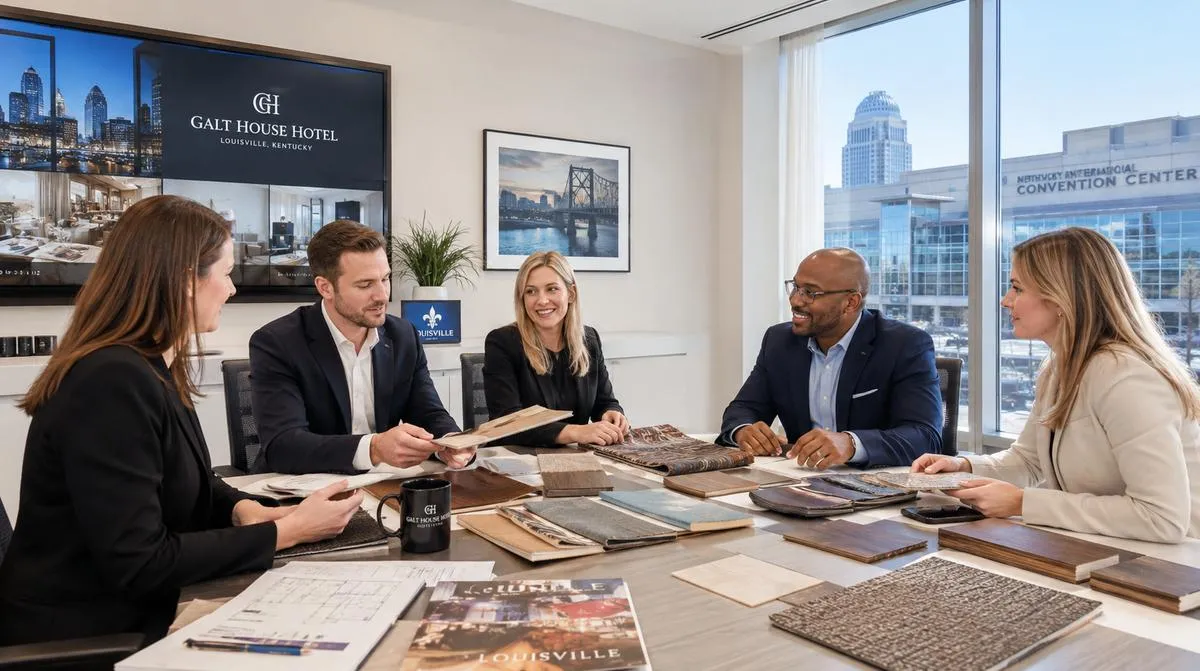
Custom upholstered pieces (headboards, lounge seating, COM dining chairs) run 10-14 weeks from PO to delivery. If your installation window is April 15, your custom POs need to be placed no later than mid-January. Casegoods from stock programs run 2-4 weeks more flexible, but stock levels deplete as Louisville's spring project season accelerates.
Freight into Louisville is favorable: the city's position at the convergence of I-64, I-65, and I-71 puts it within range of most major FF&E distribution hubs without the congestion surcharges that affect coastal markets. However, freight capacity tightens significantly in March and April as Derby-related logistics demand builds. Properties that haven't locked freight commitments by February sometimes face carrier availability issues in April.
Building a phased delivery schedule that coordinates with your GC's sequence is the most reliable way to manage large-scale projects without storage overflow. Floor-by-floor or zone-by-zone delivery sequencing, with each tranche arriving as the preceding phase reaches punch-list stage, keeps projects moving without the cost and damage risk of holding furniture in staging areas.
Specification Standards for Louisville's Market
Louisville's top-performing hotels have established a specification baseline that shapes buyer expectations throughout the market. For upholstered guest room pieces, contract-grade means: frame construction with double-doweled and corner-blocked joints, 8-way hand-tied or sinuous spring systems in seat cushions, and upholstery fabrics rated to 50,000+ rubs. Headboards should be fabric-wrapped over commercial-density foam with a rigid backing board floating headboard styles require additional blocking coordination with your GC.
For casegoods, specify moisture-resistant finishes on all drawer interiors and horizontal surfaces. Louisville's summer humidity is significant, and casegood finishes that aren't sealed properly show damage within the first year.
Lounge chairs and lobby seating in premium properties should be specified with self-leveling glides on all four legs Louisville's historic properties frequently have uneven flooring and slipcover-able or easily reupholstered construction for long-term maintenance efficiency.
Every Louisville venue has its own volume, layout, and turnaround demands, and FF&E pricing follows from those specifics. Request a quote and we will scope it to your project.
Related reading
- Banquet tables in Louisville: sizing and specs
- FF&E procurement: a practical guide for hotels and venues
- What is contract furniture
- Hotel furniture supplier guide
- Hospitality furniture supplier guide
- Hotel headboards for guest room programs
- Banquet chairs for convention hotel programs
- Lounge chairs for hotel lobby and common areas
- Commercial furniture in Kentucky