FF&E procurement in Lincoln runs on a calendar most markets do not have to think about. Between the Husker football season that dominates hotel booking patterns in the fall, the Nebraska Legislature's session that brings a wave of downtown business travel through the winter and spring, and a Haymarket restaurant and bar scene that turns over furniture at a pace tied to its own seasonal traffic, procurement teams in this market are managing more moving calendar pieces than a typical FF&E project. Getting the process right starts with understanding exactly what falls under FF&E and how Lincoln's specific rhythm should shape your timeline.
What FF&E Actually Covers (and What It Does Not)
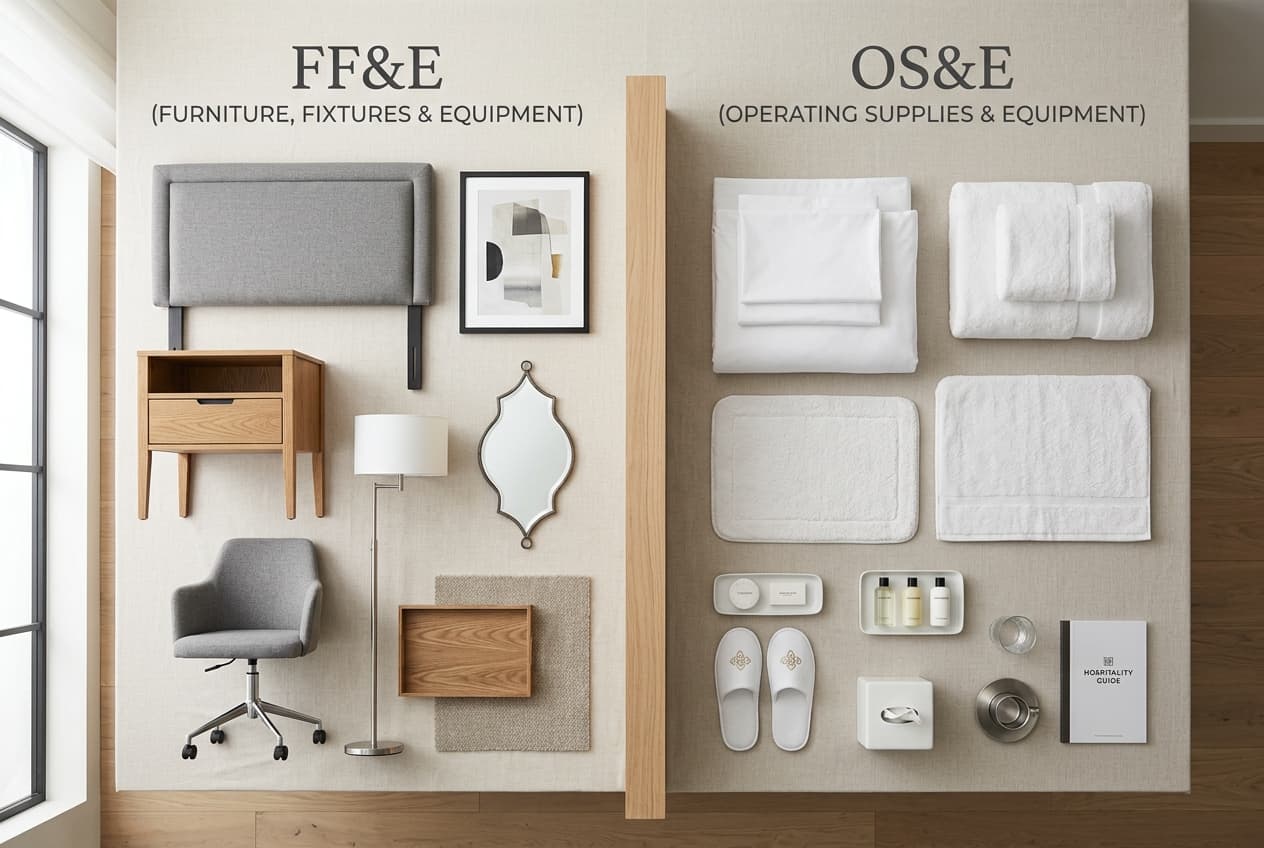
FF&E stands for furniture, fixtures, and equipment, and it covers the movable and semi-permanent items that furnish a hospitality space: guest room casegoods, seating, tables, lighting fixtures not built into the architecture, and operational equipment like folding tables and banquet chairs for event spaces. It does not cover architectural finishes, built-in millwork, or permanently installed systems, those fall under construction or interior finish scopes and follow a different procurement path entirely.
The distinction matters because FF&E budgets and timelines are managed separately from construction budgets on most Lincoln hotel and restaurant projects, and treating them as a single undifferentiated line item is one of the more common sources of schedule slippage. A general contractor's construction schedule and a furniture supplier's production schedule run on different clocks, and someone on the project team needs to actively manage the handoff between them.

How the Lincoln Market Shapes Procurement Timelines
Lincoln's football calendar creates one of the more predictable and demanding procurement deadlines in the market. Any hotel opening or major renovation targeting completion before the fall season needs to work backward from the first home game, not the design team's preferred timeline. Given standard lead times of 10 to 16 weeks for domestic production, plus installation and punch-list time, furniture specifications need to be locked by early spring at the latest for a fall-season opening.
The legislative session adds a second, less obvious pressure point for downtown properties. A hotel renovation that hopes to avoid disrupting business during peak legislative-session travel needs to schedule furniture delivery and installation for the summer months, between session adjournment and the following football season, which compresses an already tight construction window into an even narrower slice of the calendar.
Restaurant and bar FF&E in the Haymarket district tends to follow its own logic, often timed around a lease signing or buildout completion rather than a fixed seasonal deadline, but even here, operators who want to capture a summer patio season or a fall opening tied to football traffic need to work backward from that target with the same discipline as a hotel project.
Working With Designers and Procurement Agents
Most Lincoln hospitality projects of any real scale involve an interior designer, and many bring in a dedicated FF&E procurement agent or project manager, particularly for renovations where furniture needs to be coordinated tightly against a phased construction schedule. That role exists to bridge the gap between design intent and supplier capability, translating a mood board and finish palette into an actual purchase order with real lead times and real minimum order quantities attached.
If your project does not have a dedicated procurement agent, that responsibility falls to whoever is managing the project on the ownership or design side, and it should not be treated as an afterthought. The furniture supplier you select should be capable of working directly with your designer on sample turnaround and spec revisions, and directly with your general contractor on delivery windows and site access, without requiring every communication to route through a single overloaded point of contact.
What Your Budget Should Account For
FF&E budgets on Lincoln projects need to account for more than the sticker price of the furniture itself. Freight to the Lincoln metro, white-glove delivery and installation labor, storage costs if furniture arrives before the site is ready to receive it, and a contingency for damaged or delayed items should all be built into the budget from the start rather than treated as surprises that surface mid-project.
A realistic FF&E budget also plans for the reality that custom fabric and finish selections, while often worth the aesthetic payoff, come with both a cost premium and a longer lead time than in-stock alternatives. Projects on a tight football-season or legislative-session deadline should weigh that tradeoff carefully before committing to custom selections that could push delivery past a hard opening date. Bring your project scope and target date to a supplier for a detailed quote before you finalize your FF&E budget.
Related reading
- FF&E procurement: a practical guide for hotels and venues
- What is contract furniture
- Commercial furniture vs retail
- Hospitality furniture supplier guide
- Hotel seating catalog
- Guestroom casegoods
- Hotel renovation furniture in Lincoln
- Commercial furniture supplier in Lincoln
- Commercial furniture in Nebraska