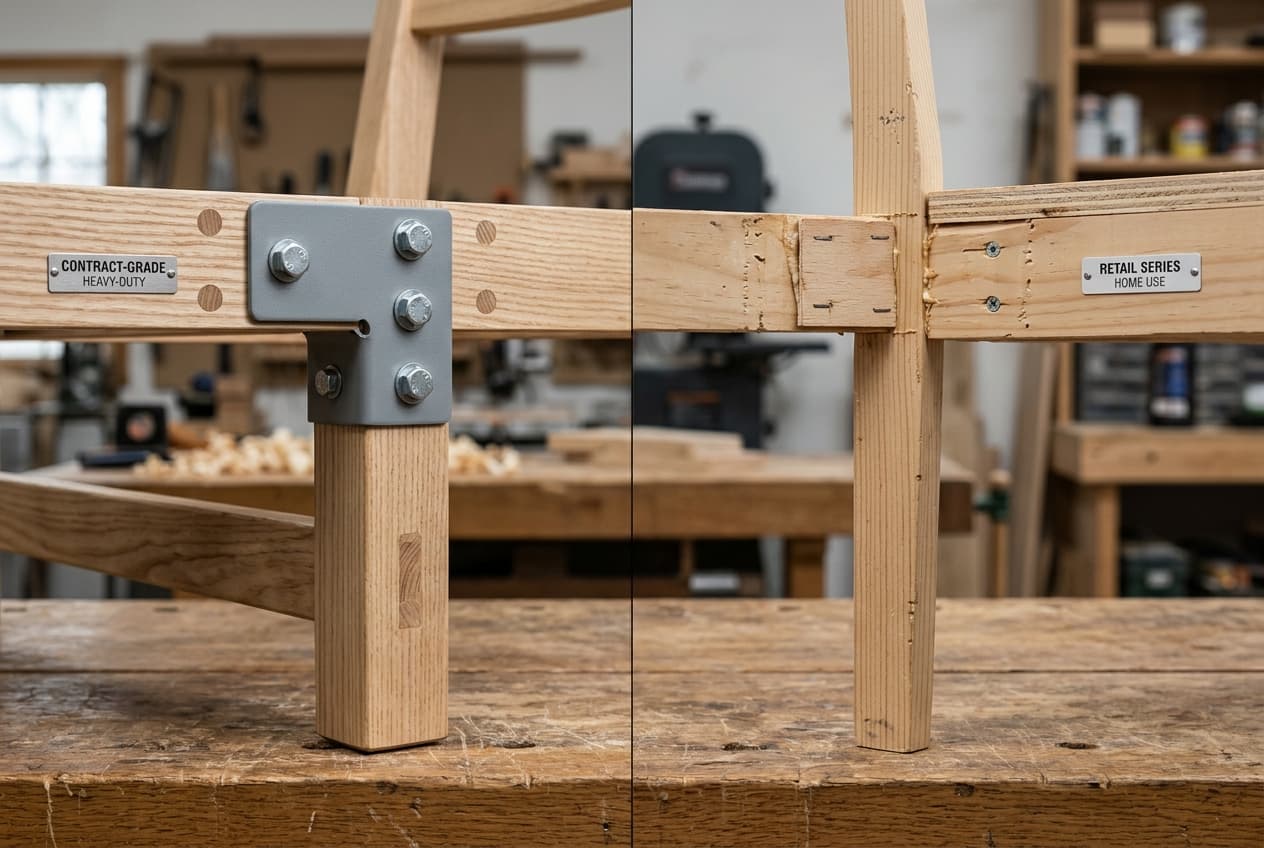
Choosing a commercial furniture supplier in Lincoln comes down to one distinction that determines everything else: whether the product you are buying was actually engineered for commercial use, or whether it is retail furniture with a finish that happens to look appropriate in a hospitality setting. That distinction is invisible on a showroom floor and completely obvious eighteen months later, when one property's furniture still looks and performs like new and another's needs partial replacement.
What Contract Grade Actually Means for Lincoln Operators
Contract-grade furniture is built and tested to standards that retail furniture is never subjected to, typically BIFMA certification or an equivalent commercial benchmark covering frame strength, joint durability, and fabric performance under repeated use. In practice, that means reinforced frame construction using corner blocks and mechanical fasteners rather than glue alone, foam density chosen for longevity under heavy use rather than initial softness, and fabric tested for tens of thousands of double rubs rather than the handful residential fabric is rated for.
The gap between contract and retail product shows up fastest in exactly the conditions Lincoln hospitality furniture actually faces: a football weekend that puts a season's worth of wear on lobby seating in a single Saturday, a Haymarket restaurant running back-to-back services on a busy weekend, or a legislative-session reception that fills a downtown hotel's public spaces with volume it does not see the rest of the year.
Hospitality-Specific Requirements in the Lincoln Market
Lincoln's hospitality furniture demands span a wider range than the city's size might suggest. Hotel guest rooms and lobbies need casegoods and seating built for the specific compressed-volume pattern that football weekends create. Restaurant and bar furniture in the Haymarket needs to withstand heavy, weekend-concentrated turnover in a district defined by converted-warehouse architecture. Banquet and event furniture needs to survive constant stacking and reconfiguration across a calendar packed with legislative receptions, university functions, and weddings.
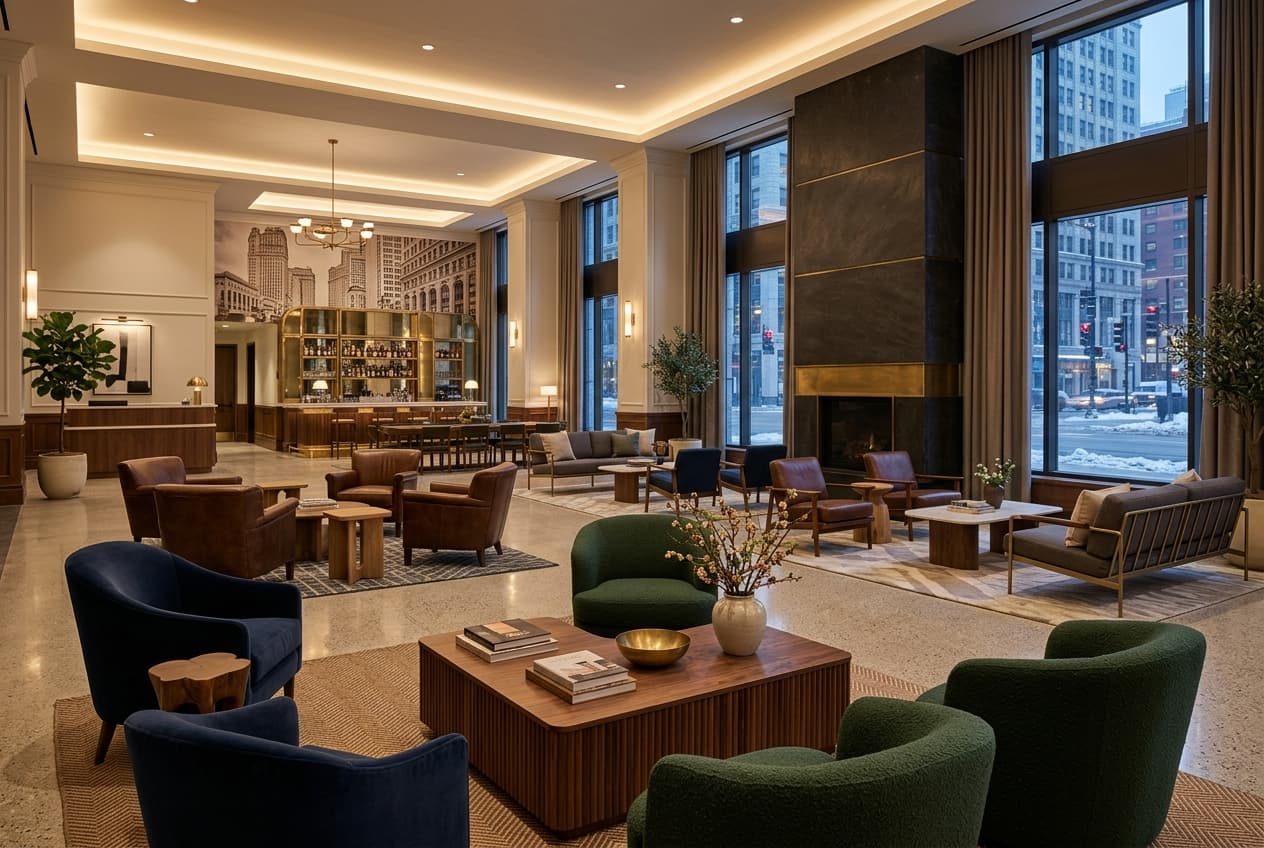
A supplier who only stocks one category, hotel casegoods but not banquet seating, or restaurant furniture but not lobby lounge pieces, forces a project to work with multiple vendors, multiplying coordination overhead and creating gaps in accountability if something goes wrong. A supplier with genuine breadth across hospitality categories can carry a project from guest rooms through public spaces through event furniture on a single purchase order and a single point of contact.
What to Look for When Choosing Your Supplier
Start with documentation. Ask for BIFMA test results or equivalent certification on any piece under consideration, and treat hesitation or vague answers as a warning sign. Ask for references from completed Lincoln or regional Great Plains hospitality projects, and actually call them, not just to confirm the supplier delivered, but to ask how the furniture has held up over time.
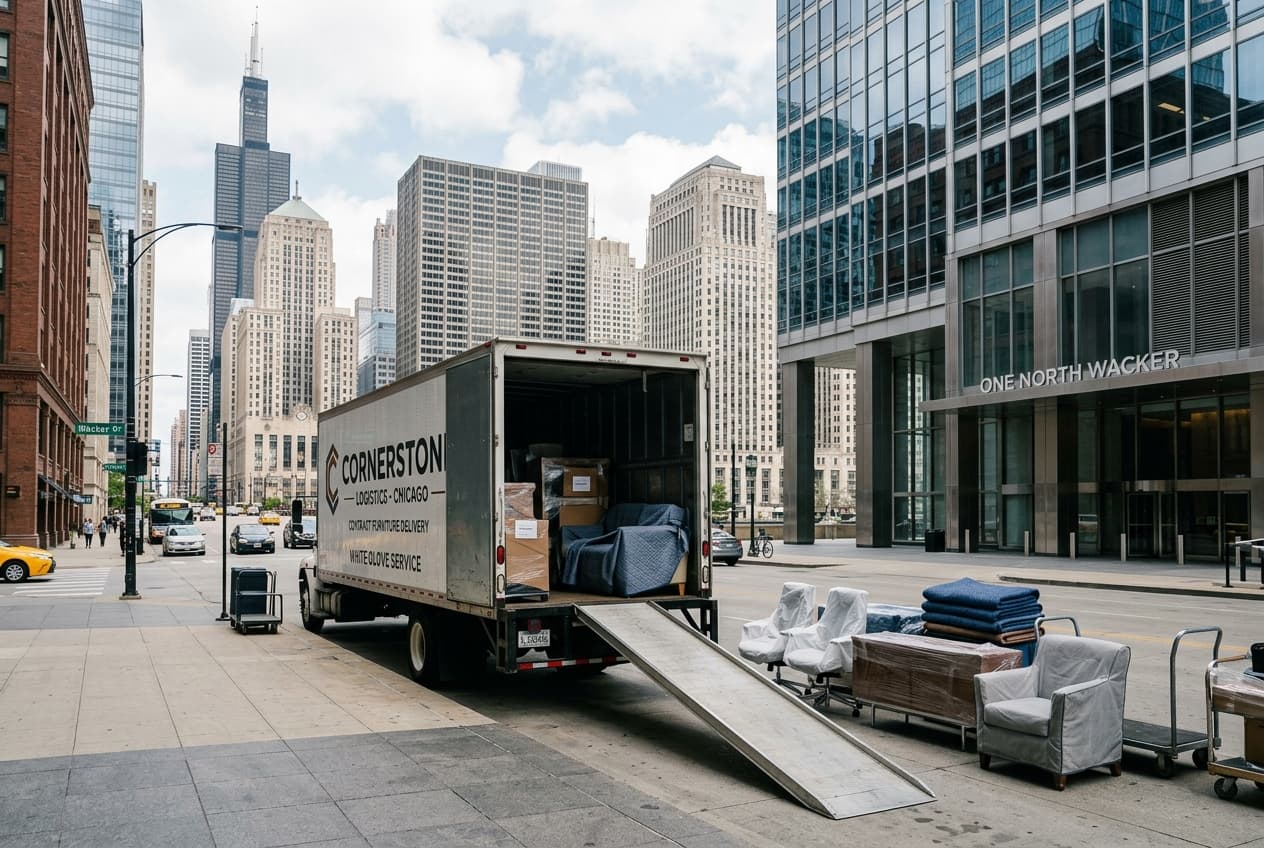
Evaluate logistics capability as carefully as product quality. Lincoln hotel and restaurant deliveries involve loading dock coordination, elevator scheduling in occupied properties, and working within general contractor timelines that leave little room for error. A supplier with in-house white-glove delivery and installation experience handles those constraints proactively. A supplier who outsources final-mile delivery to a third party creates a coordination gap that tends to surface at the worst possible moment, on installation day with a hard opening deadline bearing down.
Budgeting for Contract Grade: What the Numbers Look Like
Contract-grade furniture carries a real cost premium over retail product, typically 20 to 40 percent depending on category and finish, and that premium is easy to second-guess when a project budget is under pressure. The math changes when you account for replacement cycles: contract-grade seating and casegoods typically last two to three times longer than retail-grade product under the same commercial use conditions, which means the higher upfront cost is usually recovered well before the first replacement cycle a retail alternative would require.

Build your budget around total cost of ownership rather than sticker price alone, and get itemized quotes that separate furniture cost from freight, delivery, and installation so you can compare suppliers on an apples-to-apples basis. A commercial furniture supplier worth working with in Lincoln will walk you through that math directly rather than leaving you to guess at long-term value from a single upfront number. Start that conversation with a detailed quote covering your full project scope.