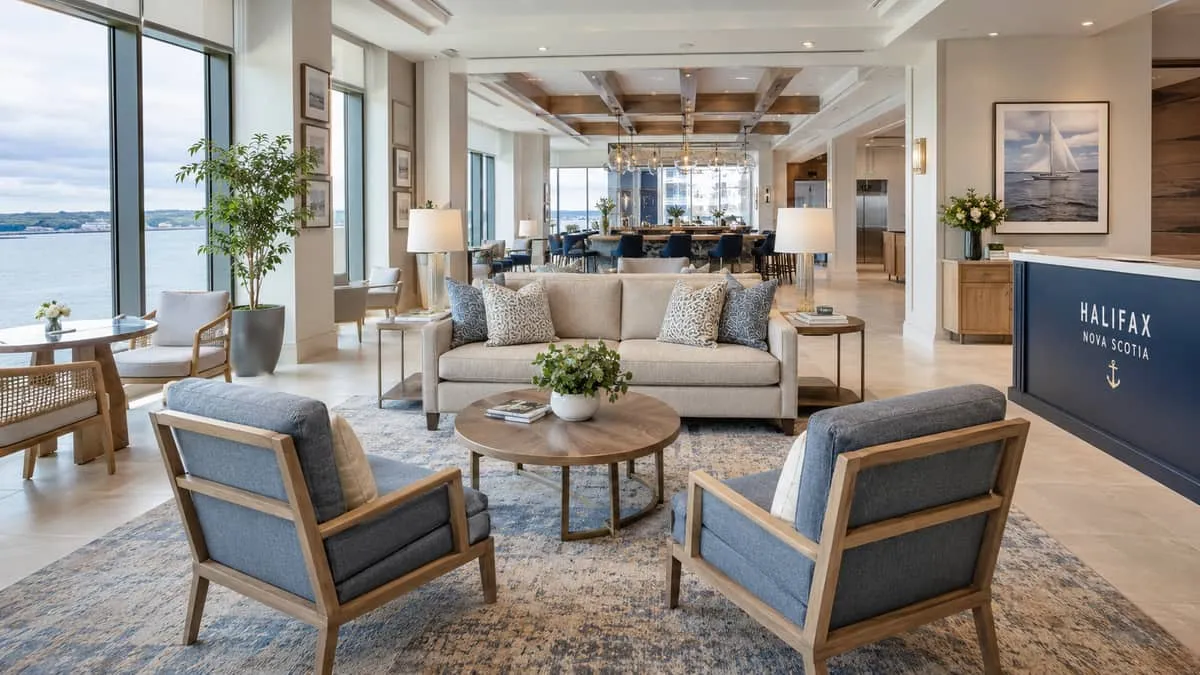
Halifax is building. The waterfront development pipeline has added new hotel inventory near the Seaport and Historic Properties district, heritage warehouse conversions in the North End and across the harbour in Dartmouth are becoming boutique hospitality concepts, and the Halifax Convention Centre has anchored a convention market that creates steady group and corporate demand twelve months a year. If you are opening or renovating a hospitality property in this city right now, you are doing it alongside a real estate and development cycle that is reshaping what guests expect from the built environment. FF&E procurement for Halifax operators is consequential in ways that differ meaningfully from other Canadian markets, and getting it wrong is expensive in ways that compound over time.
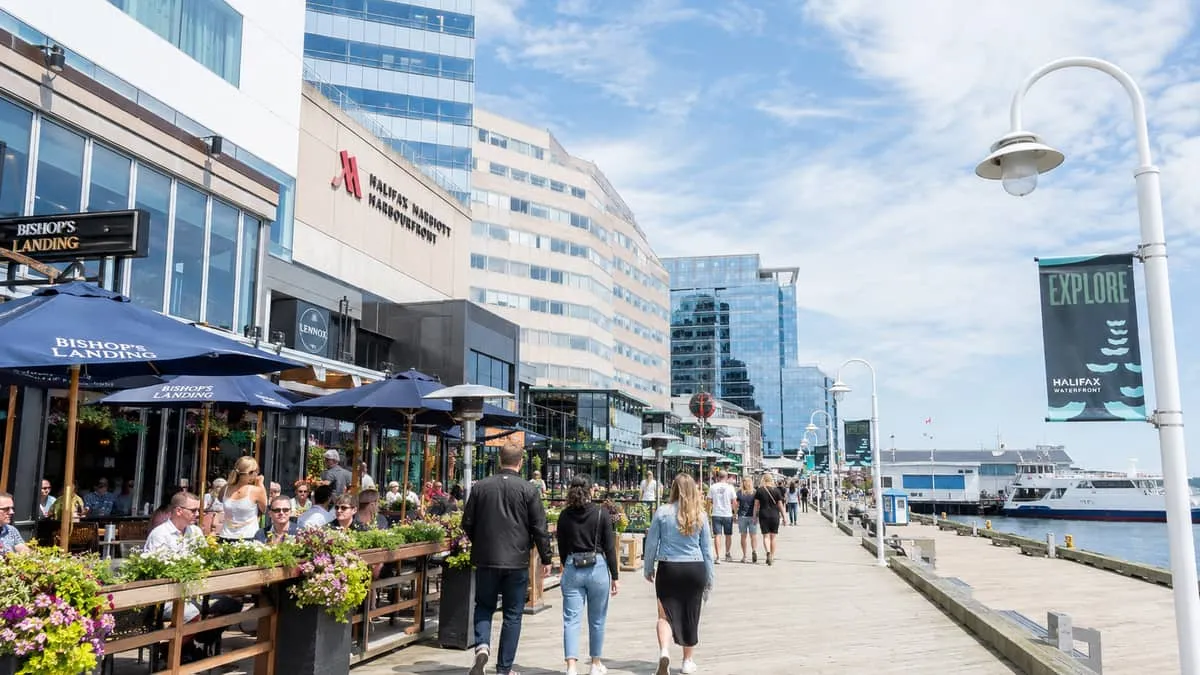
Halifax's Development Pipeline and What It Means for FF&E Scope
The current wave of Halifax hospitality development has three distinct layers, and each one presents different procurement challenges.
The waterfront and downtown core, anchored by properties like the Westin Nova Scotian and newer entrants like the Muir Hotel, sets a quality benchmark that adjacent projects compete against. If you are opening a boutique property near the Historic Properties district or anywhere along the boardwalk, your FF&E specification is being benchmarked against those established luxury flags whether you want it to be or not. Guests who have stayed at the Muir have a reference point, and your guestroom furniture, lobby atmosphere, and outdoor seating communicate your positioning the moment someone walks through the door.
The North End and Dartmouth conversions are a different procurement problem. Heritage warehouse buildings on Agricola Street or in the Dartmouth waterfront district have irregular floor plans, exposed structure, and character elements that should be integrated into the design rather than covered over. FF&E for these properties often involves more custom specification work to ensure furniture scale and finish work with brick walls, timber beams, and non-standard room configurations. That means longer lead times and less ability to lean on standard hospitality casegoods packages.
The convention market adds a third layer. Hotels serving the Halifax Convention Centre need furniture that handles the specific abuse patterns of group business: chairs moved repeatedly for breakout sessions, soft seating in lobbies holding up through multi-day conference loads, meeting room tables that get rearranged constantly. The spec requirements for that use pattern differ from leisure or transient business travel.
Understanding which layer your project sits in shapes every procurement decision that follows.
The Military and Government Account Factor: Durability Specs Are Not Optional
Halifax is home to CFB Halifax, the largest Royal Canadian Navy base in Canada. Combined with the concentration of federal departments and crown corporation offices, the military and government account base creates a hospitality demand profile unlike any other Canadian market of comparable size. These guests are frequent travelers who use hotels regularly, and properties that capture this business need furniture built to sustain high-frequency turnover without visible deterioration.
For a hotel on or near Gottingen Street, around the Hydrostone, or serving the Stadacona base corridor, this is not an abstract concern. A guestroom chair or headboard that looks fresh for a leisure resort's seasonal guests will show its age within 18 months under government account rotation. The durability gap between contract-grade hospitality furniture and semi-commercial or retail product is measurable in years of serviceable life, and in a market where government repeat business is a meaningful revenue line, that gap translates directly to renovation cycles and capital expenditure.
Specific specifications that matter for Halifax's government and military account segment: seating should meet or exceed 250,000 double rubs on upholstered surfaces, metal frames should be rated for commercial load cycles rather than residential standards, case goods should use commercial-grade hardware that can handle daily use without drawer and door failure within a standard three to five year FF&E lifecycle. These are contract furniture standards, not retail furniture standards. They are not optional if you want the economics of your property to work.
Shipping to Halifax: The Port Advantage Nobody Talks About Enough
The logistics reality of FF&E procurement for Atlantic Canada properties is widely misunderstood, usually by operators who have done projects in central Canada and assume the same freight dynamics apply.
The misunderstanding cuts both ways.
On overseas sourcing, Halifax is actually advantaged. The Port of Halifax is one of the deepest natural harbours in North America and handles direct container traffic from Europe and Asia. For FF&E sourced from overseas manufacturers, routing containers through Halifax rather than through Montreal or the Port of New York with subsequent inland freight can shorten total delivery time and reduce handling touchpoints. Operators who have sourced commercial dining chairs or casegoods from European or Asian contract furniture manufacturers should ask their freight forwarder about direct Halifax routing. It is not always the answer, but it is often overlooked.
The misunderstanding that costs Halifax operators money is the inland freight assumption. Sourcing from Toronto-based suppliers or from Ontario distribution warehouses, which is common for contract furniture in Canada, involves a longer inland freight run than operators from Ontario assume. Toronto to Halifax by road freight is roughly 1,800 kilometres, and transit times, especially for large commercial shipments on standard LTL service, run longer than the distance alone suggests. Add that Atlantic Canada freight lanes operate with fewer carriers and less frequency than the Quebec-Ontario corridor, and you have a supply chain that requires more lead time buffer than the same supplier's team may be used to planning for.
The practical implication: build an additional one to two weeks into every lead time estimate your supplier provides when that supplier is shipping from central Canadian distribution. For projects with hard opening dates tied to a convention group, a summer season launch, or a tourism-peak target, that buffer is not optional padding. It is the difference between a furniture delivery that lands the week before your opening inspection and a scramble to cover rooms with temporary product while you wait for the actual FF&E.
What Full FF&E Procurement Looks Like for an Atlantic Canada Property
FF&E stands for furniture, fixtures, and equipment. In hospitality, that means guestroom beds, headboards, casegoods, lobby seating, dining chairs, bar stools, outdoor patio furniture, and decorative lighting. What it excludes is your kitchen line, your point-of-sale systems, and your operating supplies and equipment, known as OS&E, which covers linens, smallwares, glassware, and uniforms. The budget distinction matters because mixing FF&E and OS&E costs leads to allocation errors that are avoidable with clear scope definition before any purchasing decisions happen.
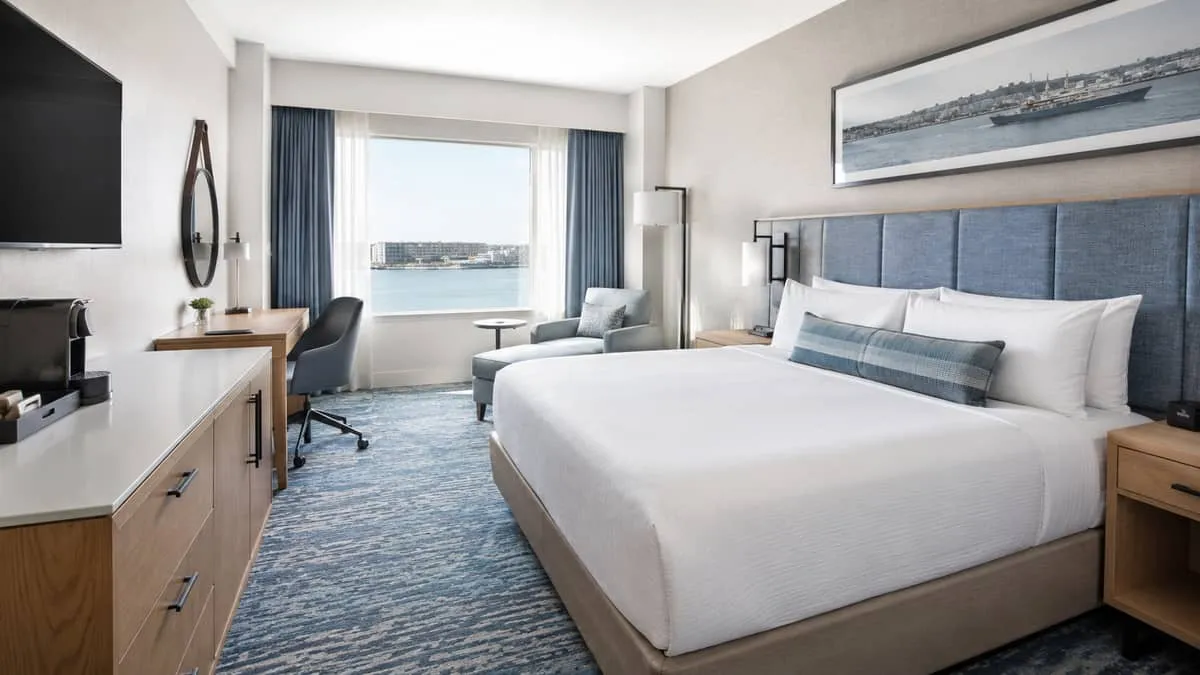
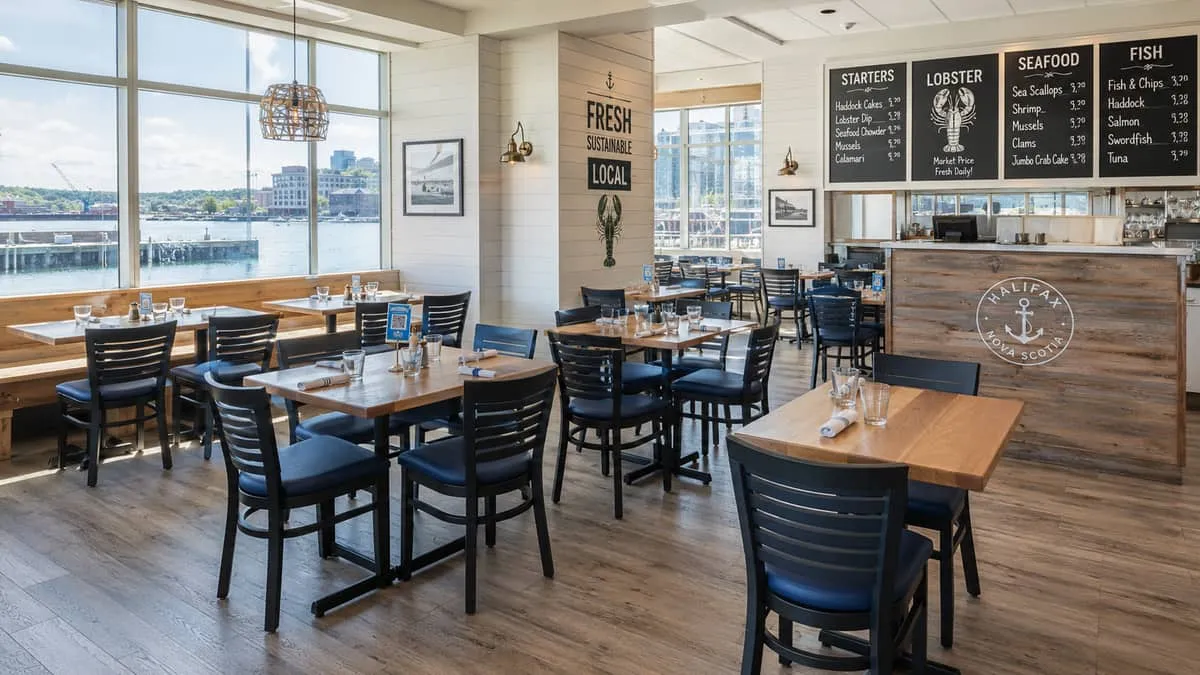
On a mid-scale Halifax hotel project, FF&E typically represents 15 to 25 percent of total project cost. A select-service room might see $8,000 to $15,000 per key in FF&E spend. A boutique property competing in the luxury and upscale segment against the Muir's positioning could push $20,000 to $35,000 per key depending on custom specification levels. Restaurant seating, decorative lighting, and millwork coordination for a 60-seat dining room in the Five Fishermen mould or a North End independent concept on Agricola runs $60,000 to $150,000 before installation, depending on material selections and how much custom work is involved.
Full FF&E procurement for an Atlantic Canada property starts before shopping. It starts with a design intent document, produced by your interior designer or project manager, that specifies every item by category, quantity, finish, and performance requirement. That document is the basis for sourcing and quoting. A hospitality furniture supplier with commercial-grade product access, or a procurement agent who specializes in contract furniture, manages vendor coordination, volume pricing, and lead time tracking across multiple manufacturers simultaneously.
For a Halifax hotel project of any meaningful size, the value of consolidated procurement management is the accountability it creates. One contact responsible for specifications, quoting, vendor follow-up, freight coordination, and installation scheduling means problems surface earlier and get resolved before they delay your opening. First-time operators opening a property anywhere from the Dartmouth waterfront to the Convention Centre district underestimate how much coordination work lives in that function.
Outdoor Furniture for Halifax: Atlantic Storm Season Is Not a Footnote
Halifax restaurant and hotel operators who want outdoor seating capacity face a climate specification challenge that inland Canadian markets do not deal with in the same way. The maritime climate delivers a genuine patio season from June through September, and properties along the waterfront boardwalk, in the Historic Properties courtyard, or at restaurants near the Halifax Seaport Farmers Market area have strong commercial incentive to maximize outdoor covers. But Atlantic storm season, coastal wind load, salt air exposure, and real fog humidity create an outdoor furniture specification environment that is genuinely different from Toronto or Calgary.
The relevant specifications for Halifax outdoor furniture are not cosmetic. Frame material should be powder-coated aluminum or marine-grade stainless, not painted steel or standard aluminum that will corrode faster in salt air exposure. Fabric on upholstered outdoor seating should be solution-dyed acrylic rated for marine environments, not standard outdoor fabric. Weight and wind stability matter more on Halifax's exposed waterfront sites than they do at an inland patio in a sheltered urban context.
Stacking capability is commercially important for Halifax operators who need to clear patios quickly when Atlantic weather moves in. A patio that seats 40 covers during a calm August afternoon needs to be secured in 20 minutes when a coastal low arrives. Furniture that does not stack efficiently, or that requires disassembly for storage, adds operational friction that accumulates over a season.
The Five Fishermen, waterfront boardwalk operators, and Dartmouth brewery patios understand this because they have operated through multiple Atlantic storm seasons. Operators opening new hospitality concepts in Halifax for the first time frequently underspecify outdoor furniture because they are sourcing from suppliers whose standard outdoor line is designed for calmer inland conditions.
Procurement Timelines for Halifax Projects
The rule of thumb for hotel FF&E procurement is to begin the process no later than six months before your targeted opening date. For a restaurant with any custom or semi-custom specification, four months minimum is realistic. Those timelines assume a straightforward specification process and no significant revision cycles. If your design intent document is not finalized at the start of that window, the effective timeline compresses.
Custom and semi-custom hospitality furniture pieces routinely run 12 to 20 weeks from purchase order to factory completion. Add freight transit to Halifax, add receiving and inspection time, add installation scheduling, and you can see how a six-month procurement window disappears quickly when any single step runs late.
Halifax-specific timing considerations compound this. Convention Centre opening events in spring and fall create demand spikes for hotel renovations timed to those periods, which means Halifax projects sometimes compete for the same contractor and installer availability windows. Planning procurement and installation scheduling around those peaks is part of the local market knowledge that experienced Atlantic Canada project managers carry.
Operators who are converting heritage buildings in the North End or Dartmouth into hospitality concepts face an additional complication: heritage building renovation timelines are often less predictable than new construction. If the structural or mechanical scope reveals surprises during demolition, your FF&E delivery timing needs to flex without arriving at a site that is not ready for it. Building delivery windows into your purchase agreements, and confirming your supplier can hold product in their warehouse for a short period if your site is delayed, protects you from the cost of emergency storage or re-delivery.
Working With Suppliers Who Understand Atlantic Canada
The Halifax market has a smaller local pool of hospitality designers and contract furniture dealers than Toronto or Vancouver. That makes the relationship between operator and supplier more important, and it makes the choice of supplier more consequential. Many Halifax hospitality projects are coordinated with designers based in the city who source through national suppliers with Atlantic distribution capability. Some operators bring in suppliers they have worked with on Ontario or Quebec projects and manage Halifax freight from those relationships.
What that means practically is that your supplier needs to know Atlantic Canada freight, not just national shipping generalities. They need to know which carriers reliably serve Halifax, what the realistic transit times are from their distribution points, and how to build those realities into your project schedule from the first conversation. A supplier whose standard project management assumes Toronto freight times will routinely give you optimistic delivery estimates that do not account for the Atlantic leg.
The right FF&E supplier for a Halifax hospitality project is one who has shipped to Atlantic Canada before, understands the Port of Halifax's container access advantage for overseas sourcing, and can give you accurate lead time projections that account for where your product is actually manufacturing and how it actually gets to your site.
The furniture in your Halifax property is not a finishing touch applied after the real work is done. It is infrastructure. It carries your brand positioning, absorbs the specific physical demands of a maritime climate and a military-government guest base, and either holds up through a five-year FF&E lifecycle or creates capital expenditure pressure before you are ready for it. Procurement done properly from the start is the difference.
We quote FF&E for Halifax operators against their own layouts and order sizes rather than a generic sheet. Request a quote and we will put together pricing for your property.