
Charleston's hospitality market does not move like Atlanta or Nashville, and that difference matters for how you plan procurement. As West Virginia's capital and its largest city, Charleston carries a compact but steady base of demand: state government travel, CAMC and WVU Medicine medical visitors, coal and energy industry meetings, and a convention calendar anchored by the Charleston Coliseum and Convention Center downtown. The hotel and restaurant projects that come through this market tend to be renovations and conversions more often than ground-up builds, which changes the procurement conversation from day one. If you are refreshing a property on the Kanawha Boulevard corridor or opening a restaurant near Capitol Market, the challenge is not finding furniture, it is locking in specifications and lead times against a smaller pool of regional vendors and a construction schedule with little room to slip.
What FF&E Covers on a Charleston, WV Project
FF&E stands for furniture, fixtures, and equipment. In a hotel context, that means your guestroom beds, nightstands, desks, and chairs, along with lobby lounge seating, restaurant banquettes, bar stools, and the decorative lighting that carries a property's design identity through its public spaces. For a standalone restaurant project, FF&E covers dining tables, all seating, host stands, and any built-in booth or banquette work paid for out of the furniture budget rather than the general contractor's line items.
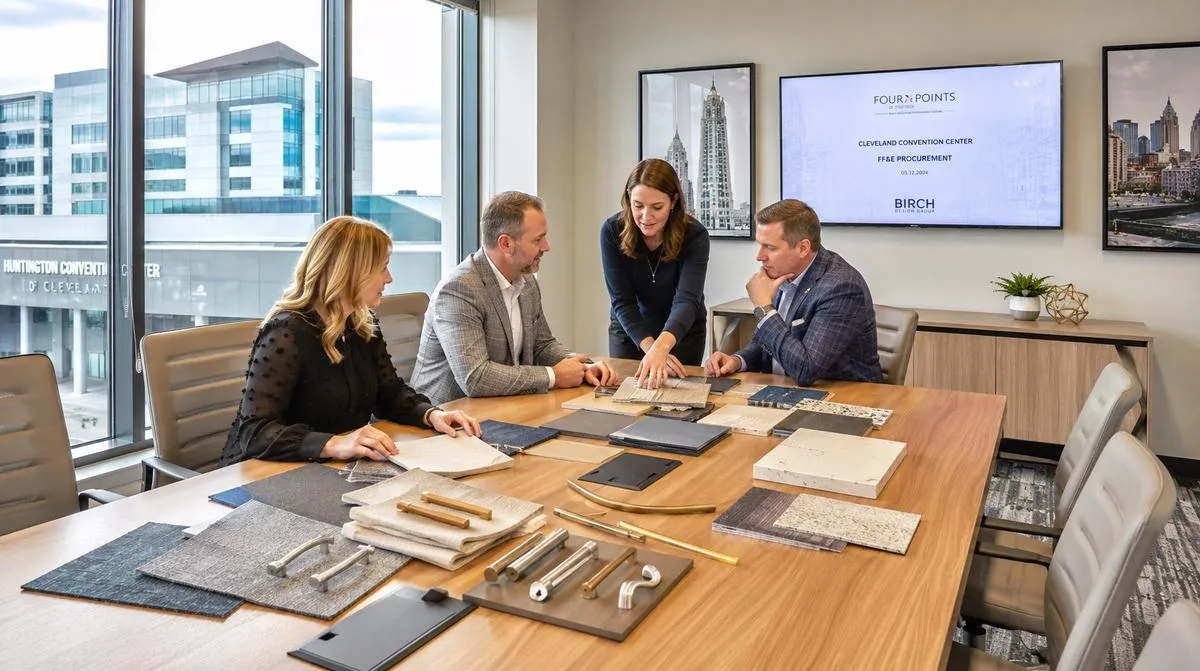
FF&E does not cover OS&E, operating supplies and equipment. That category is linens, dishware, glassware, kitchen smallwares, and anything with a short replacement cycle. The distinction matters because FF&E is a capital expense owned by development or ownership, while OS&E is an operational cost owned by whoever runs the property day to day. On a Charleston project, a downtown convention hotel renovation or a multi-space restaurant buildout near the East End can still run into the mid six figures or higher on FF&E alone. Treating that scope loosely, without a written definition everyone agrees to, is how a modest-sized project ends up with disputed invoices and change orders nobody budgeted for.
Get your FF&E scope defined in writing before any vendor conversations start. That document keeps your interior designer, your procurement contact, and your general contractor working from the same page, which matters even more in a market like Charleston where you may be coordinating with fewer local specialists than a major metro would offer.
How the Charleston Market Shapes Procurement Timelines
Charleston operators are frequently caught off guard by how early the procurement clock actually starts. Contract furniture manufacturers, especially for custom upholstered seating or branded casegoods, run 14 to 22 weeks from a confirmed purchase order to delivery. Custom work with a distinct look, rather than catalog standard, extends that window to 28 weeks or more, and because Charleston sits outside the direct delivery lanes of most major East Coast and Midwest manufacturers, freight scheduling deserves extra attention.
For a downtown hotel near the Civic Center, a boutique property along Kanawha Boulevard, or a restaurant buildout in the Capitol Market district, procurement needs to begin well ahead of substantial completion. The practical sequence looks like this: specifications locked during design development, bids issued two to three weeks later, purchase orders placed no later than 20 to 22 weeks ahead of your target delivery date, and delivery phased in by floor or zone as construction hands off each area.
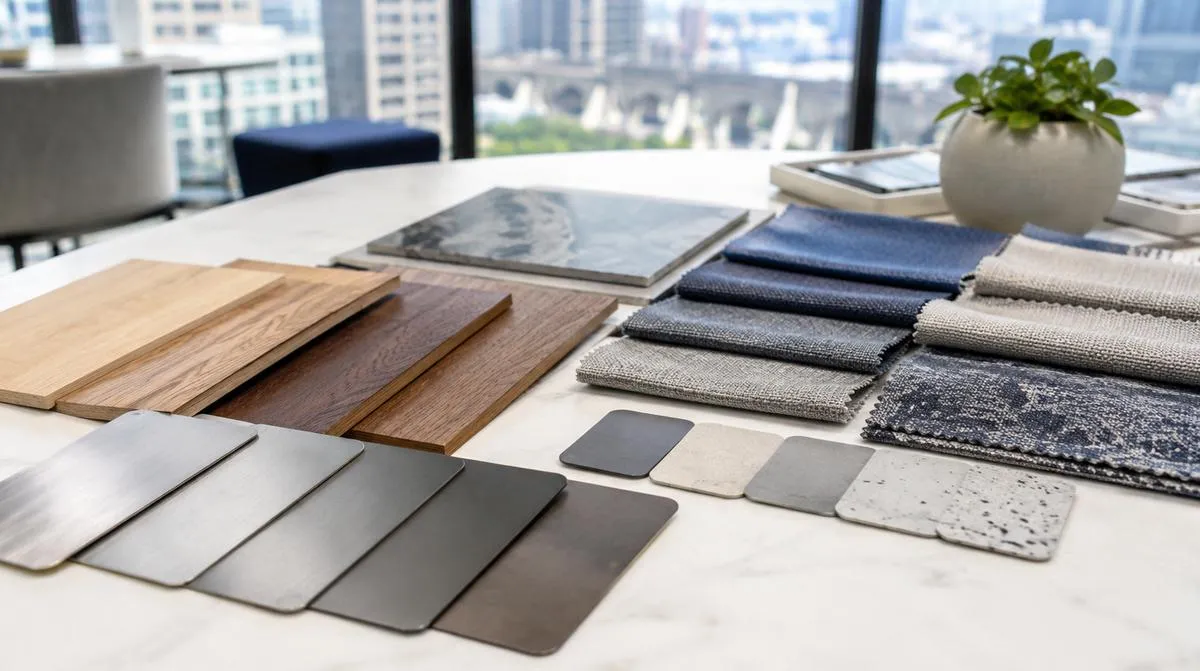
The Charleston Coliseum and Convention Center's event calendar creates a real pressure point even in a smaller market. State association meetings, regional trade shows, and university and youth sports tournaments all push short-term hotel demand higher than a typical week would suggest. If your reopening or renovation completion date is tied to one of those windows, a procurement delay does not just cost you a few days, it costs you the compressed-rate period that made the timing worth targeting in the first place.
Charleston's climate is a milder variable than what a Gulf Coast or Deep South market deals with, but riverside patio seating along the Kanawha and outdoor dining near Capitol Market still needs furniture rated for real humidity swings, freeze and thaw cycles, and seasonal flooding risk near the river corridor. Specifying interior grade product for an exterior application here fails just as fast as it would anywhere else, and replacement costs erase whatever you saved up front.
Working With Designers and Procurement Agents
Most Charleston hospitality projects run with the same three-party structure you would see anywhere: an interior designer setting the aesthetic direction, a procurement contact managing vendors and purchase orders, and you holding the budget and the calendar. In a market this size, though, the working relationship between those three parties often has to cover more ground per person, since Charleston does not have the deep bench of hospitality-focused design firms that a larger metro supports.
That means the designers and procurement specialists who do work regularly in this market, often based in Charleston itself or commuting from Huntington or Pittsburgh, tend to carry outsized influence over how a project runs. Their established relationships with regional contract furniture reps are valuable precisely because there are fewer redundant options if a first choice falls through. A rep who already understands your designer's spec language can flag lead times and substitution options early, before you are locked into a bid.
The most consistent mistake in Charleston projects is bringing procurement in too late. Waiting until design is fully resolved before pricing and lead times enter the conversation means redesigning under pressure later, substituting product at the last minute, and sometimes pushing your certificate of occupancy date. Bring procurement into the conversation during schematic design, while specifications can still be value-engineered without compromising the concept.
For a larger scope, such as a full hotel renovation or a multi-space restaurant group opening across downtown and the East End, some operators bring in a dedicated FF&E procurement consultant to sit between design and purchasing. That role owns vendor communication, purchase order tracking, freight coordination, and punch list resolution. For smaller Charleston projects, the interior designer often manages procurement directly, with a purchasing fee built into the contract. Either approach works, as long as someone is clearly accountable for the decisions before the project is already underway.
What Your Budget Should Account For
FF&E budgets for Charleston hospitality projects vary by property type and finish level. A limited-service or select-service hotel near the interstate or the airport typically runs $8,000 to $14,000 per key. A full-service downtown property or a boutique renovation along Kanawha Boulevard can reach $18,000 to $28,000 per key, with lobby and meeting space budgets climbing further when the design program calls for it.
A few line items consistently surprise Charleston developers. Freight from contract furniture manufacturers, most of which ship from North Carolina, the Midwest, or the Northeast, adds 8 to 12 percent on top of product cost, and Charleston's location off the primary interstate freight corridors can add days to delivery windows compared to a market like Columbus or Pittsburgh. White-glove delivery and installation, usually contracted separately, adds another 5 to 8 percent. Storage costs show up when furniture arrives before the site is ready to receive it, which happens more in renovation-heavy markets like this one than owners expect.
Custom and semi-custom work costs more and takes longer, but it is what separates a property that looks intentional from one that reads as generic. Build a contingency of at least 10 percent into your FF&E budget from the outset. Field changes are common in renovation work, and a buffer lets you absorb them without making procurement decisions under financial pressure.
The Charleston properties that open on schedule are the ones that started procurement early, respected realistic lead times, and kept the designer and procurement contact talking constantly through the process. Whether you are refreshing a hotel near the Civic Center, opening a restaurant close to Capitol Market, or renovating a property along the Kanawha Boulevard corridor, the fundamentals hold: start earlier than feels necessary, specify clearly before you bid, and build freight and installation into your numbers from day one.
Ready to spec FF&E for your Charleston WV project? Send us the details and we will price it around your requirements. Request a quote to start.