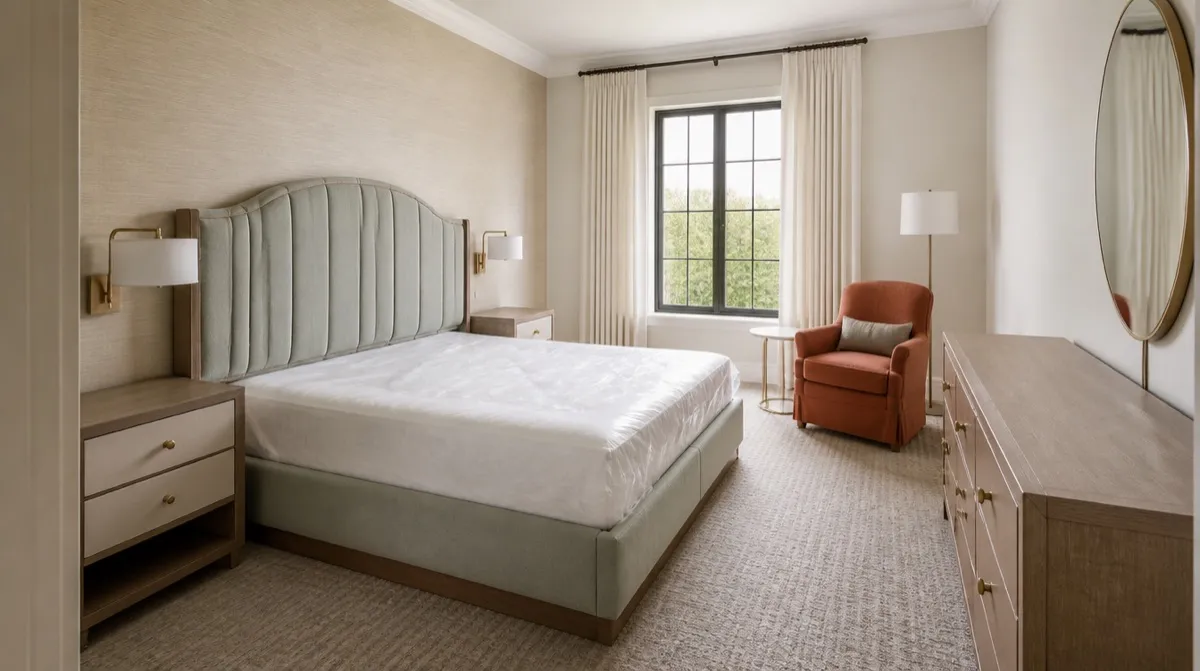
FF&E stands for furniture, fixtures, and equipment. It is the set of movable, non structural items that turn a finished building shell into a working hotel, restaurant, office, or venue: the beds, chairs, tables, casegoods, lighting, and equipment that people actually use. The term shows up on construction budgets, design schedules, and accounting ledgers, and it means a slightly different thing in each context. This guide explains what FF&E covers, what it does not, and how the pieces fit together, so the vocabulary stops getting in the way of the project.
What does FF&E stand for
FF&E stands for furniture, fixtures, and equipment. You will also see it written as FF and E, ff & e, or simply FFE without the ampersand, and all of them mean the same thing. Each word points at a different kind of item.
Furniture is the movable pieces people sit at, sleep in, or store things in: beds, seating, tables, desks, casegoods, and cabinets. Fixtures are items attached to the building but still specified and bought as part of the furnishing package rather than the construction, such as decorative lighting, mirrors, and window treatments. The line here is judgment, not physics, since a fixture is fastened down but is still selected, budgeted, and installed as part of FF&E rather than as base building work. Equipment is the functional gear a space needs to operate: in a hotel that can mean televisions, minibars, and safes, and in a restaurant it extends toward the kitchen and service equipment.
What FF&E is not
The clearest way to understand FF&E is by what falls outside it. Anything structural or permanently part of the building is not FF&E: walls, flooring, plumbing, HVAC, and built in millwork belong to the construction budget. The plumbing fixtures in a bathroom are construction; the decorative mirror above the sink is FF&E.
There is also a separate category that gets confused with it, usually called OS&E, or operating supplies and equipment. OS&E covers the consumable and small operational items a property needs to open its doors: linens, glassware, tableware, and cleaning supplies. It is bought and budgeted apart from FF&E even though both get specified before opening. The table below sorts the common items.
| Category | What it covers | Example items |
|---|---|---|
| Building / construction | Structure and permanent systems | Flooring, walls, plumbing, HVAC, built in millwork |
| FF&E | Movable furnishings, fixtures, equipment | Beds, seating, casegoods, decorative lighting, TVs, mirrors |
| OS&E | Operating supplies and small equipment | Linens, glassware, tableware, cleaning carts |
What FF&E means in construction
On a construction project, FF&E still means furniture, fixtures, and equipment. The distinction is between the building work and the furnishing package that makes the completed space usable. A hotel room's bed, desk, and television belong in the FF&E schedule; its walls, plumbing, and HVAC belong in the construction scope.
The boundary needs a written project scope, especially for attached items. Decorative lighting or window treatments may be selected with the furnishings while their wiring, supports, or installation involve the construction team. Attachment alone does not settle responsibility. Architecture and interior design practice Board & Vellum explains that FF&E leaves the architecture in place, with exceptions to the movable-item rule and some overlap with finishes on smaller projects.
For an item near that boundary, record who specifies it, who purchases it, who prepares the building connection, and who installs it. Put those responsibilities beside the item in the schedule before requesting prices. That prevents the same item being priced twice or its installation being omitted. For operating items such as linens and tableware, use the separate FF&E versus OS&E guide.
FF&E in interior design
In interior design, FF&E is the deliverable that turns a concept into a specified, buyable package. The designer develops the look, then translates it into an FF&E schedule: a line by line list of every piece with its finish, fabric, dimensions, and quantity. This document is what suppliers price against, so the quality of the schedule drives the quality of every bid that follows.
FF&E interior design work sits between the creative and the practical. The designer is choosing how a lobby or guest room feels, but every choice has to resolve into a real product at a real price with a real lead time. A common tension is specifying a custom piece that photographs beautifully but carries a long production time or a cost that breaks the budget. Good FF&E design holds the concept together while keeping the schedule and the budget honest, which is why the schedule usually goes through a round of value engineering before anything is ordered.
The categories inside an FF&E package
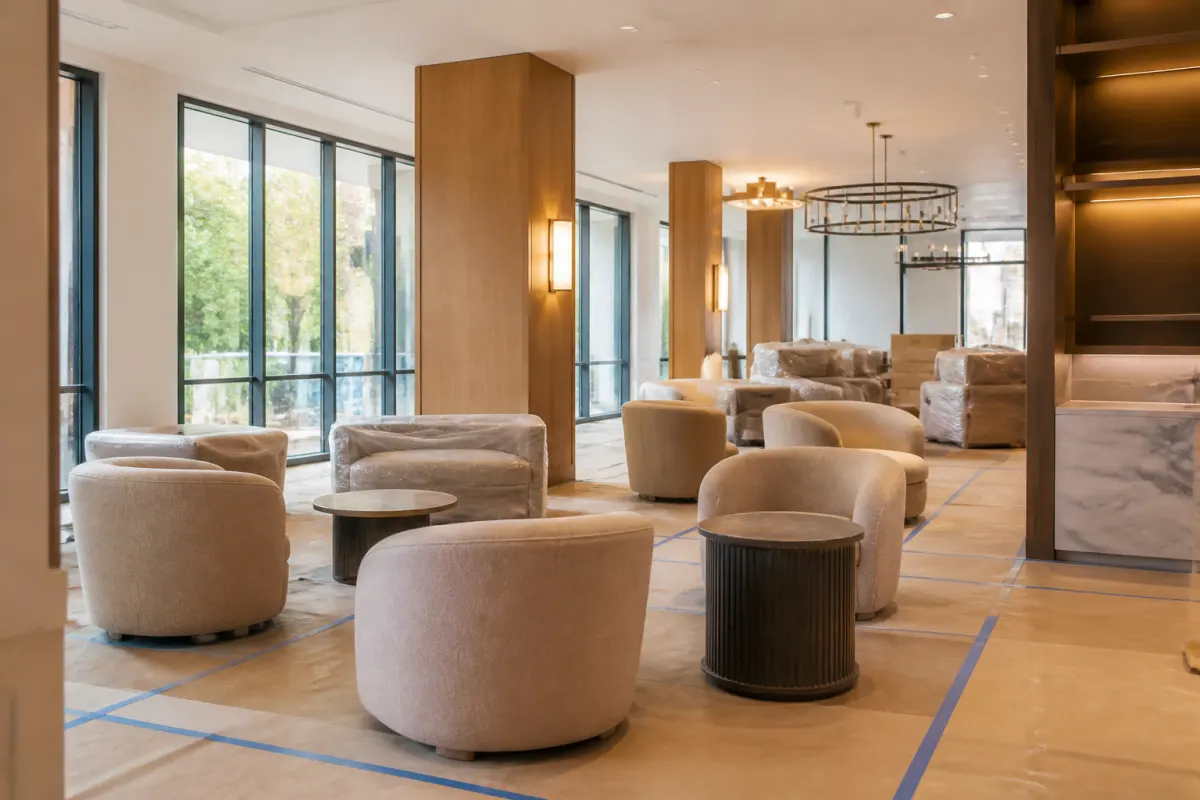
A hospitality FF&E package breaks into a few recognizable groups. Guest room FF&E covers beds, headboards, casegoods, seating, and desks. Public space FF&E covers lobby seating, tables, and decorative pieces. Food and beverage FF&E covers dining chairs, booths, barstools, and tables for every restaurant and bar outlet. Meeting and event FF&E covers banquet chairs, folding tables, and the seating that fills ballrooms and conference space.
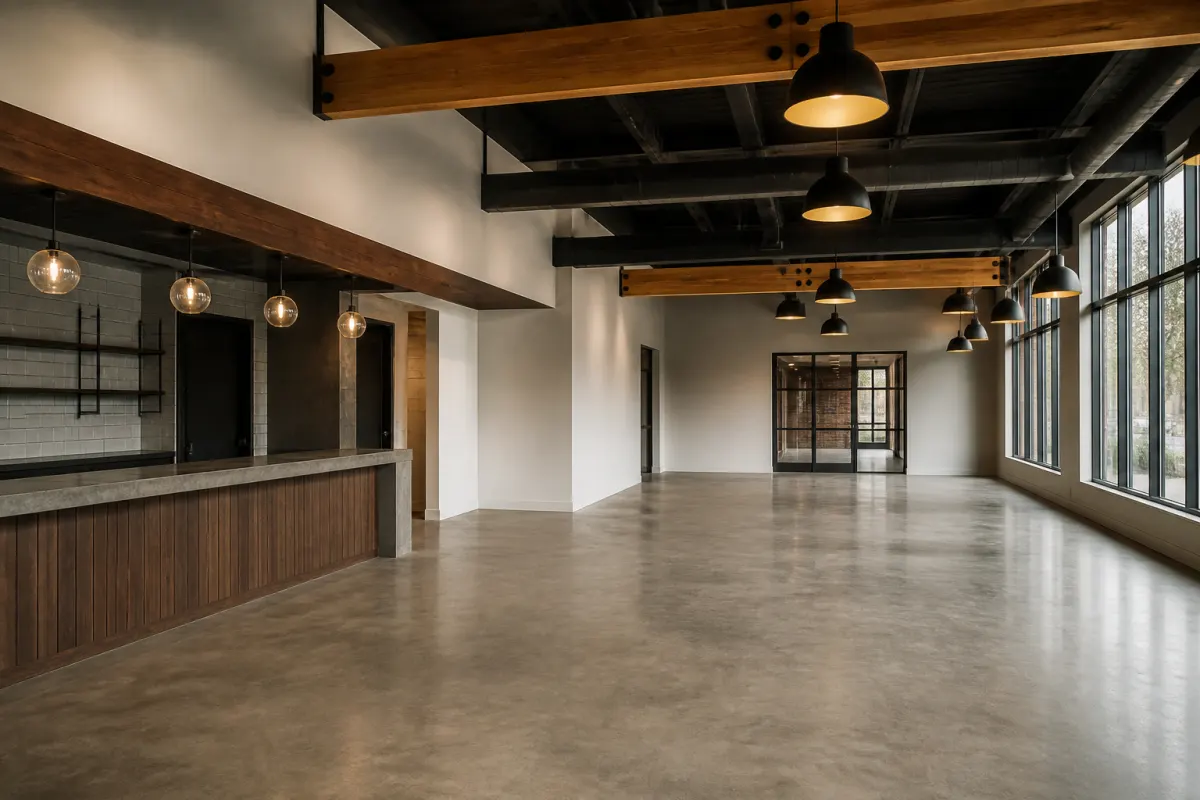
Each group has its own durability standard. Food and beverage furniture takes daily contact with cleaning chemicals and spills, so it is specified closer to restaurant contract grade, while guest room casegoods are built for quieter, longer service. You can see how these categories map to real products across the banquet chairs, tables, barstools, and headboards ranges.
FF&E procurement in one paragraph
FF&E procurement is the process of specifying, buying, delivering, and installing everything in the package, and it is a logistics discipline as much as a purchasing one. The short version: lock the specification, bid the package and value engineer where needed, issue purchase orders, produce and inspect, ship and warehouse, then deliver and install on a schedule matched to construction. Ask each supplier to confirm production lead time, approval deadlines, freight arrangements, and the date the site must be ready to receive its products. Treat those as project-specific commitments rather than a fixed lead time for every FF&E package. The complete workflow and the roles involved are laid out in the FF&E procurement guide.
Budgeting an FF&E package
Build the FF&E budget from the item list, with a planning allowance for each category and separate lines for freight and installation. Record the quantities, dimensions, fabrics, finishes, and delivery destination needed to price each item. Ask suppliers to identify what their price includes, such as assembly or installation, and list any exclusions so quotes can be compared on the same scope. Confirm the selected products and the complete delivered cost in an itemized supplier quote.
To turn a room count and outlet plan into a realistic package number before finishes are selected, run it through the FF&E budget calculator. When the specification is locked, request a quote with your item list and target opening date so the pricing reflects your real timeline rather than a generic estimate.
FF&E as an asset class
The FF&E label matters in accounting as much as in design, because it defines a distinct asset class on the books. Where the building is a long lived structural asset, FF&E is capitalized and depreciated over a shorter useful life that reflects how furniture and equipment actually wear out in commercial service. That is one more reason the boundary between construction and FF&E has to be drawn cleanly: the two sit in different places on the balance sheet and depreciate on different schedules, so an item filed under the wrong heading distorts both.
For an operator, this has a practical upside. Because FF&E depreciates faster than the building, planning replacement cycles around that schedule keeps a property from carrying furniture long past its service life while it is still on the books. Renovation and refresh cycles tend to track the useful life of the FF&E rather than the structure for exactly this reason. To see how a furniture package depreciates across its service life, run it through the furniture depreciation calculator alongside the budget number.
Why the definition matters on a real project
Getting the FF&E boundary right is not academic. Items that get misfiled as construction can fall out of the furnishing budget and reappear as a surprise late in the project, and items misfiled as FF&E can inflate a number that should sit with the general contractor. Draw the line early, keep the schedule complete, and the budget behaves.
If you need supplier input on the furniture portion, include your item list, quantities, finishes, delivery location, and target date in a furniture request. With your consent, Commercial Furniture Depot may share the request with relevant independent suppliers who can contact you about options, pricing, and timing. Confirm each supplier's included scope before comparing quotes.