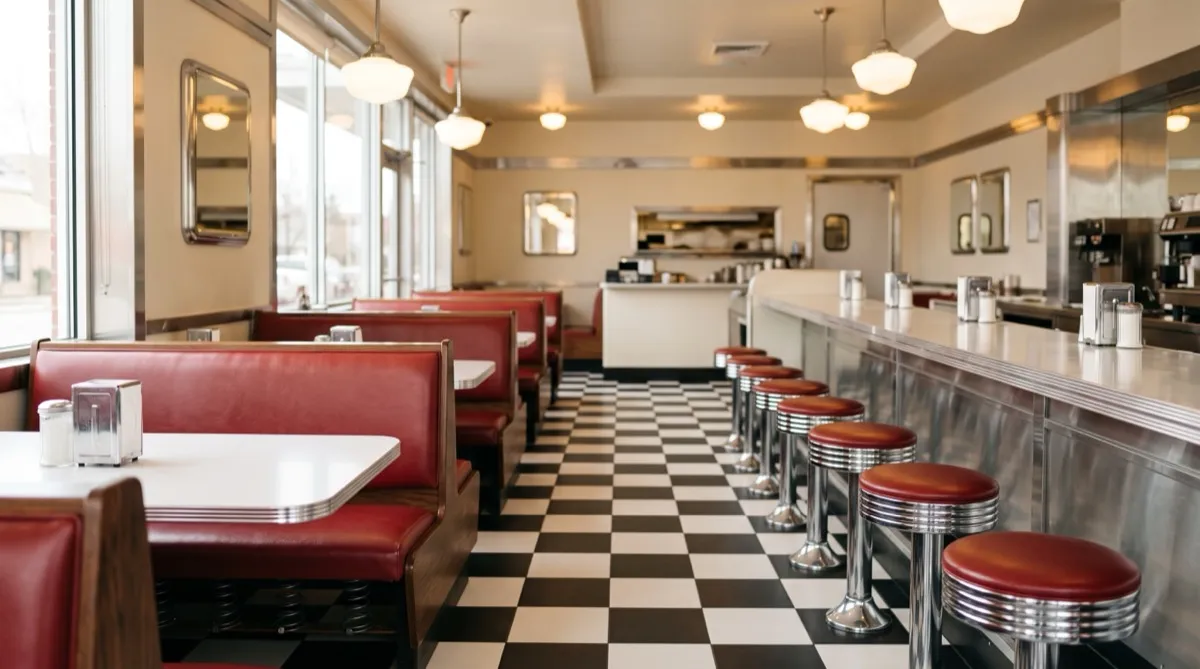
A diner reads as a diner before a guest orders anything, and that read comes almost entirely from the furniture. Chrome trim, vinyl booths, a counter with fixed stools, this is a specific visual language, and getting it right takes more than picking pieces that look retro. It takes a package that survives all day service while still landing the aesthetic.
The chrome and vinyl language
Classic diner furniture pulls its identity from a small set of consistent choices repeated across every piece. Chrome or polished steel trim on chair and stool frames. Vinyl upholstery, often in a saturated color, sometimes with contrast piping. Laminate table tops in a pattern or solid color that reads mid century without literally copying a specific decade. Getting the diner look right is less about finding any one dramatic piece and more about applying this same material language consistently across booths, counter stools, and any freestanding chairs, so the room reads as one coherent concept rather than a mix of styles that happen to share a color.
Modern diner concepts often push the retro cues further in one direction or another, either leaning harder into a specific decade with bold color and pattern, or softening the references into a more contemporary space that only hints at diner DNA through the counter layout and a few material choices. Either direction works. Mixing genuinely modern furniture forms with classic diner materials without a clear point of view is what tends to look unresolved.
Booth seating
Booths can anchor the diner floor plan. Sliding into a booth puts the seat edge, upholstery, and frame into the daily service routine, so assess an actual sample and the complete assembly’s intended use and support. Request the selected vinyl’s cleaning instructions and the foam specification; a commercial label or foam density alone does not prove all-day comfort or service life.
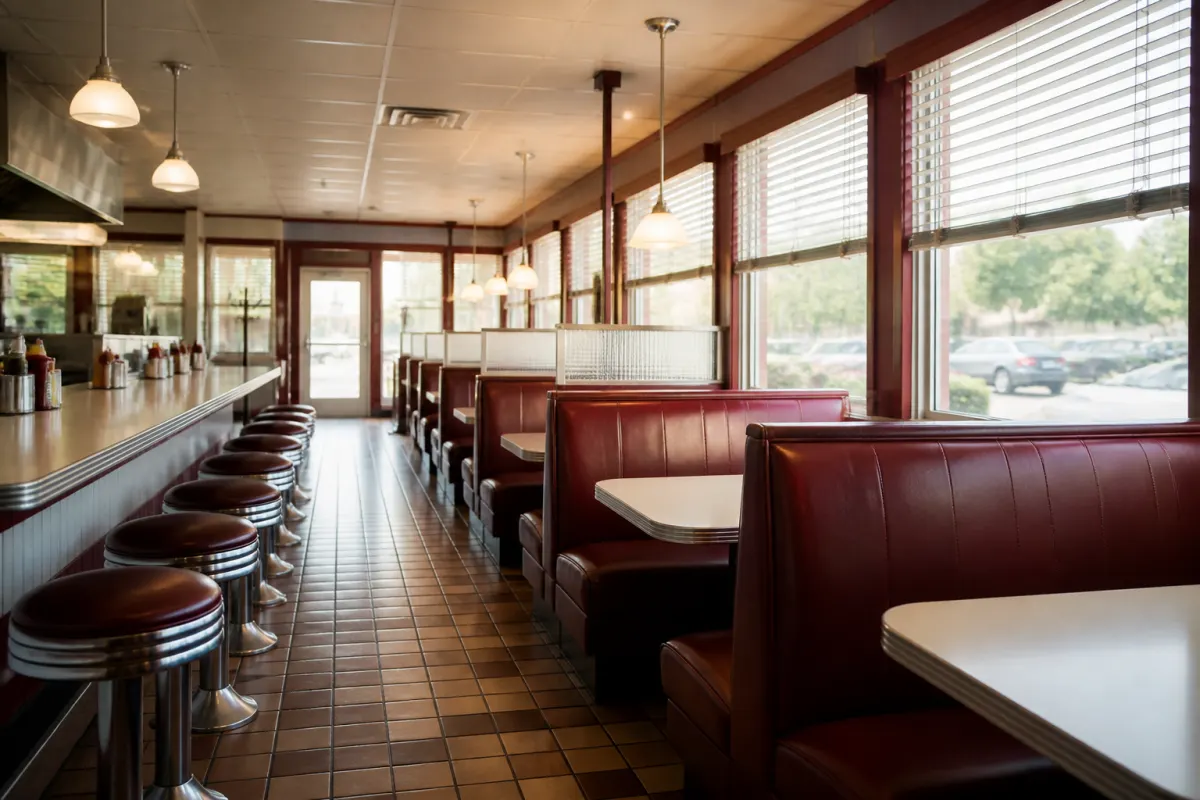
Booth back height and depth affect both the look and the guest experience. Higher backs read as more private and more classic diner, while lower backs open up sightlines across the room, which some contemporary diner concepts prefer for a more social feel. Either works, but the choice should be intentional and consistent across the room rather than mixed booth styles that fight each other visually.
The counter and counter stools
The counter deserves the same design attention as the booths. The guide’s 24 to 26 inch stool seat range is a planning example for some counter arrangements, not a fit specification for your room. Measure the actual counter, underside clearance, seat, and footrest together. Confirm the proposed frame’s use and test documentation and select upholstery that fits the room’s visual language and cleaning routine.
Fixed base counter stools can maintain a planned position when installed to the model’s anchoring instructions and approved floor conditions. Review the layout, circulation, and accessible seating provision with the project team before committing to fixed positions. Trial entry, exit, and swivel options with the actual counter rather than assuming swivel is worth the cost for every layout.
Tables and freestanding chairs
Beyond booths, most diners run some freestanding table and chair seating for parties that do not fit a booth or during peak times when every seat matters. Laminate tops in the diner's chosen pattern match the counter and booth tables, and chairs should echo the same chrome and vinyl material language rather than introducing a third furniture style into the room. A diner that runs three different chair and table styles across its floor plan reads as unplanned, regardless of how good any single piece looks on its own.
Durability standard for all day service
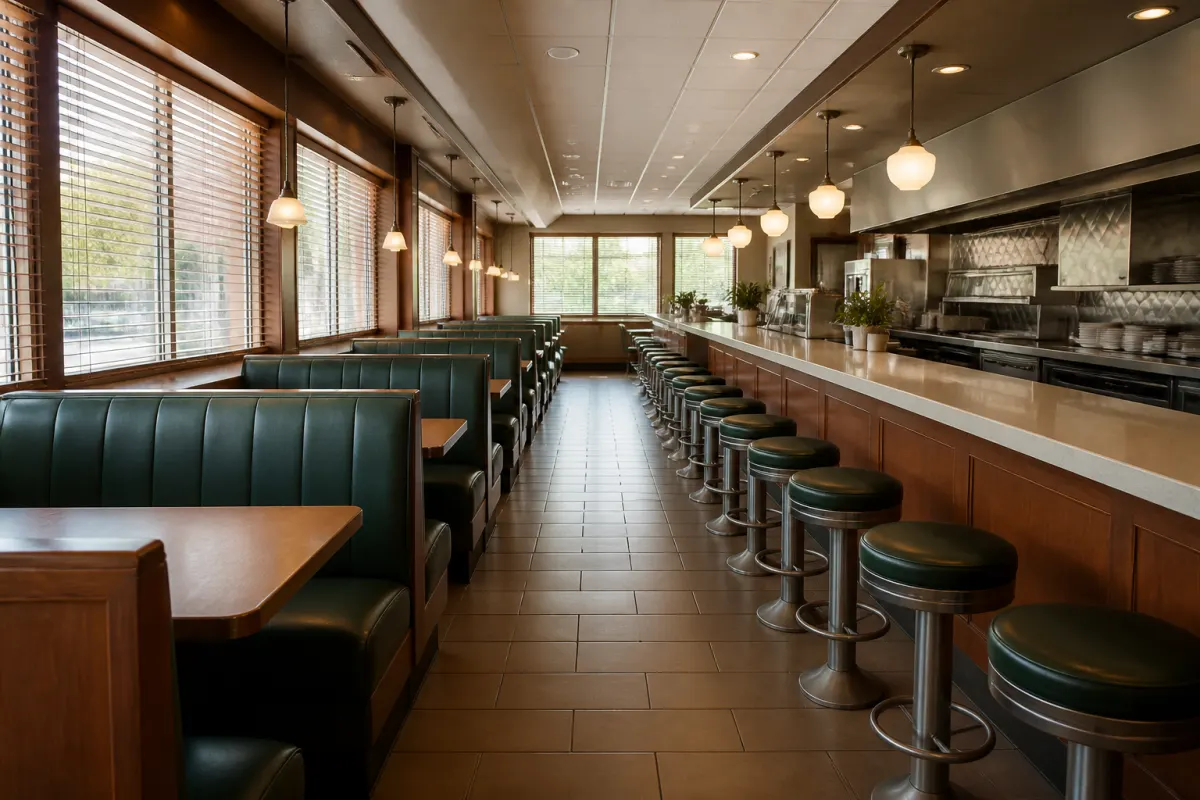
Use your diner’s actual service hours and cleaning routine to specify the furniture. Ask for complete-frame use and test documentation, the exact upholstery’s care instructions, and tabletop compatibility with the cleaners you intend to use. Welds, vinyl, laminate, and solid surface describe construction or materials; they do not establish resistance to every spill, chemical, or duty cycle.
Modern retro without sacrificing durability
The retro look and the performance requirements can be evaluated separately within the same package. Chrome trim, vinyl, and laminate provide visual cues, while the selected finishes, upholstery, complete assemblies, and care documents determine the proposed product’s suitability. Approve physical samples and cleaning requirements alongside the room’s color palette.
Planning the full package
Work out booth, counter, and freestanding seat counts together on the actual floor plan, with one deliberate material and color palette. Use the restaurant seating capacity calculator for an initial planning scenario, then verify dimensions, circulation, and accessible seating in the project layout before finalizing quantities. Our bar furniture guide covers further stool and counter questions.
Sourcing and lead times
Ask whether the selected vinyl, laminate, trim, and full item quantities are allocated stock or require production. The original guide’s 10 to 14 week custom-package window was a planning example, not a current delivery commitment. Obtain dates for palette approval, production, dispatch, and coordinated delivery across booths, stools, and tables.
Browse booth seating and counter stools for visual concepts. Request a quote with your floor plan, quantities, material direction, and receiving conditions, then compare independent supplier proposals for the actual models and coordinated delivery scope.
Related reading
- Bar furniture guide
- High volume restaurant furniture
- Restaurant booth layout and dimensions
- Get a quote
Our take
In the counter zone, review finish samples under the actual lighting and trial them against the approved cleaning routine. Bright chrome, polished steel, brushed steel, and satin finishes have different appearances; the finish specification and care instructions matter more than assuming one hides marks or resists the diner’s exposure better. Include proximity to cooking, moisture, and cleaning products in the supplier review.
The bottom line: Coordinate booths, counter stools, and tables in one diner palette. Approve the actual finish and upholstery samples, counter fit, care requirements, and delivery scope before ordering.