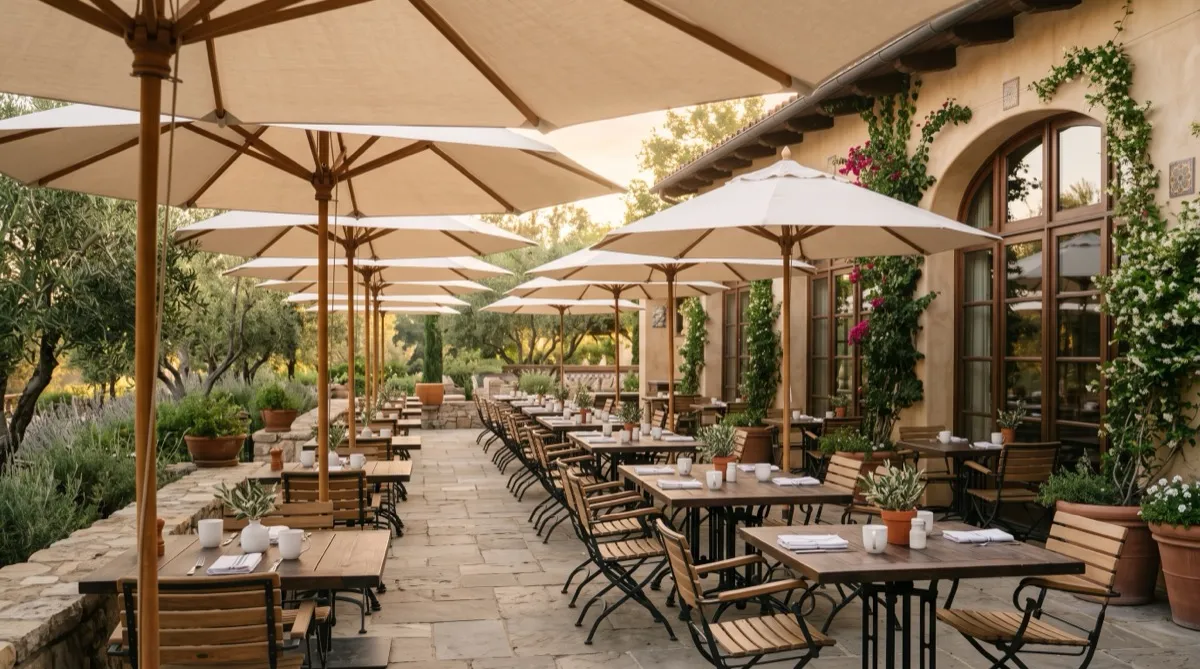
Shade determines whether a patio gets used during the hours it matters most. Check sun exposure during the hours guests use the space; shade placement can affect which seats are comfortable at those times. Umbrellas and shade structures are a seating capacity decision as much as a comfort one.
Market umbrellas
Market umbrellas use a center pole and can suit individual tables or small seating clusters. A table opening can locate the pole, but it does not establish adequate anchoring. Confirm the approved table, umbrella, and anchor combination before planning the installation. A market umbrella covers roughly one table and its immediate seating, so the shade math scales directly with your table count.
The tradeoffs are real. A center pole runs through the middle of the seating area, which slightly limits how tables can be arranged underneath, and staff need a closing procedure that follows the selected umbrella’s operating limits. A tilt or crank mechanism helps position or operate the canopy; do not assume it detects wind or closes automatically. For most single table or small cluster seating, market umbrellas are the right default.
Cantilever umbrellas
Cantilever umbrellas move the support structure to the side. Depending on the model, they use a specified weighted base or fixed mount; account for that support footprint when planning seating. This matters for lounge zones, larger table clusters, or any layout where a center pole would break up the furniture arrangement or block sightlines.
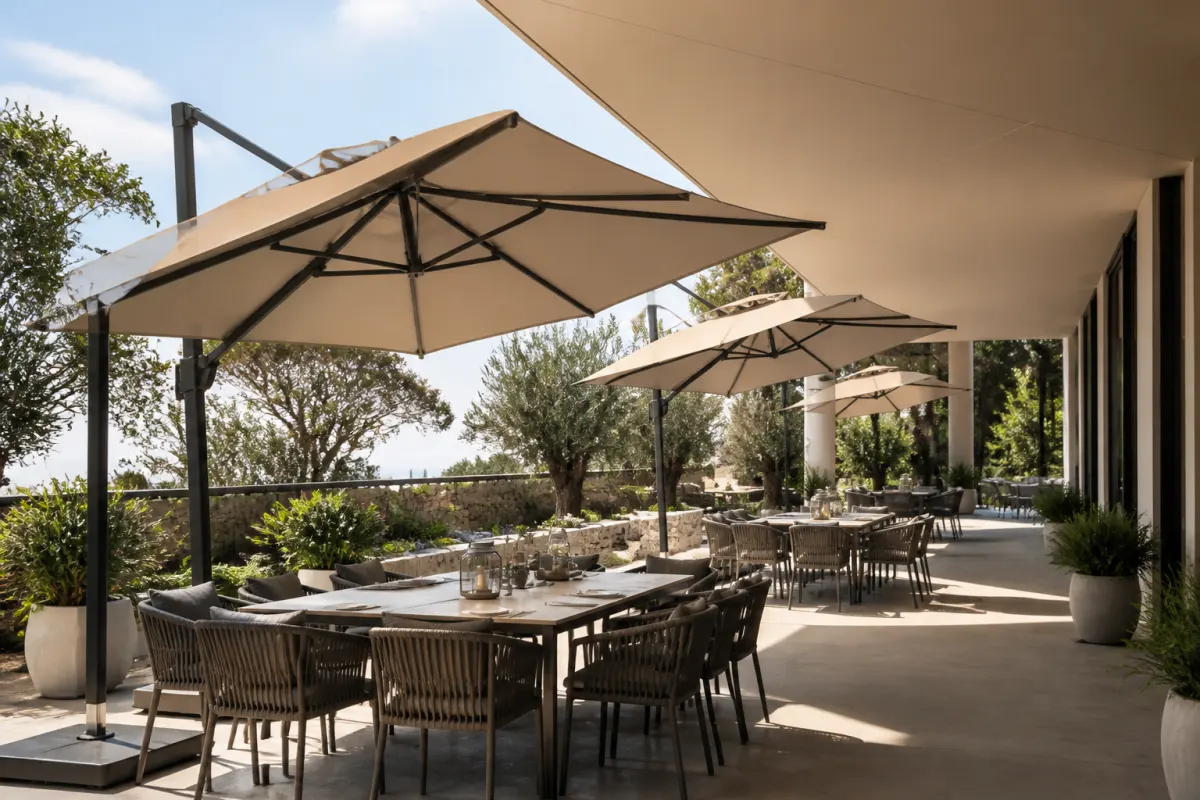
The tradeoff is footprint and weight. Compare the manufacturer’s required anchor, ballast or fixed mounting, overall footprint, and installation scope. Those requirements and costs depend on the canopy size, model, and site; do not choose ballast from a generic cantilever description. For premium lounge seating or larger group tables, the open sightline is usually worth the extra footprint.
Wind ratings and what they actually mean
Ask for the selected model’s operating instructions, closure limits, and any wind-test documentation. A tested wind speed is not automatically a safe operating threshold. Tuuci’s care and maintenance guidance, for example, distinguishes tested speeds from recommended maximum use speeds and makes some limits conditional on in-ground mounting. Those figures apply to its named models and configurations, not every commercial umbrella. Canopy shape, venting, ribs, anchor, and site exposure work together; a vented top alone does not establish wind suitability.
Coastal markets, elevated rooftop patios, and any location with regular afternoon wind need this rating taken seriously, not treated as a nice to have. An umbrella that is not closed in time in real wind becomes a liability, not just a furniture problem, since a tipped umbrella and base can injure a guest or damage nearby property.
Base weight and stability
Use the anchor or base specified for the exact umbrella size, model, mounting method, and site conditions. Tuuci requires an adequately weighted approved anchor before opening and directs buyers to its dealer or representative for the appropriate weight. Do not substitute an estimated weight, improvised ballast, or the table’s mass for the manufacturer’s anchoring requirements. Include the base footprint and handling access in the layout, and give staff the opening, closing, inspection, and severe-weather procedure.
Branding on umbrella valances
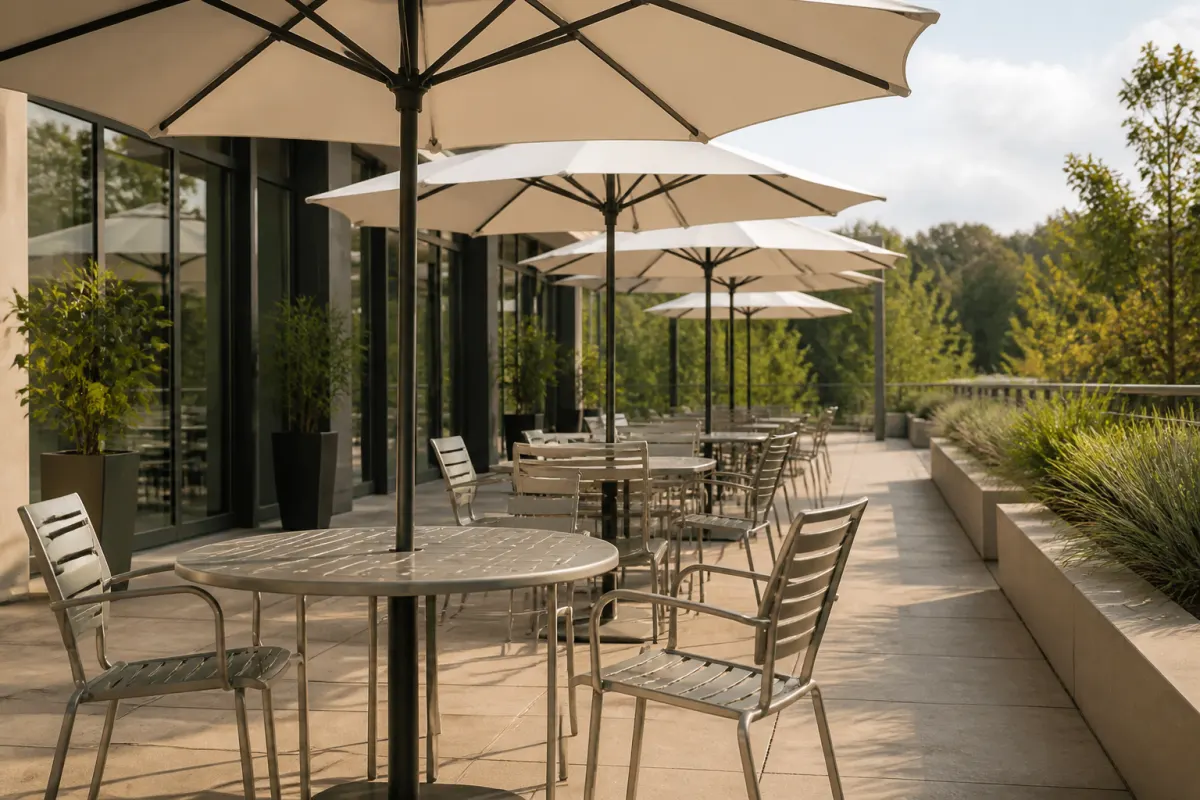
A valance, the fabric border hanging from the umbrella's edge, is a common and effective branding surface for a hotel or restaurant patio, since it is visible from a distance and reinforces the brand across every table on the property. Keep the branding on the valance rather than the canopy face itself in most cases, then confirm the artwork method, approval, price, and production schedule for the selected model. Canopy and valance options vary by supplier.
When to go structural
For larger patios or a fixed architectural shade plan, evaluate a pergola, fixed canopy, or retractable awning with the responsible design and installation team. Each system has its own site, structural, weather, and operating limits; permanent installation does not mean unrestricted use in every weather condition. Structural shade makes sense for larger footprints where umbrella density would clutter the layout, for climates where wind makes umbrella operation a daily hassle, or where a hotel wants a permanent architectural feature rather than furniture that needs opening and closing.
Structural shade is a longer lead time, higher upfront decision than umbrellas, and it usually involves a design or architecture partner alongside the furniture supplier. For most restaurant and hotel patios, umbrellas remain the right primary shade tool, with structural elements reserved for entry features, bars, or anchor zones within the larger patio.
Planning shade against your seating count
Work out your shade plan against actual table locations and the hours the patio needs shade. The event space calculator can help you explore seating layouts. Check canopy coverage, moving shadows, support footprints, and anchoring separately against the selected shade system and the site plan.
Sourcing and lead times
Use 10 to 14 weeks only as an illustrative custom-production assumption until a supplier confirms the exact umbrella, branding, anchor, approvals, and delivery schedule. Stock status and cantilever availability require their own confirmation. Order shade at the same time as the rest of the patio furniture rather than as an afterthought, since a fully furnished patio with no shade solution sits unusable in the exact hours it should be busiest.
Browse outdoor table options built to pair with umbrella mounts, or request a quote with your patio layout and climate and we will recommend the right shade mix for your seating plan.