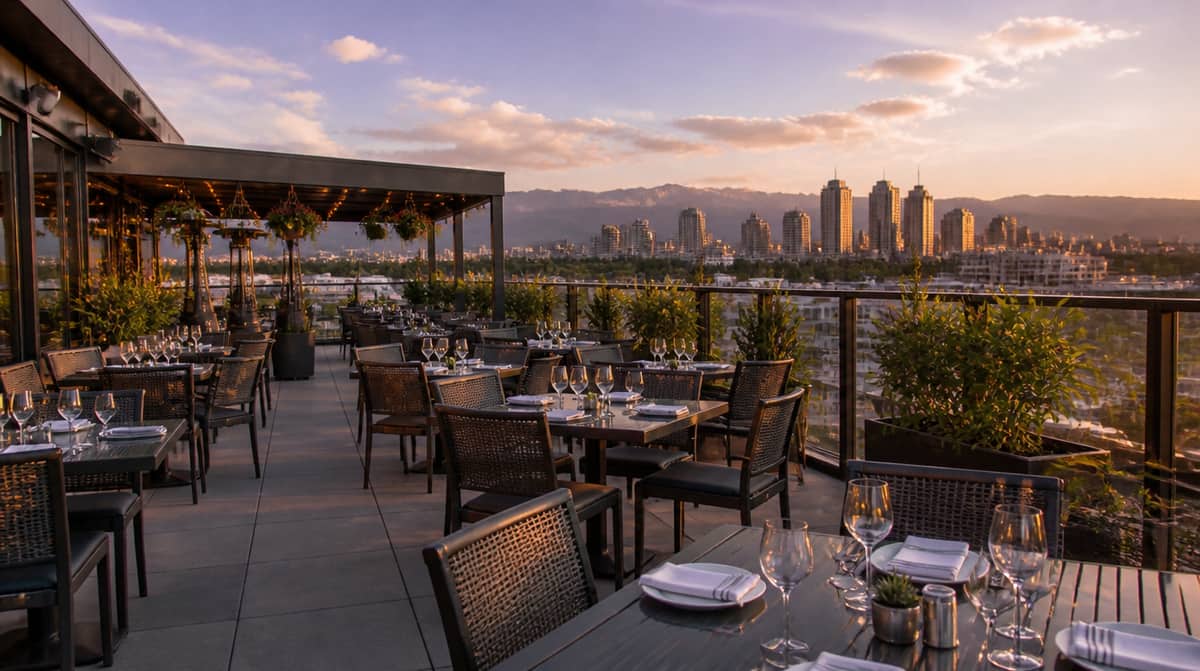
Omaha has a patio problem, and it's not the one most operators plan for. The assumption walking into an Omaha furniture project is that a Midwest climate splits cleanly into a short warm season and a long cold one, and that furniture only needs to survive the gap in between. Operators who have actually run outdoor programs on the cobblestone patios of the Old Market, along the restaurant row in Aksarben Village, and on hotel terraces near the CHI Health Center Omaha know the real story is more demanding: Omaha sits in wind alley, gets violent spring hailstorms with almost no warning, swings from 95-degree July humidity to sub-zero January wind chill, and packs a full year of foot traffic into the ten frantic days of the College World Series every June.
The operators who get commercial patio furniture in Omaha right are not treating outdoor seating as a fair-weather amenity. They're treating it as a revenue program with wind, hail, and freeze-thaw requirements that look nothing like what a supplier would spec for Phoenix or Charlotte. Getting those specifications correct from the start is the difference between a patio program that earns its keep for eight years and one that needs a partial rebuild after its first bad storm season.

Omaha's Weather Actually Requires More, Not Less
The standard assumption is that a landlocked Midwest city gets an easier furniture spec than a coastal or Sun Belt market because there's no salt air and no year-round sun exposure. Omaha's weather record says otherwise. The city sits in one of the windiest metro corridors in the country, with sustained spring and fall gusts that regularly reach 30 to 40 miles per hour and higher during frontal passages. Furniture that isn't weighted, ballasted, or specified with wind performance in mind ends up airborne off a rooftop patio or knocked flat on a sidewalk terrace, and it happens more than once a season if the program wasn't built for it.
Hail is the other variable operators underestimate. Eastern Nebraska sits inside a genuine hail corridor, and a fifteen-minute spring storm can leave dents in thin-gauge aluminum and pockmarks in cheap resin wicker that no amount of touch-up paint fixes. A powder-coat finish over a heavier-gauge frame resists that kind of impact damage; a finish over thin stamped aluminum does not, and the difference only becomes obvious after the first storm rolls through.
Then there's the freeze-thaw cycle. Omaha winters bring genuine cold, often well below zero with wind chill, punctuated by warm-up days that melt and refreeze standing moisture on patios and pool decks. That cycle finds every hairline crack in a powder-coat finish and every weak weld point, and it accelerates corrosion faster than a steady cold climate would. Operators running large-scale outdoor seating near the downtown convention and arena district, where hotels and restaurants see continuous traffic tied to Charles Schwab Field and CHI Health Center events, know that a furniture program built for Omaha has to survive both extremes in the same calendar year, not just one of them.
What the Old Market, Blackstone, and Aksarben Village Actually Require
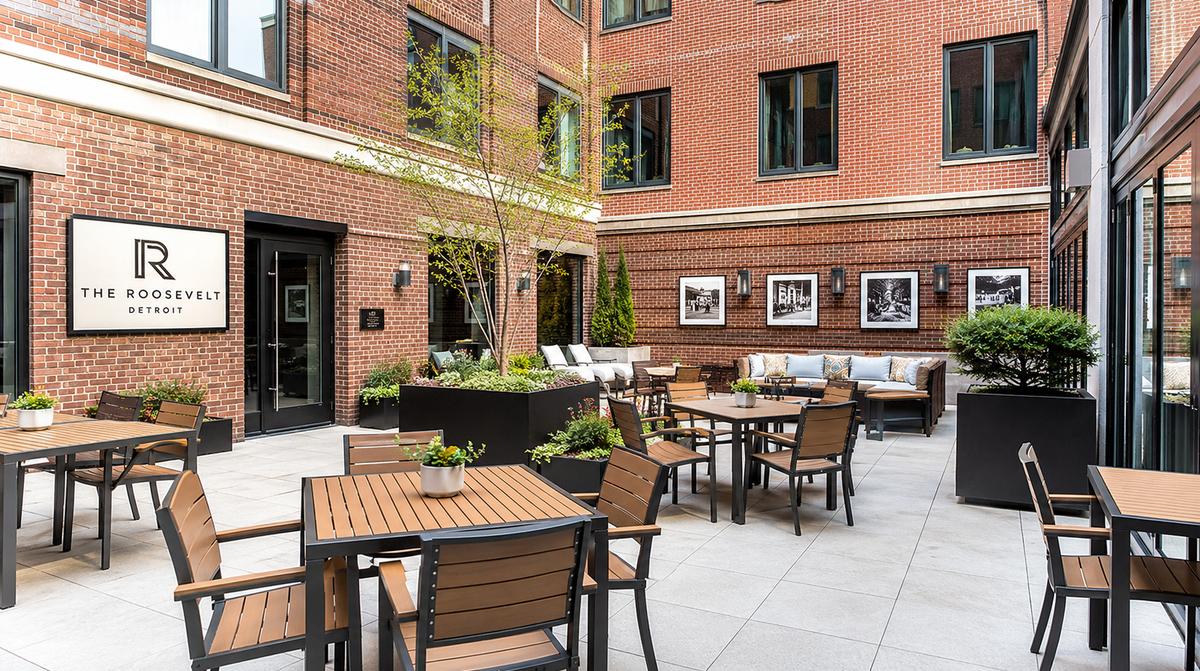
Omaha's patio market is not uniform. The design expectations on an Old Market cobblestone terrace are different from a Blackstone District beer garden, and both are different from a hotel pool deck or rooftop bar serving corporate and convention travelers downtown. Specifying commercial patio furniture in Omaha without matching the program to the location's guest profile and physical setting is how operators end up with furniture that holds up structurally but reads as slightly wrong to the people sitting in it.
The Old Market's patio scene is historic brick and cobblestone, and the furniture program needs to read as considered rather than generic. Uneven surfaces mean self-leveling glides matter more here than in almost any other Omaha district, and frame finishes in bronze or aged black tend to sit more naturally against the brick and cast-iron storefronts than bright white or champagne aluminum. Guests here are dining out for the atmosphere as much as the food, and mismatched or clearly budget furniture undercuts that experience quickly.
Blackstone's patio and beer garden culture is younger, louder, and higher volume. The stretch along Farnam and 40th sees serious weekday and weekend turnover, and the furniture needs to be stackable, easy to reset between services, and durable enough for a crowd that treats a patio chair the way it treats a bar stool. Bold upholstery and darker matte frame finishes fit the neighborhood's craft-beer, industrial-adjacent identity better than a resort-style aesthetic would.
Aksarben Village and the broader midtown corridor operate on a more polished logic, closer to what a suburban lifestyle center or a well-funded hotel courtyard needs. The guest base here skews toward families and corporate visitors staying near the medical center and university corridor, and the furniture program benefits from a cohesive look across dining sets, lounge seating, and shade structures rather than pieces assembled from whatever was in stock.
Wind, Weight, and Fabric: Getting the Spec Right in Nebraska
Fabric specification in Omaha needs to account for both summer humidity spikes and the mechanical stress of wind-driven rain. Solution-dyed acrylic, with Sunbrella as the industry benchmark, is the right base specification for any uncovered or partially covered patio. The color is embedded in the fiber rather than coated on the surface, so it holds up under repeated soak-and-dry cycles from sudden storms without streaking or fading the way surface-dyed fabric does within a season or two. It also cleans easily, which matters on a patio that gets pollen, dust, and storm debris blown across it several times a season.
Foam density matters just as much. Standard 1.8 lb density foam compresses fast under continuous hospitality use, and in a climate with a short but intense patio season, cushions need to hold their shape through every busy weekend without a mid-season replacement. Commercial-grade foam in the 2.0 to 2.5 lb range with a higher ILD rating maintains its profile through the compressed, high-traffic window that Omaha's patio season really amounts to.
Frame weight and wall thickness deserve special attention given the wind exposure. Commercial aluminum at 1.5mm wall thickness minimum is the right starting point, and in more exposed rooftop or riverfront locations, operators should ask specifically about frame weight and glide-anchoring options rather than assuming any "commercial-grade" label covers wind performance. A dining chair that tips in a 35 mile-per-hour gust isn't a durability problem, it's a liability problem, and it's one that shows up in Omaha far more often than in calmer regional markets.
The Revenue Math on Quality Commercial Patio Furniture in Omaha
Omaha's downtown corridor has grown into a genuine convention and event destination, anchored by CHI Health Center Omaha and the College World Series crowds that fill hotel patios and restaurant terraces for nearly two weeks every June. On those peak weeks, a well-positioned downtown or Old Market patio generates outsized per-seat revenue compared to a normal week, and the furniture math shifts entirely once you measure quality against that concentrated revenue window rather than against sticker price alone.
A commercial aluminum dining chair correctly specified for Omaha's wind and freeze-thaw conditions, properly maintained, lasts eight to ten years in active service. A lower-cost or "commercial-style" chair that needs replacing after one bad hailstorm or two rough winters costs more over time, and it adds the operational headache of sourcing mid-season replacements during the exact weeks when the patio can least afford to look unfinished. Operators who have run Omaha patio programs through several full seasons buy once for the actual climate, maintain the finish, and reupholster rather than replace when the frame is still sound.
For hotel and event-district properties near downtown, brand perception is part of the calculation too. A patio that shows storm damage, rust at the welds, or faded cushions by year two signals underinvestment to guests who are comparing that property against others in the same convention traffic. The right approach to commercial patio furniture in Omaha is to specify for wind and hail as seriously as for temperature, match the aesthetic to the neighborhood, and buy for the full lifecycle rather than the opening season. The patio programs built that way keep earning their seats. The ones that aren't spend their maintenance budget catching up every spring.