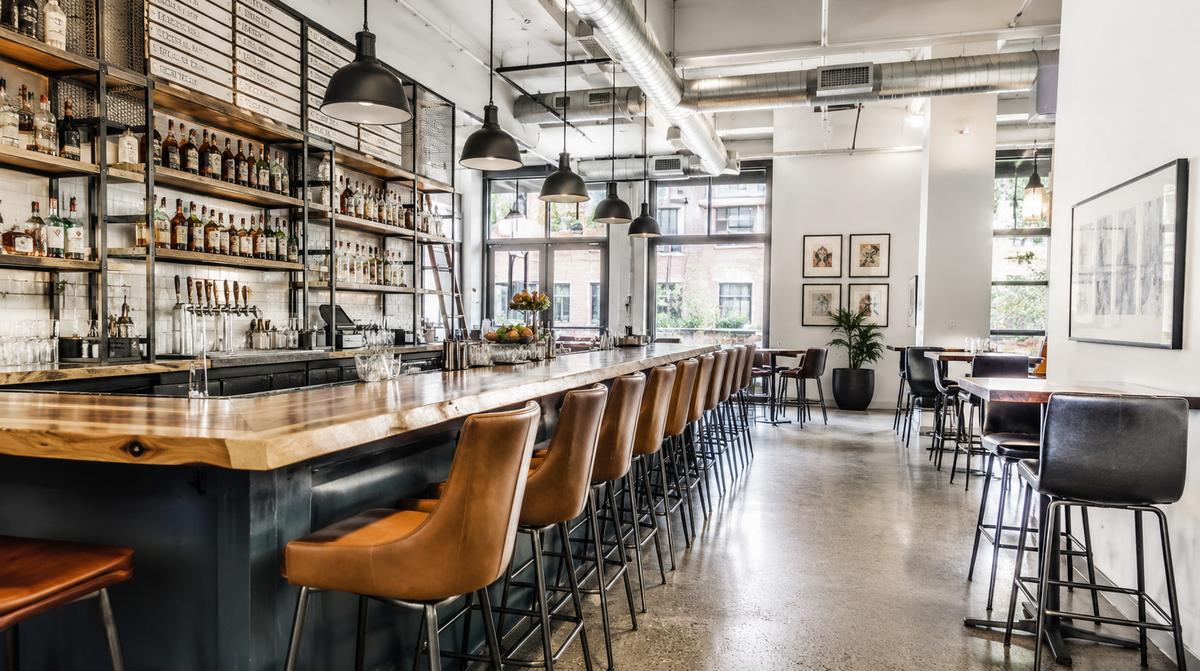
Omaha's bar and lounge market is smaller than the coastal metros but more concentrated, and that concentration creates real pressure on furniture specification. The Old Market anchors a century-old warehouse district where bars sit inside brick-and-timber buildings never designed for modern hospitality loads. The Blackstone District has become the city's most design-literate strip of cocktail bars and lounges over the past decade. And downtown, the CHI Health Center and TD Ameritrade Park pull in convention traffic and College World Series crowds that push nearby bars to volumes most neighborhood venues never see. Sourcing bar lounge furniture Omaha operators can depend on means treating each of these districts as its own specification problem, because a stool built for a CWS-week downtown bar is not the same stool that belongs in an Old Market wine lounge.
The Old Market and the Challenge of Historic Buildings
The Old Market is Omaha's oldest and most recognizable hospitality district, a cluster of former warehouses and produce houses now filled with bars, restaurants, and lounges along cobblestone streets just east of downtown. The buildings themselves are the constraint here. Uneven original floors, exposed brick that eats into usable floor plan, and narrow footprints mean furniture has to be sized and leveled carefully, and it has to look at home against century-old architecture rather than fighting it.
Wood-frame and wood-look metal barstools with leather or leather-look upholstery tend to perform best in Old Market spaces, both structurally and visually. Solid maple or oak frames with reinforced stretcher joints hold up to the twisting stress that comes from guests bracing against uneven floors, and they read as appropriate against exposed brick and original timber ceilings in a way that a sleek chrome-and-acrylic stool never will. Confirm bar counter height on-site before ordering. A surprising number of Old Market buildings were retrofitted with custom millwork counters that do not match standard 42-inch bar or 36-inch counter dimensions, and a stool ordered against blueprint measurements rather than a field measurement is the most common furniture mistake operators make in this district.
For lounge seating in the smaller wine bars and speakeasy-style venues tucked into Old Market side streets, prioritize compact footprints and stackable or nestable options. Many of these spaces run under 2,000 square feet and need to reconfigure seating between a slow weekday lunch and a packed weekend night, and furniture that cannot be moved and stored quickly becomes a liability in a room this tight.
Blackstone District: Where Omaha's Cocktail Scene Sets the Bar
The Blackstone District along Farnam Street has emerged as Omaha's most design-forward hospitality corridor, a strip of independent cocktail bars, breweries, and lounges that opened in a wave over the last several years and that compete on atmosphere as much as on drink menus. Operators here are thinking about visual identity the way Old Market operators think about historic character, and the furniture needs to hold up to that scrutiny.
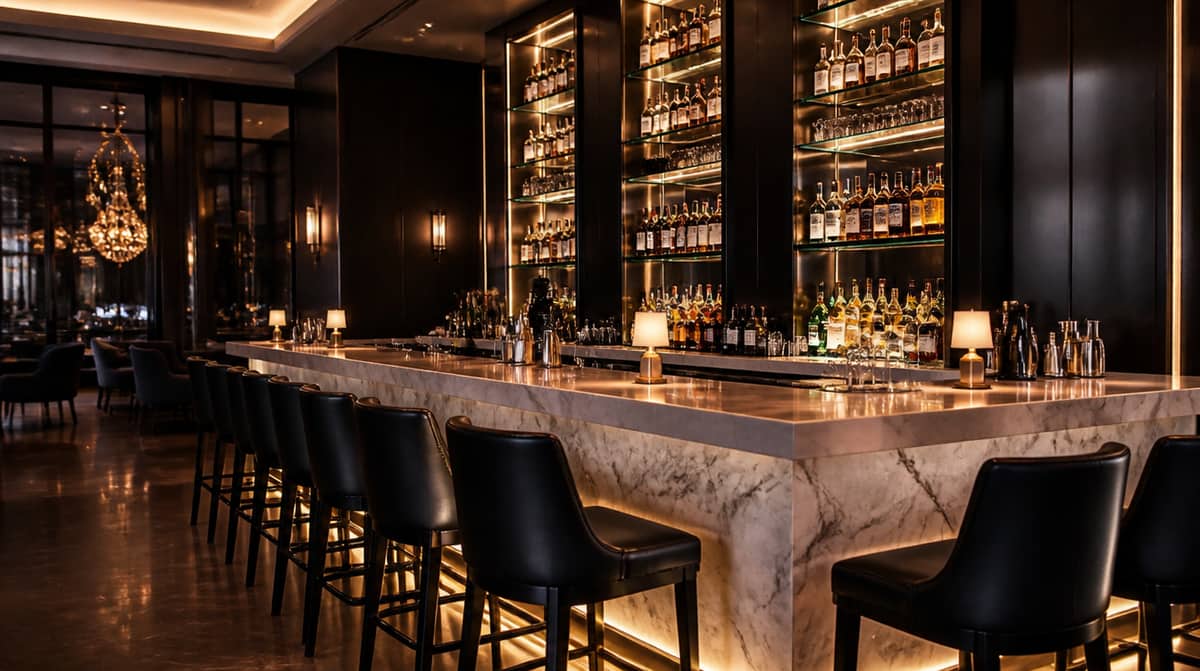
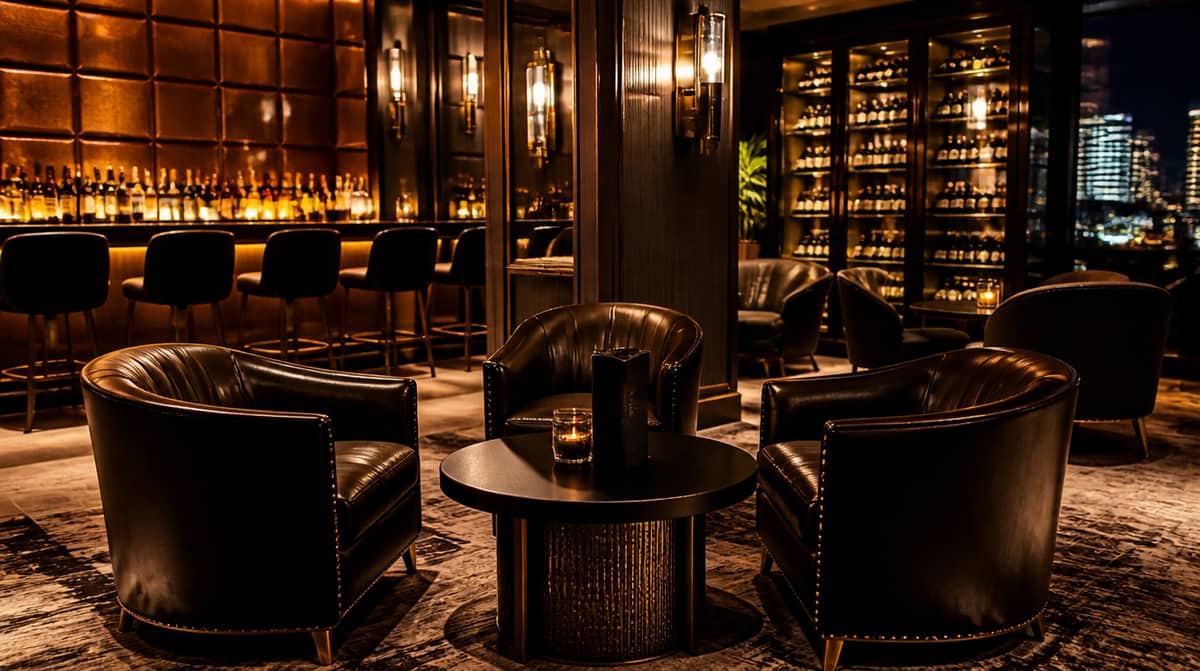
Current preferences in Blackstone lean toward curved lounge silhouettes, warm neutral and jewel-toned upholstery, and mixed-material tables that pair blackened steel with walnut or reclaimed wood tops. The heavy industrial look that defined the district's early bar builds is giving way to softer, more layered interiors. COM programs are worth discussing early with any contract furniture supplier serving this market, since a custom order-material program lets a designer specify proprietary fabric on a proven commercial frame, which is how a small independent operator achieves a distinctive look without sacrificing contract-grade durability.
High-top and communal table configurations are common in Blackstone's larger venues, and those tables need cast iron or heavy powder-coated steel bases with adjustable leveling glides. Several buildings in this corridor have concrete floors from past retrofits that are not perfectly level, and a rocking high-top table is a detail that guests notice immediately in a room this design-conscious.
Downtown and the Convention and Ballpark Corridor
Downtown Omaha, running from the CHI Health Center convention complex through the riverfront hotel corridor and into TD Ameritrade Park, operates on an entirely different demand cycle than the neighborhood districts. When the CHI Health Center hosts a major convention, or when TD Ameritrade Park fills up for the College World Series each June, the bars and hotel lounges within walking distance see traffic that is a multiple of their normal volume, concentrated into a short window.
Furniture in this corridor needs to be specified as infrastructure rather than decor. Barstool frames should be a minimum 16-gauge steel on structural members with fully welded joints, not bolted connections, at the footrest and every leg-to-seat point. Bolted frames loosen under the repeated stress of hundreds of different guests sitting down and standing up over a multi-day event run, and a downtown hotel bar during CWS week or a major convention week absorbs exactly that kind of stress. Solid bar stock footrests are worth the upgrade over hollow tube in these settings, since hollow footrests dent and loosen within a season of high-volume use.
Replaceability matters as much as initial specification. A hotel lounge or downtown bar running peak covers during a convention or tournament week will lose individual pieces to wear and needs a supplier who stocks its primary collection rather than one that only offers made-to-order lead times. The ability to get six replacement barstools in a matching finish for next-month delivery is worth more than a marginal price advantage on furniture that ships eight weeks out from a single production run.
Sourcing Bar Lounge Furniture for Omaha Projects
Omaha's hospitality construction market moves on a compressed timeline more often than not. A Blackstone group signs a lease, an Old Market building finishes a renovation, or a downtown hotel plans a lounge refresh ahead of convention season, and the furniture order lands on a schedule that construction delays have already eaten into. The standard 8 to 12 week lead time for custom contract orders rarely fits a fixed opening date.
The practical approach for most Omaha bar and lounge projects combines in-stock contract inventory for the core seating program with custom or COM orders reserved for the accent pieces where design specificity actually matters. Build supplier relationships before a project is urgent. Know which vendors keep in-stock barstools in the finishes used most often in this market, which suppliers run realistic COM turnaround times, and which can fill a partial replacement order without a multi-week wait.
If you are planning a bar or lounge build anywhere in Omaha, the Old Market, Blackstone, downtown, Aksarben Village, or the growing Benson bar scene, request a specification consultation before your layout is finalized. It surfaces seat height mismatches, floor-leveling issues, and clearance problems while they are still cheap to fix on paper.