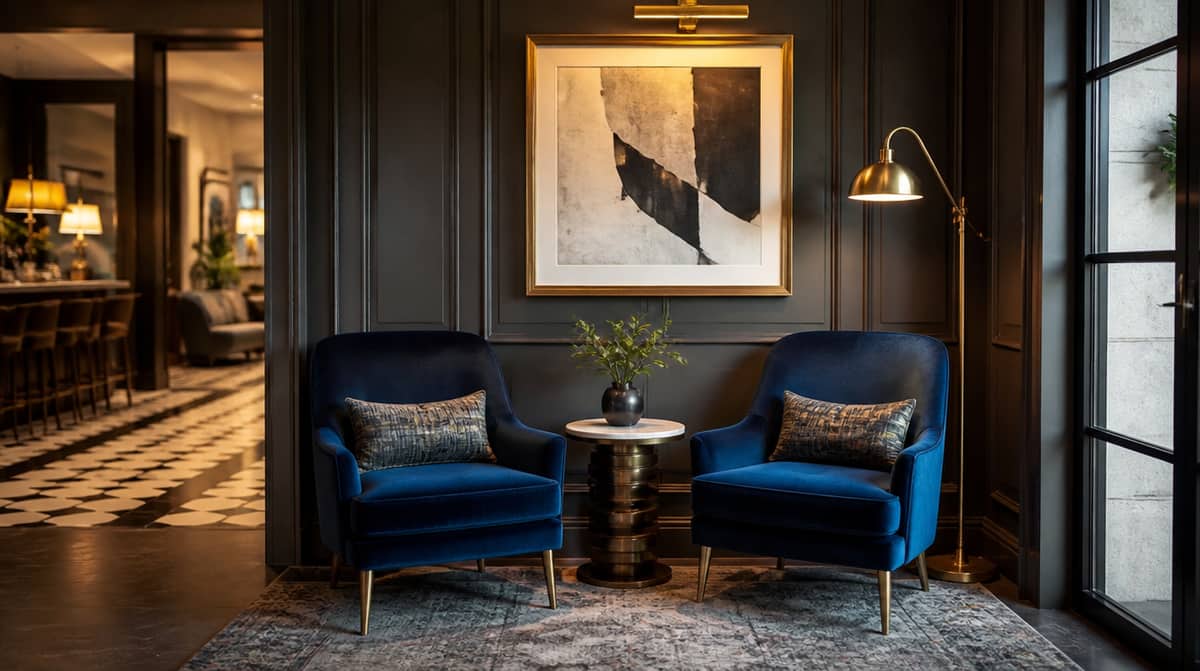
Omaha's boutique hotel market is smaller than Atlanta's or Denver's, but it is not simpler. You have Old Market properties built into converted 1880s warehouse brick, trading on exposed timber and cast iron columns that no chain hotel down the street can replicate. You have newer boutiques in Blackstone and Aksarben Village competing on a different axis entirely: walkable retail, a younger guest base, and interiors that need to read as current rather than historic. Downtown properties near the CHI Health Center pick up convention and arena traffic that has nothing to do with the neighborhood's design identity at all. Each of those contexts calls for a different furniture program, and none of them can be filled from a standard chain FF&E catalog. If you are sourcing boutique hotel furniture Omaha style, the core problem is consistent across all three: contract-grade construction, smaller order quantities, and a look that feels curated rather than pulled off a shelf.
Why Omaha's Event Calendar Changes the Durability Math
Omaha punches well above its size when it comes to occupancy spikes. The College World Series brings tens of thousands of fans downtown every June, filling boutique properties within walking distance of Charles Schwab Field with guests who are on their feet from breakfast through last call. The Berkshire Hathaway Annual Shareholders Meeting draws a similar surge every May, when investors from around the world converge on the city for a single weekend and every room within a few miles of the CHI Health Center fills at a premium. Add in the convention and trade show calendar that runs through the CHI Health Center the rest of the year, and boutique properties across downtown and Midtown absorb traffic volumes that have little to do with their normal weekday business mix.
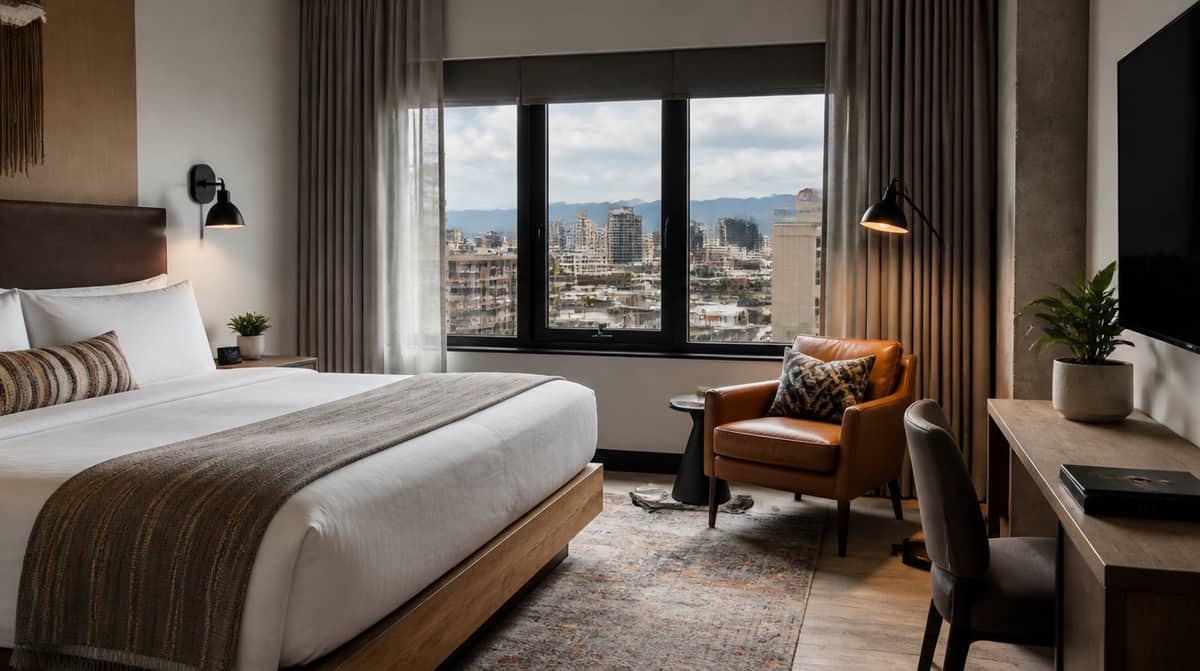
Furniture that holds up fine during a quiet Tuesday in Aksarben faces a very different stress test during a Berkshire weekend or a CWS series, when lobby seating, bar stools, and guestroom chairs get used at a pace closer to a stadium concourse than a boutique hotel. The lounge chairs in the lobby, the upholstered pieces at the bar, the seating in every guestroom all of it needs to be specified for sustained commercial use from day one, not dressed-up residential furniture wearing a hospitality label. Under that kind of load, softer frames crack, joinery loosens, and fabric wears through at the seams within a season or two, turning an apparent up-front savings into an early replacement bill.
Contract-grade construction for Omaha's market means hardwood or engineered hardwood frames, upholstery rated above 30,000 double rubs on any seating in a lobby, bar, or high-traffic guestroom, and joinery built to take repeated use from guests who are not thinking about the furniture at all. For a boutique property absorbing even one or two major Omaha events a year, that standard is not a nice-to-have. It is the baseline.
Design Cohesion Across Very Different Neighborhoods
What separates a strong boutique hotel in Omaha from an average one is not any single standout piece. It is whether the entire room reads as designed rather than assembled, and that comes down to locking a material palette before sourcing starts.

An Old Market property can credibly lean into the warehouse vocabulary already built into the building: dark steel frames, reclaimed or raw-edged wood surfaces, leather and heavy woven textiles that feel at home next to original brick and timber. A Blackstone or Midtown Crossing boutique positioned toward a younger, design-conscious guest wants something brighter and more current, cleaner case goods, upholstered seating in performance fabric that photographs well for social media and holds its color under daily use, matte black or brushed brass accents rather than anything that reads dated. A downtown property near the CHI Health Center serving convention travelers and CWS crowds might land somewhere in between: durable enough for heavy transient use, but polished enough to compete with the national brands two blocks away.
The mistake most boutique owners make is sourcing individual pieces that each look strong on their own, then trying to force them into a coherent room at install. The result reads as assembled, and design-aware guests, who are exactly the guests a boutique property is trying to attract, notice immediately when a room lacks a consistent logic. Settle the palette before sourcing begins. Pick two or three anchor finishes, one wood tone or metal family, and a tight fabric range, then hold every piece in the order to those constraints.
Navigating Minimums and Finding the Right Suppliers
Most large contract furniture manufacturers are built around scale. A 250-room order is comfortable territory for them. A 40-room boutique in the Old Market ordering 30 lounge chairs and 20 guestroom desk chairs is not the kind of order that moves their production schedule, and their minimum order quantities reflect that.
That is not a dead end, it is a filter. The suppliers worth pursuing are the ones whose business is built around exactly this kind of account: independent hotels, boutique conversions, restaurant groups, and adaptive reuse projects in secondary markets like Omaha. These manufacturers are used to smaller quantities, mixed SKU orders, and the flexibility a boutique specification requires. Ask about minimum order quantities in writing early, before you build out a full specification around a supplier who cannot actually fulfill a project this size.
Omaha's furniture and design trade presence is smaller than in Atlanta or Dallas, so most boutique projects here work directly with regional reps or national suppliers who specialize in independent hospitality rather than a local design center. That makes vetting even more important: confirm commercial ratings on every upholstered piece, ask for FR compliance documentation where local code requires it, and look for a track record delivering into properties with occupancy swings similar to what CWS week or a Berkshire weekend produces.
If you are working with an FF&E consultant or purchasing agent, one of the main things they bring to a project this size is aggregation, combining your order with other boutique hospitality projects to access manufacturer pricing and lead times that your standalone volume would not unlock on its own. That fee frequently pays for itself once you account for the specification mistakes and reorders it prevents.
Planning for Omaha's Renovation Cycle
Boutique properties in Omaha's fastest-changing corridors, Blackstone, Aksarben Village, and the Old Market, refresh their interiors on a shorter cycle than most first-time owners expect. Blackstone in particular has continued to add new restaurants and retail every year, and a boutique hotel that looked current at opening can feel behind within four or five years as the neighborhood around it keeps evolving.
The right point to plan for that refresh is during the original procurement, not once you are already behind on it. Specify frames and case goods to last through the full renovation cycle. Treat upholstery as the shorter-cycle variable you will swap on its own schedule. Require COM-ready construction on every upholstered piece from the start, no proprietary fabric programs and no locked-down frame systems, so reupholstery later is a straightforward job rather than a full replacement. Keep clean records of your original specifications: frame construction, foam density, fabric weight, finish codes. Having that documentation on hand makes the next sourcing round go considerably faster.
Lead times on custom upholstery programs typically run 10 to 16 weeks. If you are targeting an opening ahead of CWS season or the Berkshire weekend, get orders placed early enough to absorb that lead time without squeezing your install schedule. Owners opening their first boutique property consistently underestimate how little slack exists between order placement and opening day once custom work is part of the specification.
Sourcing boutique hotel furniture in Omaha is a more specific problem than general commercial procurement. The city's compressed but intense event calendar, its distinct neighborhood identities, and its smaller but active boutique hospitality scene all shape what holds up and what does not. Getting the specification right before the order ships is the most cost-effective decision on the entire project.