Oklahoma City has a patio problem, and it's not the one most out-of-state suppliers assume. The typical pitch to an OKC operator leads with sun exposure and summer heat, and those matter, but anyone who has actually run an outdoor program along the Bricktown Canal or on a Midtown rooftop knows the real adversary is volatility. This is a market where a 95-degree afternoon can be followed by a hailstorm before dinner service, where straight-line wind gusts above 50 mph show up on the forecast with a day's notice, and where a January cold snap can drop temperatures 40 degrees in an afternoon. Furniture specified for a "warm climate" without accounting for that swing fails here in ways that surprise operators who sourced it based on average annual temperature alone.
The operators who get commercial patio furniture in Oklahoma City right are not treating outdoor seating as a fair-weather bonus. They are treating it as a revenue program that has to survive severe weather season, brutal UV load, and a wind profile that most furniture specs never anticipate. Getting those details right at the outset is the difference between a patio program that runs a full lifecycle and one that needs frames replaced after a single spring storm season.
Oklahoma City's Weather Actually Requires More, Not Less
The standard assumption is that a Plains climate is simpler to furnish for than a coastal or humid market because there is no salt air and no hurricane exposure. Oklahoma City's actual weather record argues otherwise. This is one of the windiest major cities in the country, with sustained spring winds and gusts during severe weather season that will tip, scatter, or airborne lightweight furniture that would sit still anywhere else. Any patio program near Scissortail Park, the Boathouse District along the Oklahoma River, or an open rooftop deck downtown needs frame weight, stackability, and anchoring options specified with actual wind load in mind, not furniture that happens to look sturdy in a catalog photo.
Hail is the other factor operators underestimate until it happens. Central Oklahoma sees hail events most years, and a hailstorm that dents a cheap tubular frame or shatters a glass tabletop is a maintenance bill that arrives with zero warning. Then there is the heat itself. Summer afternoons routinely sit in the upper 90s with intense, unfiltered UV exposure typical of the southern Plains, and a powder coat finish without a documented UV inhibitor package will visibly fade within two or three seasons instead of holding color for six or more. The hotels and convention properties around the Oklahoma City Convention Center and Paycom Center corridor, which run heavy outdoor patio traffic during conventions, home game weekends, and concert nights, cannot afford a program that looks tired by its second summer.
What Bricktown, Midtown, and the Boathouse District Actually Require
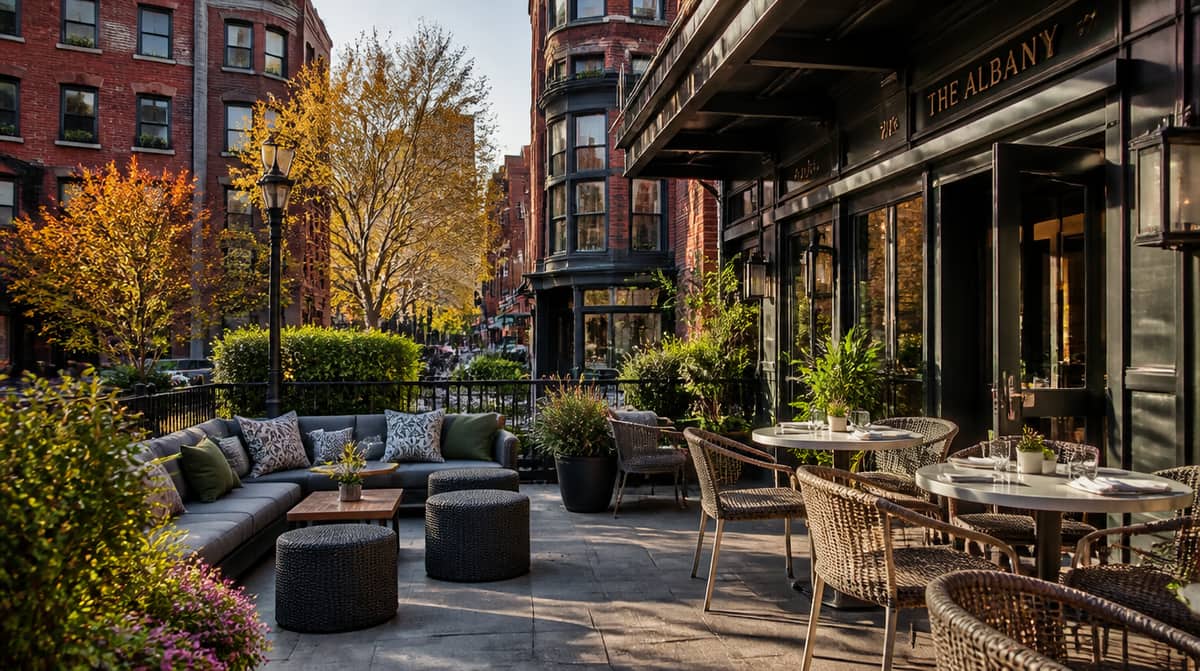
Oklahoma City's patio market is not one market. The expectations at a Bricktown Canal-side restaurant terrace are different from a Midtown rooftop bar, and both differ from a hotel pool deck serving convention travelers downtown. Specifying commercial patio furniture in Oklahoma City without matching the program to the neighborhood's actual guest base is how operators end up with furniture that functions fine but reads as slightly off to the people sitting in it.
Bricktown's canal-front restaurants and entertainment venues serve a mix of tourists, convention attendees, and Thunder game night crowds, and the patio programs here need to hold up under high turnover and heavy foot traffic while still photographing well against the canal backdrop. Cohesion matters: matching frame finishes across dining chairs, café tables, and rail seating reads as a considered program rather than a patchwork of whatever was in stock. A canal-side patio with three mismatched chair styles is a small detail, but it is one that repeat convention visitors and locals both notice.
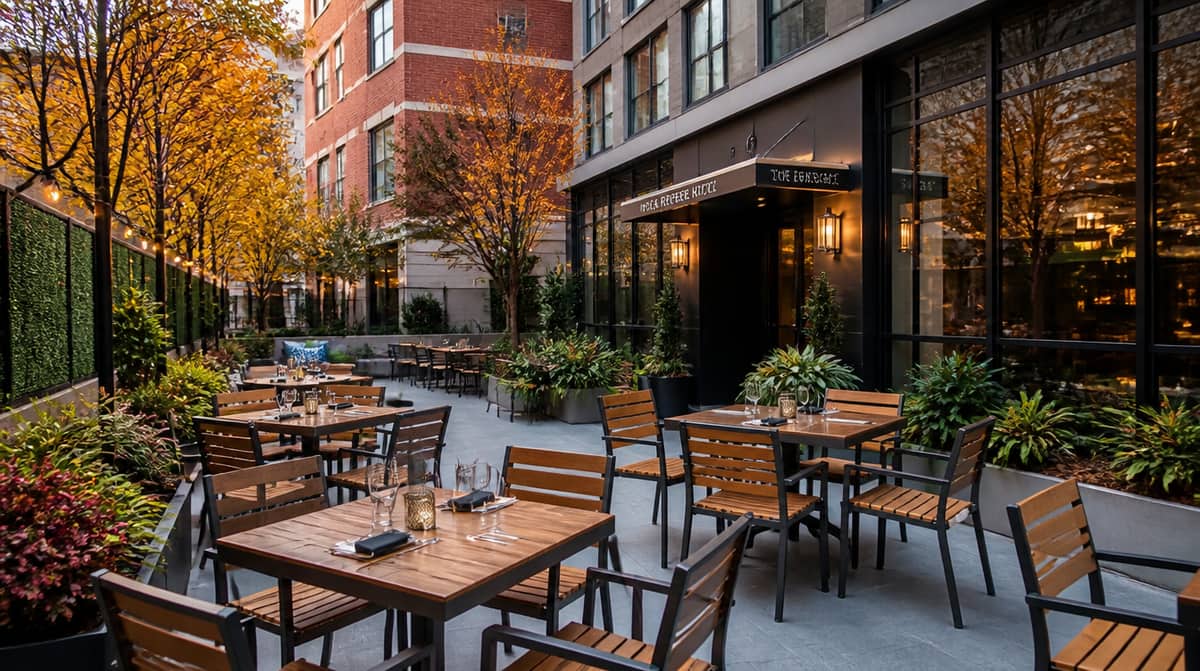
Midtown's patio scene, centered around the restaurant density on 10th and Walker, skews toward a design-forward, younger professional crowd, and it rewards bolder upholstery choices and darker matte frame finishes over the resort-white aluminum that reads as generic. Stackability and quick reconfiguration matter here too, since many Midtown patios double as private event space on weekends. The Boathouse District, with its riverside restaurants and event venues along the Oklahoma River, leans more casual and recreational, and the furniture program needs to withstand river humidity, wind off the water, and a guest base that treats the patio as an extension of an active outdoor day rather than a formal dining setting.
Wind, Hail, and Fabric: Getting the Spec Right in Oklahoma
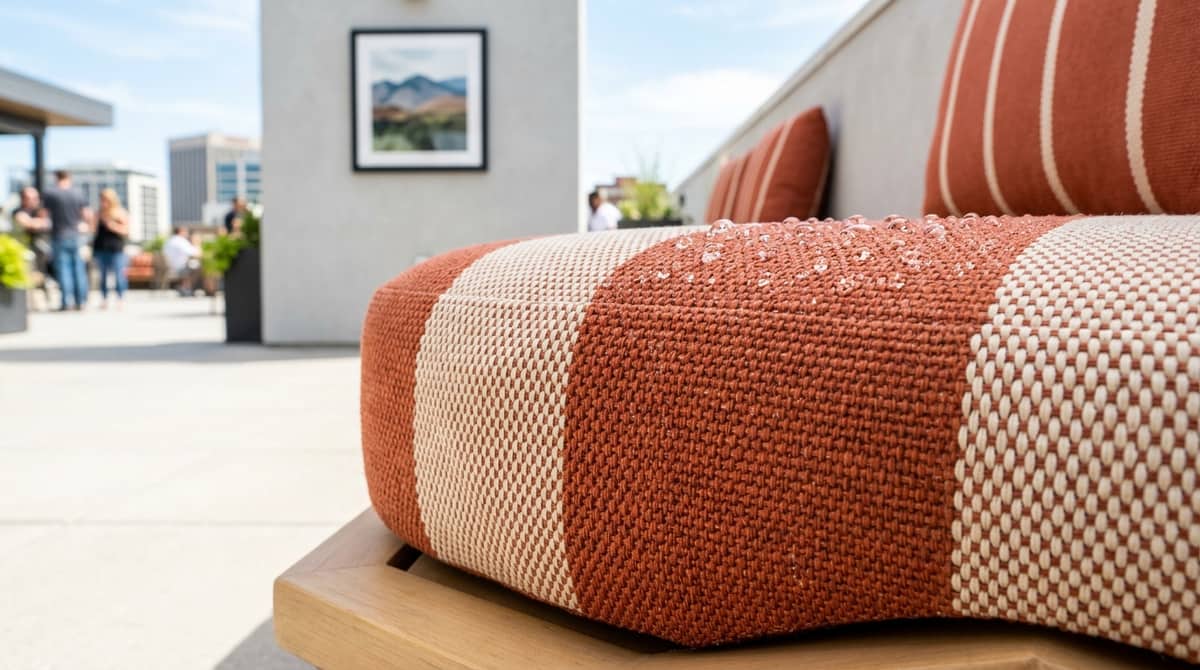
Fabric specification in Oklahoma City needs to account for intense, sustained UV exposure and rapid wet-to-dry cycling from sudden storms. Solution-dyed acrylic, with Sunbrella as the industry benchmark, is the correct baseline for any uncovered or partially shaded OKC patio. The color is embedded through the fiber rather than applied to the surface, so it holds up against the region's UV intensity instead of fading out within a season or two the way surface-dyed fabric does. It also cleans easily with diluted bleach, which matters after a dust storm or a sudden downpour leaves grit and moisture on cushions that need to be turned around before the next seating.
Foam density is where a lot of Oklahoma City patio programs quietly underperform. Standard 1.8 lb density foam compresses fast under the combination of heavy summer use and repeated humidity exposure. Commercial-grade foam in the 2.0 to 2.5 lb range with a higher ILD rating holds its shape through a full convention season of near-continuous rotation. For frame material, commercial-grade aluminum at 1.5mm wall thickness or better is the right starting point, and in a market with this much wind exposure, frame weight and joint welding quality deserve specific questions to any supplier rather than being assumed from a spec sheet.
The Revenue Math on Quality Commercial Patio Furniture in Oklahoma City
Oklahoma City has built a genuinely strong convention and hospitality base around Bricktown, the Paycom Center, and the downtown convention district, and the hotels and restaurants that ring it depend on outdoor seating capacity during conventions, Thunder home stands, and festival weekends to move real revenue per seat. That revenue math changes the calculation on furniture quality entirely. A commercial aluminum chair correctly specified for this climate, properly maintained, runs eight to ten years in active service. A consumer-grade chair that looks similar at a lower price point but needs replacing after two seasons of wind and hail exposure ends up costing more per year, on top of the disruption of sourcing mid-season replacements and living with a mismatched patio in the meantime.
For hotel pool decks and properties competing on outdoor amenity quality, a patio that shows wind damage, faded fabric, or hail dents by year two sends a signal to guests that the property cut corners. In a market where OKC's downtown hospitality scene has invested heavily in its outdoor identity over the past decade, that signal carries real weight against competitors who specified correctly the first time.
The right approach to commercial patio furniture in Oklahoma City is to specify for actual severe weather exposure, match the aesthetic to each district's character, and buy for the full lifecycle instead of the opening day price tag. The patio programs built this way become a durable advantage through every storm season. The ones that aren't spend their maintenance budget catching up every spring.