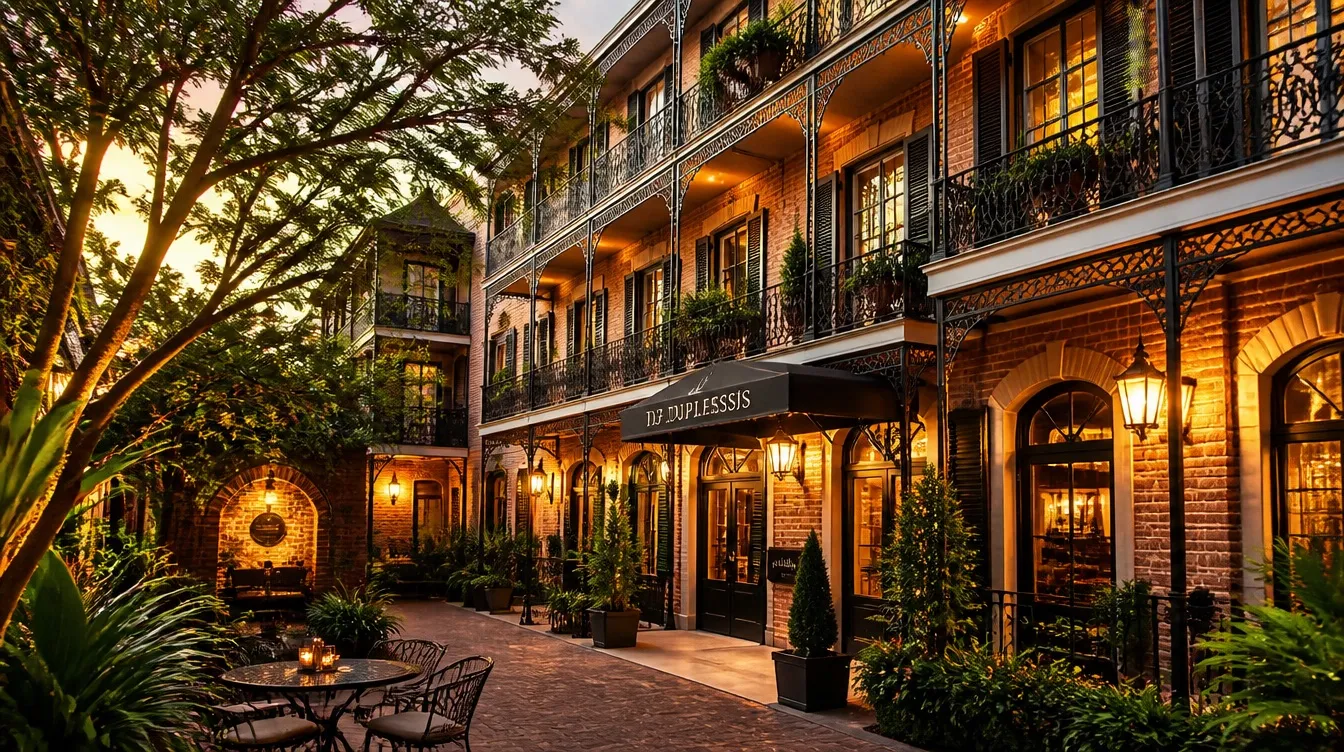
Outdoor hospitality in New Orleans operates on a different calendar than most American cities. The combination of subtropical climate and a visitor economy that never stops means outdoor courtyards, terraces, and sidewalk dining operate for the majority of the year and in some French Quarter courtyards and Magazine Street sidewalk programs, effectively year-round. That sustained outdoor use, combined with a climate that subjects furniture to heat, humidity, UV, and regular rainfall at levels that most outdoor furniture manufacturers do not design for as a baseline, makes commercial patio furniture New Orleans procurement a genuinely specialized sourcing exercise.
What the New Orleans Climate Does to Outdoor Furniture
The first mistake operators make when sourcing commercial patio furniture in New Orleans is applying a general outdoor furniture specification rather than one calibrated to the specific conditions of the Gulf South. The climate here is not simply "warm." It is subtropical: sustained high humidity throughout the warm months, UV exposure that ranks among the highest in the continental United States, frequent afternoon rain events during spring and summer, and the occasional tropical weather system that creates acute stress on any outdoor furniture not secured and specified for those conditions.
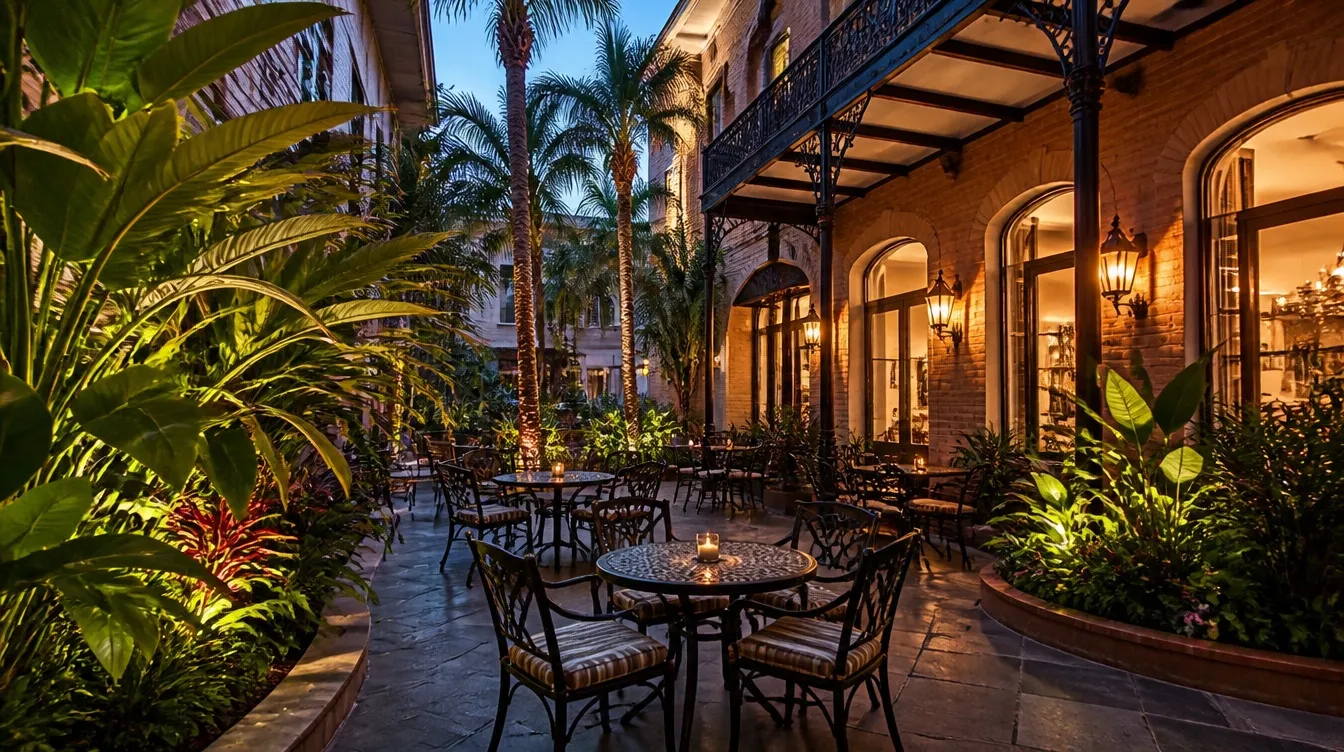
Steel frames even powder-coated steel begin showing rust at welds, cut edges, and hardware penetrations within two to three seasons of sustained New Orleans outdoor exposure. Operators who spec steel outdoor furniture because it is heavier and more stable discover that the stability advantage disappears when the frame starts degrading. Marine-grade or 6005-T5 aluminum alloy frames are the correct specification for any New Orleans outdoor hospitality application. Aluminum does not rust. Properly coated aluminum frames with 60-micron minimum powder coat thickness maintain their finish and structural integrity across many years of Gulf South exposure without the maintenance overhead that steel requires.
Resin wicker over aluminum cores provides the visual warmth that most New Orleans outdoor hospitality concepts want particularly in the French Quarter's courtyard bar aesthetic, where naked metal furniture reads as wrong against exposed brick and wrought iron architectural elements. The resin wicker weave is significantly more humidity- and UV-resistant than natural rattan, which degrades rapidly in this climate regardless of finish treatment, and pairs correctly with the aluminum core's durability.
French Quarter Courtyard and Corridor Applications
The French Quarter's courtyard bars and dining terraces are among the most distinctive outdoor hospitality spaces in any American city. A well-maintained New Orleans courtyard flagstone or brick pavers, iron railings, banana plants and potted jasmine, fountain or water feature sets an ambiance that the furniture must support rather than undercut. In these environments, commercial patio furniture that looks generic or institutional reads as wrong immediately.
Powder-coated aluminum lounge chairs and dining chairs in a wrought iron-profile design maintain the visual continuity of the French Quarter's iron aesthetic while delivering the corrosion resistance that the courtyard's humidity and casual water use demand. Cast aluminum furniture heavier than extruded aluminum, with the visual weight of genuine iron without the maintenance liability is well suited for quarter properties where the look of the courtyard is part of the product being sold to guests. Finish color for this application should draw from the historical palette: dark forest green, matte black, oil-rubbed bronze, aged patina finishes that read as period-appropriate.
Tables for French Quarter outdoor dining should use bases in powder-coated aluminum or cast aluminum with compact footprint designs spider bases and single-column pedestals work well in the tight courtyard layouts where table density is high and adjacent tables are pushed together for larger parties. Tops should be solid aluminum, compact laminate, or sealed stone: materials that handle the combination of moisture, UV, cleaning chemicals, and physical contact that a busy courtyard dining service generates daily.
Magazine Street and Garden District Patio Dining
Magazine Street's restaurant and bar corridor runs through neighborhoods where the outdoor dining program is a significant revenue component and a visible street-presence asset. Sidewalk tables and chairs in this market are evaluated by passersby and diners with the design literacy that New Orleans' local hospitality culture produces they notice the difference between furniture that contributes to the ambiance of the street and furniture that reads as an afterthought.
For Magazine Street bistros and the Garden District's patio dining programs, the specification combines aesthetic intentionality with the same climate durability requirements that apply across all New Orleans outdoor applications. Bistro-style aluminum side chairs with a considered profile subtle curves, clean welds, finish that references the French influence in the neighborhood's design vocabulary perform better in this context than generic commercial stacking chairs in standard commercial black.
Sidewalk programs on Magazine Street require attention to weight as a stability specification: umbrella tables and chairs on a sidewalk with normal foot traffic and occasional afternoon wind gusts need bases and chair weights calibrated for those conditions. Umbrella poles and bases need to be rated for wind load, not just shade provision a 7.5-foot cantilever umbrella on a Magazine Street sidewalk in a summer thunderstorm needs a base weight appropriate to the leverage involved. Specify 50-plus-pound bases for any umbrella application in open outdoor New Orleans locations.
Warehouse District Hotel Terrace and Rooftop Seating
Warehouse District boutique and convention hotels operate outdoor terraces and rooftop bars that serve a combined hotel guest and convention delegate audience. The Ernest N. Morial Convention Center's proximity means these spaces run heavy volume during major conference weeks, with a guest profile that expects a design-forward environment that matches the neighborhood's gallery and cultural character.
For rooftop and elevated terrace applications, wind resistance is a primary specification concern that is often underweighted in procurement. Lightweight aluminum stacking chairs that perform perfectly at ground level in a courtyard can become a management problem on a rooftop terrace during a late-afternoon squall. For exposed elevated outdoor spaces, specify chairs with a minimum weight of 12 to 15 pounds per unit, or use seating with connection hardware that allows chairs to be secured when the terrace is not staffed.
Warehouse District terrace aesthetics call for furniture that references the neighborhood's contemporary design standard without abandoning the rich material register that defines New Orleans. Powder-coated aluminum in a dark charcoal or graphite finish, combined with cushions in performance fabrics with deep-toned, saturated colors navy, slate, deep olive creates an outdoor environment that reads as intentional against the industrial-contemporary backdrop of the district.
Cushion Specification for Gulf South Conditions
Outdoor cushion specification in New Orleans requires a different standard than most of North America. Solution-dyed acrylic fabrics not printed polyester or solution-dyed polyester alternatives provide the UV longevity that Gulf South conditions demand. Solution-dyed means the color runs through the fiber rather than residing in a surface application, which is what allows the fabric to maintain its color through years of New Orleans UV exposure. Sunbrella and equivalent commercial-grade solution-dyed acrylics are the only appropriate fabric categories for New Orleans outdoor hospitality cushion applications.
Quick-dry foam is equally critical. Afternoon rain events during warm months are frequent and can be heavy. A cushion that absorbs and holds water for four to six hours is effectively out of service for any table it belongs to during the transition from lunch to dinner service. Open-cell or reticulated foam in outdoor cushions drains and dries significantly faster the difference between a cushion ready to use in 30 minutes and one that is still wet four hours after the rain has stopped.
We quote commercial patio furniture for New Orleans operators against their own layouts and order sizes rather than a generic sheet. Request a quote and we will put together pricing for your property.