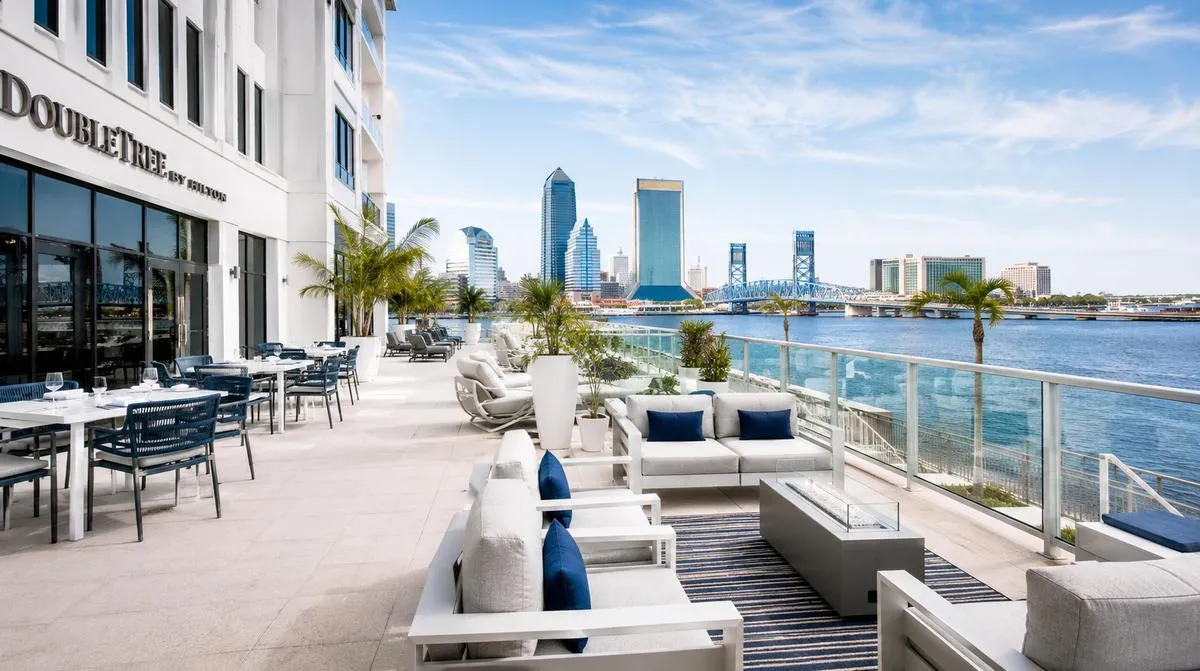
Manchester has a patio problem, and it has nothing to do with heat. The assumption operators bring into a New Hampshire furniture project is that a short outdoor season means a lighter-duty spec, since the furniture only has to survive May through October before it comes off the patio. That logic gets it backwards. The compressed window is exactly why the furniture running the rooftop bars near the Millyard, the hotel courtyards along South Willow Street, and the restaurant patios on Elm Street has to work harder in less time. A five-month season with heavy convention and event traffic asks more of a chair per day of service than a year-round warm climate market does, and the freeze-thaw cycle waiting on the other side of that season punishes anything that wasn't specified correctly.
The operators who get commercial patio furniture in Manchester right are not treating outdoor seating as a seasonal afterthought that gets stacked in a storage room from November to April. They're treating it as a revenue program with a narrow window to perform, storage and handling built into the plan, and a frame and fabric spec that survives repeated freezing and thawing without quietly degrading. Getting that right from the start is the difference between a patio program that earns its keep for eight seasons and one that needs a partial replacement by year three.
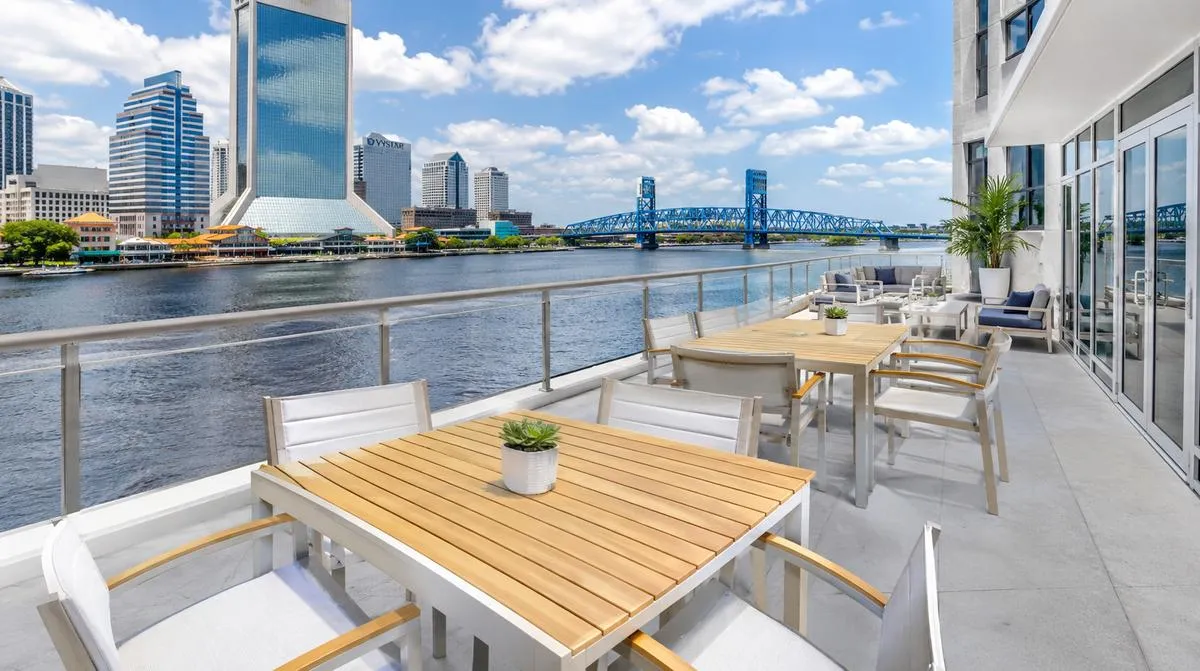
New Hampshire's Climate Actually Requires More, Not Less
The standard assumption is that a northern market like Manchester is easier on outdoor furniture because the season is shorter and the furniture spends winter in storage. In practice, the opposite is often true. Storage is only protective if it's done correctly, and a large share of New Hampshire patio programs end up storing furniture in an unheated garage or an outdoor shed where humidity swings and temperature cycling continue to work on the frame and finish even when the chairs aren't in use. Furniture that gets left out through the shoulder season, which happens constantly when a restaurant wants to squeeze a few more warm October evenings out of the patio, faces real freeze-thaw exposure. Moisture that gets into a hairline crack in a powder coat finish expands when it freezes, and that cycle repeated over a Manchester winter accelerates delamination and corrosion at weld points faster than a straightforward cold-and-dry climate would.
Then there's the compressed season itself. A Manchester rooftop or courtyard patio doesn't get twelve months to spread out its usage, it gets roughly twenty weeks, and a meaningful share of that usage lands on a handful of high-demand stretches: graduation weekend at Southern New Hampshire University, summer concerts and events at SNHU Arena, and the steady flow of corporate travelers moving through the Manchester-Boston Regional Airport corridor into Bedford's hotel row. That means the furniture is absorbing a full year's worth of wear in a fraction of the time, with less margin to notice a foam or frame problem before the season ends and the pieces disappear into storage until spring. Specifying for durability under concentrated use, not just seasonal exposure, is what separates a program that holds up from one that quietly wears out.

What the Millyard, Elm Street, and Bedford Actually Require
Manchester's patio market is not one thing. The design expectations in the Millyard, the historic brick mill complex that now houses restaurants, offices, and event space along the Merrimack River, are different from a downtown Elm Street restaurant terrace, and both are different from a hotel courtyard in Bedford serving business travelers off Route 3 and the airport. Specifying commercial patio furniture in Manchester without matching the program to the location's character and guest base is how operators end up with furniture that functions fine but doesn't fit.
The Millyard's restaurant and brewery patios sit inside and alongside century-old brick mill buildings with exposed timber, iron detailing, and a genuinely industrial texture that a resort-style white aluminum program reads as out of place against. This market rewards darker powder coat finishes in matte charcoal, bronze, or black, frame designs with some visual weight, and a build quality that can stand up to a guest demographic that includes a lot of after-work and weekend foot traffic moving between breweries and restaurants in a compact district. Furniture here needs to look considered against a backdrop that already has a strong architectural identity, not compete with it.
Downtown Elm Street's patio scene is smaller-format and street-facing, with sidewalk cafes and restaurant patios that need to hold up to close public sightlines and the practical demands of a working city street: narrow footprints, frequent reconfiguration for events and farmers markets, and furniture that needs to look intentional at close range rather than from across a large plaza. Stackability and a clean, cohesive frame program matter more here than anywhere else in the city.
Bedford's hotel corridor, serving the airport and the Manchester business travel market along South River Road and the surrounding commercial strip, runs on a different logic entirely. These are courtyard and pool deck programs built for corporate travelers who expect a competent, comfortable, low-maintenance outdoor amenity rather than a design statement. Consistency across lounge seating, dining sets, and shade structures matters more here than a distinctive aesthetic, because the guest profile is judging the property on whether the basics are handled well.
Cold Snaps, Storage, and Fabric: Getting the Spec Right in New Hampshire
Fabric specification for a Manchester patio has to account for a season that swings from cool, damp spring evenings to humid July afternoons to crisp fall nights, often within the same month. Solution-dyed acrylic, with Sunbrella as the industry benchmark, is still the correct base specification here, the same way it would be in a warmer market, because the fiber-level dye resists fading under UV exposure and the fabric handles repeated wet-to-dry cycling from spring rain and summer humidity without the fiber breaking down. It also matters for mold resistance, since New England spring dampness left sitting on a cushion that isn't rated for it turns into a maintenance problem fast.
Foam density is where a lot of New England patio programs run into trouble, not from heat but from cold and moisture combined. Standard 1.8 lb density foam that sits through a damp shoulder-season stretch before storage absorbs moisture and compresses faster than the same foam would in a dry climate. Commercial-grade foam in the 2.0 to 2.5 lb density range, ideally with a moisture-resistant core, holds its shape through a full Manchester season of heavy convention and event-driven use and survives the transition into off-season storage without degrading.
Frame material matters as much here as anywhere. Commercial-grade aluminum at 1.5mm wall thickness minimum is the right starting point for a Manchester hospitality application, the same baseline that applies nationally, but the storage-and-redeploy cycle that New Hampshire programs go through every year adds extra stress at the joints from repeated handling, stacking, and transport in and out of storage. Weld quality and joint construction are worth asking suppliers about directly, since a frame that's strong when new but poorly welded will show its weaknesses after a few seasons of being moved twice a year rather than left in place.
The Revenue Math on Quality Commercial Patio Furniture in Manchester
Manchester is New Hampshire's largest city and its primary business and convention hub, anchored by the SNHU Arena downtown, a growing Millyard restaurant and event district, and steady corporate travel through Manchester-Boston Regional Airport. The hotels and restaurants that serve that traffic are competing for a compressed patio season where every warm-weather weekend counts disproportionately toward the year's outdoor revenue. The lifecycle math on furniture quality shifts when it's measured against that concentrated revenue window rather than against the upfront sticker price.
A commercial aluminum dining chair correctly specified for a New England climate, properly maintained and stored between seasons, lasts eight to ten years of active service. A consumer-grade or "commercial-style" chair that looks similar at a lower price point but fails after two or three seasons costs more per season once you account for replacement sourcing, the aesthetic mismatch of mixing old and new pieces mid-program, and the operational disruption of managing that mid-season. Operators who have run Manchester patio programs through several cycles buy once, maintain the finish and fabric correctly, and reupholster rather than replace when the frame is still sound.
For hotel courtyards in Bedford and along the airport corridor, brand perception is part of the calculation too. A pool deck or courtyard with furniture showing rust, faded fabric, or a broken frame by year three tells a business traveler that the property doesn't reinvest in the guest experience, and that impression carries into review scores and repeat booking decisions in a market where corporate travelers have plenty of hotel options along the same stretch of road.
The right approach to commercial patio furniture in Manchester is to specify for a compressed season with real freeze-thaw risk, match the aesthetic to the district, whether that's the Millyard's industrial texture, Elm Street's street-level scale, or Bedford's corporate courtyard expectations, and buy for the full lifecycle rather than the opening season's cost. The patio programs that get this right turn a short season into a durable competitive advantage. The ones that don't spend their maintenance budget catching up every spring.
We quote commercial patio furniture for Manchester operators against their own layouts and order sizes rather than a generic sheet. Request a quote and we will put together pricing for your property.