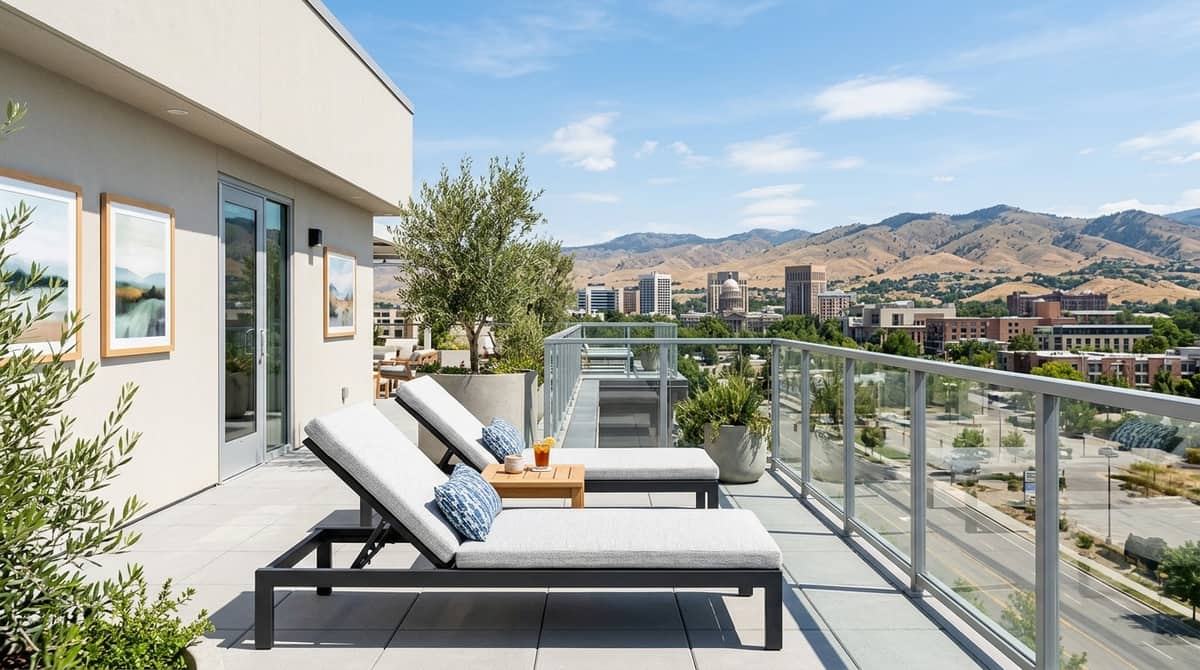
Hartford has a patio problem that most out-of-state suppliers never see coming. The assumption walking into a Hartford furniture project is that New England means a short outdoor season and low durability demands. The reality on the ground, from the Connecticut Convention Center riverfront to the restaurant patios along Pratt Street and Farmington Avenue, is a climate that punishes furniture in both directions: brutal freeze-thaw cycles from November through March, then a humid, storm-prone summer that runs hard from Memorial Day through the insurance industry's fall conference season. Furniture specified for a mild climate fails here twice a year instead of once.
The operators who get commercial patio furniture in Hartford right are not treating outdoor seating as a five-month amenity to be packed away and forgotten. They're treating it as a seasonal revenue program with its own storage cycle, its own maintenance calendar, and its own material requirements that differ meaningfully from what works in Atlanta, Phoenix, or even nearby Boston. Getting that specification right at the outset is the difference between a patio program that pays for itself over eight years and one that needs a partial replacement after its second Connecticut winter.
Hartford's Climate Actually Requires More, Not Less
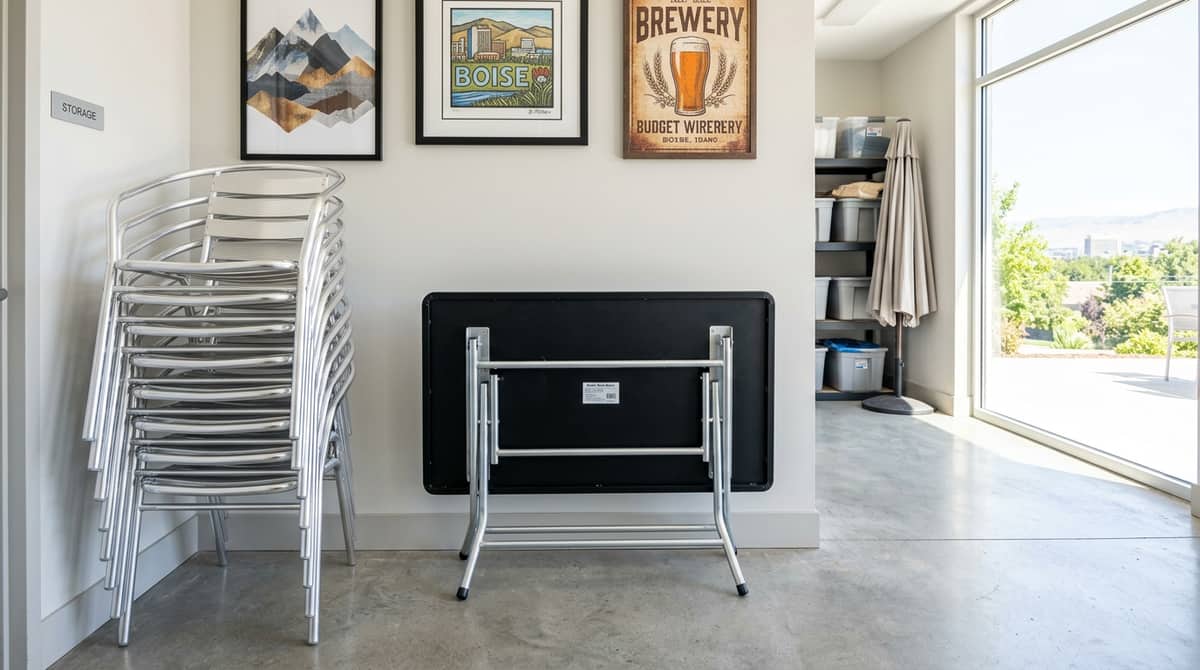
The standard assumption is that a shorter outdoor season means less wear on the furniture. Hartford's weather record says otherwise. The city sees genuine winter conditions, hard freezes, repeated snow and ice events, and the kind of freeze-thaw cycling that is far more damaging to a powder-coat finish than a single deep freeze followed by a stable cold snap. Moisture works its way into any micro-crack in a finish, freezes, expands, and thaws again days later when temperatures swing above freezing, and it repeats that cycle a dozen times or more each winter. An operator who buys furniture rated for "cold climates" without asking specifically about freeze-thaw performance finds out the difference the following March.
Summer brings a different challenge. Connecticut humidity runs high from June through September, with regular stretches of sustained mugginess punctuated by sudden thunderstorms rolling up the river valley. That combination of moisture and heat accelerates corrosion at any point where a finish has already been compromised by the winter cycle, and it creates ideal conditions for mold and mildew on cushion fabrics that were never rated for it. The hotels and restaurants that serve the Connecticut Convention Center and the insurance industry's steady stream of corporate travel know this well: fabric specification is not a design afterthought here, it is a maintenance line item that scales directly with how wrong the first order gets it.
What Downtown, the West End, and the Riverfront Actually Require
Hartford's patio market is not uniform, and specifying furniture for the city without matching it to the neighborhood's guest profile is how operators end up with something that functions correctly but looks slightly off. Downtown's convention and insurance corridor is different from the West End's residential dining scene, and both are different from the riverfront hotel terraces overlooking the Connecticut River.
Downtown Hartford's hotel and restaurant patios serve a heavy corporate and convention audience tied to the insurance industry and the Connecticut Convention Center. These guests are traveling on business, often repeatedly, and they notice when a property's outdoor program looks coordinated versus improvised. Furniture here needs to read as a complete system: consistent frame finish across dining chairs, lounge seating, and side tables, real shade structures rather than umbrellas bought on short notice, and a layout that photographs well for the meeting planners who influence where the next conference books its room block.
The West End, around Farmington Avenue and the Elizabeth Park area, has a different character. This is Hartford's most walkable, most residential dining corridor, with a guest base that returns weekly rather than once a year. Patios here need to hold up to sustained local use rather than convention-week spikes, and the aesthetic expectation leans toward a warmer, more considered look than a corporate hotel terrace. Stackability and quick reconfiguration matter for restaurants that turn their patio space over for private parties on weekends.
The riverfront, near the Convention Center and the Bushnell Park area, operates on its own logic again. These are larger-format hotel terraces and event spaces that need furniture capable of handling both everyday hotel guest traffic and the surge volume of a convention week, when every seat on the property is filled from breakfast through last call. Durability and a design vocabulary that works equally well for a Tuesday business lunch and a Saturday wedding reception both matter here.
Freeze-Thaw, Humidity, and Fabric: Getting the Spec Right in Connecticut
Fabric specification in Hartford deserves more attention than most operators give it before the first season. Solution-dyed acrylic, with Sunbrella as the industry benchmark, is the correct baseline for any uncovered or partially covered patio in this market. The dye is locked into the fiber rather than applied to the surface, which is why the color holds through a Connecticut summer's UV exposure instead of fading within two seasons the way surface-dyed fabric does. It also cleans with diluted bleach, the right protocol for controlling mildew in a humid climate, and it survives the cycle of a sudden downpour followed by direct sun without the fiber breaking down.
Foam density is where patio programs quietly fail rather than dramatically fail. Standard 1.8 lb density foam compresses and loses its shape within a season of real hospitality traffic, and it recovers even worse after sitting compressed and damp through a New England winter in storage. Commercial cushion foam in the 2.0 to 2.5 lb range with a higher ILD rating holds its profile through a full season and through the freeze-thaw stress of off-season storage in an unheated space, which is exactly where a lot of Hartford properties keep their cushions from October to April.
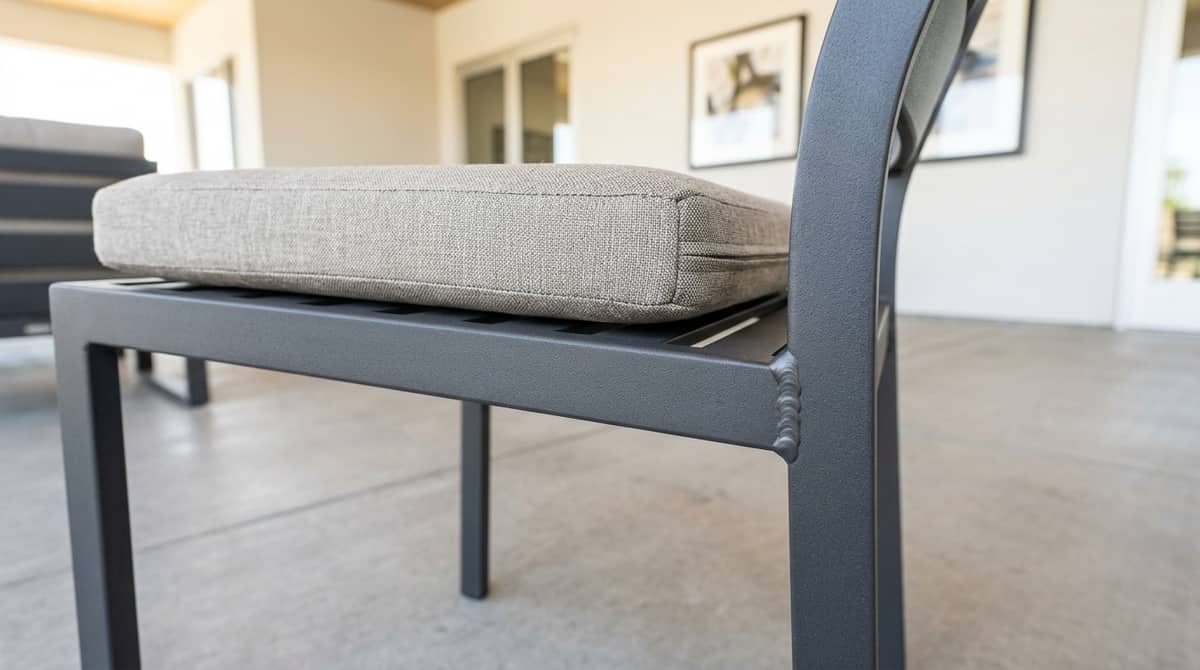
For frame material, commercial-grade aluminum at 1.5mm wall thickness minimum is the right starting point for a Hartford hospitality application. Thinner consumer-grade frames in the 0.8mm to 1.0mm range are built for a residential deck, not for staff moving furniture in and out of storage twice a year, guests leaning back with full weight, and repeated exposure to New England's freeze-thaw cycle. Weld quality at the joints matters as much as wall thickness here, since that is exactly where a compromised finish lets moisture in and where a frame first shows stress after several seasons in this climate.
The Revenue Math on Quality Commercial Patio Furniture in Hartford
Hartford is the anchor of Connecticut's insurance industry and a steady regional convention and meetings market, and the hotels and restaurants around downtown and the Convention Center serve a continuous stream of business travelers who return often. A well-run downtown hotel terrace during a strong conference week generates meaningful per-seat revenue, and the lifecycle math on furniture quality changes completely once it's measured against that revenue rather than against the sticker price on the invoice.
A commercial aluminum chair correctly specified for a Connecticut climate, properly maintained and stored over the off-season, lasts eight to ten years in active service. A consumer-grade or "commercial-style" chair that costs less upfront but needs replacement after two seasons costs more per year of service, and it adds the operational headache of sourcing mid-season replacements, managing the visual mismatch between old and new pieces on the same patio, and repeating the whole process again two winters later. Operators who have run Hartford patio programs through several full cycles buy quality once, store it correctly over the winter, and reupholster rather than replace once the frame is still sound.
For hotel properties along the riverfront and in the West End, brand perception is part of the calculation too. A patio that shows fading, rust at the joints, or a cracked finish by its third Connecticut winter tells a returning business traveler that the property doesn't maintain its outdoor spaces. In a market built on repeat corporate visits, that impression compounds in a way that dwarfs the up-front savings of a budget furniture program.
The right approach to commercial patio furniture in Hartford is to specify for the real climate, match the look to the neighborhood, and buy for the whole lifecycle rather than the first invoice. The patio programs that get this right turn a short outdoor season into a real competitive advantage. The ones that don't spend every spring catching up on damage the winter should never have caused.