Baltimore's outdoor hospitality real estate is among the most valuable in the Mid-Atlantic. A waterfront terrace on the Inner Harbor, a rooftop bar in Harbor East, a cobblestone patio in Fells Point these spaces generate revenue per square foot that rivals prime indoor dining, but only when the furniture holding them together is specified for the environment they actually live in. The Chesapeake Bay climate is not forgiving: humid summers with salt-air exposure from the harbor, wet springs, and winters that cycle between freeze and thaw with enough frequency to destroy patio furniture that wasn't designed for it.
Baltimore's Outdoor Hospitality Market
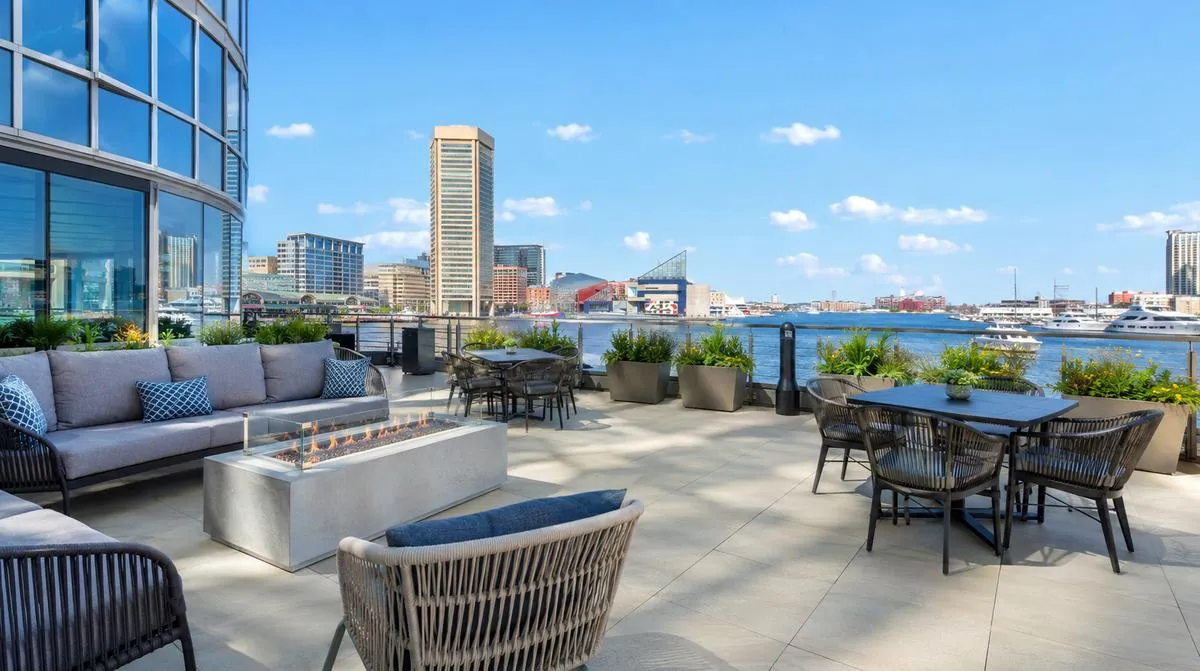
The Inner Harbor waterfront promenade is Baltimore's highest-visibility outdoor dining corridor. Hotel terraces, casual seafood concepts, and tourist-facing bar patios along Pratt Street and the harbor edge see some of the highest outdoor covers per year of any hospitality district in Maryland. These spaces operate at full capacity from May through October and host heated outdoor programming through November. The furniture in these environments is exposed to direct sun, harbor spray, salt air, and rain often all in the same week.
Dining chairs for Inner Harbor terraces need aluminum frames specifically marine-grade or powder-coated commercial aluminum rather than steel, which will rust with harbor salt-air exposure regardless of finish quality. Seat and back materials should be sling fabric in a solution-dyed acrylic or injection-molded polymer that won't fade under UV and won't absorb water. These are non-negotiable specifications for waterfront environments; they're not aesthetic preferences.
Fells Point outdoor dining extends the neighborhood's historic character into its courtyards and sidewalk cafes. The narrow cobblestone streets and irregular outdoor footprints mean furniture needs to be stackable or easily reconfigured. A barstool that can't stack is a storage problem in a neighborhood with no surplus back-of-house square footage. Dining chairs and café tables that stack four or five high allow Fells Point operators to clear and store outdoor seating quickly when weather or city permitting requires it.
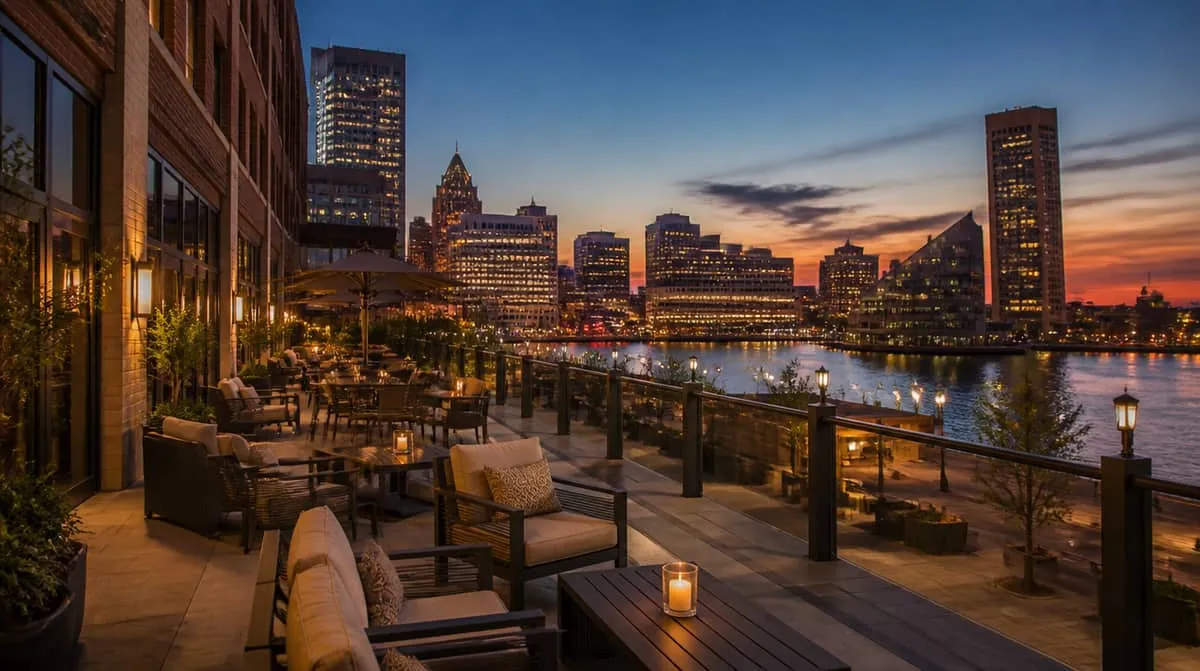
Federal Hill rooftop bars and outdoor decks face wind exposure that ground-level patios don't. Furniture in elevated outdoor environments needs weighted bases particularly for tables and umbrellas and should be spec'd with tie-down or anchoring options for periods when the deck is not in active service. Lighter aluminum pieces that are excellent for ground-level waterfront terraces can become safety hazards on an unanchored rooftop in a Chesapeake Bay storm.
Hotel rooftop pools and pool decks at Harbor East and Inner Harbor properties need a distinct specification: pool-deck furniture must handle constant water contact, chlorine splash, and sunscreen residue. Chaise lounges and pool-deck lounge chairs in powder-coated aluminum with sling or quick-dry foam cushions are the standard. Teak is a premium option that holds up beautifully in pool environments and reads as a deliberate luxury specification appropriate for the Harbor East tier.
Design Specifications for Baltimore Outdoor Spaces
Baltimore's outdoor furniture aesthetic should extend the same brick-and-harbor vocabulary that defines its interiors outward. The Chesapeake Bay color palette slate blue, oyster, weathered cedar, aged teak translates naturally into outdoor furniture specifications. Deep navy sling fabric on brushed aluminum frames, teak tops on galvanized steel bases, or charcoal powder coat with a warm wood accent all read as Baltimore-fluent outdoor design.
Umbrella specifications matter more in Baltimore's harbor corridor than they do in sheltered inland markets. Commercial-grade cantilever umbrellas with aluminum poles rated for 35+ mph wind resistance and UV-protective canopy fabric in a solution-dyed acrylic are the correct specification for waterfront exposure. Polyester canopy fabric fades and tears within a single season of direct harbor exposure.
For Fells Point's more intimate courtyard spaces, café-style lounge chairs with rattan-look polymer weave or solid teak frames in a warm honey finish are aesthetically appropriate and weather-resistant. The neighborhood's historic character calls for furniture that looks like it belongs in a European port city which, historically, it does.
Procurement and Seasonal Coordination
Outdoor furniture procurement in Baltimore follows a compressed seasonal window. Orders placed in February and March for May delivery are standard practice. Orders placed in April frequently miss the season opener or arrive during the busy period when installation labor is hardest to schedule.
Lead times for commercial outdoor furniture with custom cushion fabric run eight to twelve weeks. Standard in-stock frames with in-stock fabric can often be turned in four to six weeks, which works for mid-season replacements but not for planned property-wide refreshes.
Storage planning is part of outdoor furniture procurement in Baltimore the city's winters require either furniture rated for year-round outdoor exposure or adequate storage for seasonal removal. Clarify storage requirements during specification to avoid purchasing furniture that the property has no good plan to store.
Tell us about your Baltimore commercial patio furniture needs and we will turn your quantities, finishes, and timeline into a firm quote. Request a quote whenever you are ready to compare.