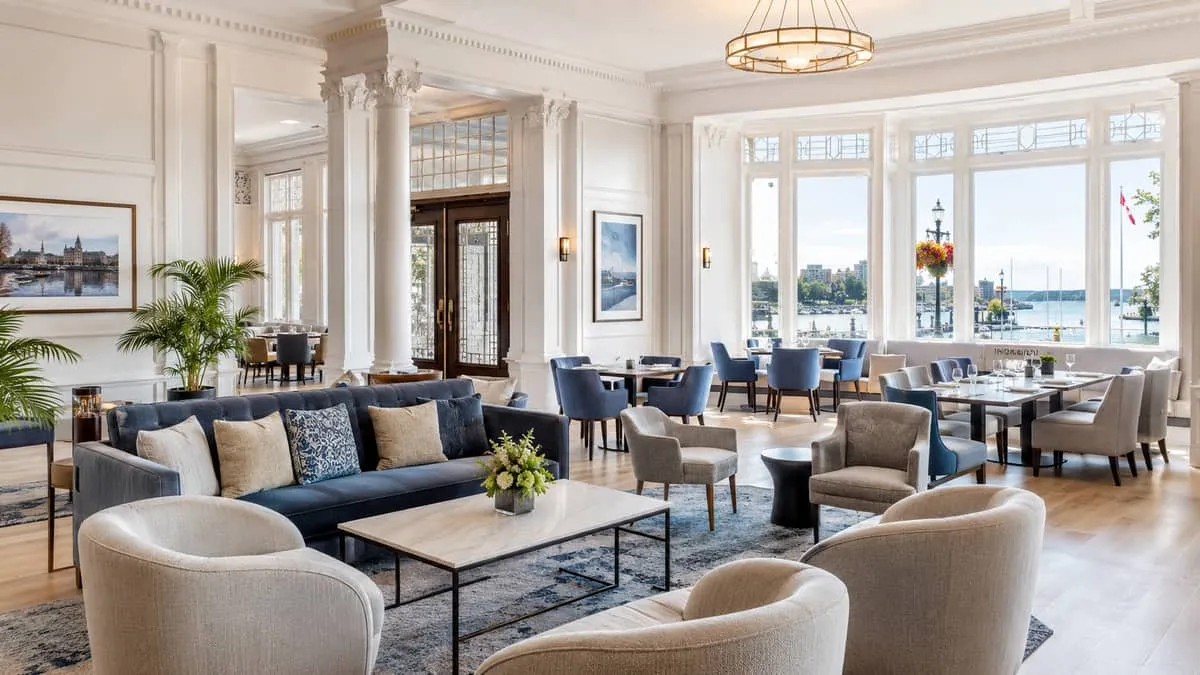
Victoria is not a small market pretending to be a big one. It is a mid-sized tourism capital with genuine hospitality infrastructure , the Fairmont Empress, dozens of heritage boutique hotels in Old Town, waterfront restaurants along the causeway, and a destination wedding scene built around garden settings and Victorian architecture. But it is also a market that sits across a body of water from its nearest major city, without the direct supplier access that Vancouver operators take for granted. That gap matters more than most Victoria operators realize until they are already stuck with the wrong product.
The furniture sourcing problem in Victoria is not about quality , there are good suppliers who ship here. It is about information asymmetry. When you cannot walk a showroom floor or visit a trade district the way a Vancouver buyer can, you are making significant purchasing decisions based on catalogue images, spec sheets, and phone calls. That is exactly the situation where operators end up with residential furniture dressed up in commercial-sounding language, and exactly the situation where working with a national commercial furniture supplier Victoria becomes a genuine advantage rather than just a convenience.
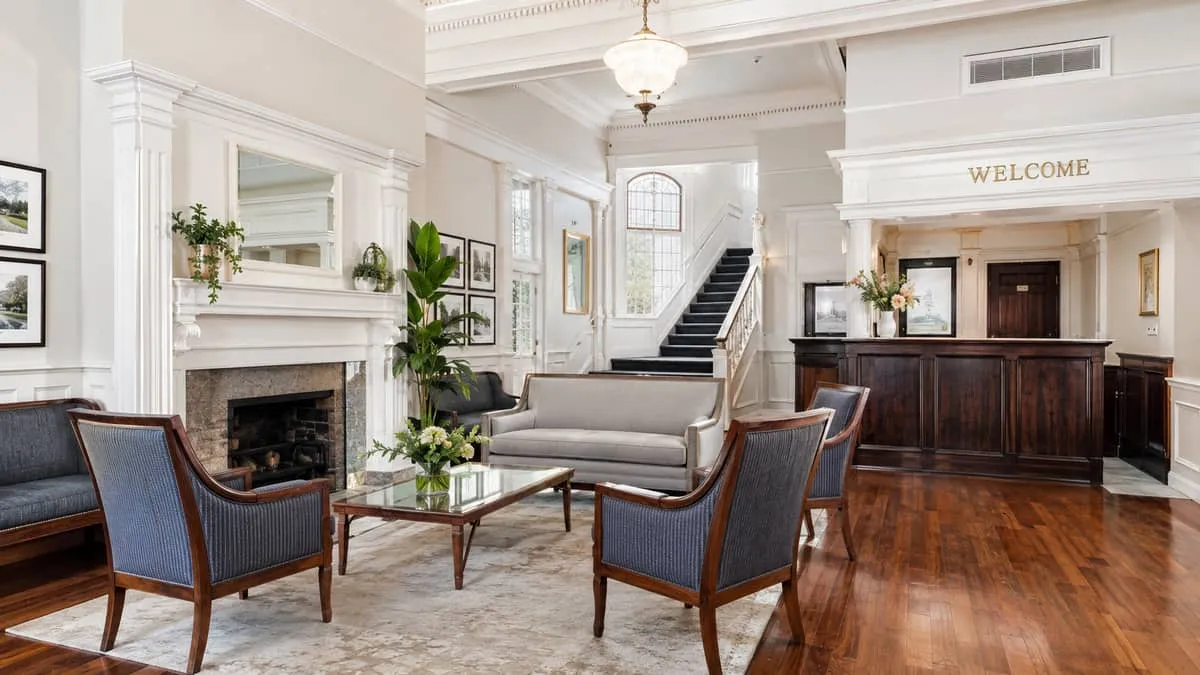
Why Victoria's Market Creates a Specific Sourcing Problem
Most Victoria hospitality operators have tried the local retail route at some point. There are furniture stores on the island, and some carry pieces that look appropriate for a heritage property or a harbour-view dining room. The problem is that looking appropriate and being built for hospitality use are two entirely different things. Retail furniture is engineered for residential environments , a household where the sofa gets used a few hours a day, not a restaurant where a chair cycles through forty covers on a Friday night.
The supply gap becomes visible when you map out the actual options. Vancouver has a wholesale and trade district with dedicated contract suppliers. Toronto and Montreal have showrooms and regional reps who visit regularly. Victoria has what it has. That means operators who want legitimate contract-grade product are either sourcing through the internet with limited ability to vet the supplier, driving or ferrying to Vancouver for a showroom visit, or working with a national supplier that ships to the island. The third option is consistently the most efficient , if you know what to ask for and how to evaluate what you are being offered.
The seasonal compression in Victoria makes this more urgent. The Inner Harbour tourism machine runs hard from May through October. If you are replacing dining seating or refreshing a hotel lobby, you need the furniture to arrive before the peak season starts, which means your ordering window is tighter than it looks on the calendar. A supplier who cannot give you an honest lead time estimate in February is going to cost you a season.
Contract-Grade vs. Residential-Grade: How to Tell the Difference Without a Showroom Visit
This is the central challenge for any Victoria operator sourcing furniture remotely. A supplier who cannot provide straight answers to these questions is not a contract supplier, regardless of what their website says.
Frame documentation. A genuine commercial furniture supplier will provide specification sheets that state the frame material, joinery method, and frame warranty. Look for solid hardwood or steel frames, mortise-and-tenon or dowel joinery, and frame warranties of five years or more. If a supplier describes frames as "solid construction" without specifics, or cannot produce a spec sheet, that is a warning sign.
Foam density and ILD rating. Residential foam runs 1.5 to 1.8 lb per cubic foot. Commercial seating uses 1.8 to 2.5 lb, with high-traffic applications using higher-density foam and appropriate ILD (Indentation Load Deflection) ratings to prevent premature sagging. A supplier who cannot tell you the foam spec is selling you residential product. In a hotel room that might be acceptable , in a restaurant chair that sees forty covers a day, it is not.
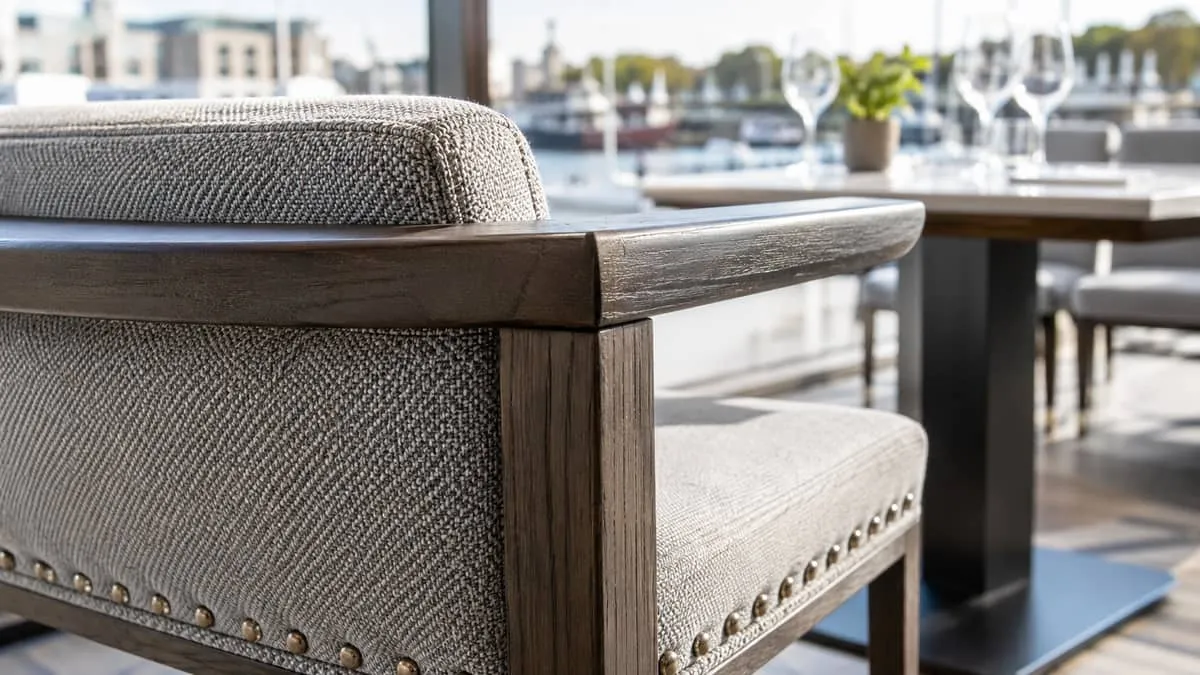
Double rub count on upholstery. The Wyzenbeek test measures fabric abrasion resistance in double rubs. Residential fabrics typically run 15,000 to 30,000 double rubs. Contract minimum for light commercial use is 50,000 double rubs. High-traffic hospitality seating should be specified at 100,000 double rubs or above. This number should appear on the fabric spec sheet. If it does not, request it. If the supplier does not know what you are asking for, end the conversation.
Warranty terms in writing. Contract suppliers provide written warranties covering frame, foam, and fabric separately. They specify what constitutes normal wear versus defect. They have a process for claims. A supplier whose warranty is a vague promise to "make it right" is not operating at a commercial level.
The reason this due diligence matters more in Victoria than in Vancouver is that you cannot easily visit a showroom to sit in the product, feel the construction, or meet the team in person. You are evaluating based on documentation and conversation. Get the documentation.
Lead Times and Delivery Reality for Vancouver Island
Any Victoria operator who has ordered freight to the island knows that logistics add complexity. Getting clear answers about delivery logistics before you place an order is not optional , it is the difference between furniture that arrives before your summer season and furniture sitting in a warehouse in Delta waiting for the next available load to the ferry.
Standard lead times for contract furniture run eight to fourteen weeks from order confirmation for semi-custom pieces. Full custom projects , specific frame modifications, COM (customer's own material) fabric, or unusual size requirements , can extend to sixteen weeks or beyond. For Victoria, add logistics planning time on top of that. Your supplier should be building the ferry and final-mile delivery coordination into their timeline, not telling you the furniture ships in week twelve and leaving you to sort out what happens when it reaches the Swartz Bay area.
Ask your supplier these questions before you confirm an order:
Does the quoted lead time include shipping to Vancouver Island, or is it FOB a mainland warehouse? What freight carrier do they use for island deliveries, and do they have an established relationship with a Victoria-area delivery partner? What happens if a piece arrives damaged , is the replacement process factored into the lead time for your overall project? If you are outfitting a multi-room renovation at a James Bay heritage property with narrow staircases and no freight elevator, has the supplier asked about access constraints and built them into the delivery plan?
A supplier who has not shipped to Vancouver Island before will not ask these questions proactively. A supplier who regularly works with Victoria operators will. That experience gap matters, and you can surface it simply by asking how many projects they have delivered to the island in the past year.
Matching Furniture Specifications to Victoria's Built Environment
Victoria's heritage architecture is not just an aesthetic preference , it creates practical constraints that affect furniture selection. The boutique hotels in Old Town and Chinatown are operating in buildings from the 1890s through the 1920s. Room dimensions are not standardized. Staircases are narrower than modern code requires. Doorways that looked spacious in 1910 do not accommodate standard sofa profiles.
Before you finalize any order, provide your supplier with actual room measurements and access point dimensions. This applies particularly to lobby seating, lounge pieces, and any case goods that cannot be disassembled for delivery. A national commercial furniture supplier Victoria worth working with will ask for this information during the specification process, not after the furniture has shipped.
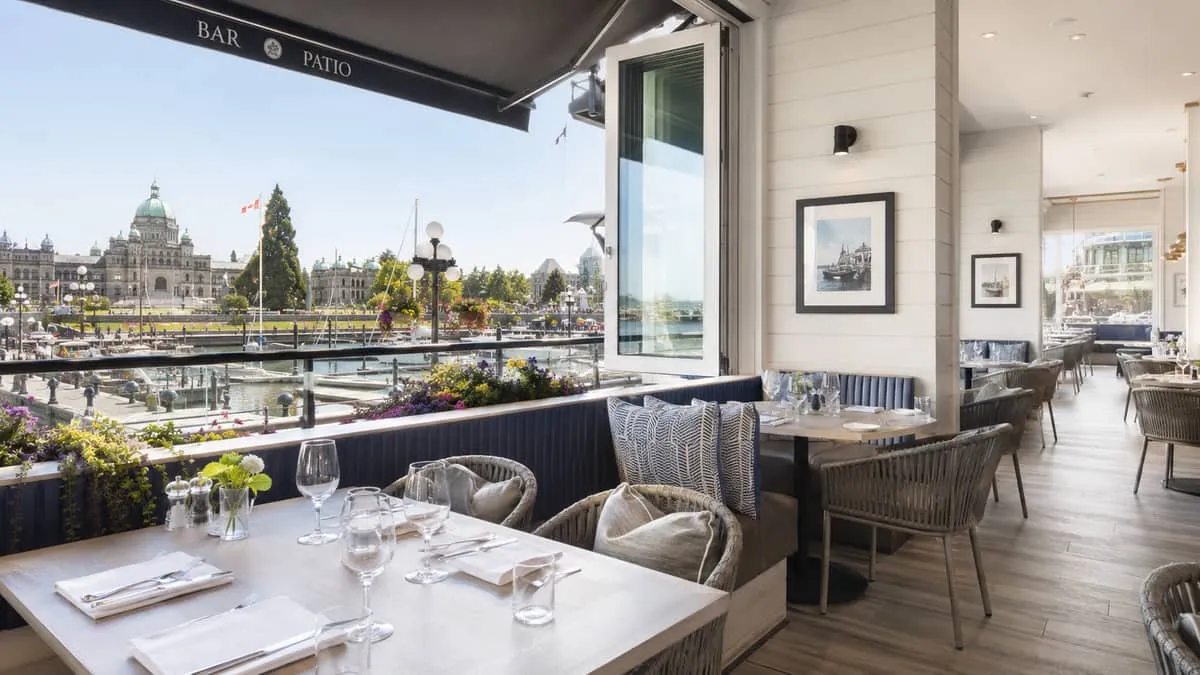
The outdoor and semi-outdoor situation in Victoria is also worth addressing specifically. The city has the mildest climate in Canada, which means a genuinely long patio season , a competitive advantage for waterfront restaurants on the causeway and garden-setting venues in Saanich. But mild does not mean dry. Victoria gets significant rainfall, and harbour-facing patios deal with salt air exposure on top of moisture. Outdoor furniture for a Fisherman's Wharf restaurant or a causeway patio needs UV-resistant solution-dyed acrylic fabric, powder-coated or marine-grade aluminum frames, and drainage-designed cushion construction. These are not upgrades , they are baseline requirements for anything that will sit outside year-round in this environment.
For covered or semi-covered spaces , the kind of garden terrace settings that show up at heritage properties in the Rockland or Fairfield neighbourhoods , the spec sits somewhere between fully outdoor and interior commercial. High-density foam with moisture-resistant treatment, frames that can handle temperature variation, fabrics in the 100,000-plus double rub range. A supplier who treats indoor and outdoor as a binary choice rather than a spectrum has not thought carefully about how Victoria hospitality spaces actually operate.
How to Structure the Supplier Relationship When You Cannot Visit in Person
Victoria operators who source furniture nationally need to be more deliberate about the supplier relationship than their Vancouver counterparts who can drop into a showroom. Here is a process that works.
Start with a specification call, not a quote request. Tell the supplier about your property , the age of the building, the traffic volumes, the aesthetic you are working toward, and the functional requirements of the space. A good commercial furniture supplier will ask questions before they propose product. A transactional one will send you a catalogue and a price list.
Request physical samples before you commit to any upholstery fabric. Most contract suppliers will send fabric swatches. For Victoria properties with strong natural light , Inner Harbour views and garden settings both bring significant light into a space , see the fabric in the actual room before you order it. Colours read differently in catalogue images than they do in a heritage building with large windows facing west over the water.
Get the order documentation complete before you pay a deposit. This means a written quote with unit pricing, a lead time that specifies when delivery to your address is expected (not when the furniture ships from the factory), warranty terms for frame, foam, and fabric, and a clear process for defects or damage claims. The deposit is typically 50 percent of the order value. Do not pay it until you have this documentation.
At delivery, inspect every piece against the packing list before you sign the driver's receipt. Photograph any damage before the delivery team leaves. Contract suppliers will handle legitimate damage claims, but you need the documentation to start that process. A supplier who tells you to sign for the delivery and sort out damage later is not taking responsibility for the product they shipped.
Why the Supplier Choice Is a Longer Decision Than It Appears
Victoria's hospitality market runs on reputation. The Fairmont Empress has been in continuous operation for over a century partly because the building and its fittings are maintained to a standard that guests recognize, even if they cannot articulate exactly what they are responding to. Heritage boutique hotels in Old Town compete on character and atmosphere. Waterfront restaurants on the causeway are priced at a level where the physical environment is part of what guests are paying for.
None of that is sustainable with residential furniture on a two-year replacement cycle. The economics of hospitality furniture are straightforward once you run them: contract-grade dining chairs that last ten years at two to three times the unit cost of residential chairs that last two years are significantly cheaper over any reasonable time horizon. The operational disruption of re-sourcing, re-ordering, and taking dining rooms or hotel rooms offline for replacement is an additional cost that does not appear in the original retail price.
For Victoria operators specifically, there is another calculation. Every time you go back to market for furniture , especially as a mid-sized island market , you are repeating a process that takes time and carries the risk of sourcing errors. Getting it right with a national commercial furniture supplier the first time, establishing a documented spec that can be reordered, and building a supplier relationship that covers future phases of renovation or expansion is worth more than the savings from a cheaper initial purchase.
Whether you are refreshing the lobby of a heritage boutique in Old Town, outfitting a new waterfront restaurant near the causeway, or upgrading the terrace seating at a destination wedding venue in Saanich, the furniture decision compounds. Choose a supplier who understands Vancouver Island logistics, knows how to specify for Victoria's built environment, and can give you documentation that stands behind the product. That is the starting point for a decision that will hold up for a decade.
If you are sourcing commercial furniture for your Victoria property, the fastest way to real numbers is to tell us what you need. Request a quote with your quantities and timeline.