Vancouver charges the highest average daily rates in Canada. A Coal Harbour boutique runs $450 to $700 a night without blinking. A Yaletown rooftop bar will turn a table four times on a Friday and still have a wait list. A Gastown restaurant doing $2 million in annual revenue might seat 60 covers in a room half the size of a comparable operation in Calgary. The guests filling those rooms and seats have stayed at the Aman in Tokyo, the Rosewood in Hong Kong, the Ace in New York. They notice things. And one of the things they notice , even when they cannot articulate it , is furniture that feels wrong for the room it is in.
The sourcing decision that puts residential or retail furniture into a Vancouver commercial environment is rarely made out of ignorance. It is usually made under budget pressure, deadline pressure, or because the person specifying the furniture underestimated what a hospitality environment actually does to a chair over twelve months. The consequences are predictable and expensive. Understanding why commercial furniture suppliers exist , and how to evaluate one for your specific Vancouver operation , is what separates a procurement decision that holds up from one that comes back to hurt you within the first year.
What Residential Furniture Actually Costs a Vancouver Operator
The scenario plays out regularly in this market. A boutique hotel in Gastown completes a conversion of a heritage building and outfits the lobby with furniture sourced from a high-end home retailer because the lead times were short and the pieces looked right for the aesthetic. The furniture looks excellent at opening. By month eight, the seat cushions on the lounge chairs have compressed, the dining chair frames are wobbling, and one of the sofas has developed a structural lean that no amount of repositioning corrects. The GM is now managing a visual problem in the most photographed space in the building , the lobby that guests see first and post to Instagram before they even check in.
The replacement cost is one issue. The lost revenue from a lobby that looks tired before the property hits its second year is another. But the most significant cost in a Vancouver context is reputational: a property competing for Asia-Pacific clientele against established Coal Harbour hotels cannot afford interiors that signal under-investment. International guests with options will simply choose the Fairmont Pacific Rim or the Rosewood Hotel Georgia instead, and they will not explain why in their review. They will simply not return.
Residential furniture fails in commercial settings for a specific set of structural reasons. Joint construction on residential chairs uses lower-grade fasteners and adhesives rated for infrequent use by a small number of regular occupants. A dining chair in a home might receive two to four seated hours daily from the same person. That same chair in a Kitsilano restaurant seats eight to twelve different occupants daily, with the full weight and shifting motion of someone sitting down quickly, pushing back to stand, and dragging the chair across a concrete or hardwood floor. The cumulative load on the joints accelerates failure by a factor of ten or more.
Upholstery tells the same story through double rub counts. Residential fabrics rate between 15,000 and 25,000 double rubs , adequate for a home sofa that gets light use over years. A contract-grade commercial fabric starts at 50,000 double rubs, with heavy-rotation pieces like bar stools and lobby seating typically specified at 100,000 or higher. A Yaletown cocktail bar running 300 covers a night on a bar stool upholstered in residential fabric will see visible wear within six months. The same stool in a 100,000 double rub performance fabric runs two to three years without meaningful degradation.
Why Vancouver's Market Conditions Make This More Consequential Than Other Cities
Vancouver's guest profile is not forgiving of execution gaps. Properties in Coal Harbour and Yaletown draw a significant share of occupancy from Asia-Pacific markets , mainland China, Hong Kong, Japan, South Korea , where hospitality standards in luxury tier properties are exceptionally high and guests are accustomed to environments where every specification has been considered. A worn armchair in a room at a property charging $500 a night is a more damaging signal in that context than it might be in a market with less sophisticated demand.
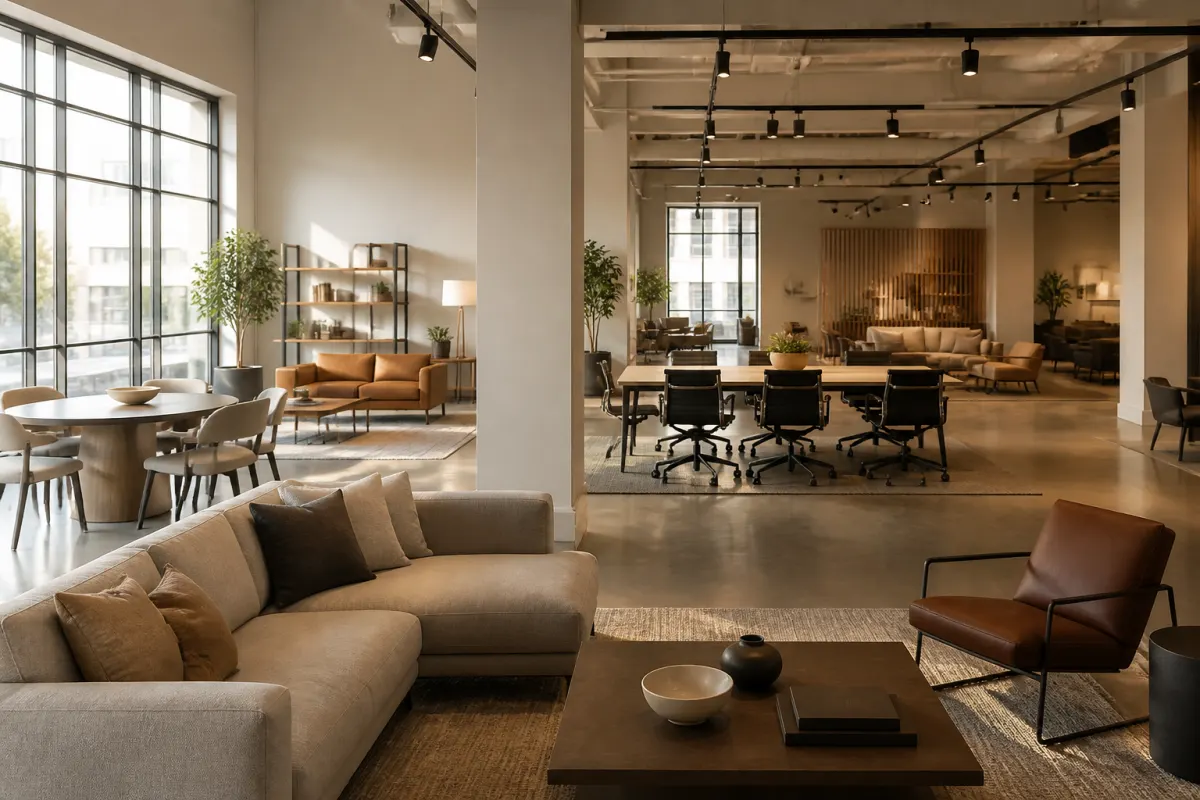
The film and television industry adds another layer. Vancouver has hosted more productions than any other city in North America outside Los Angeles for consecutive years, and the professionals who come with those productions , directors, producers, cast, senior crew , are experienced travelers with strong preferences. They use hotel lobbies as informal meeting spaces. They book restaurant buyouts for cast dinners. They notice when furniture is not appropriate for a room, because their professional lives involve making decisions about whether physical environments look and feel right.
The outdoor dining environment creates a third pressure point that is genuinely specific to Vancouver. The city's mild, rainy climate makes year-round patio operation commercially viable in a way that is simply not true for Toronto or Calgary. A restaurant on the Coal Harbour seawall or a patio on Denman Street in the West End can run covers 11 months of the year, which means outdoor furniture in Vancouver accumulates commercial wear at rates comparable to interior furniture in other markets. Specifying residential patio furniture for a Vancouver outdoor dining program is a mistake that compounds quickly. Contract-grade outdoor furniture , properly rated aluminum frames, marine-grade fabrics, UV-stable finishes , is not optional for operators who depend on patio revenue year-round.
How a Coal Harbour Boutique Hotel Sources Differently Than a Kitsilano Restaurant
The procurement process looks different depending on the type of operation, and a commercial furniture supplier worth working with will recognize that distinction and guide you through it appropriately.
A Coal Harbour boutique hotel in the 50 to 120 room range is typically working with an interior design firm whose principal has deep familiarity with the property and its brand position. The furniture specification will often involve COM , customer's own material , where the designer has selected a specific fabric or leather from a separate textile supplier and requires the furniture manufacturer to build against that spec. The hotel will want tight quality control across a large number of matching pieces: 80 identical guest room chairs, 40 lobby lounge chairs, 20 bar stools, all built to the same tolerances. Lead times matter, but so does the ability to deliver replacement pieces years later that match the original specification without a visible discrepancy.
A Kitsilano or Main Street high-volume restaurant is asking different questions. Volume and durability over design coherence with a specific textile spec. Quick turnaround because the renovation window before reopening is compressed. Stackability for floor plan flexibility during private events. A seat that can be wiped down fast between covers during a dinner service. Pricing that works at a lower per-unit cost because the restaurant might be specifying 120 to 200 chairs across two floors.
Neither of these procurement profiles is better served by a generalist retailer. The Coal Harbour hotel needs a supplier with genuine COM capability, the project management bandwidth to handle a large coordinated order, and the reliability to fulfill replacement pieces years into the future on consistent spec. The Kitsilano restaurant needs deep inventory availability at shorter lead times, knowledge of which product lines hold up under volume turn, and likely a regional warehouse that can stage delivery around their renovation timeline.
A supplier who tells both operators that they work with any type of project is less useful than one who can describe specifically how they have served both profiles and what each process looks like.
Evaluating a Commercial Furniture Supplier for Your Vancouver Operation
When you are sourcing for a Vancouver hospitality project, the evaluation process should cover several areas that are genuinely specific to this market.
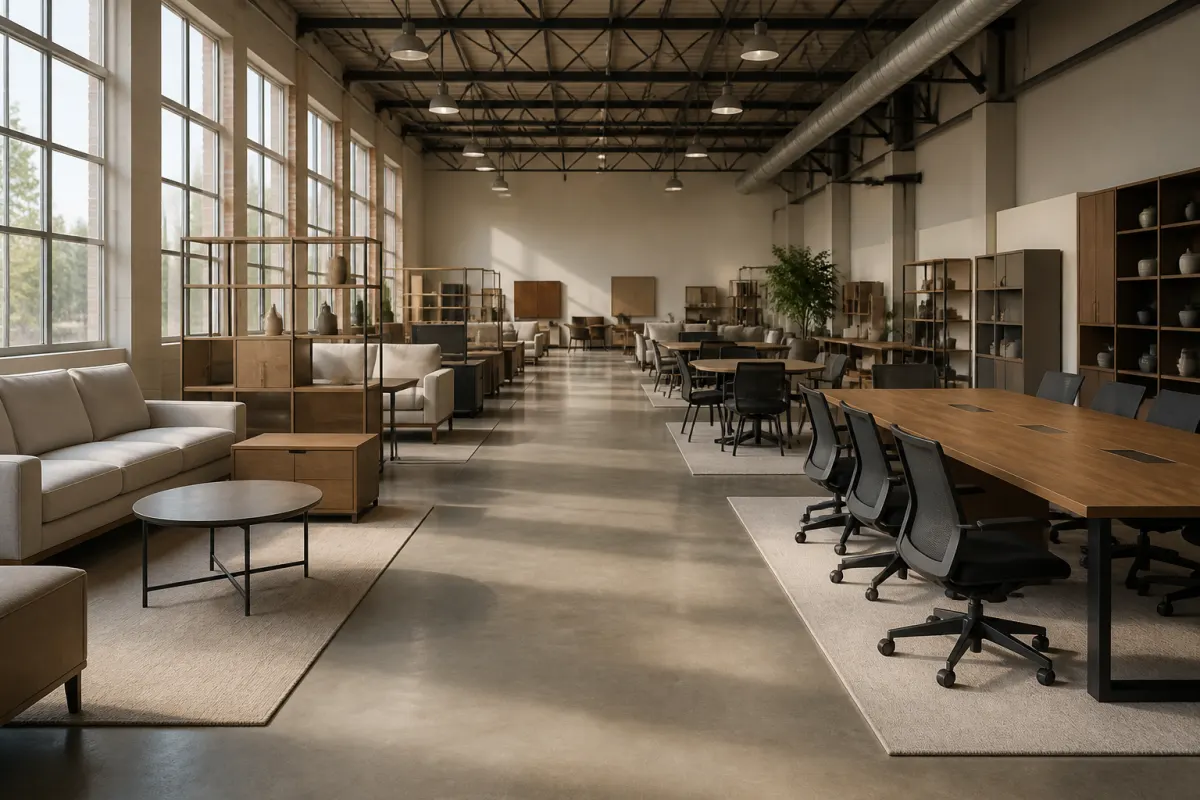
Regional inventory and lead time capability. Furniture delays are operationally damaging in Vancouver because the construction and renovation cycle in this city is highly competitive for contractor time, and a furniture delay that pushes back an opening can cascade into real revenue loss. Ask any supplier whether they hold inventory in Metro Vancouver or the Lower Mainland, what their standard production and delivery timelines look like for an order of your size, and how they handle replacement or defect orders. A supplier with regional warehousing can resolve a damaged piece in days. A supplier relying on overseas production with no local stock puts you on a six to ten week wait for a single replacement item.
Fire code compliance for BC commercial settings. Upholstered furniture in BC commercial occupancies must meet provincial fire code requirements that residential furniture does not address. Flame retardant certification is not something to verify after you have taken delivery of 80 guest room chairs. Ask for FR compliance documentation before you approve a specification. Any serious commercial furniture supplier will provide it without hesitation.
Familiarity with Vancouver's design context. The aesthetic that works in a Coal Harbour property , restrained, material-led, influenced by the mountain and ocean setting and the Asia-Pacific design sensibility , is different from what works in a Gastown heritage conversion or a Yaletown restaurant with an industrial reference. A supplier who can discuss those distinctions and align their catalogue or custom capability accordingly is giving you value beyond the product itself. A supplier who shows you the same line sheet regardless of your context is not operating as a real partner.
Account representation, not order processing. The difference between a transactional supplier relationship and a genuine account relationship shows up in small ways that matter. Does a specific person at the company know your property, your lead times, your designer's preferences? Can you call that person when something goes wrong rather than submitting a ticket? In a market where a problem piece in a lobby or a shortage of bar stools during a weekend service creates immediate visible and revenue impact, the account relationship is part of what you are buying.
What the Procurement Brief Should Include
Whether you are outfitting a new property from scratch or refreshing a specific space, a clear procurement brief makes the supplier engagement more efficient and the output more aligned with what you actually need. The brief should cover space dimensions and occupancy load, your timeline including any hard opening or soft opening dates, the traffic expectations for the space (low versus high rotation, indoor versus outdoor, fine dining versus casual high-volume), any design direction already established by your architect or interior designer, and your target price-per-unit range.
For properties working with a design firm, get the interior designer involved in supplier conversations early. Designers who work in the Vancouver hospitality market regularly have supplier relationships and strong preferences about which manufacturers build to spec reliably and which do not. That knowledge saves time and reduces the risk of specifying something that looks right on paper but does not perform in the space.
Vancouver's hospitality market is unforgiving of procurement decisions that prioritize short-term savings over operational performance. The operators who build rooms and dining rooms that hold up , and hold their design intent , over the full lifecycle of a property are the ones working with suppliers who understand what commercial grade actually means in this specific market.
Every Vancouver venue has its own volume, layout, and turnaround demands, and commercial furniture pricing follows from those specifics. Request a quote and we will scope it to your project.