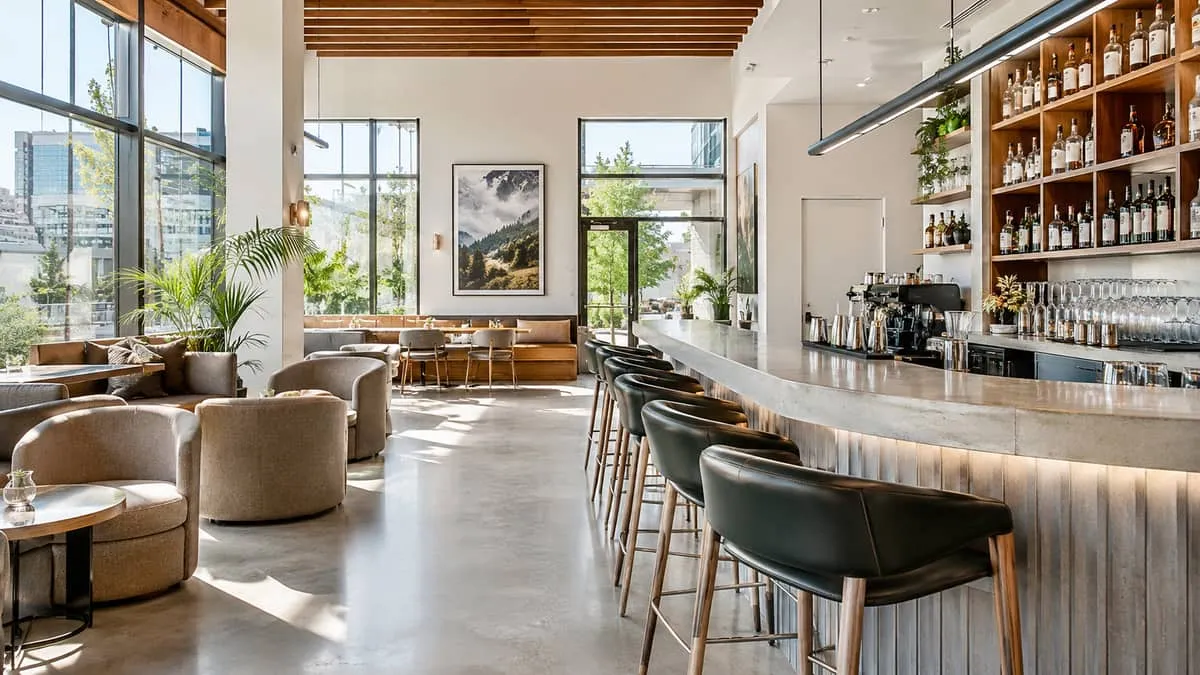
Vancouver's bar and lounge market operates at a level of design sophistication that most Canadian cities do not touch. The cocktail bars in Gastown have regulars who have sat in bars in Tokyo, New York, and London. The hotel bars along Coal Harbour are competing for guests who spent the previous night at a property in Singapore or Hong Kong. And the rooftop lounges in Yaletown are drawing film industry money that moves fast and has no patience for a space that looks like it was furnished on a budget. When you are sourcing bar lounge furniture Vancouver, you are not just buying seating: you are buying your position in a market where the design bar is genuinely high and your guests know the difference.
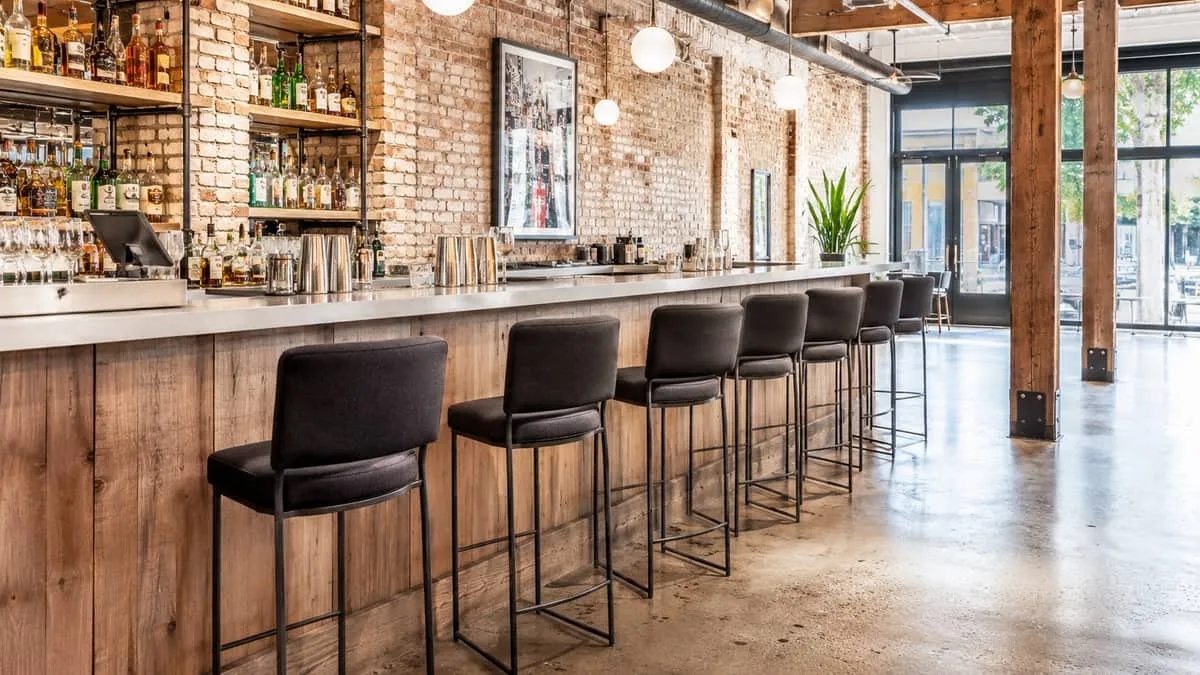
Why Vancouver's Bar Scene Sets a Different Benchmark
The specific geography of Vancouver's hospitality districts shapes what contract-grade bar furniture actually needs to do here. Gastown's cocktail bar scene , places that have earned international attention for their programs , attracts guests who are design-literate by default. These are not people who sit down without noticing the stool they are on. They notice the stitching on the upholstery, whether the barstool wobbles on the original 1920s floor, and whether the finish on the table feels like it belongs in the space or was selected from a generic hospitality catalogue.
Coal Harbour's hotel bars face a different but equally demanding test. The Fairmont Pacific Rim and the properties around it draw Asia-Pacific business travellers and leisure guests who arrive with strong reference points for what a well-executed hotel bar looks and feels like. A barstool that would be acceptable in a mid-market bar in another city reads as an oversight in this context. The margin for error is smaller here than almost anywhere in Canada.
Yaletown adds the rooftop dimension , open-air and covered lounge spaces where furniture faces a completely different set of conditions. And then there is the weather reality that shapes everything: Vancouver is one of the rainiest major cities in North America, which means your guests are inside constantly, sitting in your seating for longer, and your furniture is under sustained pressure for a far greater portion of the year than it would be in a city with true seasons.
Six months of rain is not a trivial detail for a bar operator. It means your capacity for outdoor displacement is limited, your indoor seating carries the load all year, and your furniture needs to be genuinely durable rather than merely presentable.
The Durability Standard for High-Rotation Bar Seating
Contract-grade is a term that gets used loosely, but in a high-volume Vancouver bar context it has a specific meaning. A barstool doing its job in a Gastown cocktail bar is being sat on and vacated dozens of times per shift, moved slightly on tile or hardwood floors with every guest, and leaned on, climbed on, and occasionally dragged by guests who rearrange their group without asking. The failure point on inferior stools is almost always the same: lateral flex in the frame that becomes a wobble, then a creak, then a structural failure.
The frame specification that holds up in this environment is fully welded steel, with wall thickness sufficient to resist lateral stress , not hollow tube profiles that look identical from a distance but develop movement within months. Glides matter more than most operators anticipate: rubber or felt glides rated for commercial use protect your floors and reduce the sound of constant repositioning, which matters when your space has the ambient acoustic signature that good cocktail bars aim for.
Powder-coat finishes on metal frames outperform painted surfaces because the coating is baked in rather than applied on top, meaning the friction of nightly use does not chip it at contact points the way standard paint does. Matte black and brushed brass are both dominant in Vancouver's current bar aesthetic and both hold up well in powder-coat formulations.
For bar-height seating specifically , the 28 to 30-inch seat height that pairs with a 40 to 42-inch bar counter , foot-ring placement affects comfort on long sits. Vancouver's cocktail bar culture involves guests staying for two or three rounds at the bar, not rushing through a drink. A foot ring positioned correctly keeps guests comfortable, which keeps them at the bar longer, which matters for your cheque average.
Upholstery in a Market That Does Not Forgive Mediocrity
The upholstery question for Vancouver bars is more complex than it looks, because the city's bar scene has pulled in aesthetic influences from multiple directions. The Japan-influenced minimalism that shows up in Gastown bar design tends toward clean, tightly upholstered seating , no piping, minimal tufting, precise stitching. The Coal Harbour hotel bar aesthetic often goes warmer and more traditional, with channel tufting and richer fabrics. Yaletown rooftop lounges want something that photographs well in natural light and reads as contemporary without being cold.
Across all of these, the performance requirements are identical: a bar environment in Vancouver is getting red wine, Campari, citrus-heavy cocktails, and beer on its upholstery every night the space is open. The question is not whether a spill will happen but whether your upholstery recovers from it without leaving a permanent mark.
The industry standard for commercial upholstery durability is double-rub count, measured by the Wyzenbeek test. For bar seating taking high-rotation use, 100,000 double rubs is a floor, not a target. But abrasion resistance is only one axis , you also need moisture resistance, because a fabric that absorbs liquid will show staining and deteriorate at the foam underneath even if the surface looks acceptable.
Solution-dyed acrylic fabrics hold colour through bleach cleaning, which matters when your staff is sanitizing between services with commercial-grade products. Coated performance vinyls and faux leathers offer wipe-clean surfaces that withstand the citrus oils and alcohol in cocktail spills without deteriorating. The COM vinyl products that have improved significantly in recent years can achieve the warm, tactile quality that Vancouver's design-literate market expects without sacrificing cleanability.
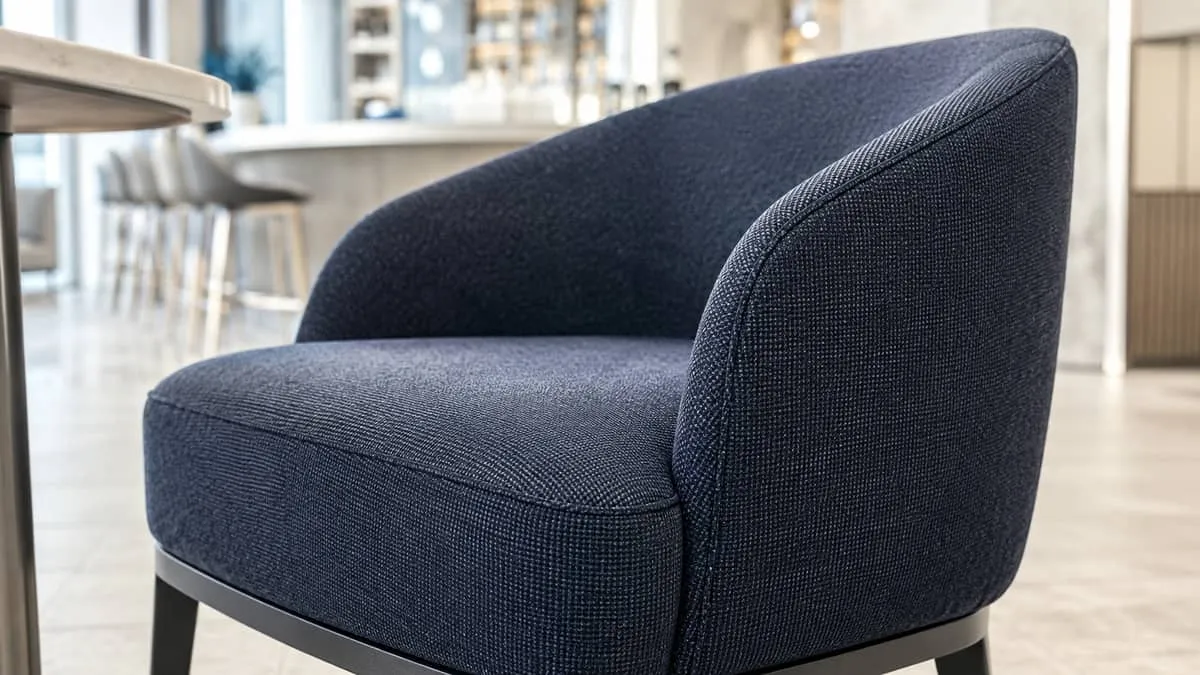
For banquette upholstery specifically , the fixed seating along walls and between tables that carries the heaviest sustained use , darker base tones and textured weaves hide wear between deep cleans. Charcoal, forest green, and deep navy are all performing well in Vancouver spaces right now: they photograph well under the warm lighting that most cocktail bars use, they read as intentional rather than just neutral, and they conceal the reality of a banquette that has been sat in continuously since 5pm.
Foam density under the upholstery is the variable that most operators under-specify. High-resilience foam at 1.8 lb density or higher maintains its shape under sustained weight. Foam that is too soft bottoms out within months, which changes the seated height of the banquette and makes the space feel worn even if the upholstery surface still looks clean.
Designing for Vancouver's Specific Spatial Constraints
Gastown and Chinatown venues are often working in heritage commercial buildings where the floor plates are small, the ceiling heights are either very high or very low depending on the building, and the original architecture is a major part of the draw. You cannot fight the bones of a Gastown building , and you should not try , but you can spec furniture that works with spatial constraints rather than against them.
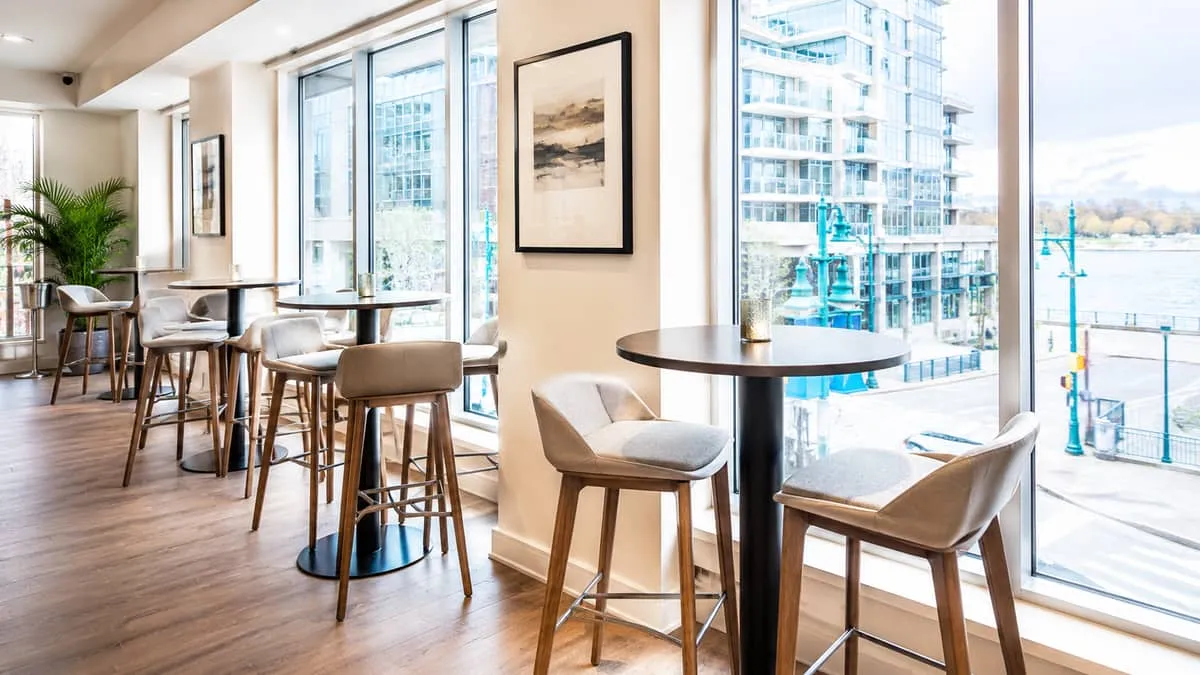
High-top seating runs along windows and rails are standard solutions in these spaces, and they work well when the stool-to-table proportions are correct. A mismatch of even two or three inches between seat height and table height reads immediately to guests and creates discomfort that shortens their stay. In a space where you are already working with limited covers, an uncomfortable seating configuration is a revenue problem.
Lounge seating in smaller Gastown spaces often has to pull double duty: the same chair that serves cocktail hour serves dinner service, and the layout needs to flex for different group configurations without requiring staff to move heavy pieces repeatedly. Lightweight lounge chairs with manageable seat dimensions allow more fluid reconfiguration than deep, heavy club chairs that feel luxurious in a hotel lobby but become obstacles in a compact venue.
The Coal Harbour and West End hotel bars have more space to work with, but they face a different constraint: the furniture needs to hold up to the transient nature of hotel guest use, where the person sitting in the bar chair tonight has no relationship with the property and no reason to treat the seating with care. Contract-grade construction is not optional in this context. It is the baseline.
The Design Vocabulary Vancouver's Market Expects
The aesthetic evolution in Vancouver's bar design over the past several years has moved clearly away from the industrial-reclaimed look that saturated the market a decade ago. The raw concrete, Edison bulbs, and salvaged-wood everything aesthetic still exists, but operators who built that look ten years ago are now refreshing it , and what they are moving toward tells you a lot about where the market is.
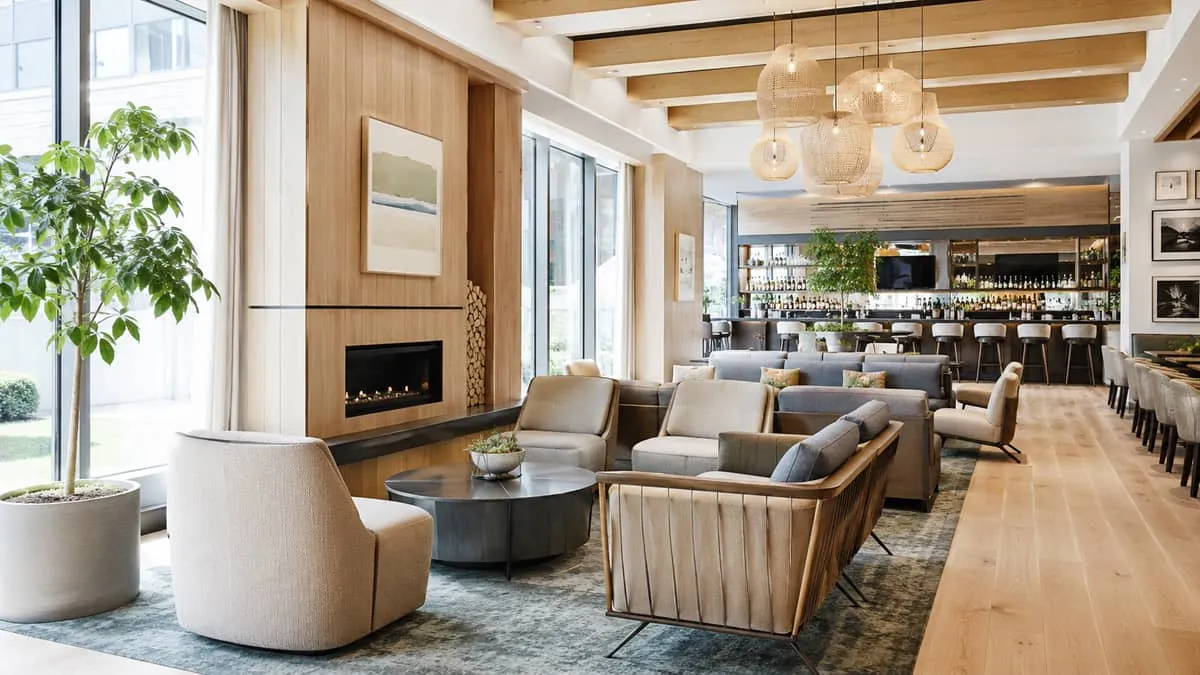
Warm natural materials are dominant: white oak and walnut table tops, leather and textured fabric seating, brass and aged bronze metal accents. The Japan-influenced thread in Vancouver's design scene shows up in restraint , fewer pieces, more considered placement, negative space treated as a design element rather than an oversight. The Pacific Northwest identity of the city leans toward organic materials and craftsmanship over mass-produced uniformity.
This matters for furniture sourcing because it defines what photographs well and what your guests actually experience. The Asia-Pacific clientele that flows through Vancouver's hotel bars and waterfront restaurants , guests arriving from Hong Kong, Singapore, Tokyo, and Seoul , have strong visual references for what high-quality bar seating looks and feels like. A barstool with imprecise joinery or a table top with a finish that dulls within six months reads as a quality problem to this market in a way it might not in a lower-stakes context.
For operators on the Yaletown rooftop circuit, where your venue is competing visually in every guest's social media post, furniture that reads well on camera under natural and ambient light is a genuine business consideration. This is not about vanity , it is about the marketing reality that a well-photographed lounge chair in the background of a guest's post is reaching that guest's network for free. Furniture that looks generic or worn in that context is working against you.
Outdoor Seating and Vancouver's Extended Patio Season
Vancouver's mild climate means the patio season runs genuinely long , April through October with reasonable reliability, and many operators push it further with heaters and covered structures. A bar that loses its patio seating to the weather in late September is leaving covers behind that it does not need to. But outdoor bar furniture in Vancouver faces a specific challenge: Pacific coast moisture, not frost.
Steel frames without proper finishing will begin to rust within a season in Vancouver's salt-adjacent, high-humidity air. Powder-coated aluminum is the standard recommendation for outdoor bar seating along this coast , it is lighter than steel, corrosion-resistant by default, and holds its finish through the kind of prolonged damp that Vancouver's fall and winter bring even on the covered patios that stay open year-round.
UV-stable finishes on both frames and upholstery matter more than most operators spec for. Vancouver's summers bring real UV load despite the city's rainy reputation, and outdoor fabrics that are not solution-dyed will fade noticeably within a season of patio use. This is an investment that pays for itself in not having to replace outdoor seating every two years.
What to Demand from a Commercial Bar Furniture Supplier
The sourcing process for bar lounge furniture Vancouver is one where working with a supplier who understands commercial specifications , not just residential aesthetics , makes a measurable difference in outcomes. Lead times for commercial orders are longer than most operators budget for, and the ability to reorder matching pieces two or three years into a space's life is something that sounds unimportant until you need to replace four barstools after a damage incident and discover the finish has been discontinued.
Ask for physical samples before committing to upholstery. Test them yourself with a wet cloth, a citrus-based liquid, and whatever sanitizer your staff uses , not because you distrust the supplier's specs but because the interaction between your specific cleaning products and a specific fabric coating is worth knowing before you have the pieces in place. Ask explicitly about warranty terms on frame welds, not just surface finishes. And ask whether the supplier can service repairs or source replacement parts for the specific frames you are buying.
The furniture in a Vancouver bar or lounge is representing your brand every night your space is open. Treating the sourcing process with the same rigour you bring to your spirits programme or your staff training is not excessive , it is proportionate to what is at stake in a market this competitive.
If you are sourcing bar and lounge furniture for your Vancouver property, the fastest way to real numbers is to tell us what you need. Request a quote with your quantities and timeline.