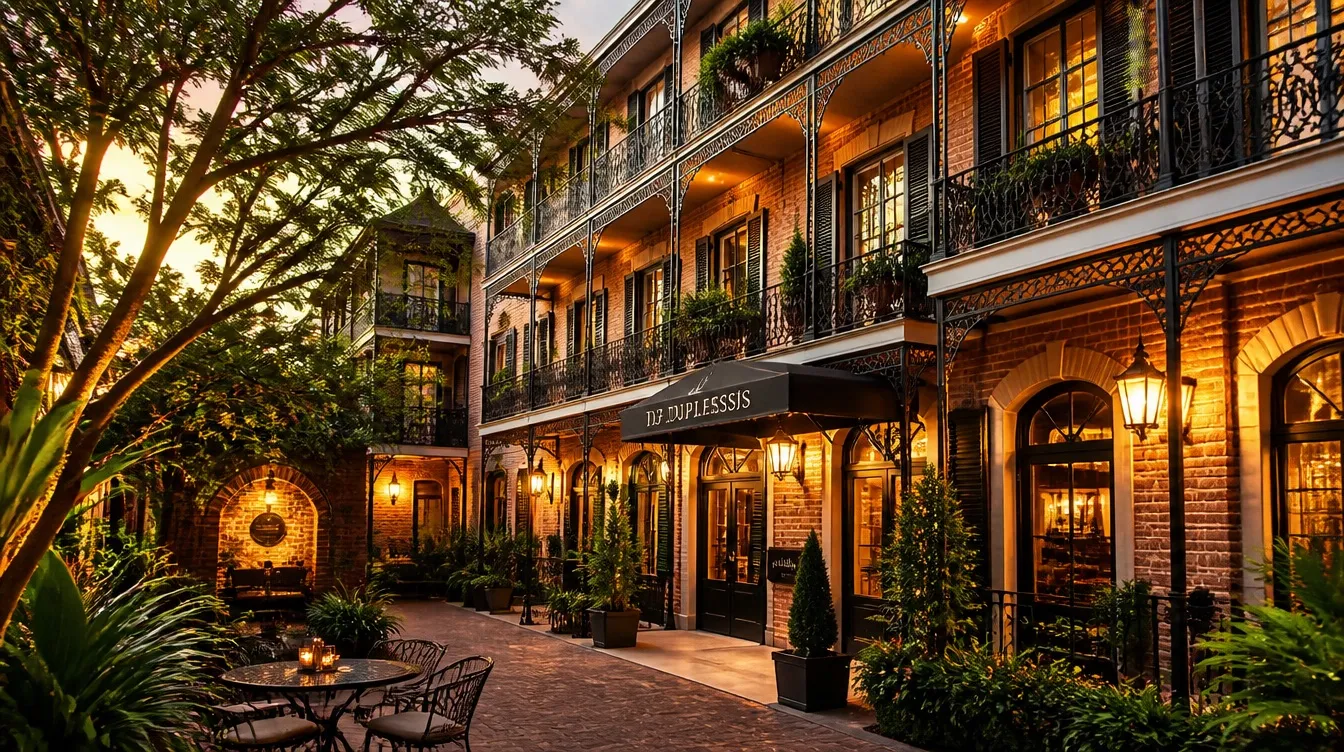
New Orleans is the most demanding commercial furniture market in the United States for hospitality applications. That claim has a specific basis: no other American city combines the sustained base volume of the French Quarter tourism economy, the convention anchor of the Ernest N. Morial Convention Center, the two peak demand events Mardi Gras and Jazz Fest that push the entire city to effective sell-out for extended periods, and the subtropical climate conditions that accelerate furniture wear in ways that most suppliers never address proactively. If you are sourcing commercial furniture for a New Orleans hotel, restaurant, bar, or event venue, the most important question you can ask a prospective supplier is whether they genuinely understand what this market requires not just what they can ship here.
What Contract Grade Actually Means for New Orleans Operators
Contract furniture is engineered for continuous, multi-user commercial use: frames rated for tens of thousands of use cycles, seating tested to BIFMA durability standards, and finishes that survive daily cleaning with commercial-grade products. Retail furniture including high-end retail is designed for residential loads. The gap between the two categories is visible fast in any high-use commercial environment. In New Orleans, where French Quarter properties run near-continuous guest contact and bars on Frenchmen Street operate until dawn, that gap is visible within the first season.
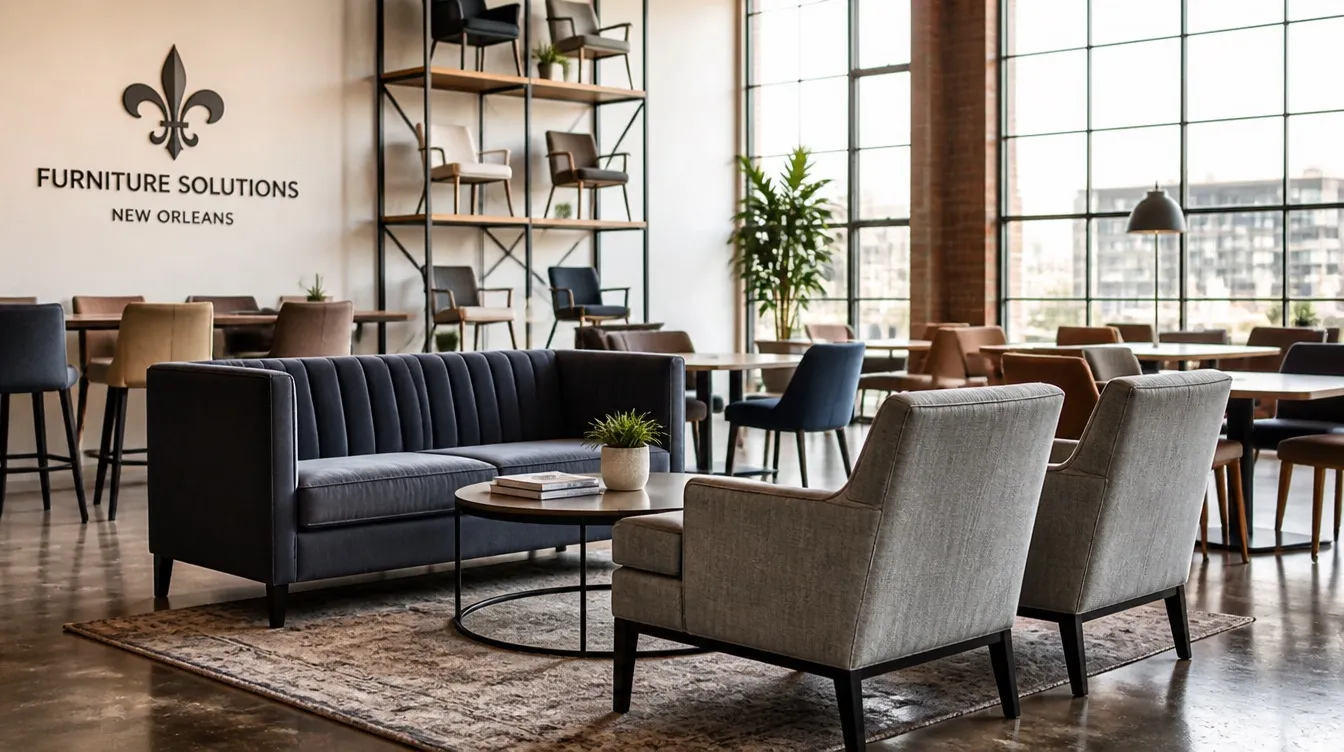
The specific questions to ask a prospective commercial furniture supplier New Orleans: Does this product meet BIFMA X5.1 seating standards? What is the foam density specification, expressed in ILD and pounds per cubic foot? What gauge steel or which hardwood species is used in the frame construction? Does the frame use welded construction with corner blocking, or is it doweled and stapled? What is the warranty on structural components, and does it explicitly cover commercial use? A supplier who cannot answer these questions clearly is not selling genuine contract product, regardless of how the catalog describes it.
For New Orleans applications specifically, ask about subtropical climate specifications. Does the supplier's outdoor product use marine-grade or 6005-T5 aluminum alloy? What is the powder coat thickness on outdoor pieces? Are upholstery fabrics in guestroom and high-use applications available with antimicrobial treatment? Does the case good finish option include conversion varnish or catalyzed lacquer for humidity resistance? These are not niche questions in this market they are the baseline specification requirements for furniture that will perform across a full replacement cycle in New Orleans conditions.
Hospitality-Specific Requirements Across New Orleans' Markets
The New Orleans commercial furniture market spans dramatically different application contexts that require different specification approaches, and the right supplier needs to be able to engage across all of them.
French Quarter hotels are sourcing against a design standard defined by historic grandeur: dark mahogany and ebony finishes on case goods, headboards with substantial visual weight in jewel-tone velvet or performance fabric, wrought iron accent references, and the kind of material quality that holds up against architectural character that most hotels elsewhere spend budget trying to simulate. A commercial furniture supplier for this market needs genuine aesthetic range not just a contract catalog with a wide product count, but the ability to present options that fit the French Quarter's specific design vocabulary and then execute those selections with the construction quality they demand.
Warehouse District and CBD convention hotels are sourcing for high-volume operational performance. Banquet chairs rated for commercial stack heights, folding tables with reinforced hardware for daily reset cycles, lobby seating that absorbs continuous convention delegate use these are the workhorses of the city's largest hotel programs. A supplier who has furnished convention properties adjacent to the Morial Convention Center already understands what daily ballroom reset volume, continuous lobby use during major conference weeks, and Mardi Gras demand peaks actually require of the product.
Restaurant and bar operators across Magazine Street, Frenchmen Street, and the Garden District are sourcing for a combination of design intentionality and durability that is specific to New Orleans' F&B culture. Dining chairs in commercial-grade wood frames with appropriate seat depth and foam density for the long service culture of this city. Barstools with welded steel footrests and rotation hardware rated for late-night bar use. Outdoor seating in aluminum frames with solution-dyed cushion fabrics. The supplier needs to understand all of these requirements and be able to source product that meets them.
What to Look for in a New Orleans Commercial Furniture Supplier
Lead time transparency is the first filter. New Orleans' compressed renovation calendar means that missed delivery commitments have a direct cost a delayed furniture arrival that pushes an opening past the Mardi Gras window or past a Convention Center peak costs revenue that cannot be recovered. Standard custom contract furniture lead times run 12 to 16 weeks for upholstered pieces. Get that commitment in writing, with a clear process for managing exceptions, before you place any order.
Ask specifically about phased delivery capability. Most New Orleans hotel renovation programs run floor-by-floor or wing-by-wing in occupied properties, which means furniture needs to arrive against a phased schedule coordinated with the construction handoff rather than as a single bulk delivery. A supplier who can warehouse partial inventory between phases and release against a documented schedule is operationally compatible with how New Orleans renovation programs actually run. One who cannot is adding logistics risk to every phase of your project.
Warranty terms separate genuine contract-grade suppliers from wholesale operations moving product that looks commercial. A credible contract furniture supplier offers a minimum five-year warranty on structural components with a clear claims process that does not require extensive documentation to trigger. If the warranty language explicitly excludes commercial use which appears in more product documentation than it should that is a definitive signal to look elsewhere.
Ask for references from New Orleans or Gulf South hospitality projects specifically. A supplier who has placed furniture in a French Quarter boutique hotel, a Warehouse District restaurant, or a CBD convention property has already navigated the aesthetic requirements, the climate specifications, and the delivery logistics that define this market. Those references tell you more than any catalog or pricing sheet can.
Budgeting for Contract Grade in New Orleans
Contract-grade commercial furniture costs more upfront than retail alternatives. In New Orleans, the cost-benefit calculation for the upgrade is clearer than in most markets, because the wear intensity here is higher than most operators from other cities anticipate until they experience it directly.
A commercial dining chair from a reputable contract manufacturer runs $150 to $350 per unit depending on specification. A comparable-looking retail chair may be available for $80 to $120. In a city where Mardi Gras alone puts chairs through a pace of use that other markets generate across months of normal service, the retail chair's shorter service life before replacement produces a total cost that typically exceeds the contract-grade purchase. The math resolves in favor of the higher upfront cost when you calculate over the actual replacement cycle, particularly for operators who have lived through one unplanned early replacement program in this market.
For large New Orleans properties CBD convention hotels, major French Quarter operators volume orders create leverage that boutique and independent properties cannot typically access. A supplier structured for volume business will help you understand where pricing tier thresholds are and how to structure your order to reach them. For smaller independent operators, find a supplier who has built their model around boutique accounts and can offer appropriate minimum order quantities without the per-unit pricing that makes a 30-room renovation program impractical.
Work with a supplier who treats the specification conversation as the core of the engagement. The right commercial furniture partner for a New Orleans property asks about your renovation timeline against the event calendar, your climate exposure for outdoor and semi-outdoor applications, your design vocabulary and the architectural context you are furnishing against, and your maintenance and housekeeping protocols before they propose anything. That conversation is what separates a supplier who can genuinely serve New Orleans hospitality from one who is shipping product south from a national catalog.
Planning commercial furniture for your New Orleans project? Share your specs and quantities and we will build pricing around your actual program. Request a quote to get numbers for your space.