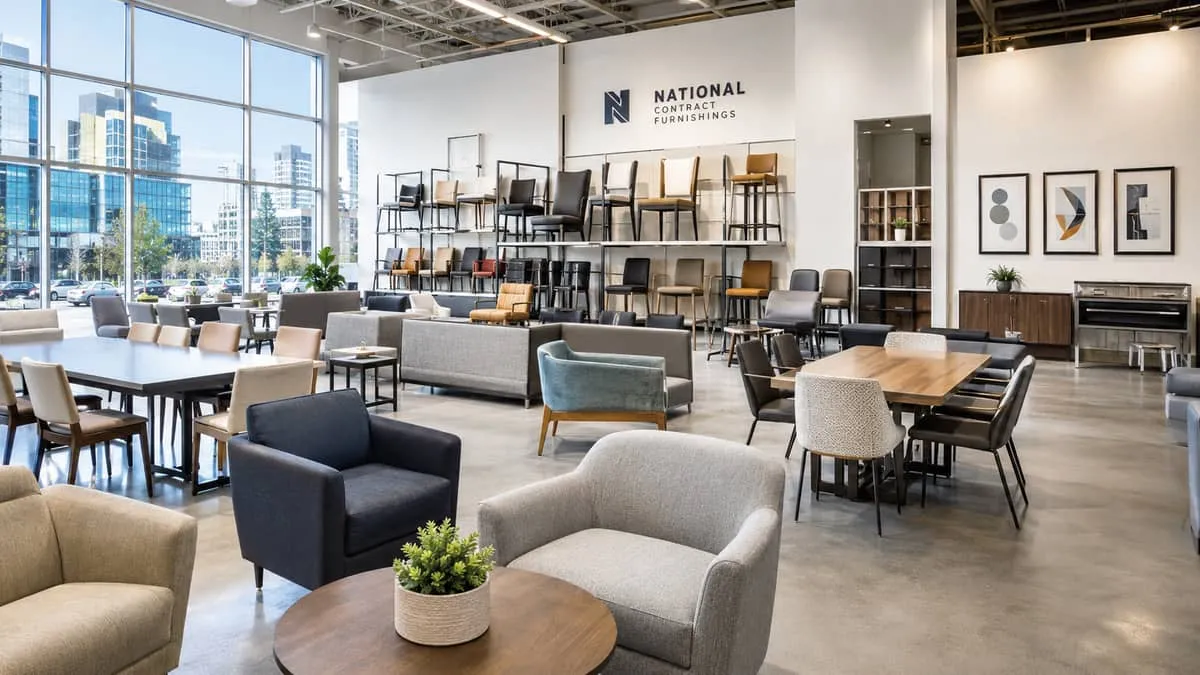
Edmonton's hospitality operators make purchasing decisions differently than operators in most Canadian cities, and the difference matters when you are sourcing commercial furniture. The customer base here includes oil and gas executives on corporate accounts, government delegations cycling through provincial meetings, and convention groups filling the downtown core. These are not budget travelers comparing room rates on their phones. They are guests who notice when a chair wobbles, when upholstery looks tired, or when a lobby does not hold its look after a hard Alberta winter. The commercial furniture supplier Edmonton businesses rely on has to understand that the buyer is often a seasoned operator whose renovation math is calculated in years, not seasons.
The Edmonton Operator's Calculus: Total Cost of Ownership Over Five Years
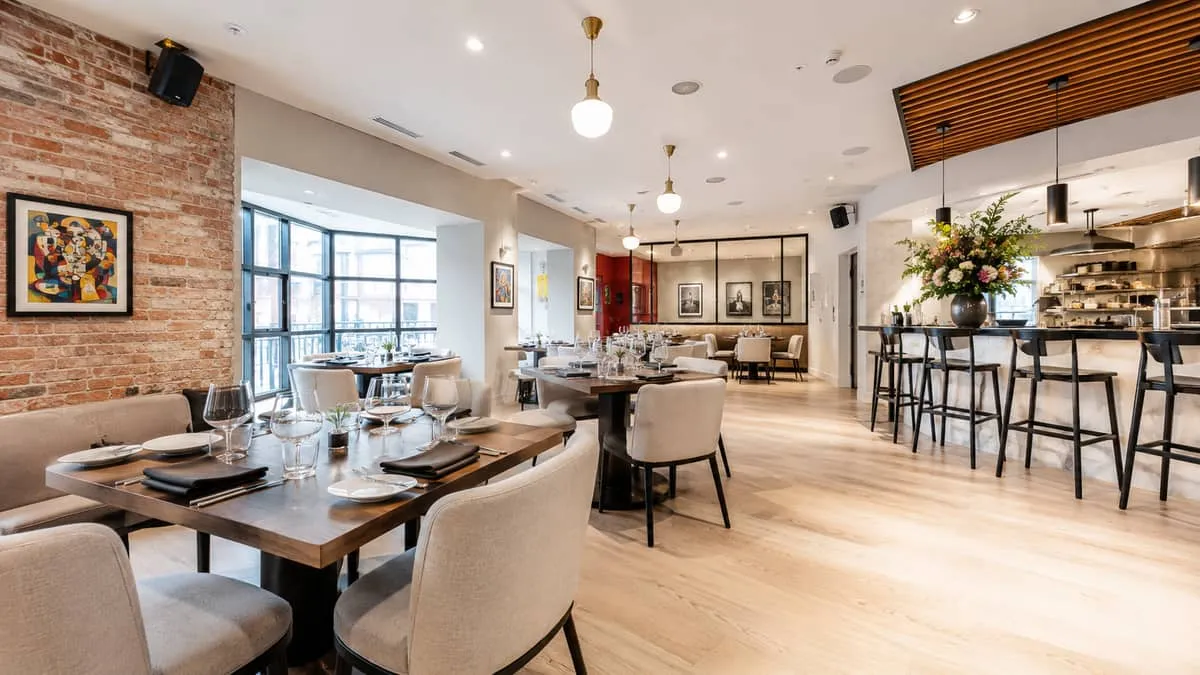
The most common mistake Edmonton operators make when sourcing furniture is pricing a project on per-unit cost rather than total cost of ownership over a realistic operating cycle. A dining chair at 90 dollars looks like a win until you are replacing 60 of them 18 months into operation because the joints have cracked, the fabric has worn through at the seat edges, and the finish has been stripped by the cleaning protocols your staff runs after every cover.
Run that math differently. A contract-grade dining chair at 280 to 380 dollars, properly specified for commercial hospitality use, should carry a five-year warranty and realistically perform for seven to ten years in a well-managed Edmonton restaurant. At 60 chairs, the difference in upfront cost is significant. But factor in two replacement cycles for the cheaper product over the same period , purchasing, delivery coordination, disposal of the old inventory, and the disruption of swapping chairs during operating hours , and the contract product is not just a better operational choice. It is a cheaper one.
This is the conversation that separates commercial furniture suppliers who understand the Edmonton market from those who are essentially moving retail product into commercial spaces and hoping it holds. A genuine commercial furniture supplier Edmonton operators can trust will push back if you are trying to fit a residential-grade product into a 200-seat banquet hall. They will show you the durability math because they know you will be calling them in 18 months otherwise, and that is not a relationship that works for either party.
For operators in the Ice District running high-volume bars and restaurants around Rogers Place on game nights, the math is even more compressed. A busy night near the arena means dozens of covers per seat, spilled drinks, wet winter gear hanging off chair backs, and staff wiping surfaces with commercial cleaners between turns. Furniture that cannot handle that load is not a bargain at any price point.
Specifying for Alberta's Conditions , Not Just Generic Commercial Standards
Alberta's climate creates a specific set of requirements that a supplier working purely from a generic commercial catalog will miss. Edmonton's winters are genuinely harsh , temperatures regularly drop to minus 25 or below, and guests arrive in heavy parkas, wet boots, and carrying the kind of moisture load that destroys certain upholstery finishes and swells lower-quality wood components over time.
The patio season is the inverse problem. Edmonton has a short, intense outdoor season that typically runs from late May through early September. West Edmonton Mall's outdoor areas, the 124th Street patios, and the Whyte Avenue restaurant strips all compress a full season of outdoor use into roughly 14 to 16 weeks. Outdoor furniture in this climate needs to tolerate UV exposure, dramatic temperature swings between morning and afternoon, and the Alberta hailstorm that arrives without notice in July. Contract-grade aluminum or powder-coated steel frames, marine-grade fabrics rated for UV and moisture, and stackable profiles for fast cover when weather turns are all functional requirements in Edmonton, not optional upgrades.
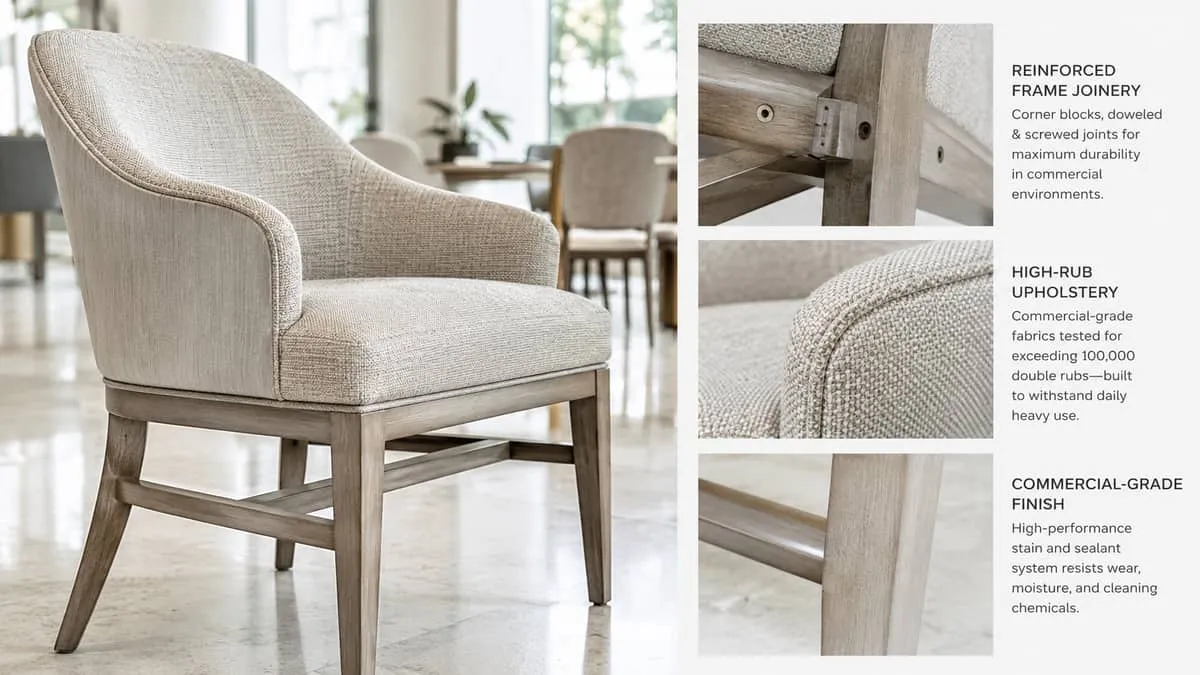
For indoor spaces, the dry Alberta winter air creates its own set of considerations. Solid wood components that are not properly kiln-dried and finished can check and crack in the low-humidity indoor environments that Edmonton buildings maintain during winter months. Quality commercial suppliers specify wood components with appropriate moisture content and finish them with coatings that tolerate the expansion and contraction that Alberta's seasonal shifts demand. This is a detail that gets missed by suppliers without regional experience, and the result shows up as splitting veneer and opening joints by the second or third winter.
Cleanability is another Alberta-specific issue that goes beyond standard commercial requirements. The energy sector corporate accounts that drive significant business for downtown Edmonton hotels often come with a full entourage, long stays, and heavy use of meeting and dining spaces. Housekeeping protocols in these properties run harder than in leisure-focused hotels. Fabrics and finishes need to tolerate daily contact with commercial cleaning products without degrading. The fabric spec of 50,000 double rubs that is standard for commercial upholstery is a floor, not a target, for high-contact hospitality seating in Edmonton.
What Edmonton's Different Market Segments Actually Need
Edmonton's hospitality market is not monolithic. The furniture decisions at a West Edmonton Mall cluster hotel look nothing like the decisions at a boutique restaurant on 124th Street, and a supplier who treats both projects the same way is not paying attention.
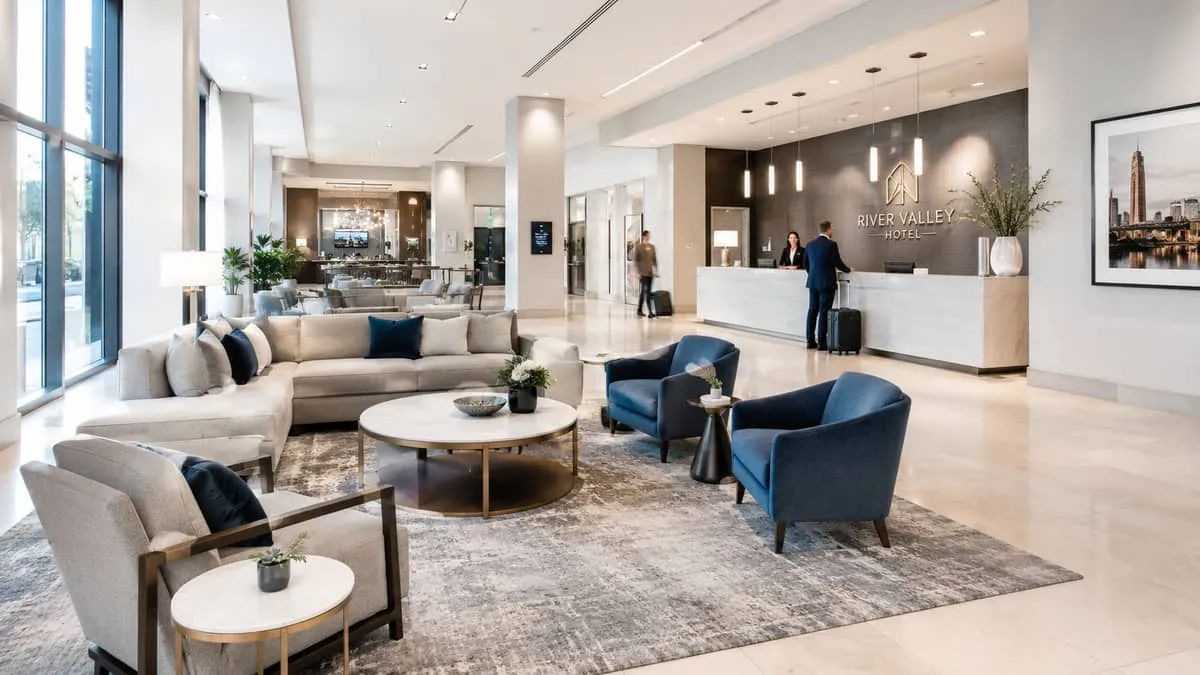
The WEM hotel cluster competes hard on volume. These properties push significant occupancy through family travelers, weekend shoppers, and group bookings, which means furniture takes a high-contact pounding across a broad range of user types. The priority here is durability and cleanability at scale. Case goods for hotel rooms need to tolerate luggage impact, resist finish damage from cosmetics and personal care products, and be replaceable in matched units when individual pieces take damage. A commercial furniture supplier Edmonton hotel operators in this cluster need will have experience coordinating phased delivery across multi-floor renovations without disrupting occupied room blocks , a logistics capability that not every supplier has.
The 124th Street independent restaurant and cafe market is a different conversation entirely. These operators care about character, not just function. The furniture has to work with the design identity of the space , exposed brick, local art, a neighborhood dining atmosphere , while still carrying commercial-grade construction underneath. The mistake suppliers make here is pushing product that reads as generic contract furniture, the kind of stacking chair and laminate-top table that looks fine in a convention hall but kills the ambiance of an independent restaurant. The right supplier for this segment can source product that has aesthetic interest and reads as thoughtfully chosen while still being built to handle nightly commercial use.
The downtown convention hotel market, which services Rogers Place events, government delegations, and the provincial convention circuit, operates at a different scale. Banquet seating, stackable chairs for flexible event configurations, and lobby furniture that holds up through heavy convention traffic are the core requirements. Here the priority is flexibility and fast turnaround , furniture that can be configured, cleared, and reset multiple times in a single day without showing wear in the joinery or finish.
The Whyte Avenue corridor, which serves a younger local dining demographic alongside tourists and festival goers, sits somewhere between the independents and the high-volume chains. Durability is essential , these spaces run hard on weekends , but so is a style sensibility that fits the neighborhood.
How to Read a Commercial Supplier , Before the Quote
Edmonton operators who have been through a commercial furniture project before develop a quick read on suppliers early in the conversation. A few signals tell you a great deal before any product is specified.
Ask how they handle project phasing. A supplier who understands the Edmonton renovation market , where hotels often complete renovations floor by floor while remaining open, and restaurants may need furniture for a partial reopening while back-of-house construction continues , will have an answer ready. If they have never thought through phased delivery, that is a significant gap for any multi-phase project.
Ask about their experience with Alberta building code and fire safety requirements for hospitality occupancies. Commercial furniture in public spaces needs to meet specific flame-spread and smoke-development ratings. A supplier who is not familiar with these requirements is not equipped to make compliant specifications, and non-compliant furniture creates liability issues that go well beyond the cost of the furniture itself.
Ask who handles warranty claims in Edmonton. This matters more than it sounds. A supplier whose warranty process routes through a Toronto head office with six-week response times is not a functional partner for an Edmonton operator who needs a replaced chair during a busy convention season. Local relationships and clear warranty procedures are a real differentiator.
Finally, ask for references from Edmonton hospitality operators in your segment. Not Vancouver properties. Not Calgary. Edmonton, where the market conditions, the client mix, and the regulatory environment are what you are actually navigating. A supplier who has worked with Ice District venues, WEM hotels, or 124th Street independents has context that transfers directly to your project.
The Ordering and Delivery Process for Edmonton Projects
Once you have confirmed a commercial furniture supplier Edmonton operators in your segment have used successfully, the project process follows a predictable structure , but Edmonton adds a few wrinkles worth planning for.
Lead times are the most important variable to lock down early. Custom upholstered pieces from North American manufacturers are typically running 10 to 14 weeks. Import product from overseas can be 16 to 24 weeks depending on current container availability. For Edmonton projects with fixed opening dates , a Rogers Place event anchor, a government contract deadline, a pre-Christmas restaurant opening , these timelines are not flexible. Get lead time commitments in writing, not in a conversation, and build buffer for the customs and logistics delays that have become a standard part of importing furniture in the current environment.
Delivery logistics in Edmonton require specific coordination. If you are taking delivery at a downtown hotel during an active operating period, loading dock access, freight elevator scheduling, and the timing of deliveries relative to front-of-house operations all need to be planned in advance. A supplier who has done commercial deliveries in the downtown core understands this. One who has not will create problems you end up solving yourself.
Installation coordination with your general contractor is equally important. Commercial furniture does not typically arrive pre-assembled in final configuration. If your GC's timeline and the furniture delivery are not aligned, you end up with product sitting in a staging area, eating into your buffer before opening. The right supplier will work directly with your project manager to coordinate delivery against the construction schedule rather than treating the two as separate streams.
Working with a commercial furniture supplier Edmonton's hospitality operators trust means you are not running this process on an improvised basis. It means the oil and gas corporate account guests who walk into your lobby in January, the WEM shoppers who fill your restaurant in December, and the convention delegates cycling through the downtown core in the shoulder seasons find a space that reads the way it did on opening day , because the furniture was built to hold up to all of them.
For Edmonton properties comparing commercial furniture options, project-specific pricing tells you more than any published range. Request a quote and we will scope it to your space and volume.