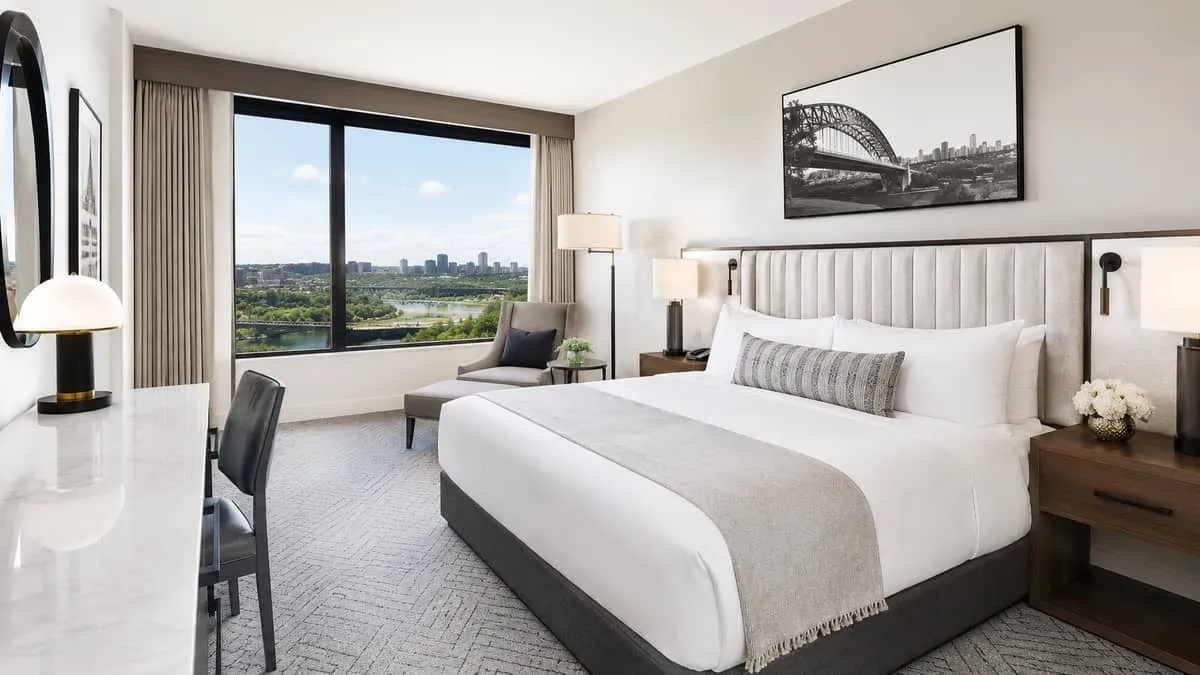
Edmonton's boutique hotel scene is not Toronto's, and it is not Vancouver's. Anyone trying to apply a coastal playbook to an Edmonton independent property will find out quickly that the guest profile, the climate, the competitive set, and the economics of running a small hotel here demand a different approach , including a different approach to furniture.
The properties gaining traction in Edmonton right now are clustered in two distinct zones. There are the 124th Street and Oliver neighbourhood boutiques targeting guests who want proximity to the galleries, wine bars, and independent restaurants that have made that corridor one of the more interesting stretches in Western Canada. And there are the Ice District-adjacent properties that opened or repositioned when Rogers Place came online, chasing a guest who is here for a concert, a playoff run, or a corporate event tied to the arena and the surrounding development. These are not the same guest. The furniture decisions for each are not the same either.
Edmonton's Corporate Guest Is Not the Leisure Traveller You Think
Before getting into specifications, it helps to understand what drives room nights in Edmonton. The city's hospitality market is anchored by energy sector accounts, government delegations, healthcare and conference traffic, and increasingly the Rogers Place entertainment calendar. Leisure travel exists , Fringe Festival, K-Days, the Oilers postseason , but it is episodic. The consistent revenue base for downtown and midtown boutique properties is corporate.
That shapes furniture selection in concrete ways. The corporate traveller coming off a project in Fort McMurray or sitting through three days of industry meetings at the Edmonton Convention Centre is not looking for whimsical. They want comfort, function, and a room that feels elevated without feeling theatrical. A lounge chair that works as a real reading chair. A desk that handles a dual-monitor setup or at minimum does not collapse under a laptop and a notebook. Adequate lighting that does not require hunting for lamps. These are basics that boutique properties can deliver better than the flag hotels on Jasper Avenue precisely because they are not locked into chain-wide spec sheets.
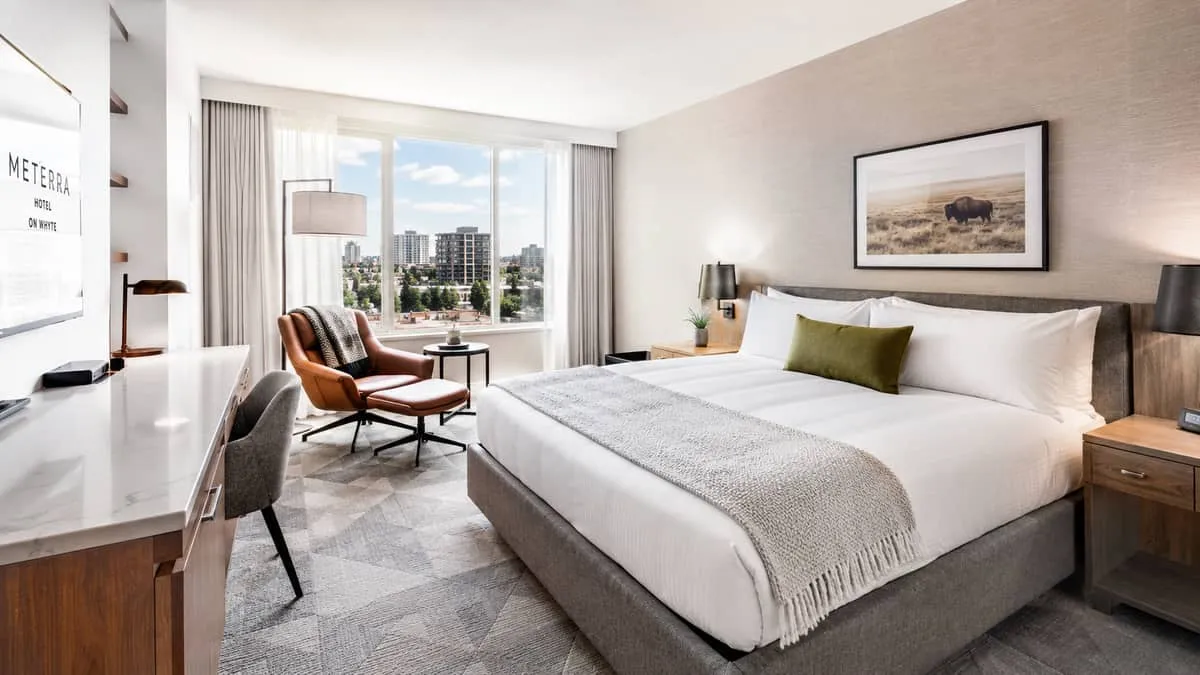
The distinction matters for purchasing. Furniture that reads well in a boutique hotel targeting leisure travellers in Tofino , raw wood edges, artisanal imperfection, maximalist texture , tends to land differently with the Edmonton corporate account who is paying $280 a night out of a project budget and wants to feel like the rate is justified by quality, not concept.
The Ice District Adjacency Problem
Properties that opened within a few blocks of Rogers Place had a specific challenge from the start. The Ice District itself is polished and corporate , the Stantec Tower, the JW Marriott, the office towers with ground-floor hospitality. Competing directly with the JW on fit and finish is a losing proposition for a 50-room independent. Differentiating purely on price means you are not a boutique, you are a budget option.
The boutiques that positioned well did it by leaning into scale as an asset. Smaller properties can deliver consistency that a 300-room flag hotel struggles with: every guest room actually matching its photos, furniture that is properly maintained because you have 48 rooms to keep track of instead of 400, staff who know the property and can respond when something needs attention. Furniture selection supports that positioning when you choose pieces with finish quality that holds up across a 3 to 5 year horizon without looking tired.
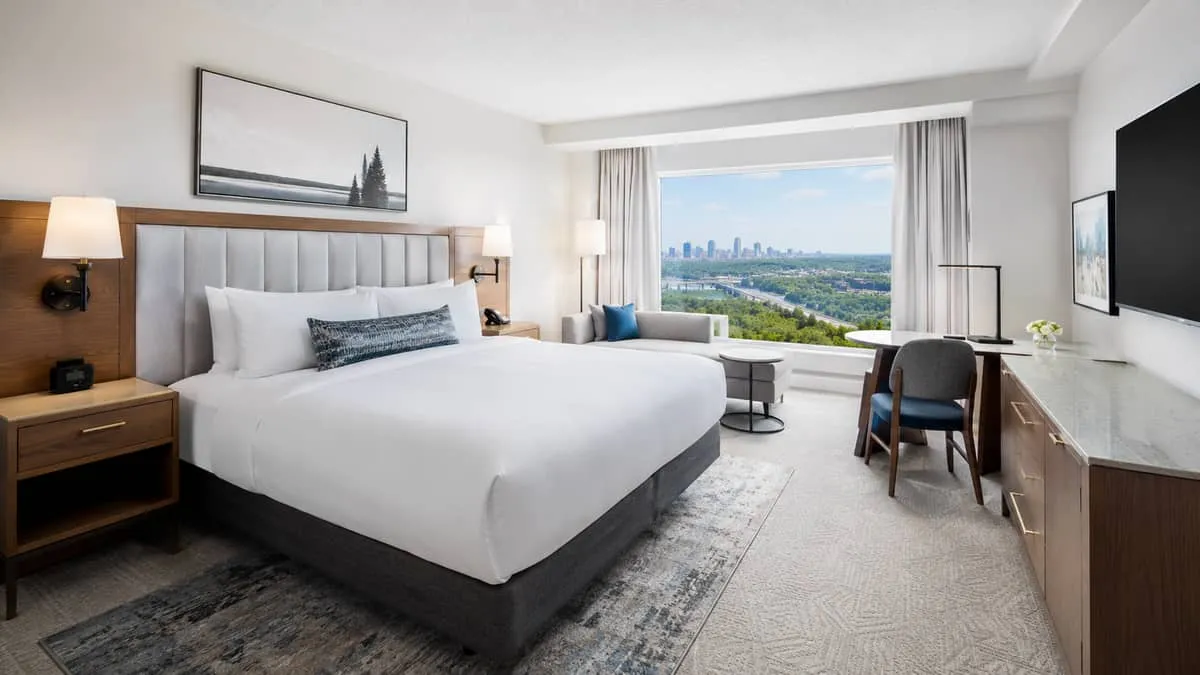
For Ice District-adjacent properties, the practical furniture spec leans toward clean European silhouettes , walnut or white oak veneer on casegoods, upholstery in charcoal or warm grey performance fabrics, minimal ornamentation. It is a visual language that reads sophisticated without being aggressive, which is appropriate when your guest is splitting time between a board meeting and a concert.
Durability thresholds matter here because the entertainment district drives high turnover. A property running at 80 percent occupancy with a mix of corporate midweek and entertainment weekends is cycling guests through frequently. Upholstery should be rated for at minimum 50,000 double rubs using the Wyzenbeek method. Frame construction on seating should use kiln-dried hardwood or steel , not particleboard core with a wood veneer, which will not survive the abuse of a high-occupancy hotel room over a five-year span.
124th Street Properties: A Different Brief
The 124th Street corridor is Edmonton's closest equivalent to a creative district hotel market. The galleries, the independent restaurants, the proximity to the river valley and the Glenora neighbourhood: guests choosing a property here are making a deliberate choice away from the downtown tower hotels. They want the neighbourhood. Furniture should reflect that without becoming a caricature of it.
What works on 124th is a warmer material palette and a stronger connection to craft. Upholstered headboards in textured fabrics rather than the wrapped vinyl common in flag properties. Casegoods with visible joinery or handcrafted-adjacent details , a furniture piece that looks like it was chosen, not specified out of a catalogue. Seating that prioritises comfort over sleekness, because the guest who chose a 35-room property on the arts strip over the Fairmont is probably someone who notices if the chair is beautiful but useless.
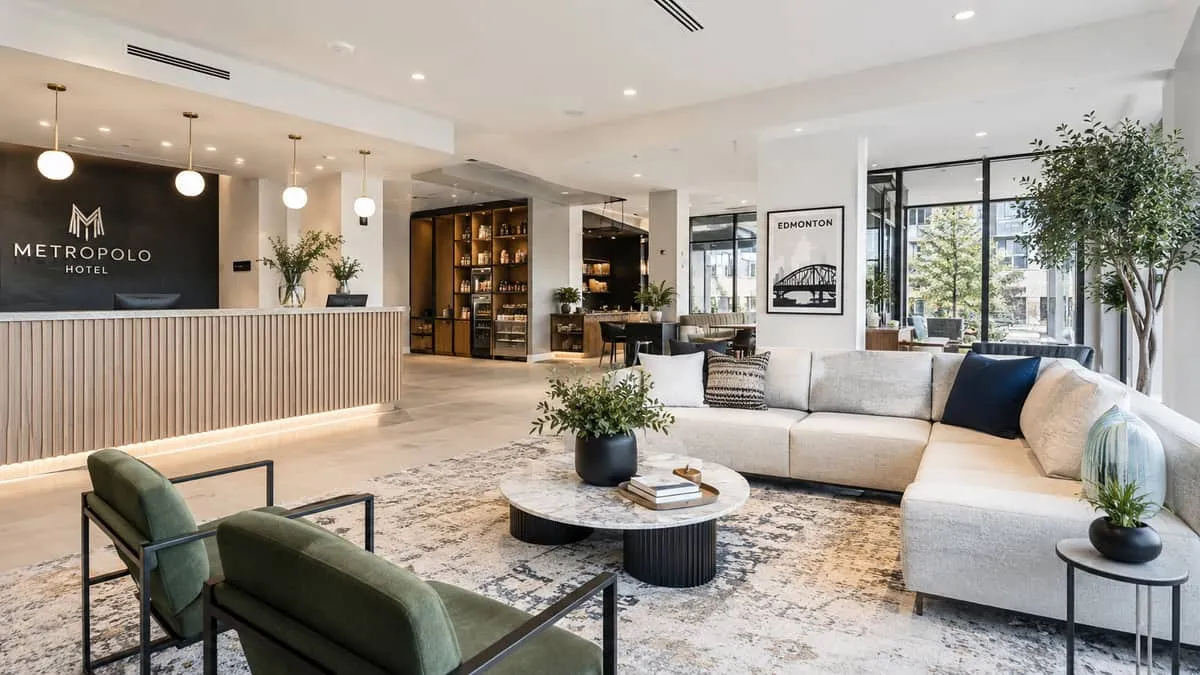
Alberta's short patio season and the indoor-focused nature of Edmonton hospitality generally push these properties toward lobbies and common spaces that do a lot of work. A well-furnished lobby seating area in a 124th Street boutique becomes a genuine gathering point , guests, neighbourhood regulars getting coffee, small informal meetings. That seating takes more use than a typical hotel lobby and needs contract-grade specifications even if the aesthetic is residential. Kiln-dried hardwood frames, eight-way hand-tied springs if the budget allows, or at minimum sinuous spring construction rated for commercial use. The piece can look like something from a design shop on 124th itself; it cannot be built like one.
Small Quantities, Full Specifications
Edmonton boutique properties are typically running between 30 and 70 rooms. That puts them in an awkward position with most contract furniture suppliers, who calibrate their pricing models and production schedules for chain orders of 300 units or more. The boutique owner calling a national supplier about a 60-unit guest room package will often hit minimum order barriers or pricing that does not make sense for the project scale.
The practical path through this is knowing which suppliers have explicitly built programs for independent hospitality. Some contract furniture manufacturers offer hospitality lines within a broader commercial catalogue that allow smaller quantities at proper commercial specifications. Others will work with you on mixed orders , upholstered pieces hitting one minimum, casegoods hitting another , and coordinate delivery to align with your construction or renovation schedule.
Edmonton's geography adds a layer to this. Lead times from eastern manufacturing centres or US suppliers need to account for shipping to Alberta, which is not a short run. A supplier promising 10-week delivery for a Toronto project may be quoting 14 to 16 weeks for Edmonton delivery, and that window compounds if anything needs to be reordered. Build more lead time into your project schedule than you think you need, and confirm actual delivery timelines to your specific location before finalising any purchasing decision.
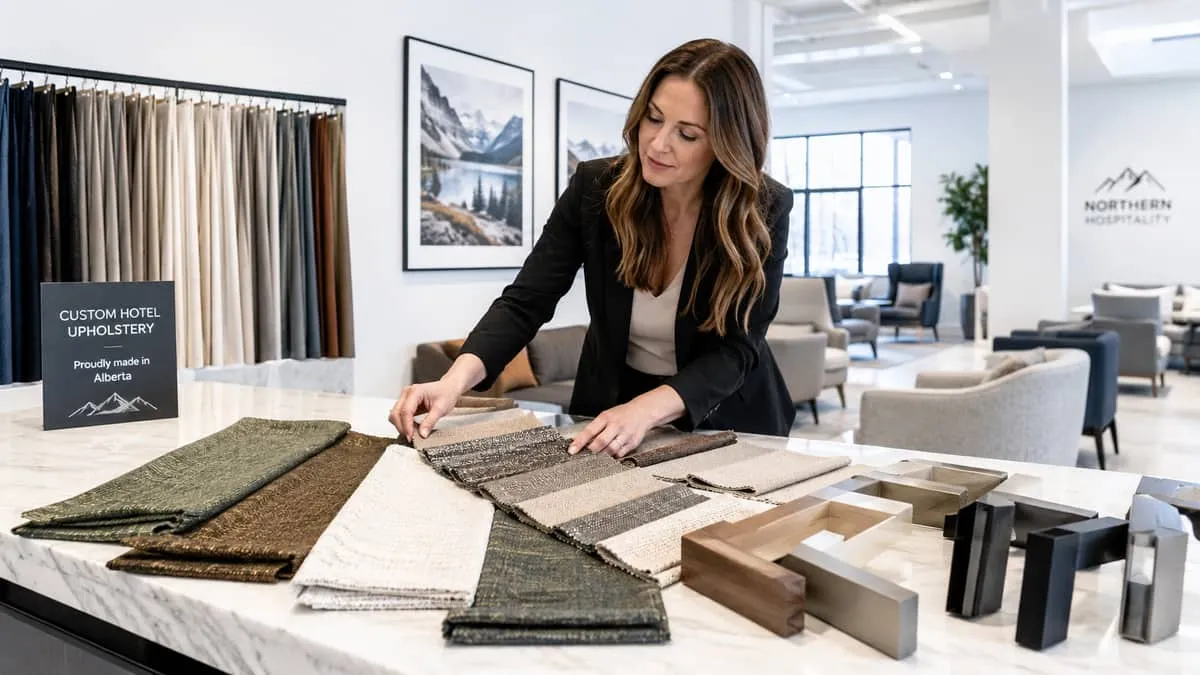
Custom upholstery is often where regional suppliers offer a real advantage. An Alberta-based or western Canada upholstery manufacturer working at boutique hotel scale can match your exact fabric specifications, produce samples for designer review, and adjust quantities without the friction a large factory creates. The trade-off is lead time visibility and quality consistency at scale , ask for references from hotel projects specifically, not just commercial upholstery work generally.
Climate Considerations That Are Often Overlooked
Edmonton winters are serious. Properties near the river valley, on 124th Street, or anywhere with guest rooms that face north or west need furniture that can handle the humidity swings that come with a climate where outdoor temperatures drop to -30°C and indoor heating runs hard for six months. Solid wood components with proper finishing will move and crack in environments where humidity is poorly controlled. Veneer on stable substrate , quality MDF or plywood core , is more dimensionally stable across the temperature and humidity range that Edmonton hotel rooms will see.
This is not hypothetical. Furniture placed near exterior walls in Edmonton properties without adequate vapour barrier and insulation performance will show stress across the first winter season. Casegoods with solid wood panels and inadequate finish will check and crack. If you are doing a full property fit-out, get your mechanical engineer's assessment of anticipated humidity levels in guest rooms across seasons before finalising wood species and finish specifications.
Fabric performance under dry winter conditions also matters. Static build-up in heavily synthetic fabrics becomes a guest-experience issue in Alberta winters. Performance fabrics with a wool or wool-blend component, or properly treated polyester performance fabrics, manage this better than all-synthetic upholstery.
Competing With the Chains on the Things That Actually Matter
The downtown Edmonton flag hotels , the Marriott, the Fairmont Macdonald, the Delta, the properties on the convention hotel corridor , have advantages that boutique operators cannot match on volume: national loyalty programmes, brand recognition for corporate travel managers, and the meeting room infrastructure that captures large convention blocks. Trying to compete on those terms is not a winning strategy.
What boutique properties can compete on is everything the chains flatten out. Consistency of room condition. Speed of response when something goes wrong. A genuine local connection that a Marriott in Edmonton shares with a Marriott in Calgary and a Marriott in Halifax, which is to say no local connection at all. Furniture is part of how you make that differentiation legible. A room where every piece was chosen for this property, in this city, for this guest type is a room that photographs better, reviews better, and commands a rate premium that holds.
The Fairmont Macdonald has history and the high ground above the river valley. The JW Marriott in the Ice District has the flag and the loyalty points. A well-designed boutique on 124th Street or a sharp independent near Rogers Place does not need to beat either of those on their own terms. It needs to be unambiguously better on the dimensions that its specific guest cares about , and furnishing the property correctly is how you make that case without saying a word.
Sourcing the Right Supplier for an Edmonton Project
When you are evaluating contract furniture suppliers for a boutique hotel in Edmonton, the questions worth asking directly include: Have you supplied independent hotel projects in the 30 to 80 room range, and can you provide references? What are your actual minimum order quantities for upholstered goods and for casegoods separately? What is your realistic lead time to delivery in Alberta specifically? Can you stage deliveries to align with a phased renovation or new construction schedule? Do you offer custom fabric selection within your contract programme, or are you limited to house fabrics?
A supplier with genuine boutique hotel experience will answer those questions without hesitation. A supplier set up primarily for chain contracts will often hedge or redirect. The redirect is information. The right supplier for your Edmonton property understands that 50 units is a real order worth their attention, not a minimum-order problem to be negotiated around.
Edmonton's boutique hotel market is early enough that the properties getting the positioning right now are establishing the reference points that future guests and future operators will measure against. Furniture is not the whole of that , service and programming matter as much , but it is the part of the guest experience that is continuous, present in every moment of every stay, and ultimately what people are photographing when they post from your property.
Planning boutique hotel furniture for your Edmonton project? Share your specs and quantities and we will build pricing around your actual program. Request a quote to get numbers for your space.