
You are eight weeks from opening and your furniture quote came back over budget. Or your lead time is sixteen weeks and your renovation window before the fall academic conference season is twelve. Or you bought restaurant chairs from a retail supplier two years ago and three of them have already failed and now you are back at zero trying to find replacements that actually match. These are the real problems Boston hospitality operators face, and they are problems that only a qualified commercial furniture supplier can solve. A hotel in Back Bay, a restaurant expanding into the Seaport Innovation District, a bar opening near Fenway each of those operations puts furniture through commercial punishment that residential-grade product cannot survive, and sourcing from the wrong supplier means replacing everything long before the ROI math works out.
What Separates Contract Suppliers From Retail Furniture Stores
The core difference is how furniture is engineered and tested. Retail furniture is built for residential use: light traffic, careful handling, and a useful life of perhaps five to ten years in a home. Contract furniture is built for commercial environments where a single chair might be sat in two hundred times a week by guests of varying sizes who have no ownership stake in how they treat it.
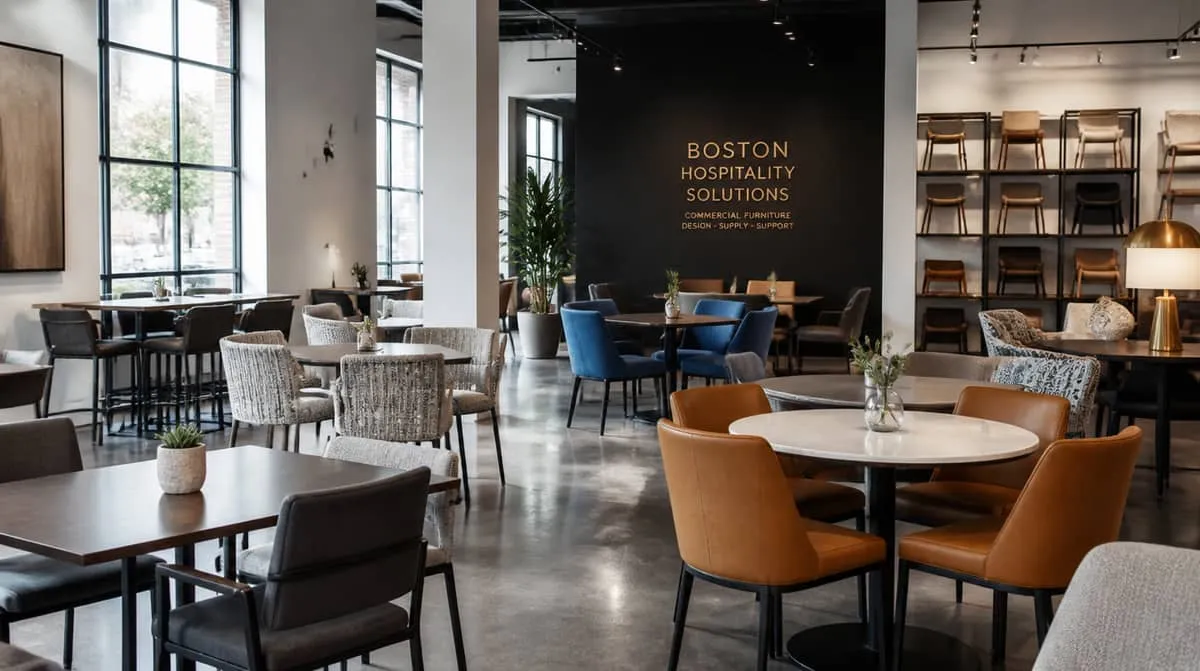
A qualified commercial furniture supplier Boston buyers can count on will carry pieces that meet BIFMA standards for commercial seating, fire-code compliant foam and fabric certifications, and construction specs double-dowel joinery, steel corner blocks, frame materials load-tested under commercial cycling conditions that retail vendors do not provide. When you source through a contract supplier, you are also buying documentation: compliance certificates, warranties specific to commercial use, and parts replacement programs that allow you to repair individual components rather than replace entire pieces.
A South End restaurant or a Seaport hotel bar that skips this step and buys commercial-looking furniture at a consumer price point will pay for it inside eighteen months. The upholstery splits, the joints loosen, and the finish lifts always in year two, always when the renovation budget is already exhausted and the warranty has run out.
How to Evaluate a Commercial Furniture Supplier in Boston
Boston hospitality operators evaluating suppliers should focus on four criteria: hospitality-specific experience, local logistics capability, lead time transparency, and post-sale support.
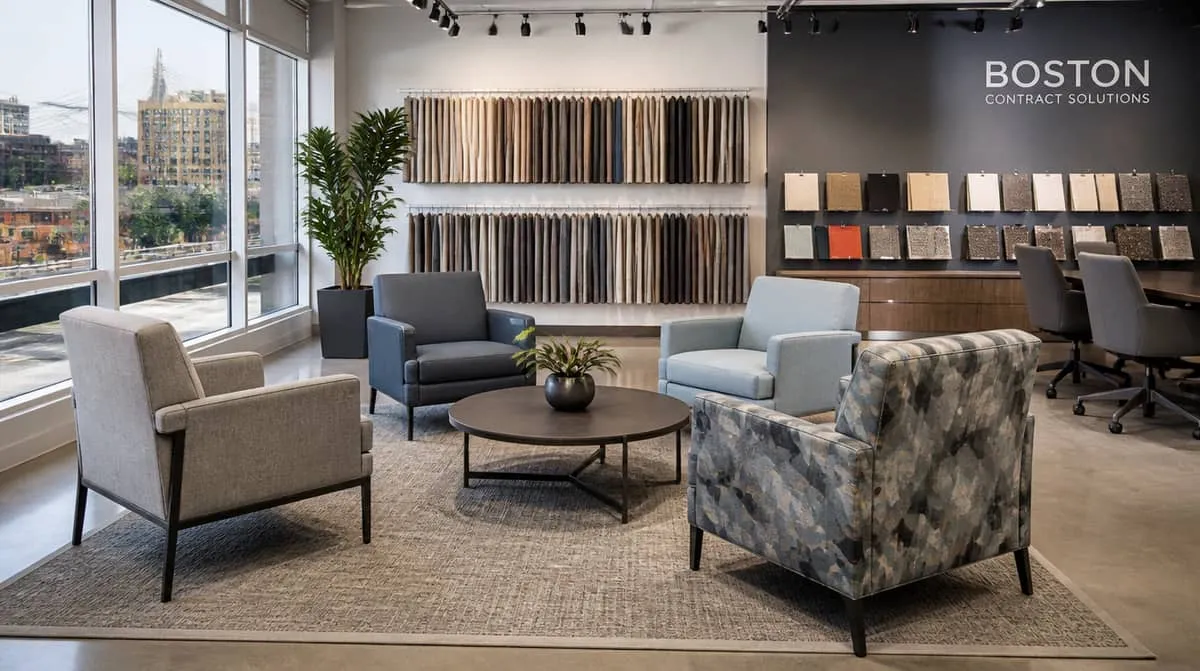
Hospitality-specific experience means the supplier has worked with properties in hotel, restaurant, and event venue contexts not just office furniture or retail environments. The durability requirements, FR compliance needs, and design program coordination involved in hospitality procurement are different from commercial office sourcing, and suppliers without that background often underestimate the specification requirements or overestimate their production capacity.
Local logistics capability matters more in Boston than in most American markets because of the city's historic building stock. Delivering lounge chairs into a Back Bay brownstone hotel or dining chairs into a North End restaurant with a 28-inch service entrance requires different delivery planning than a standard freight drop. Suppliers with Boston-area logistics experience ask about freight access before the purchase order. Those without it discover the problem on delivery day.
Lead time transparency is where projects most often go sideways. A qualified supplier will give you an accurate lead time estimate at the beginning of the procurement conversation not a number that changes after you have committed to an opening date. For Boston operators working against academic calendar or BCEC convention deadlines, accurate lead time information is not a courtesy. It is the foundation of the entire project schedule.
Procurement Timing and Boston's Market Calendar
Boston's hospitality procurement calendar has two primary windows that shape supplier selection and order timing. The first is the pre-fall window: properties targeting renovation completion or new openings before September move-in and the academic conference surge need to place furniture orders by late spring to hit that deadline with custom programs. The second is the post-graduation window in late May and June, when some properties use the brief occupancy dip before summer tourism ramps up to execute quick renovations.
For new restaurant openings, licensing approval timelines often compress the procurement window unpredictably. An experienced commercial furniture supplier Boston operators work with will identify in-stock options for core program elements the pieces that can ship in two to four weeks alongside custom elements that require full lead times. That parallel-track approach allows operators to commit to an opening date confidently without betting the entire timeline on a single custom fabrication run.
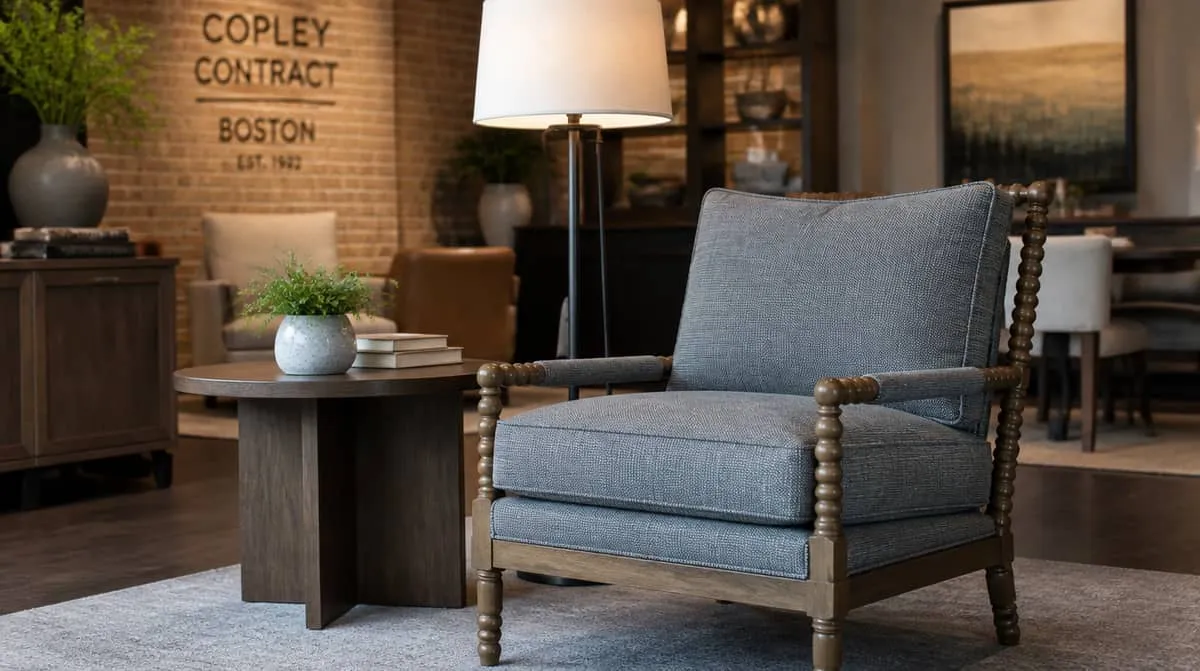
Multi-concept operators expanding through Boston restaurant groups adding a second location in the Seaport after a successful South End opening, or hotel operators with properties in both Cambridge and Back Bay benefit from standardizing on a core furniture program across locations. Volume purchasing agreements with a primary supplier unlock meaningful discounts and priority scheduling. In a city where a second location can open within the same fiscal year, that leverage compounds quickly.
Tell us about your Boston commercial furniture needs and we will turn your quantities, finishes, and timeline into a firm quote. Request a quote whenever you are ready to compare.