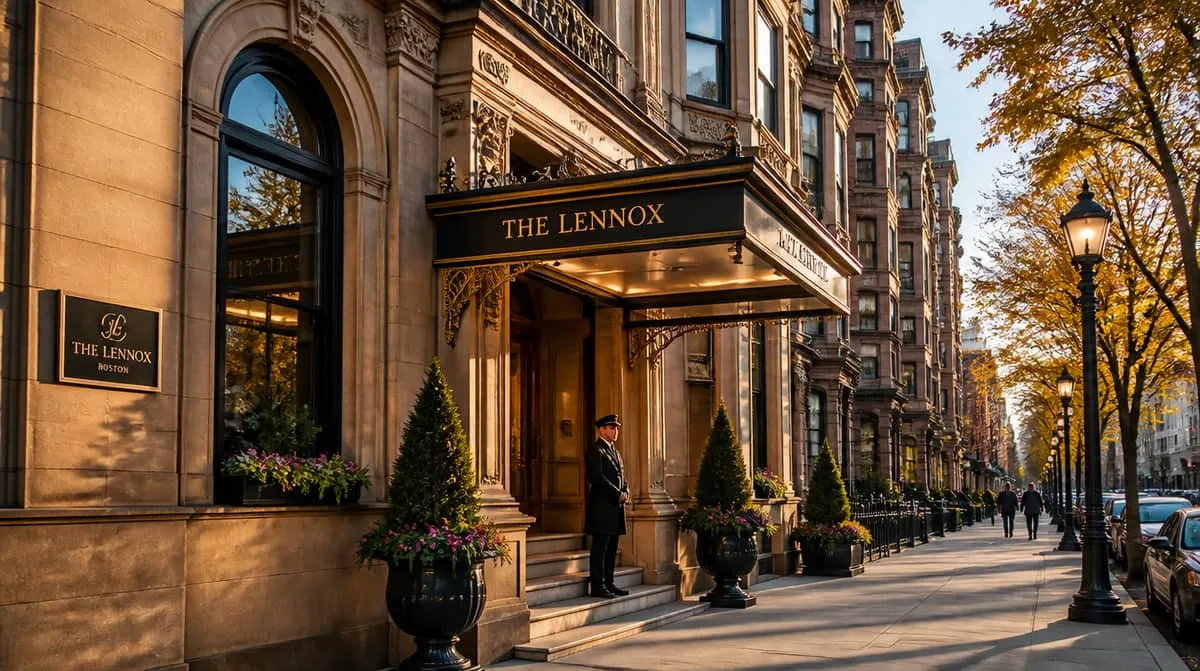
Your bar opens in ten weeks. Your lead time on custom upholstery came back at fourteen. And you are trying to figure out which barstools will still look right after two thousand covers rather than just in the opening photos. That is the real problem Boston bar and lounge operators face not picking something beautiful, but picking something that survives what this market puts it through. A busy Seaport cocktail lounge running biotech conference receptions one night and a post-Red Sox crowd the next needs furniture built to entirely different specs than the furniture in the design mood board.
What Boston Bar Operators Actually Need From Their Seating
Boston's bar and lounge scene has diversified well beyond the traditional neighborhood pub format. The Seaport Innovation District has generated a wave of hotel lobby bars and destination cocktail lounges aimed at the pharmaceutical and financial services business traveler Moderna and Biogen executives entertaining clients expect a different setting than a Fenway-adjacent sports bar. Harvard Square bars and Cambridge lounges draw an internationally-minded academic crowd that reads design quality intuitively. Back Bay hotel bars compete for the same guests as the lobby lounges of the major Copley Square properties.
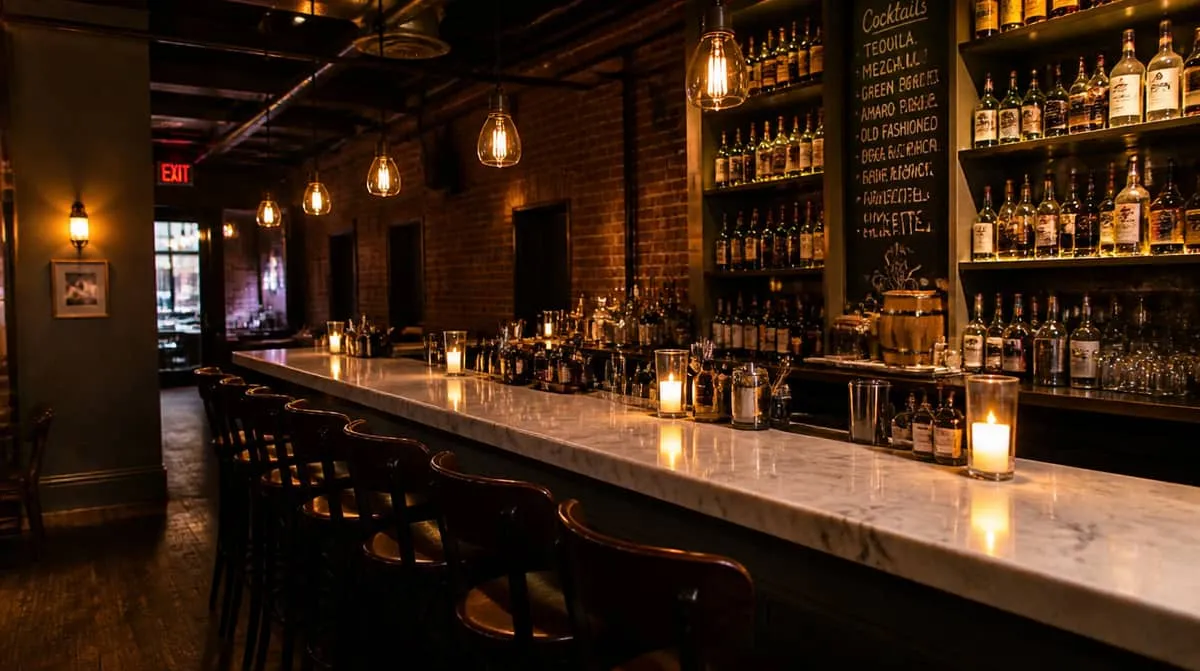
For contract barstools in any of these environments, spec frames rated for true commercial use: welded steel at 18-gauge or heavier, or solid hardwood with reinforced mortise-and-tenon joinery. Seat heights need to match your specific counter rail standard barstools run 28 to 30 inches, but measure before ordering, because a half-inch mismatch undermines the ergonomics of an otherwise well-executed bar. Weight ratings matter: contract barstools should handle at least 300 lbs with safety margin. In a high-volume Seaport bar running four seat turns on a Friday, that structural tolerance is not a spec-sheet detail.
Boston's design aesthetic for bars has moved toward the New England contemporary register: dark wood accents in walnut or espresso, cognac and navy leather at the rail, warm ambient light rather than the harsh bright lighting of an earlier era. Lounge chairs and low seating in cocktail lounge areas should hold the same palette performance fabric in navy or cognac velvet cleans quickly after a spill and photographs well without reading as residential.
Lounge Furniture Built for Boston Volume and Aesthetic
Hotel lobby bars in Back Bay and the Seaport face a specific design pressure: they sit inside lobbies that guests also move through for non-bar purposes, which means the lounge seating has to read as intentional and well-maintained at all hours, not just during service. A sectional piece that looks sharp on opening night and shows foam compression by spring is a liability in a lobby that guests judge every time they pass through.
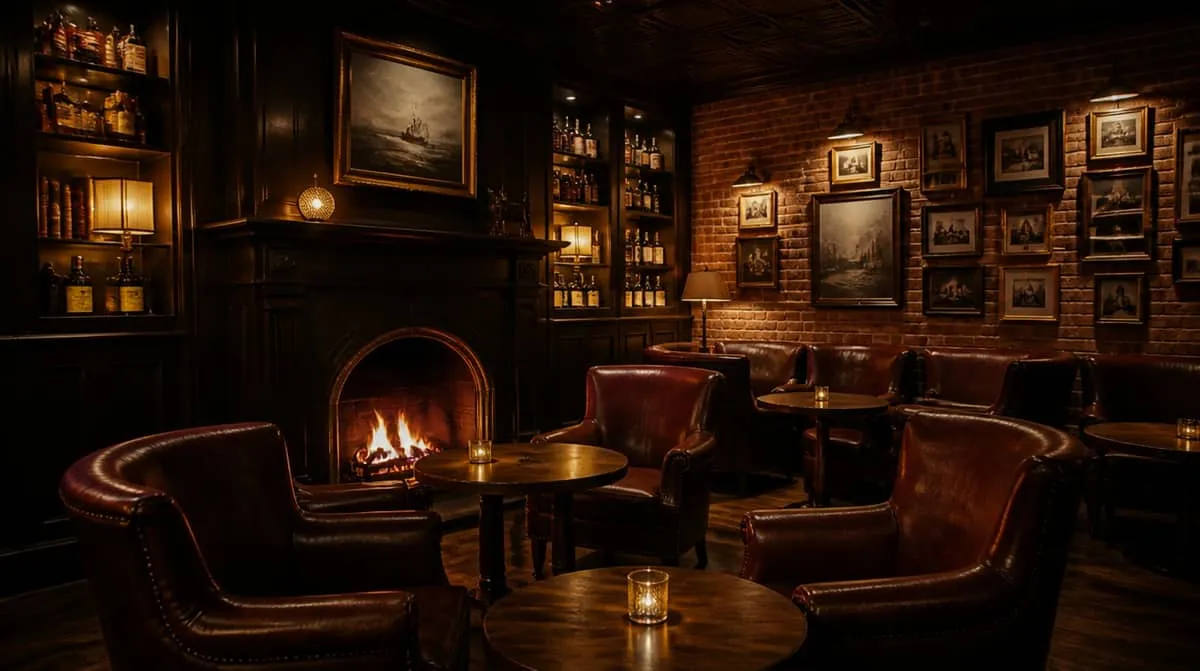
Performance fabrics in contract lounge seating have improved significantly. The best current options offer the texture and visual warmth of residential upholstery while delivering surface durability spill resistance, cleanability, and abrasion ratings that allows actual commercial use. For Boston specifically, fabrics that read as warm rather than clinical are important: the city's long winters and gray-sky months mean interiors that feel cold and stark read as less welcoming than in warmer markets. Navy and cognac leather, warm cream boucle, and brushed wool-look performance textiles all perform well in the New England contemporary register.
High-Tops, Outdoor Seating, and Boston's Compressed Patio Season
Boston's outdoor dining and drinking season is among the most compressed of any major American city. Patio and terrace programs typically run May through October, with a narrow window and no margin for furniture that does not hold up. A Seaport rooftop bar or a Back Bay hotel terrace needs outdoor seating that looks sharp through a short season and survives off-season storage in Boston's winter conditions.
Powder-coated aluminum frames are the baseline standard. They resist salt air from Boston Harbor, handle freeze-thaw cycles, and are light enough for staff to move and stack at season end without labor that compounds across years. For high-top tables workhorses in Boston bar culture that handle the casual standing crowd and accommodate groups between seated reservations spec bases with leveling glides heavy enough to resist tipping under lean weight. Tops in sealed wood, laminate, or solid surface clean quickly between covers during a busy Friday rush.
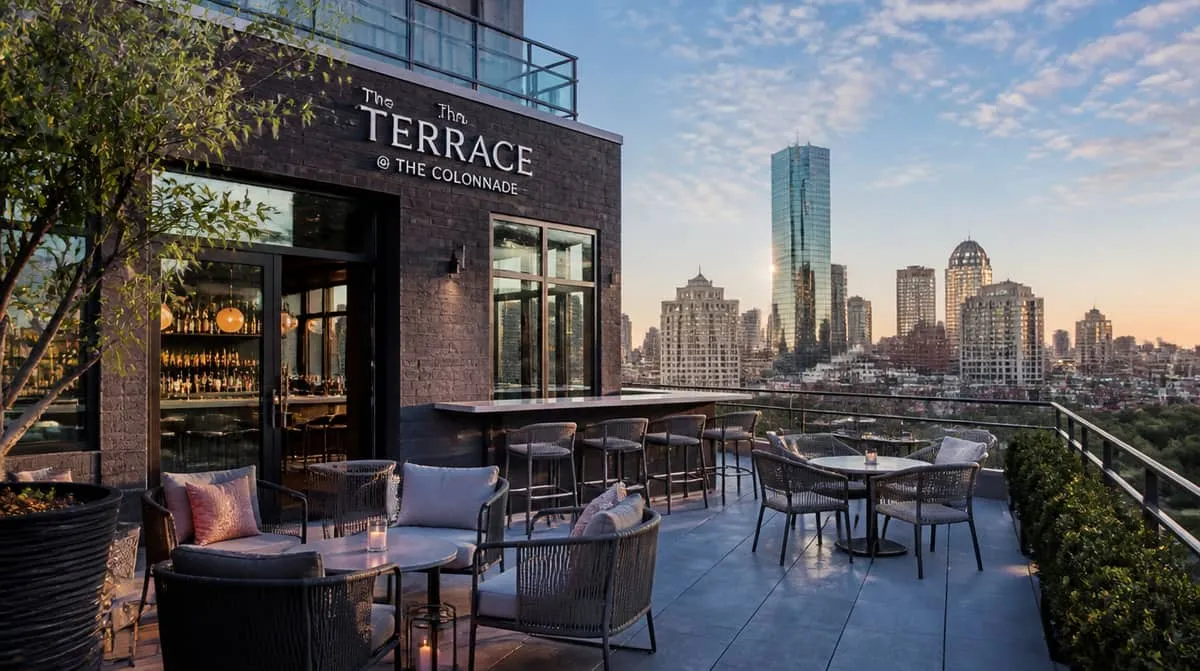
Because the outdoor season is so short, the ROI calculation on outdoor furniture is more compressed than in warmer markets. Getting the spec right the first time frames that last five-plus seasons, fabrics that hold color through UV exposure is more important in Boston than in a city where the outdoor program pays back its investment across a nine-month season.
Pricing for bar and lounge furniture in Boston depends on quantities, finishes, and your delivery window, so a project-specific quote beats any list figure. Request a quote to get yours.