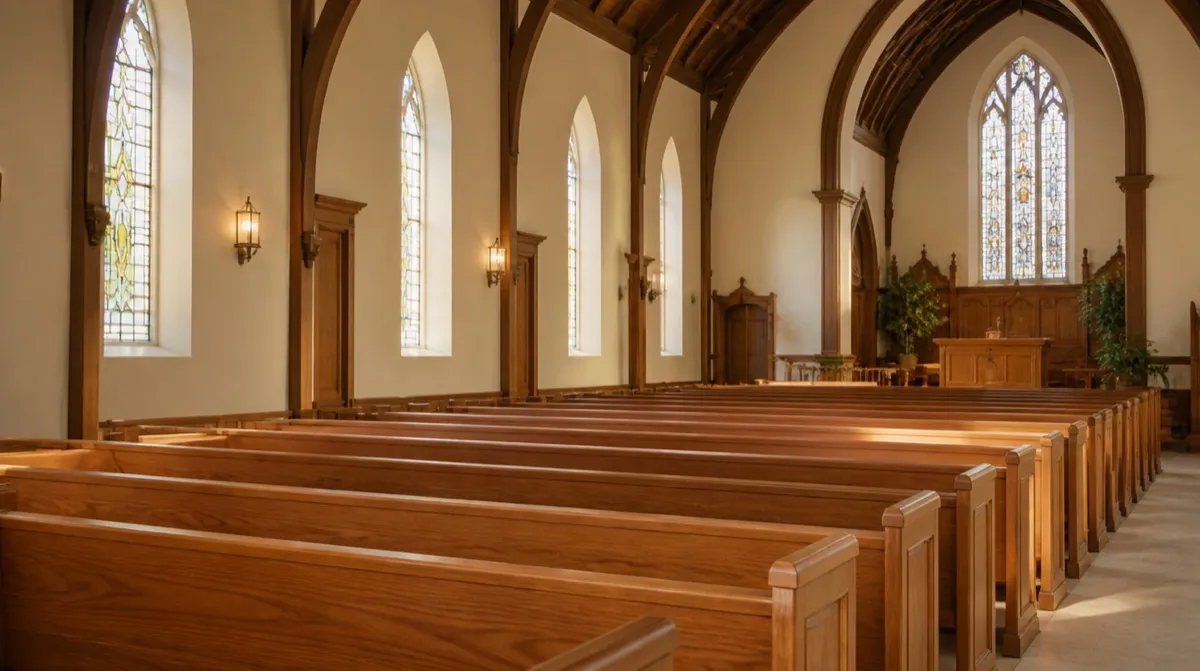
Every congregation replacing or outfitting a worship space eventually faces the same fork in the road: traditional church pews or individual church chairs. It is not just an aesthetic choice. The decision shapes how the sanctuary seats a crowd, how fast the room reconfigures for a funeral or a concert or a fellowship meal, what the project costs up front, and how long the seating lasts before it needs replacing. This guide lays out the real trade-offs between pews and chairs across cost, comfort, flexibility, and lifespan, then covers the materials, budgeting, and replacement planning that go into either path. If you are outfitting a sanctuary, this is the decision to get right first, because everything else follows from it.
Pews and chairs solve different problems
Pews and chairs are both good answers to different questions. Pews are fixed bench seating, usually wood, that anchor a traditional sanctuary and create a formal, continuous line across the room. They seat a crowd efficiently, need little maintenance, and last for decades. Church chairs are individual upholstered or stackable seats that connect into rows with ganging hardware. They bring flexibility, individual comfort, and the ability to clear the floor entirely for a different use. Neither is objectively better. The right choice depends on how your congregation actually uses the room through a typical week and how much your worship pattern is likely to change over the next twenty years.
Church pews vs church chairs: the comparison
| Factor | Church pews | Church chairs | |--------|-------------|---------------| | Seating flexibility | Fixed, room stays a sanctuary | Reconfigure or clear the floor fast | | Capacity efficiency | High along straight rows | High, and adjustable to the crowd | | Individual comfort | Shared bench, less personal space | Contoured seat, defined space per person | | Upfront cost | Often higher per linear foot | Priced per chair, scales with count | | Multipurpose use | Limited | Strong, doubles as event seating | | Maintenance | Very low, occasional refinishing | Low, upholstery cleaning over time | | Lifespan | Decades | 15 to 20 years at commercial grade | | Best fit | Traditional, single-use sanctuaries | Growing, multipurpose, flexible spaces |
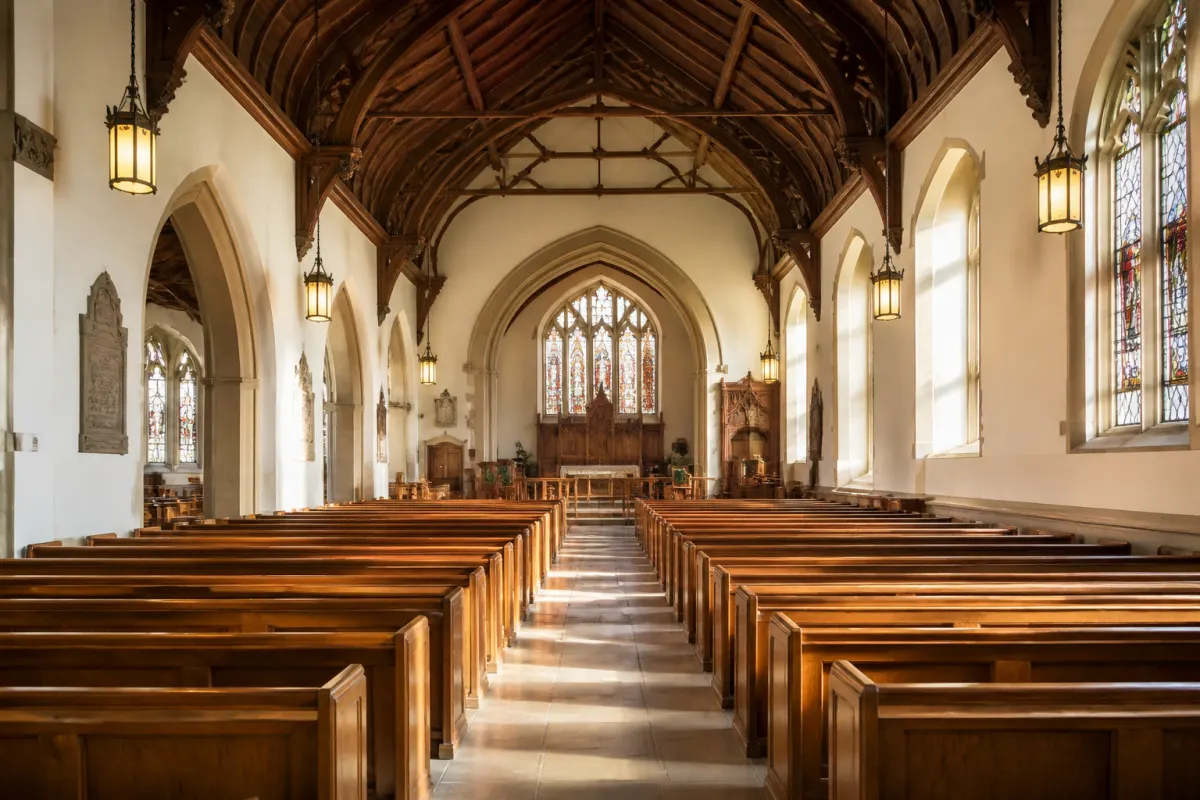
The pattern is clear. Pews suit a congregation that wants a traditional, dedicated worship space and values permanence and low maintenance. Chairs suit a congregation that reconfigures the room, runs multiple service styles, or expects to grow and adapt. Many growing churches have moved toward chairs for exactly that flexibility, while established traditional congregations keep pews for their formality and long life. There is no wrong answer, only a fit.
Comfort matters more in a sanctuary than most venues
Worship seating carries a comfort requirement that most commercial seating does not, because people sit through a full service, sometimes more than an hour. Whatever you choose, the comfort spec has to be real. On upholstered church chairs, that means commercial-density seat foam, roughly in the 35 to 40 ILD range, so cushions do not flatten within a few years and leave the congregation on a hard shell. Pews can be ordered with upholstered seats and backs or with contoured wood, and the contour matters for a long sit. In either case, seat depth and back angle decide whether the last twenty minutes of a service are comfortable or endured. Comfort is not a luxury line in a worship space. It is part of keeping people present and engaged.
Materials and durability spec
Both pews and chairs should be built to a genuinely commercial standard, because worship furniture is expected to last. Pews are typically solid hardwood or a hardwood veneer over an engineered core, with the joinery and finish doing the durability work. Ask about the finish, since a sanctuary finish has to survive decades of cleaning. Church chairs should have welded steel frames built to hold up through decades of weekly use, not stapled or bolted frames that loosen. Upholstery on either should be a performance fabric rated at 50,000 or more Wyzenbeek double rubs, well above the 10,000 to 15,000 typical of residential fabric, so the seating survives the traffic of a growing congregation. For churches choosing stackable chairs for the fellowship hall alongside sanctuary seating, the church chairs bulk guide covers the flexible-room side in detail.
Pulpit, platform, and sanctuary accents
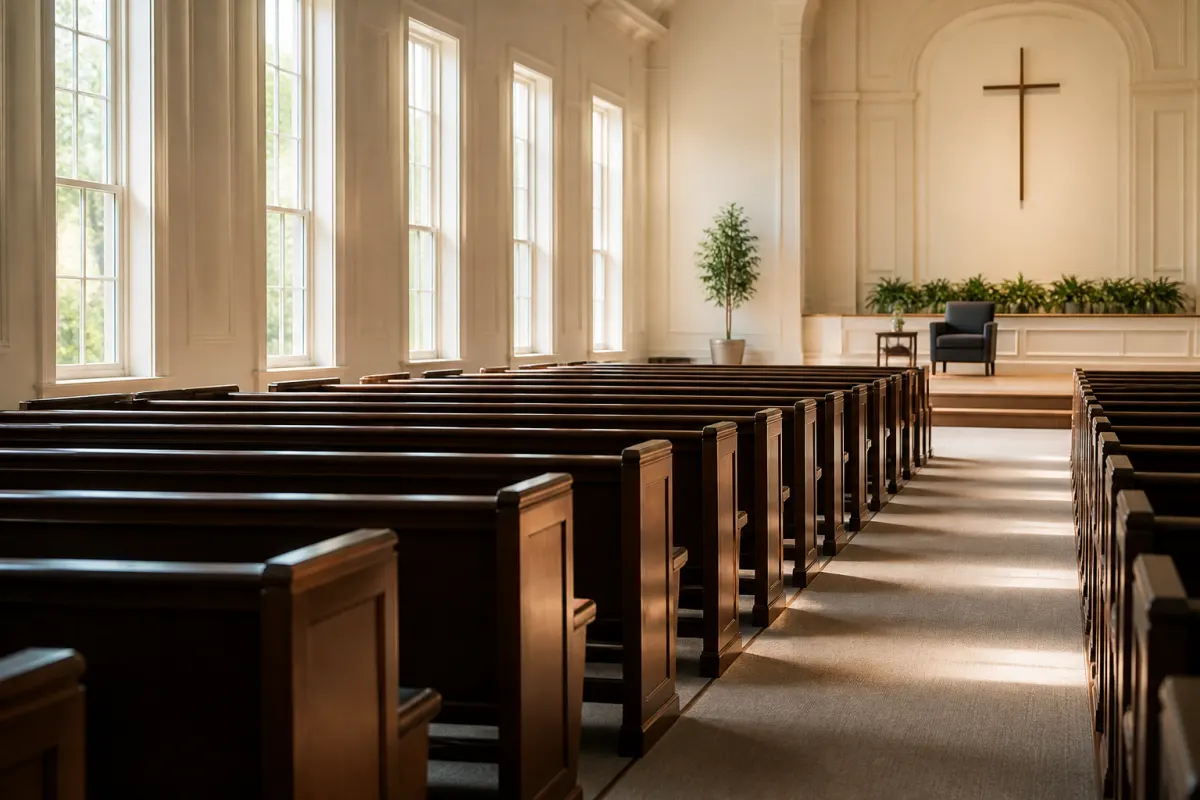
Sanctuary seating is not only the congregation. The platform needs its own pieces: pulpit chairs, clergy seating, and often a matching bench or two that read as part of the same design language as the congregational seating. Spec these to the same commercial durability standard, since they are on display every service and used every week. Match the wood tone or the upholstery to the pews or chairs in the room so the platform looks intentional rather than assembled from spare parts. A small number of well-chosen accent pieces, drawn from the same benches and side chairs categories, ties the front of the room together.
Accessibility and sightlines shape the choice
Accessibility often tips the pew-versus-chair decision, and it should be part of the plan from the start rather than an afterthought. A sanctuary needs designated wheelchair spaces with companion seating, and it needs aisle widths that let everyone reach them comfortably. Chairs make this straightforward, because you simply leave gaps where they are needed and adjust as the congregation changes. Pews handle it too, but the accessible spaces have to be designed into the layout up front, since a fixed bench cannot be moved later without a real project. Sightlines matter alongside access: every seat should have a clear view of the platform, so plan spacing, row rise where the floor allows, and aisle placement around the actual lines of sight. Check your local code for spacing and egress requirements before you finalize counts, because those rules set the floor for how many seats the room can legally hold.
Budgeting a sanctuary seating project
Churches almost always buy in quantity, and that volume works in your favor. A new sanctuary build and a full replacement set both order at counts where price breaks step down at 50, 100, 250, and 500 or more units, so a full-room order lands at a very different per-seat price than a small reorder. Budget freight and installation on top, which typically add roughly 14 to 26 percent over the furniture cost, and for pews the installation piece is larger because they are anchored and set in place. Plan timing around the church calendar: stocked stackable chairs ship fast, while custom pews, finishes, and upholstery carry a 10 to 14 week lead time, so order well ahead of an Easter or Christmas target. Model the full project with the furniture cost calculator, and if you are leaning toward chairs, the banquet seating calculator helps you count rows and spacing against your floor plan.
Planning a pew or seating replacement
Replacing sanctuary seating is a once-in-a-generation project, so plan it as one. Measure the room carefully, including sightlines to the platform, aisle widths for accessibility and flow, and any code requirements for spacing and egress. Decide early on the design direction, matching an existing look or resetting the room entirely, because that choice drives the pew-versus-chair decision as much as budget does. Order a sample or a small trial set before committing to a full sanctuary, so the congregation can sit in the actual seat before you buy hundreds of them. When you are ready to spec counts, dimensions, and finish, request a quote with your room measurements and seat target, and the seating, platform pieces, and lead time can be planned together against your calendar.