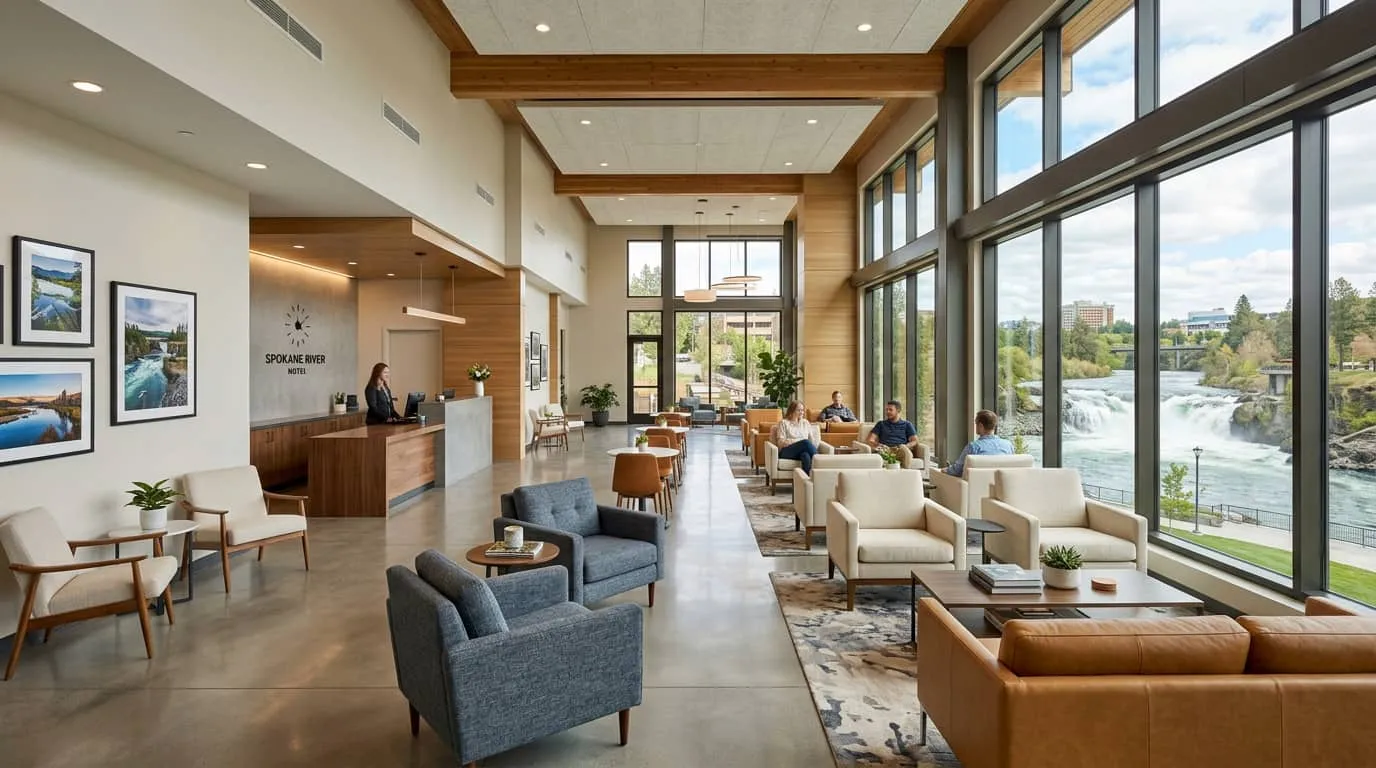
Spokane's boutique hotel market has developed faster than most hospitality observers expected. The city's growing reputation as an affordable alternative to Seattle and Portland, combined with the Gonzaga basketball draw, the convention traffic through the Spokane Convention Center, and the outdoor recreation economy centered on Mount Spokane and the north Idaho lakes, has created demand for independent and boutique-branded properties that offer genuine design intent rather than the flag-brand cookie-cutter approach.
The furniture programs that define the successful boutique properties in Spokane share a common characteristic: they translate the city's regional identity, the river district history, the Craftsman residential heritage, the outdoor recreation culture, into hospitality interiors that feel grounded in place without becoming a caricature.
What Boutique Hotel Furniture Means for Spokane
The term boutique hotel gets applied loosely. For our purposes it means properties where design intent, curated guest experience, and distinct identity matter more than brand standard compliance, where the furniture program is a deliberate design statement rather than a specification pulled from a flag brand manual.
That distinction creates different requirements from a furniture supplier. A flagged property can rely on the brand's pre-approved vendor list and finish standards. A boutique property needs a supplier who can work from concept through specification, help develop custom upholstery and case goods programs that match a specific design direction, and maintain quality consistency across every piece that arrives on the property.
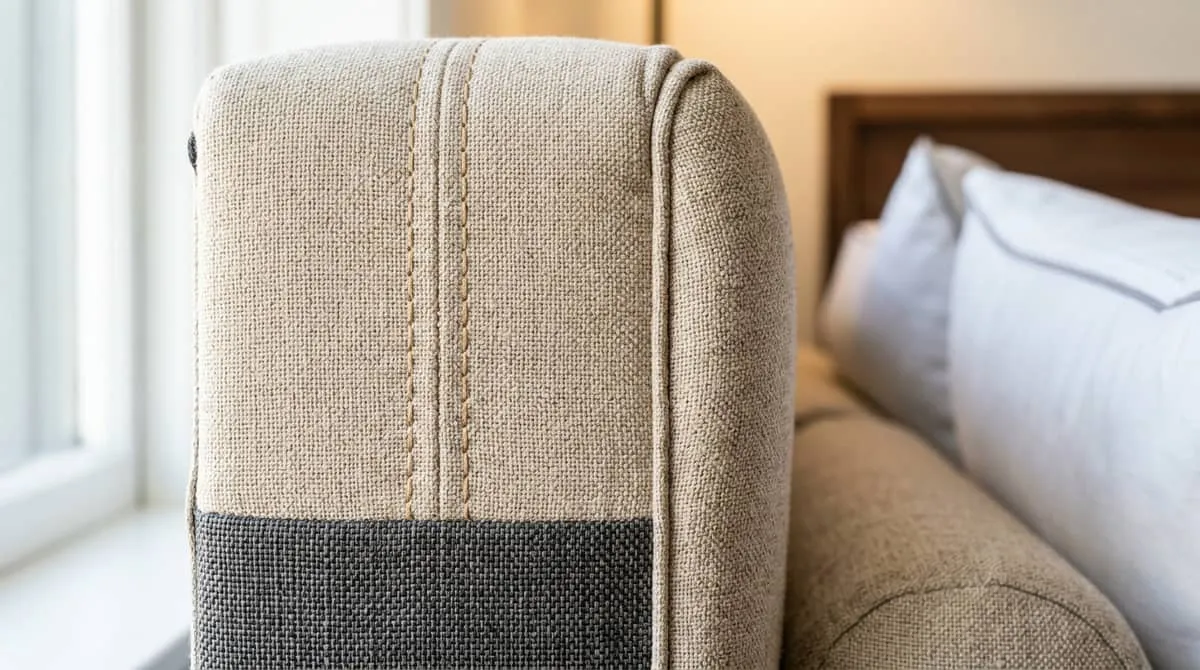
For Spokane boutique hotels specifically, the design conversations tend to center on a few recurring material families. Warm walnut and white oak finishes connect to the Pacific Northwest timber heritage without feeling rustic. Natural linen and textured woven fabrics in earth tones reference the high desert landscape east of the Cascades. Brushed metal hardware in black or brass reads as contemporary craft rather than corporate generic.
Guest Room Furniture Specification for Spokane Boutique Properties
Guest room furniture in a boutique hotel context needs to work harder than the equivalent pieces in a flagged property. The guest is paying, in part, for the design experience, which means a headboard that looks thoughtful from six feet away needs to also feel substantial when you sit on the edge of the bed. A desk that looks like a design object from the room's entrance needs to actually function as a work surface.
Case goods for boutique hotel guest rooms, nightstands, dressers, luggage benches, desks, should be specified in solid wood or hardwood-veneered MDF with mechanical fasteners, not dowel-and-glue construction. Drawer hardware should operate smoothly through thousands of cycles. Finish should be durable enough to resist the nicks and abrasions that accumulate in normal hotel use without looking like a protective industrial coating was prioritized over aesthetics.
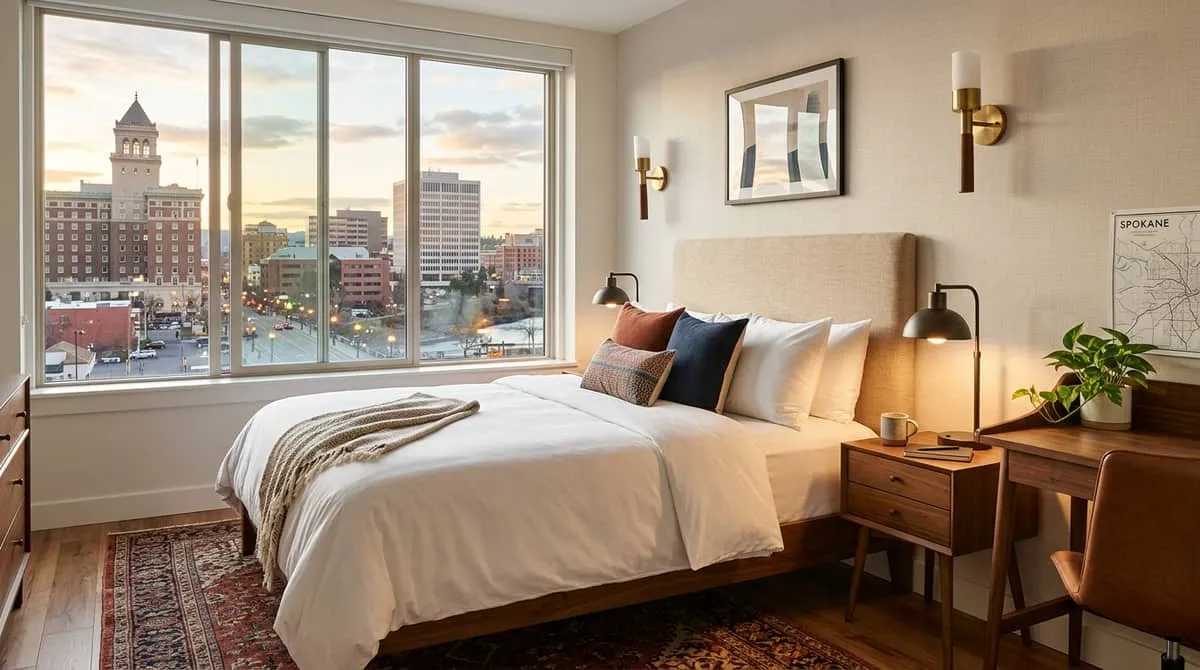
Headboards in boutique properties typically carry more design weight than in flagged hotels. Channel tufting, natural linen upholstery, wood surround details, and custom sizing are all common in Spokane boutique projects. Each of those elements requires a supplier who can execute to specification at contract-grade quality, not just produce an approximation that photographs well and falls apart under two years of hospitality use.
Public Space Furniture for Spokane Boutique Hotels
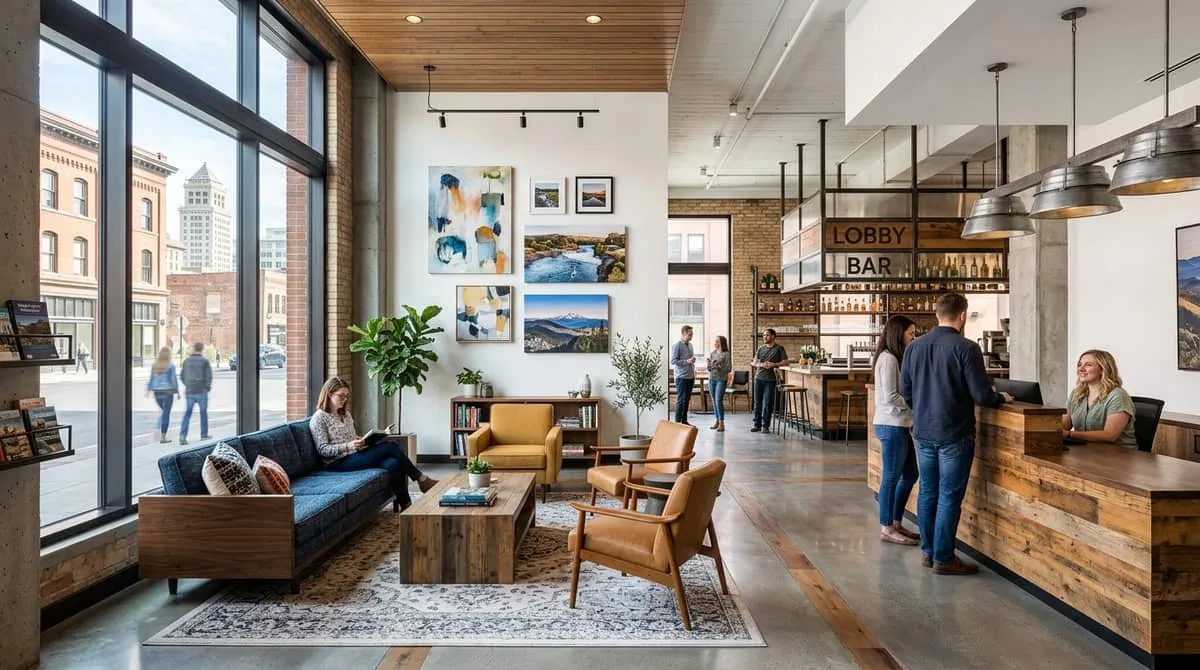
The lobby and common areas of a boutique hotel are where the design statement is made most legibly. Guests form their impression of the property in the first thirty seconds after walking through the door, and that impression is driven more by furniture, lighting, and material selection than by the artwork on the walls or the music playing overhead.
Lobby lounge seating for a Spokane boutique hotel typically needs to serve multiple functions: check-in waiting, casual meetings, solo work with laptop, and social gathering in the evening hours when the property's bar or coffee program is operating. That range of use requires seating that is comfortable for extended sitting but not so deeply cushioned that it becomes difficult to rise from without assistance.
Contract lounge chairs for boutique hotel lobbies run $400 to $900 per unit for well-specified pieces from mid-tier contract manufacturers, and $900 to $2,000 or more for custom or high-design options. The budget for a boutique hotel lobby in Spokane should reflect the fact that these pieces are the first impression, not the place to value-engineer.
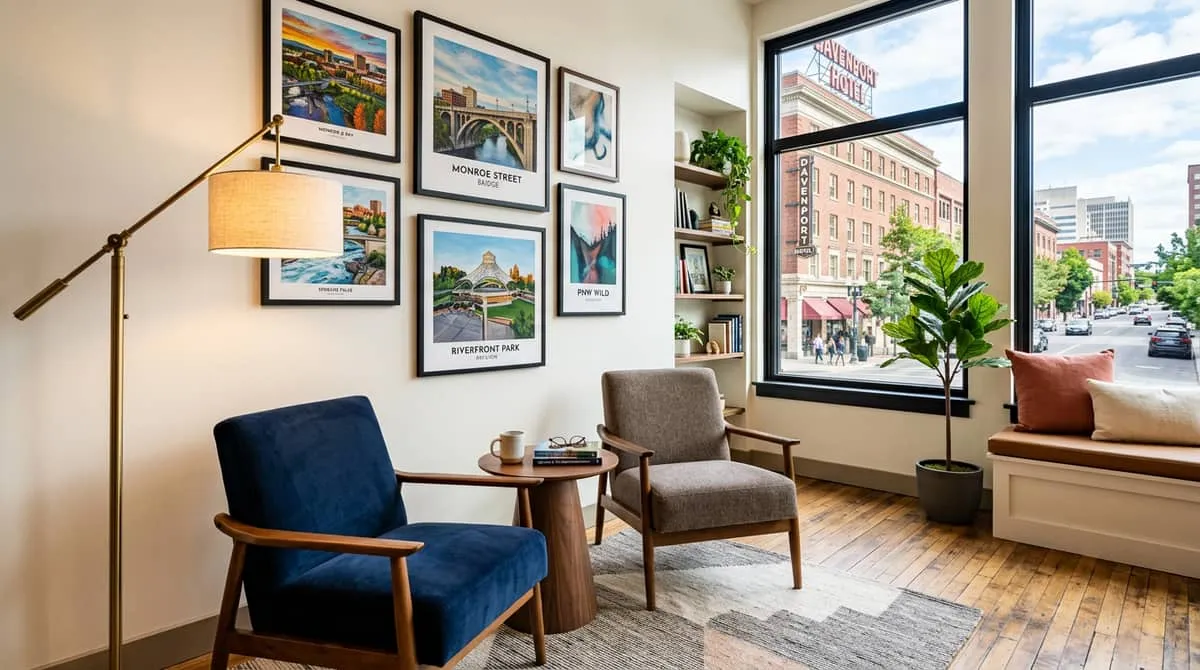
Breakfast and F&B areas, if the property operates one, need dining chairs and tables that hold up to meal service while maintaining the design language of the rest of the property. Mismatched dining and lobby furniture is one of the most common ways a boutique hotel signals that the design program was not fully thought through.
Finding a Boutique Hotel Furniture Supplier Who Understands Spokane
The supplier conversation for a boutique hotel property in Spokane needs to start with design, not with a price list. Before you get to specification and cost, you need to know that the supplier understands what a boutique hotel guest in the Inland Northwest expects and can help you build a furniture program that delivers it.
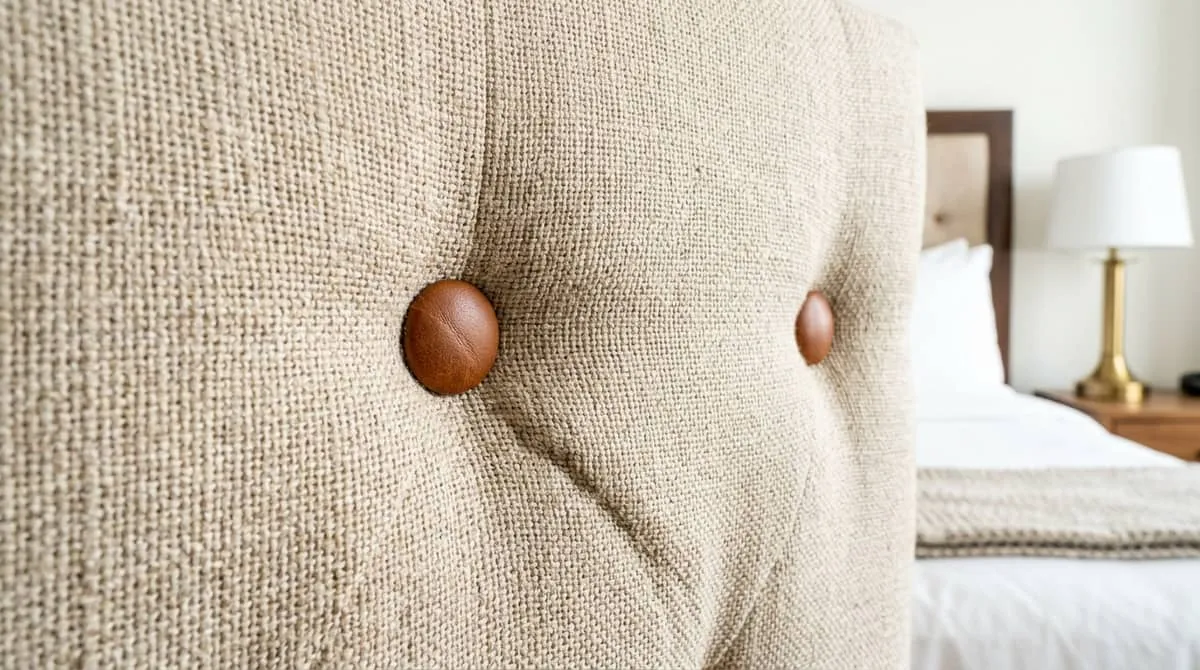
Ask for case studies from comparable projects, independent boutique hotels in markets with similar characteristics to Spokane's size and design culture. Ask to see material samples and finish boards before approving any specification. And insist on a physical strike-off sample for any custom upholstery before committing to production, because the difference between an approved color swatch and what arrives in a shipping container after twelve weeks of production is a problem you cannot solve at installation.
Pricing for boutique hotel furniture in Spokane depends on quantities, finishes, and your delivery window, so a project-specific quote beats any list figure. Request a quote to get yours.